
Street Journal Multimedia Services

Author name: Street Journal

DSWD, DENR strengthen partnership for inclusive community development

Baguio City

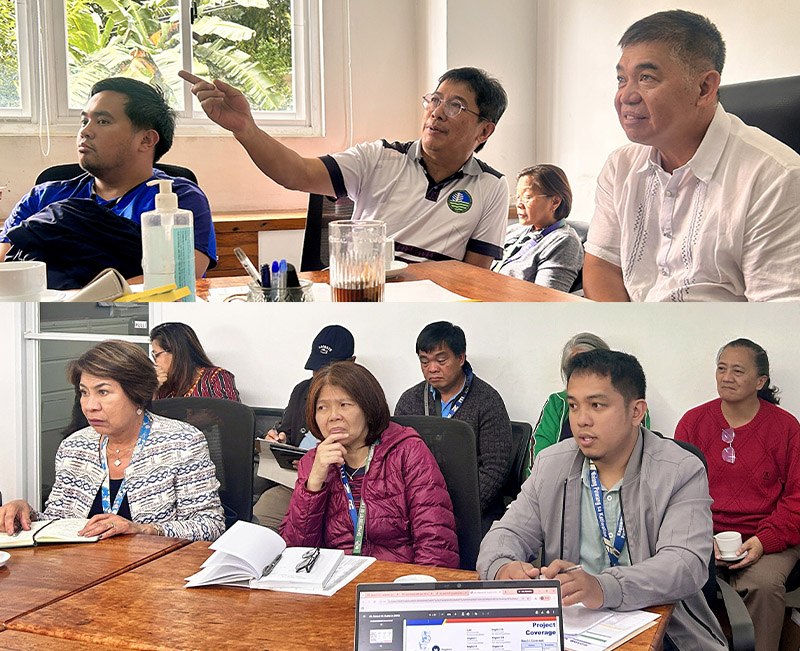
By Yvonne Gracious T. Elegado   BAGUIO CITY — The Department of Social Welfare and Development Field Office Cordillera Administrative Region (DSWD FO CAR) and the Department of Environment and Natural Resources (DENR-CAR) converged on 29 July 2026 to strengthen coordination between the two agencies in support of inclusive, resilient community development across the region. DSWD-CAR’s Kapit-Bisig Laban sa Kahirapan-Comprehensive and Integrated Delivery of Social Services (KALAHI-CIDSS) Regional Program Management Office led the discussions with DENR-CAR, represented by Regional Executive Director Paquito T. Moreno Jr., Environmental Management Bureau-CAR Regional Director Jean C. Borromeo, and the Mines and Geosciences Bureau-CAR. During the meeting, DSWD FO CAR indicated that the KALAHI-CIDSS Panahon ng Pagkilos: Philippine Community Resilience Project (PCRP) is still in its early implementation stage, as the exact project sites and beneficiary communities have yet to be identified, pending municipalities’ review of the Municipal Resilience Plans (MRP), which are prepared through community-level profiling and planning activities under the program. As a member of the program’s Regional Steering Committee (RSC), DENR-CAR agreed to designate representatives to a technical working group that will support coordination between the two agencies. DENR personnel will also take part in community-level activities early on, allowing DENR to guide communities on environmental considerations even before project sites are finalized. Both agencies likewise discussed a two-stage framework for Protected Area Management Board (PAMB) clearances, covering approval for the program’s implementation within protected areas, followed by clearance for specific subproject sites once these are confirmed in September this year. Both agencies reaffirmed their commitment to ensuring that environmental stewardship supports community empowerment and the delivery of vital infrastructure across the region. By Yvonne Gracious T. Elegado, Project Development Officer III      

Nueva Vizcaya eyes WWII ‘Liberation Trails’ to boost heritage tourism

Region 2

By Rachel Magday   NUEVA VIZCAYA, Philippines — Nueva Vizcaya is set to transform its World War II battlefields and historic landmarks into a heritage tourism circuit as the provincial government moves to establish “Liberation Trails” that will preserve the province’s wartime legacy while creating new economic opportunities for local communities. The initiative took shape following a meeting between Governor Jose V. Gambito, Provincial Tourism Officer Marichelle O. Costales and Erwin Tiongson, a Solano native based in the United States who serves as director of the Global Human Development Program at Georgetown University. The proposed Liberation Trails will feature guided tours of significant historical and World War II sites across the province, targeting travelers with an interest in Philippine history, military heritage, and cultural tourism. Tiongson first presented the proposal to the Provincial Tourism and Culture Office during one of his “balikbayan” visits to Nueva Vizcaya. He also facilitated the provincial government’s engagement with leading Filipino historians, including Dr. Ricardo Jose, professor emeritus at the University of the Philippines Diliman and one of the country’s foremost authorities on World War II in the Philippines and Asia. Jose underscored Nueva Vizcaya’s strategic importance during the Second World War, describing the province as one of the country’s most significant battlefield areas. According to Costales, the planned tourism circuit will highlight key wartime sites, including Balete Pass in the municipality of Santa Fe and Kirang Pass in Aritao. Kirang Pass is home to a Japanese war shrine, commonly known as the Kirang Pass Monument, which was built in 1978 by Japan’s Rokusankai Society. These and other historically significant sites will be documented and incorporated into the heritage trail. Gambito welcomed the initiative, saying scholarly research will help the provincial government strengthen heritage conservation while promoting responsible tourism. “Historical data can guide us in preserving these places while developing tourism that benefits local communities,” the governor said. The proposal is expected to gain further momentum during the upcoming Nueva Vizcaya Historical Congress, which is co-organized by the provincial government and the Nueva Vizcaya Historical Society. Jose is scheduled todeliver the keynote address at the event. Beyond heritage preservation, the Liberation Trails project is also envisioned to generate livelihood and business opportunities for residents through community-based tourism initiatives. As part of the effort, Tiongson introduced local historian Desiree Benipayo, who organizes historical tours, to the Provincial Tourism Office. Benipayo, together with other local historians, has expressed willingness to work with the provincial government in developing memorial and heritage tours for the growing special-interest tourism market. Also present during the meeting were Board Member Eunice Galima Gambol, chair of the Sangguniang Panlalawigan Committee on Tourism; former Provincial Administrator Virgilio A. Tiongson; and officials of the Nueva Vizcaya Chamber of Commerce led by Magtanggol Maniquis. Once established, Gambito said, the Liberation Trails are expected to connect major historical sites across Nueva Vizcaya’s municipalities, strengthen the preservation of the province’s wartime heritage, and position Nueva Vizcaya as a premier destination for World War II and heritage tourism in the Philippines.

Cordillera records 3,343 dengue cases in 2025

CAR

BAGUIO CITY, Philippines — A total of 3,343 dengue cases were recorded in the Cordillera region, killing ten people in 2025. In the past months of 2026, the region recorded 2,315 cases with three deaths, reflecting an average 31 percent decrease in the six provinces and cities. However, Ifugao recorded an 8 percent increase in cases. Based on clinical classification, of the 2,315 reported patients, 1,362 had dengue without symptoms, of which 606 were admitted to medical facilities. Meanwhile, 945 patients had symptoms, of which 767 required hospitalization. Eight cases were classified as severe dengue, six of whom were admitted to medical institutions The latest epidemiology situation of dengue in the Cordillera, including trends in cases, deaths, and prevention strategies, was presented at the First Dengue Summit, on July 16. The summit also introduced the ASEAN campaign, “ASEAN United: Zero Dengue Death – A Future We Build Together by 2030.” Dengue data from 2009 onwards showed cyclical patterns, with relatively low numbers of cases in 2009, 2014, 2017, and 2020, followed by significant increases in 2022 and especially in 2024. Data on dengue cases by age group show that children aged 1 to 10 years recorded the highest number of infections, with 342 male and 304 female patients. This was followed by the 11 to 20 year old age group, with 303 male and 231 female cases. Infants under one year of age recorded the fewest cases, with 39 male and 21 female cases. Dr. John Alfred of the Department of Health–Cordillera also reported the presence of Chikungunya in the region, with five cases recorded from January 4 to July 4, 2026, representing a 25 percent increase compared to the same period last year. Specimens collected and tested yielded negative results, and no deaths were recorded. For Chikungunya, 61 cases with no deaths were reported in 2024, while 25 cases with no deaths were recorded in 2025. An overall decrease was observed in six areas, except for Abra, which recorded a 367 percent increase, from three cases in 2024 to 14 cases in 2025. According to Cabilan, the World Health Organization (WHO) has received reports of 14,434,584 dengue cases worldwide, of which 7,718,585 were laboratory confirmed. The cases include 52,738 severe infections and 11,201 deaths across the six WHO regions. The Americas Region accounts for more than 90 percent of the total number of cases worldwide, where dengue is transmitted at levels unmatched worldwide. Participants were also reminded of the enhanced dengue prevention campaign, now known as the 4S and 4T Kontra Dengue: Search and Destroy Mosquito Breeding Places, Self-Protection Measures, Seek Early Consultation, Say Yes to Fogging, and Taob, Taktak, Tuyo, Takip (overturn, shake, dry, and cover). These strategies are aimed at sustaining efforts in reducing dengue cases and preventing dengue-related deaths.  

Globe Business Encourages Enterprises to Move Beyond Traditional BCPs with Multi-Layered Resilience Strategies

Business

From cloud infrastructure to seamless satellite-to-mobile connectivity via Starlink, organizations are building absolute operational continuity.   As organizations revisit their Business Continuity Plans (BCPs) amid growing operational, infrastructure, and cybersecurity risks, Globe Business, the enterprise arm of Globe, is encouraging enterprises to move beyond traditional, single-point BCPs and adopt holistic, multi-layered resilience strategies. These approaches help ensure that critical systems, communications, and operations remain available even during unexpected disruptions. Historically, BCPs are centered on redundant connectivity and data recovery capabilities. Today disruptions can extend far beyond technology systems, affecting how employees communicate, how operations are coordinated, and how quickly organizations can respond to changing conditions. One of the biggest challenges organizations face during disruptions is maintaining reliable communications when local infrastructure is affected. To help address this need, Globe Business has integrated Globe Starlink into its enterprise resilience portfolio. The satellite-powered connectivity solution provides organizations with an additional layer of communication that can support operations when terrestrial infrastructure is temporarily unavailable due to natural disasters, power interruptions, or other localized disruptions. “Business continuity today is about ensuring organizations can continue operating and communicating during disruptions,” said Marlon Cruz, Globe Business Assistant Vice President. “Many companies have already strengthened their cloud and cybersecurity capabilities, but maintaining connectivity when local infrastructure is affected remains a challenge.” Unlike traditional satellite services that require dedicated equipment or specialized devices, Globe Starlink enables compatible LTE smartphones to connect to satellite coverage when terrestrial networks are unavailable. This capability can help organizations support business-critical communications, particularly for personnel operating in remote locations or areas affected by service disruptions where reliable connectivity is essential. The growing importance of communication resilience is prompting organizations across industries to reassess how they approach business continuity. Beyond protecting data and applications, enterprises are looking at ways to ensure employees, field teams, and decision-makers remain connected during periods of disruption.

Declining Mayon activity not enough to lower alert level — Phivolcs

Region 5

By Marlon Atun   LEGAZPI CITY, Philippines — The Philippine Institute of Volcanology and Seismology (Phivolcs) has maintained Mayon Volcano at Alert Level 3, as recent decreases in volcanic activity are insufficient for a downgrade. Dr. Paul Karson Alanis, senior science research specialist of Phivolcs, said that despite observing a downward trend over the past two weeks, most monitored parameters still meet Alert Level 3 conditions. “As of July 29, the volcano is still effectively at ‘Day 0’ in terms of meeting the requirement for a sustained decline,” Alanis explained, referring to the agency’s protocol requiring at least two consecutive weeks of consistent decrease in key parameters before lowering the alert level. Phivolcs noted that earlier increases in seismic activity—particularly volcano-tectonic earthquakes recorded in Sto. Domingo and Bacacay, Albay—contributed to heightened unrest, including episodes of strombolian activity, lava fountaining, intensified rockfalls, and elevated sulfur dioxide (SO₂) emissions. At its peak, SO₂ emissions reached approximately 13,128 tonnes per day, the highest recorded in the past 26 years. In recent days, however, volcanic activity has shown signs of easing, including reduced seismicity and the absence of the rumbling sounds previously heard within several kilometers of the crater. Alanis clarified that these sounds were associated with strombolian eruptions—named after Italy’s Stromboli Volcano—which produce cannon-like bursts, as well as increased rockfall events. Despite these improvements, Phivolcs emphasized that alert level downgrading is not automatic. The agency continues to implement a “stand-down” procedure, which carefully evaluates multiple parameters such as sulfur dioxide emissions, ground deformation, volcanic earthquakes, rockfall events, pyroclastic density currents (PDCs), plume activity, lava fountaining, and ongoing lava effusion. “While we are seeing a declining trend, it is not yet sufficient to justify lowering the alert level,” Alanis said. Since the onset of the current eruption, Mayon has produced an estimated 88 million cubic meters of volcanic materials, including lava, ash, gases, and pyroclastic flows. These deposits remain on the upper slopes and pose significant hazards, particularly within the 6-kilometer permanent danger zone (PDZ). Phivolcs warned that these materials are unstable and highly erodible. Even without active eruptions, they may collapse and generate PDCs and ash clouds. Additionally, loose and still-hot volcanic debris may trigger dangerous lahars during heavy rainfall, threatening communities along river channels. As of July 29, Phivolcs recorded four volcanic earthquakes, 10 rockfall events, two PDCs, and sulfur dioxide emissions of 1,318 tonnes per day. Authorities continue to urge the public to strictly avoid entry into the 6-km PDZ and to remain vigilant against secondary hazards such as ashfall and lahars as Mayon remains under Alert Level 3. (PIA Bicol)                      

Isabela City launches free transportation program to support students

Vis-Min

By Maria Vervee V. Enriquez   ISABELA CITY, BASILAN, Philippines — To ease the financial burden on families and promote inclusive education, the Local Government of Isabela City has launched the ‘Libreng Isa-Kayan’ transport program, providing free shuttle services for learners. The initiative, led by Mayor Sitti Djalia Turabin-Hataman, aims to offer safe, direct, and comfortable zero-cost transportation for young Isabeleños, addressing the rising costs of daily commuting to school. Mayor Hataman emphasized the importance of accessible transportation among learners. “So, libre pong sumakay dito,” she said, highlighting that students can now ride the shuttle for free. The free shuttle service primarily targets routes connecting residential areas to school zones, ensuring maximum attendance and convenience. The shuttle begins operation at 6:30 AM, traveling from Barangay Baluno through Plaza Misericordia to Barangay Cabunbata, with loops designed to serve students during both morning and afternoon peak hours. By removing daily transportation expenses, the city government aims to reduce household costs, particularly for low-income families, and make education more accessible for all students. “We look forward na maibsan kahit konti ‘yung gastos ng ating mga estudyante, and of course ‘yung kanilang mga magulang,” Mayor Turabin-Hataman added, reaffirming the city’s commitment to family welfare and educational support. The city government highlighted that beyond facilitating daily commutes, the ‘Libreng Isa-Kayan’ program symbolizes a broader investment in student welfare and inclusive development, ensuring every Isabeleño student has a safe and reliable ride to school, paving the way for a brighter future (JPA/NDR/MVE/PIA BASILAN with reports from LGU Isabela City)

Sustaining Baguio’s green environment is everybody’s role – CEPMO

Environment

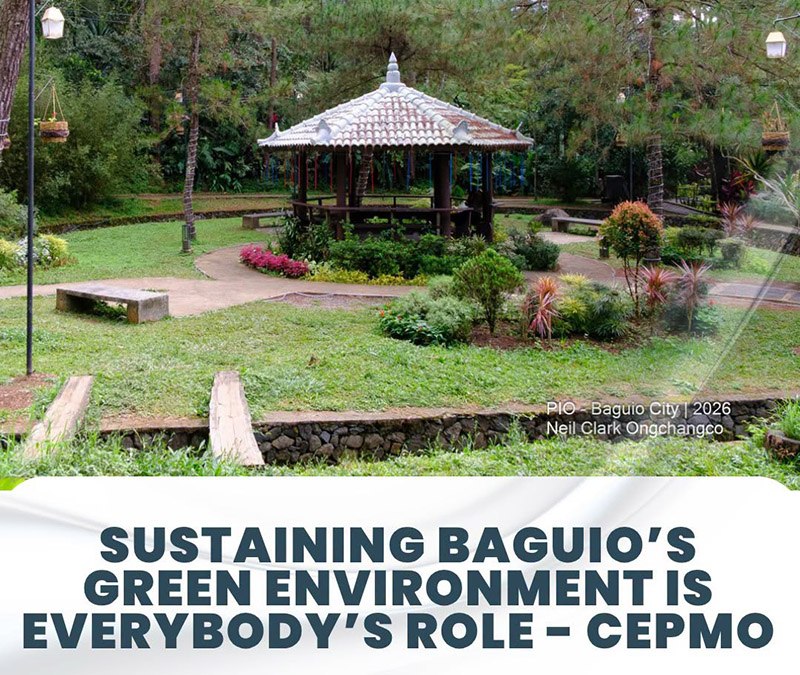
BAGUIO CITY, Philippines — Planting trees is only the beginning because for the City Environment and Parks Management Office (CEPMO), ensuring that they survive and thrive is just as important as putting seedlings into the ground. Through its Urban Forestry Management Division, CEPMO continues to strengthen the city government’s greening program by producing thousands of seedlings annually while encouraging residents and partner organizations to take an active role in caring for the Summer Capital’s trees. Floro C. Bastian, Forester III of the Urban Forestry Management Division, said the office operates nurseries in Busol and the Botanical Garden, producing around 20,000 seedlings every year to support the city’s greening initiatives. Of these, about half are Benguet pine seedlings, reflecting the city’s commitment to preserving its identity as the City of Pines, while the remaining seedlings consist of fruit-bearing and ornamental tree species. Each year, the city aims to plant around 10,000 seedlings, with schools, private companies, and various organizations regularly partnering with CEPMO through tree-planting activities. However, Bastian emphasized that successful greening goes beyond planting trees. “Very important ang tree care because we are called the City of Pines, kailangan i-maintain. Kailangan ma-incorporate ang tree planting sa lahat ng programs natin,” he stressed. Bastian said tree care involves returning to planting sites to conduct weeding, brushing, and regular maintenance, giving seedlings a better chance to grow. This is especially important for Benguet pine trees, which are sensitive and require clean surroundings to survive. The office also faces the challenge of limited planting sites due to years of continuous tree planting. To address this, CEPMO distributes free seedlings to residents, encouraging them to plant trees within their own properties. “Kahit isang pine tree sa bahay, pwedeng-pwede na,” he said. He added that the office has also been promoting pine bonsai cultivation to address the misconception that pine trees are unsafe to plant near homes. Training on pine bonsai cultivation has likewise been conducted to encourage more residents to grow the city’s iconic tree species even in limited spaces. Bastian also highlighted the Saleng Festival, celebrated from June to September, which coincides with the city’s designated tree-planting months under a local ordinance. During this period, CEPMO intensified its greening initiatives by conducting tree-planting activities with government agencies, schools, private organizations, and community volunteers. The city’s greening efforts have also expanded to private properties, including Mirador Eco Park, Baguio Country Club, Maryknoll Ecological Sanctuary, and Maryhurst Seminary toward Lucnab, through the support and leadership of Mayor Benjamin Magalong. To ensure the success of every planting activity, CEPMO conducts monitoring approximately three months after planting. Dead seedlings are replaced to improve the survival rate of newly established trees. Bastian said Benguet pine trees currently have an average survival rate of about 65%, underscoring the importance of consistent maintenance after planting. As Baguio continues to celebrate the Saleng Festival and pursue its greening initiatives, the city hopes more residents will recognize that preserving its identity as the City of Pines begins not only with planting trees, but with caring for them long after they have taken root. – Ja-el Ahochay, PIO Baguio Intern/gabykeith          

269 ​​police officers promoted in Cordillera cops

CAR

CAMP DANGWA, Benguet, Philippines  – A total of 269 police officers of the Police Regional Office-Cordillera were granted new ranks during a nationwide simultaneous oath-taking, donning, and pinning of ranks held at Camp Bado Dangwa, La Trinidad, Benguet, on July 29. BGen. Ericson Dilag, regional director, led the donning of ranks ceremony for the 269 police officers who were promoted from the rank of Police Corporal to Police Major. The group of those promoted consisted of 78 Police Commissioned Officers (PCOs) and 191 Police Non-Commissioned Officers (PNCOs). Among the PCOs, 37 were promoted to Police Major, five to Police Captain, and 36 to Police Lieutenant, while among the PNCOs, one was promoted to Police Executive Master Sergeant, 28 to Police Chief Master Sergeant, two to Police Senior Master Sergeant, 26 to Police Master Sergeant, 61 to Police Staff Sergeant, and 73 to Police Corporal. All those promoted passed a rigorous screening process conducted by the PRO CAR Promotion Board, attesting to their solid professionalism and dedication to duty under the CY 2026 Regular Promotion Program. In his message, Dilag reminded the newly promoted officers that higher ranks bring greater responsibilities. He emphasized the importance of effective leadership, mentorship, and leading by example in every aspect of their service.  

PGLU Nueva Vizcaya honors top students, world taekwando medalists

Sports

By Rachel Magday   NUEVA VIZCAYA, Philippines — Three of Nueva Vizcaya’s brightest academic achievers and three young taekwondo champions who brought home medals from an international competition in South Korea were honored by the provincial government for bringing pride and distinction to the province. The recognition took place during the provincial government’s weekly flag-raising program, paying tribute to outstanding Novo Vizcayanos who excelled in higher education and on the international sports stage. Leading the academic honorees were two graduates who earned the distinction of Summa Cum Laude from Saint Louis University in Baguio City. Ramon Emmiel Palcon Jasmin of Bonfal Proper, Bayombong, graduated with a Bachelor of Arts in Computer Science. A Department of Science and Technology–Science Education Institute (DOST-SEI) scholar, Jasmin now works at Thinking Machines DataScience Inc. in Bonifacio Global City, Taguig. He studied at Aldersgate College, Inc. from preparatory school through junior high school before completing senior high school at Saint Mary’s University. He is the son of retired Police Captain Vic Ramon D. Jasmin and Engineer Josephine P. Jasmin. Also receiving top honors was Kyle Arvin Cepe Pataueg of Barangay Masoc, Bayombong, who graduated Summa Cum Laude with a Bachelor of Arts in Political Science. A consistent dean’s lister from 2022 to 2026, Pataueg ranked among the top graduates of his program and earned certification as a paralegal. He finished elementary school at Saint Mary’s University Elementary Department and completed his junior and senior high school education at Nueva Vizcaya General Comprehensive High School.He is the son of Karrenel C. Pataueg and Reonel Joseph H. Pataueg. The provincial government likewise recognized Alldre Stephanie Rivera Magaway of Roxas, Solano, who graduated Magna Cum Laude with a Bachelor of Science in Civil Engineering from Saint Louis University. Magaway is a recipient of the DOST NationalYouth Excellence Award, an International Mathematics Olympiad bronze medalist, and a qualifier in several national academic competitions. She completed her elementary education at Bayombong Central Schooland graduated valedictorian from Nueva Vizcaya General Comprehensive High School. She is the daughter of Gloria Ritual and Samson Magaway. The provincial government also honored three Novo Vizcayano athletes who captured gold and silver medals during the 2026 Muju 19th World Taekwondo Culture Expoheld from July 16 to 21 at Taekwondowonin Muju-gun, Jeonbuk State, South Korea. The awardees were Yancy Jay D. Dinamling, 13, of Barangay Didipio, Kasibu, who won silver medals in Individual Poomsae and Kyorugi; Kazy Louise D. Tobiagon, 16, alsoof Barangay Didipio, who captured a gold medal in Kyorugi and a silver medal inIndividual Poomsae; and Alice D. Fernandez, 28, of Bayombong, who won gold medals in both Individual Poomsae and Kyorugi. “The achievements of these young Novo Vizcayanos bring honor not only to themselves and their families but to the entire provinceof Nueva Vizcaya. They have raised our flag high and shown that with hard work, discipline and determination, our youth can excel anywhere—here at home or on the world stage,” Gambito said. The governor urged other young Novo Vizcayanos to emulate the awardees’ commitment to excellence and assured continued provincial government support for programs that nurture students and athletes

Scroll to Top