

Street Journal Multimedia Services

Author name: Street Journal

Batangas City opens Human Milk Depot to support infants, breastfeeding mothers

Region 4

By Bhaby De Castro   BATANGAS CITY, Philippines — Breastfeeding mothers in Batangas City now have a new facility where they can donate excess breast milk, following the establishment of a Human Milk Depot at SM City Batangas through a partnership among the Department of Health (DOH), SM Cares, Batangas Medical Center (BATMC), and the city government. The partnership was formalized through a Memorandum of Agreement (MOA) signed on August 12 at the mall’s Atrium Center, with the Human Milk Bank Association of the Philippines also supporting the initiative. The Human Milk Depot aims to provide safe donor milk to infants who need it most, including premature babies and those whose mothers are unable to breastfeed or produce enough milk. Under the MOA, lactating mothers with excess breast milk who wish to donate will undergo screening by the City Health Office (CHO). The donated milk will then be collected, processed, and pasteurized by BATMC before being brought to the Human Milk Depot at SM City Batangas. The donor milk will be safely stored at the depot and provided to infants who need it most, including premature babies and those who cannot be breastfed by their own mothers. According to Atty. Pearl Turley, SM Program Director for Women and Breastfeeding Mothers, the program started last year and aims to establish more Human Milk Depots in SM malls across the country. “SM Supermalls believes that social responsibility is part of its advocacy, where all mothers should be supported in caring for their children, as well as in helping babies grow healthy and strong. That is why all our malls have breastfeeding stations to provide mothers with an appropriate place for their babies while they are strolling or shopping,” said Turley. In her message, DOH Calabarzon Assistant Regional Director Dr. Rosa Marie Rempillo said the agency has long been promoting breastfeeding because it is an effective way to help infants grow healthy and become less prone to illness. “Through this collaboration among SM, the Batangas City LGU, Batangas Medical Center, and our agency, safe milk for infants will be ensured. This will also help mothers who are unable to produce enough milk for their babies. With the help of this Milk Depot, many infants can receive safe milk,” said Rempillo. Mayor Marvey Marino said many children need access to safe milk and emphasized that the initiative is for the welfare of infants, which is why the city government fully supports the program. Meanwhile, more than 100 lactating mothers in the city participated in a milk-letting drive as part of the Nationwide Breastfeeding Activity (Hakab’ta), with the theme “Strengthening Breastfeeding Support through Human Milk Donation and Partnership.” The Human Milk Depot is the seventh established by SM Supermalls and the first of its kind in Southern Luzon. August is observed as National Breastfeeding Awareness Month. Mothers are encouraged to exclusively breastfeed their babies during the first six months of life to help promote their health and well-being. (MPDC-PIA Batangas)

10 Days of Downpour: Baguio Soaked by a Month’s Worth of Rain

Baguio City

BAGUIO CITY, Philippines – The Philippine Atmospheric, Geophysical and Astronomical Services Administration (PAGASA) said the city recorded more than 1,400 millimeters of rainfall from August 1 to 10, an amount equivalent to about a month’s worth of rain. PAGASA Baguio Chief Engr. Larry Esperanza said, the city received a month’s worth of rain after experiencing prolonged torrential rains triggered by tropical storm “Maymay” and enhanced southwest monsoon or “habagat” caused by other weather disturbances. Esperanza said the city’s normal amount of rainfall for the entire month of August is 920.3 millimeters, a threshold established from 1981-2021. This year’s reading is way beyond the normal range and considering that it was just for a ten-day period, he said. PAGASA Administrator Dr. Nathaniel Servando reportedly said that among the areas affected by the weather disturbances, it was Baguio City that received the highest amount of rainfall at 1,413 mm for just nine days from Aug. 1-9. Rainfall is said to be the amount of rain that falls over an area during a certain period. It is measured in millimeters (mm) with 1 mm of rain equal to 1 liter of water per square meter. The amount of rain is measured using weather instruments. The city experienced rains starting Aug. 1 due to tropical depression “Luis.” The rain became severe and relentless in the succeeding days triggered by tropical cyclone “Maymay.” The prolonged rainfall has resulted in flooding, landslides, road closures and other weather-related incidents in the including the fatal landslide incident at Guisad Surong. (By Rose Frejane A.Cruz)

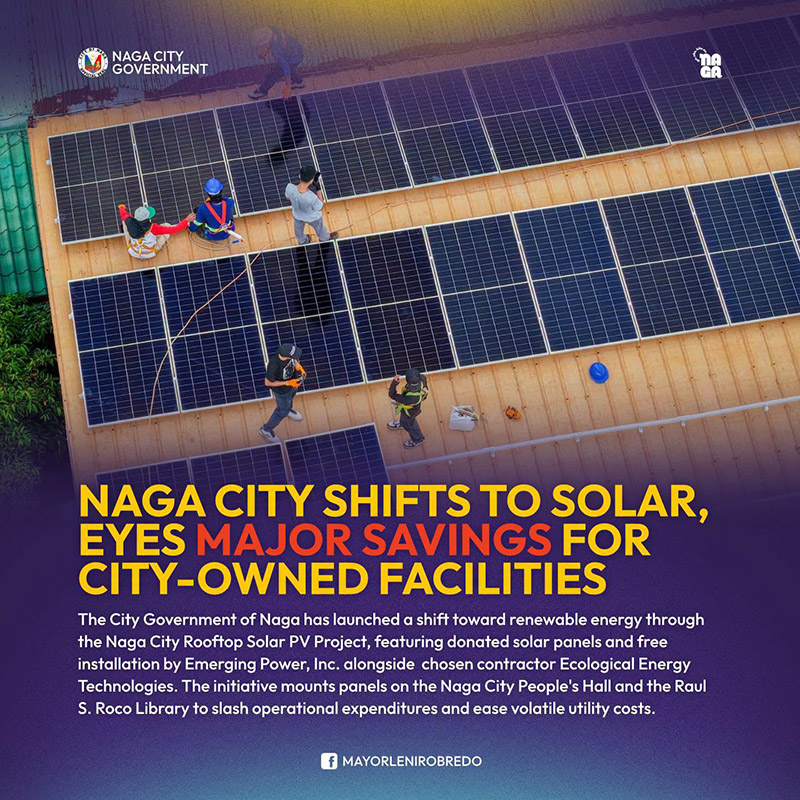
Naga City shifts to solar, eyes major savings for city-owned facilities

Region 5

By Maida Boragay   NAGA CITY, Philippines — Faced with the rising costs of fuel and the constant pressure of volatile electricity prices, the City Government of Naga is embarking on a significant shift toward renewable energy, marking a new chapter in its drive for sustainable governance. As part of a private-public partnership initiative providing donations and free installation services for the Naga City Rooftop Solar PV Project, solar panels are now being mounted atop the Naga City People’s Hall and soon, the Raul S. Roco Library. Made possible through a donation by Nagueño Joseph Nocos of Emerging Power, Inc., alongside chosen contractor Ecological Energy Technologies, the initiative supplies the city with premium solar infrastructure at no cost to the local government. Mayor Leni Robredo described this move as a “general direction” toward shifting to renewable energy, which aims to alleviate the financial burden of soaring electricity and fuel costs. By utilizing solar power, the city expects to see a significant drop in operational expenditures, specifically for its government offices. “Pag natapos na po iyan, dakulaon na maray na savings an satuyang makakamtan,” said Mayor Robredo, highlighting the pragmatic financial benefits of the transition to renewable energy. The initiative is supported by a series of resolutions and ordinances of the Sangguniang Panlungsod, reflecting a unified effort by the executive and legislative branches to institutionalize energy efficiency. Naga’s strategy goes beyond existing structures: future public projects are now required to integrate space for solar panels into their design, ensuring that new facilities are energy-ready from the start. This mandate covers upcoming developments including the Naga City Hospital Dormitory, Center for Safety and Resiliency (CESAR), the Metro Naga Sports Complex, the Jesse M. Robredo Coliseum, and the ongoing improvements at the Naga City Civic Center. By harnessing the sun to outpace rising fuel and electricity costs, Naga City is laying the groundwork for lasting fiscal and environmental resilience.    

SSS offers existing Emergency Loan Program to members affected by Tropical Storm Maymay, Habagat

NCR

QUEZON CITY, Philippines – The Social Security System (SSS) announced that members affected by Tropical Storm Maymay and the enhanced Southwest Monsoon (Habagat) may avail themselves of the existing Emergency Loan Program (ELP) to help address their financial needs arising from the calamity. SSS President and Chief Executive Officer Robert Joseph M. de Claro said the ELP remains available to qualified members nationwide and serves as a readily accessible source of financial assistance for those experiencing financial hardship due to calamities and other emergency situations. “The ELP is part of SSS’ continuing commitment to provide immediate financial relief to members affected by unforeseen events. Through the ELP, qualified members affected by Tropical Storm Maymay and the enhanced Southwest Monsoon may access much-needed financial assistance under more flexible eligibility requirements,” de Claro said. “Under the ELP, which has been in effect since 01 May 2026, the required number of monthly contributions has been reduced from 36 to 18, provided that the member has at least six posted contributions in the last 12 months,” de Claro said. He added that self-employed, voluntary, non-working spouse, and land-based Overseas Filipino Worker (OFW) members must have at least six-monthly contributions under their current membership type before the month of loan application. Other eligibility requirements are as follows: Under 65 years old at the time of loan application; Have a valid Philippine home address on SSS records; Have an updated contact information in the SSS database; Have no past-due emergency, calamity, salary, Educational Assistance Loan, or other short-term or long-term member loans; Have no outstanding restructured loan; Have not been disqualified due to fraud committed against the SSS; Have not been granted any final benefit like retirement or permanent total disability benefits; and Have an active disbursement account enrolled through the Disbursement Account Enrollment Module (DAEM) in the My.SSS Portal. Qualified members may borrow up to ₱20,000 at an interest rate as low as 7% per annum. The loan is payable over 30 months, inclusive of a six-month moratorium period. “Members are not required to make monthly amortization payments during the first six months from the date of loan approval. No penalties will be imposed during this period. Regular monthly amortization payments will begin in the seventh month,” de Claro explained. De Claro added that members affected by the tropical cyclone may also apply for an SSS salary loan at the same time, subject to the eligibility requirements.

SBMA Port Operations revenue grows 8% in H1 2026 amid global economic headwinds

Region 3

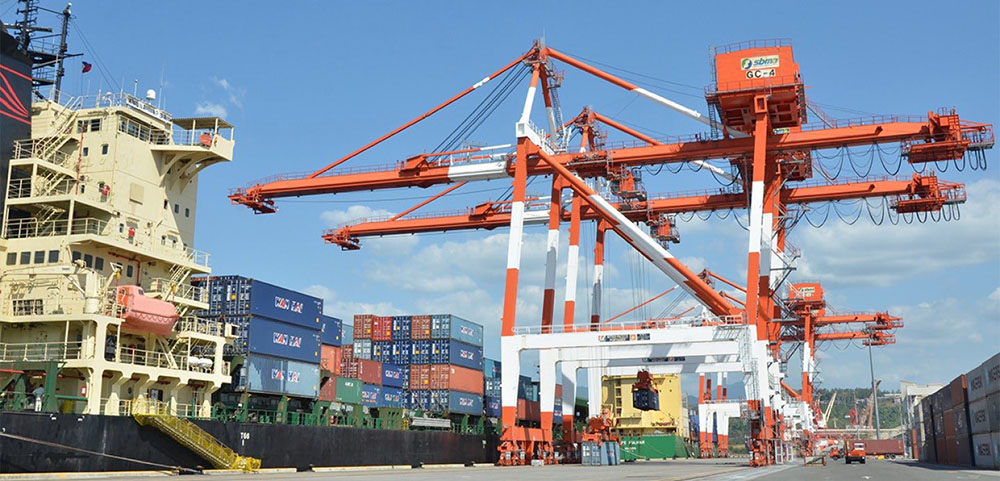
Subic Bay Freeport, Philippines – The Subic Bay Metropolitan Authority (SBMA) today disclosed a robust 8% increase in consolidated gross revenue from its Port Operations Group, reaching Php 874 million in the first half of 2026, compared to Php 806 million in the same period last year. This growth was propelled by stronger earnings in the Seaport and Trade Facilitation and Compliance Department (TFCD), despite ongoing global economic challenges. SBMA Deputy Administrator III for Operations Group, Ronnie Yambao, attributed the positive performance to strategic initiatives that balanced growth with stakeholder support. “We successfully navigated a complex global environment while implementing discount measures totaling approximately Php 81 million. These were aligned with Executive Order No. 110 of President Ferdinand R. Marcos, Jr., aimed at mitigating disruptions caused by the fuel supply crisis linked to the Middle East conflict,” Yambao explained. Breaking down the revenue contributions for H1 2026: The Seaport Department continued to be the primary revenue driver, contributing 78% of the consolidated gross income with Php 683 million—marking a 10% increase year-on-year. This growth was largely fueled by an 18% rise in non-containerized cargo, particularly bulk and break-bulk shipments, which surged 24%. Subic Bay International Airport accounted for 14% of the revenue, registering a slight 3% decrease due to lower leasing activities and reduced military logistics operations. Meanwhile, the Trade Facilitation and Compliance Department recorded an impressive 17% revenue increase, boosted by the newly implemented Registration Certificate (RC) Policy which introduced additional fees on trucks, heavy equipment, and regulated goods. The notable increase in non-containerized cargo was further supported by an 88% surge in rice imports. This import growth was driven by proactive government measures to secure rice stocks ahead of the anticipated El Niño weather phenomenon. The Department of Agriculture (DA) emphasized the critical importance of maintaining sufficient rice inventories in response to potential climate-related production impacts. SBMA Chairman and Administrator Eduardo Jose Aliño highlighted the Agency’s resilience and adaptability amid a challenging environment. “Our first-half results underscore the strength and flexibility of the Port Operations Group. We remain committed to not only sustaining growth but also delivering impactful measures to mitigate external disruptions, in line with the President’s directives,” Aliño said. The SBMA continues to strengthen its role as a key logistics and supply chain hub, supporting the nation’s economic stability and growth despite global uncertainties. (30)        

AboitizPower earns spot in top 50 brand and employer rankings

Vis-Min

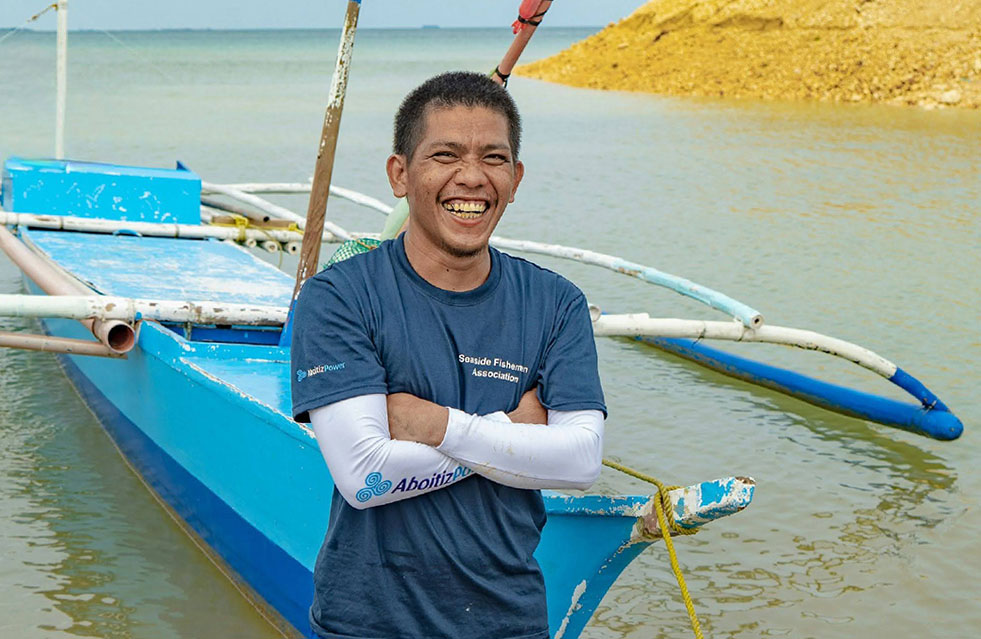
Signifying its brand’s importance as a business asset, Aboitiz Power Corporation (AboitizPower) entered the national Top 50 in the 2026 Philippine report of Brand Finance, an independent brand valuation consultancy. In its debut in the Top 50, the AboitizPower brand ranked 26th in brand value and 42nd in brand strength, joining fellow Aboitiz Group business unit UnionBank in the 2026 list. Brand value represents the transferable asset value of a brand, while brand strength evaluates a brand’s ability to drive commercial impact versus competitors. “Beyond its name and logo, the AboitizPower brand is a living expression of the trust, values, and reputation that we’ve built and stewarded over time,” said AboitizPower Vice President for Corporate Affairs Suiee Suarez. “This recognition by Brand Finance highlights that our brand’s strength and economic value resonate with both the people we serve and industry experts.” AboitizPower was also featured in Brand Finance’s “Brands to Watch” section, reflecting its growing relevance in the Philippine energy sector, which is touted to be the fastest growing sector in 2026 in terms of brand value. “The Philippine energy sector is one of the country’s fastest-growing industries from a brand value perspective, reflecting its expanding role in supporting economic growth and energy transition ambitions,” said Alex Haigh, Brand Finance Managing Director Asia Pacific. “AboitizPower’s inclusion among the nation’s top 50 brands demonstrates how companies can create value not only through infrastructure and investment, but also through building a trusted and differentiated brand that resonates with customers, investors, and other stakeholders,” he added. The Brand Finance Philippines 50 2026 report ranks the country’s strongest and most valuable brands based on a combination of brand strength, stakeholder perceptions, and financial performance. Meanwhile, AboitizPower has also been named one of the “Top 50 Employers in the Philippines” for the second consecutive year by online job-hunting platform Kalibrr. “As the Philippine energy sector evolves, AboitizPower has positioned itself at the center of the country’s transition toward more sustainable and technology-driven solutions,” the Kalibrr website said. “Beyond powering communities, the company has become known for building careers where innovation, leadership, and long-term impact intersect — attracting professionals who want to contribute to work that extends far beyond the office,” it added. The recognition is based on a data-driven evaluation of employer brand, hiring trends, industry impact, and insights from job seekers, recruiters, and third-party sources.

KALAHI-CIDSS access road eases farm-to-market transport in Lagayan, Abra 

CAR

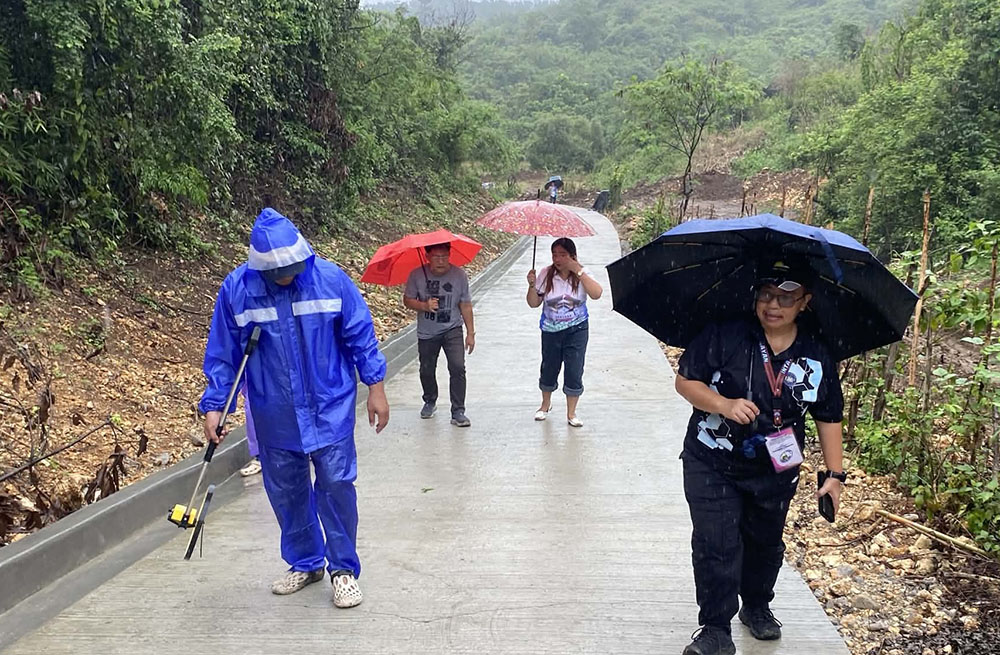
LAGAYAN, Abra, Philippines — A 395-meter access road connecting Barangay Ba-i and Parparingon was completed on 4 August 2026 as part of the Department of Social Welfare and Development Field Office Cordillera Administrative Region’s (DSWD FO CAR) Kapit-Bisig Laban sa Kahirapan-Comprehensive and Integrated Delivery of Social Services (KALAHI-CIDSS) program’s Kapangyarihan at Kaunlaran sa Barangay-Community-Driven Development (KKB-CDD) modality. For years, bringing produce to the market was a daily struggle for the farmer-residents of Brgy. Ba-i. As a landlocked, agricultural community, farming—rice, corn, root crops, vegetables, and livestock—drives the community. Poor road conditions also left residents with limited access to healthcare, schools, and other essential services. With the construction of the almost 2.4M worth subproject in just over a month, 227 households can now transport their farm products faster and reach essential services more safely even during rainy season. Construction of the road broke ground on 25 June 2026 and covered a critical 395-linear-meter stretch of the barangay’s farm-to-market road leading to its main agricultural areas. “As a community volunteer, I am grateful for this project because it is a big help to our livelihood and daily activities. We will continue to participate in maintaining and protecting the road so that its benefits can be enjoyed by the community for many years to come,” said Juneefer S. Dacuyan,  Project Preparation Team member. The improved road is expected to speed up emergency response and make it easier for health workers, teachers, and students to reach the barangay’s interior sitios, particularly during the rainy season. By Yvonne Gracious T. Elegado

What Europe’s heatwave teaches the Philippines about energy security

Environment, Opinions

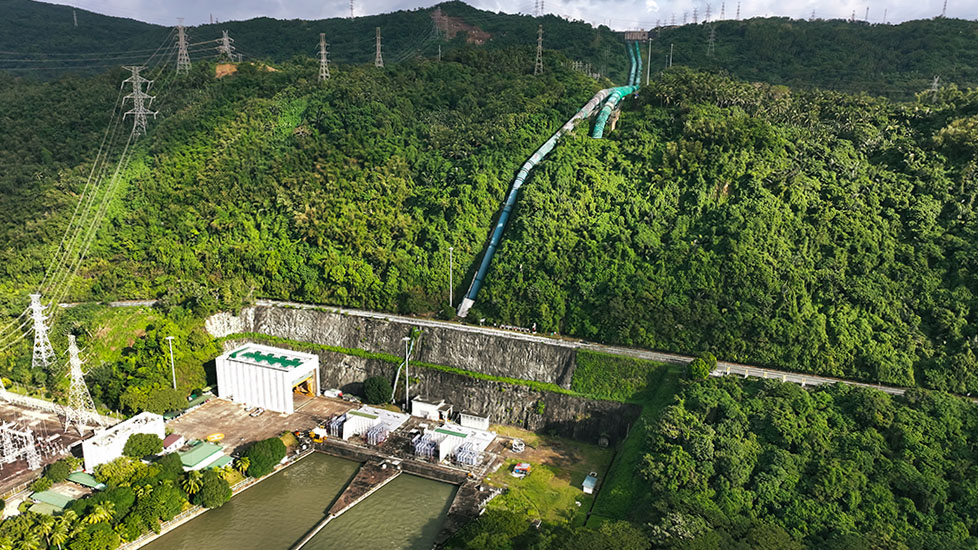
By Suiee Suarez, AboitizPower VP for Corporate Affairs   This summer, Europe found itself in a strange bind. Record heat baked France, Germany, Spain, Italy, and the UK. Air-conditioners ran nonstop, and solar panels, drenched in strong summer sun, had their best season yet. Yet wholesale electricity prices reached their highest level, public advisories and warnings were issued, and France — Europe’s nuclear powerhouse — saw reduced nuclear output and a drop in power exports. How does a heatwave, with all that free sunshine, strain the grid instead of easing it? The answer is that no single energy source, however reliable it looks on paper, is immune to a system shock. Resilience comes from the mix, not the star player. Start with nuclear, long regarded — rightly — as stable, dispatchable baseload power. Several French reactors had to cut output because the river water used to cool them grew too warm. Rules require utilities to scale back nuclear power generation when river temperatures hit a threshold in order to protect the surrounding environment. As of writing, curtailments touched over a tenth of French nuclear capacity, with several gigawatts offline exactly when the country needed every megawatt. Swiss reactors also faced similar constraints and have undergone temporary reductions. The takeaway isn’t that nuclear is unreliable; it’s that even the most trusted baseload technology has physical limits climate stress can expose. Then there’s wind, and a German word worth learning: Hitzeflaute, literally “heat lull”. It describes a phenomenon that isn’t coincidental — the same high-pressure heat domes that trap hot air also suppress wind speeds. The UK, with one of the world’s largest wind fleets, watched wind generation decrease during the same window in June when their demand was increasing. Scale doesn’t buy resilience if the pattern stressing demand also starves supply. Solar was the qualified good news. Higher summer irradiation gave midday output a real boost. But solar’s blessing has an expiration time: it falls to zero exactly when people get home, turn on appliances, and evening demand climbs. With nuclear constrained and wind quiet, gas and coal had to fill that gap. The market told the story plainly. Wholesale prices across the region climbed, an indication of just how thin its reserve margin was. But here is the detail Philippine readers should sit with: Europe still had an escape hatch. Even with its reduced nuclear capacity, France remained a net electricity exporter throughout the heatwave, still sending gigawatts of power to neighbors owing to nuclear, as well as solar power generation during daylight hours. Vice versa, France occasionally receives power from Spain, Switzerland, Belgium, the UK, and Germany. That is the quiet advantage of a continent wired together: when one country’s sun, wind, or reactors fall short, electrons can flow in from next door within minutes. The Philippines has no such escape hatch. As an archipelago with no submarine interconnection to another country’s grid, our Luzon, Visayas, and Mindanao grids can lean on each other only up to a point, and none can call on Vietnam, Malaysia, or Taiwan for emergency gigawatts. Whatever shortfall we face during heat waves, dry spells, or plant outages, we absorb entirely within our own fences. That difference should sharpen, not dull, the lesson from Europe. When discussing the case for a flexible and hybrid energy system, the underlying message is that the energy transition is not a relay race with one baton passed from fossil fuels to renewables. It’s a relay with several runners who all have to be ready to run at once. In Europe, if one runner stumbles, a runner from the next country over can step in. In the Philippines, we only have our own team on the track. Our own heat and El Niño-driven dry spells already stress hydro output and thermal efficiency. Our growing renewable fleet, like Europe’s, will have days when the sun is sufficient but the wind is not, or vice versa — and unlike Europe, we cannot dial up an import when that happens. That is precisely why variable renewable sources need a real boost in domestic capacity, reserves, and storage to back them up. Pumped hydro and battery systems like the Kalayaan Pump Storage Units aren’t nice-to-haves; for an unconnected archipelago, they are the buffer that must substitute for an electricity exporting neighbor we don’t have. A balanced portfolio — renewables, natural gas, existing thermal capacity, and storage — isn’t a hedge against uncertainty over which technology wins. It’s an acknowledgment that failure modes are converging, and no single source can carry the grid alone. A country that cannot borrow power from a neighbor must build that redundancy at home.          

‘No-build zone’ to be declared at landslide ground zero

Baguio City

BAGUIO CITY, Philippines – Mayor Benjamin Magalong announced the possible declaration of a ‘no-build zone’ at ground zero of Barangay Guisad Surong, after severe landslides buried three houses, killing ten people, during the height of the southwest monsoon in Baguio City. According to Magalong, affected residents in this area will not be allowed to return to live or build houses because there are signs of soil instability observed by city engineers. “I had our engineers go to the landslide area and they saw that the soil is too stressed, so it is dangerous to live in. And for the displaced residents, the DSWD promised to first cover the rental support for their relocation and we will also arrange for them to find relocation sites,” Magalong said. It was learned that more than 20 families affected by the Guisad Surong landslide are temporarily staying at the Baguio International Academy. He said they have first banned residents from returning to the area and the city government will temporarily find rental houses for the affected families while working on a permanent relocation site. According to Magalong, DSWD Gatchalian promised that the agency will assume the ₱10,000 monthly rental fee for three to six months, while long-term socialized housing is being arranged. He said he has also coordinated with the concerned agencies, especially the Mines and Geosciences Bureau (MGB) and the Department of Public Works and Highways (DPWH), to revisit the area for a clean-up drive and assess the area and identify engineering solutions to help prevent similar incidents. Magalong said the Baguio city government continues to lead the local response, coordinating relief operations and working with national government agencies to address the immediate needs of affected families. Magalong previously revealed that there was also a landslide in the area in the 1970s, just next to the area where the deadly landslide struck on Sunday. (By Rose Frejane A. Cruz)  

Scroll to Top