

Street Journal Multimedia Services

Author name: Street Journal

Magalong suspends classes,number coding on Aug. 4

Baguio City

BAGUIO CITY,Philippines — Mayor Benjamin Magalong has suspended classes in all public and private schools tomorrow, Aug. 4, due to the continued rains caused by Typhoon Luis in Baguio City. Due to the heavy rain accompanied by strong winds, classes from pre-school to grade 12 were suspended this afternoon, Aug. 3. Due to the threat of continued heavy rain, Magalong issued his Executive Order No. 105-2026, to suspend classes tomorrow, including the number coding scheme, to allow vehicles to be used in emergencies. According to Magalong, the continued rain and strong winds threaten landslides, falling trees, slippery road conditions, reduced visibility and other weather-related hazards that endanger the safety of the public. In the weather forecast bulletin, 100-200 mm of rain is expected tomorrow in the provinces of Benguet and La Union. Magalong encouraged schools to implement the following alternative delivery methods to ensure continuity of learning from Modular Distance Learning, Online Distance Learning and Blended Learning. Magalong also called on the public to be careful and leave landslides prone areas and immediately call 9/11 in times of emergency. By Rose Frejane A.Cruz      

PBBM inspects upgraded Sual Fish Port, eyes stronger fisheries supply chain in Northern Luzon

Region 1

By Elsha Marie S. Arguel   SUAL, Pangasinan, Philippines — President Ferdinand ‘Bongbong’ Marcos Jr. inspected the upgraded Philippine Fisheries Development Authority (PFDA) Sual Fish Port here on Thursday, July 30, as the government steps up efforts to modernize fisheries infrastructure, support fishing communities, and strengthen the movement of fish from fishing grounds to markets in Northern Luzon. The upgraded facility is expected to improve services for fishing vessels and fisheries stakeholders while helping create more efficient conditions for fishing, post-harvest handling, and other activities across the fisheries value chain. Located along the Lingayen Gulf, the Sual Fish Port is the only regional fish port in Northern Luzon and is designed to accommodate large fishing vessels. It serves fishing communities in Pangasinan, the western portion of the province, and parts of the Ilocos coastline, giving the facility a strategic role in the region’s fisheries logistics and food supply. The modernization project included improvements to the market halls, cold storage facilities, multi-purpose pier, sorting areas, access roads, and other support infrastructure. The rehabilitation was undertaken to address operational constraints associated with aging and damaged facilities. The need to improve port operations comes amid a significant decline in fish unloaded at the facility, from 485.66 metric tons in 2024 to 74.13 metric tons in 2025. The figures highlight the importance of maintaining efficient fisheries infrastructure to support fishing operations and post-harvest activities. With the upgraded facilities, fishing vessels are expected to have better access to docking, repair, resupply, unloading, and other essential services. Improved port operations can also benefit fish traders, processors, transporters, workers, and other businesses that depend on the fisheries sector. During his visit, Marcos met local fishermen and Bureau of Fisheries and Aquatic Resources (BFAR) personnel, including the 28 crew members of BRP Cabanigan and BRP Robert Servañez. For his part, Agriculture Secretary Francisco P. Tiu-Laurel Jr. said the two vessels were at the port for repairs and a resupply trip before returning to their fishing grounds. “For now, these two vessels are here to undergo repairs and resupply before returning to the fishing grounds,” Laurel said. He added that the vessels were provided with fuel, water, and food, while their crew members were given time to rest following recent bad weather. The President also met the captains and crew of BRP Datu Dumangsil, BRP Datu Paduhinog, and BRP Joselito, which were docked at the facility. He later boarded the BRP Datu Paduhinog for a brief inspection and discussed fisheries and port operations with local officials. The rehabilitation of the Sual Fish Port is part of government efforts to improve fisheries infrastructure and strengthen the capability of fishing communities to participate in a more efficient and resilient food supply chain. For Northern Luzon, a modernized regional fish port can provide a critical link between fishing grounds, landing facilities, markets, and consumers, while supporting livelihood opportunities for communities whose incomes depend on fisheries. As the government continues to invest in fisheries infrastructure, the improved Sual Fish Port is expected to play a greater role in supporting fishing activities and the movement of fish products across the region, contributing to the goals of supporting fisherfolk’s livelihood, modernizing fisheries, and ensuring food security. (AMB/EMSA/PIA Pangasinan)          

Baguio Taekwondo Ace Shines Abroad

Sports

BAGUIO CITY, Philippines — The City Government of Baguio commends Elcanor Mang-Usan Jr. for his exceptional performance at the 23rd Annual Sacramento Invitational Taekwondo Championship in California, USA, where he won three gold medals in Kombat Taekwondo, Kyorugi, and Poomsae events. Resolution No. 525, Series of 2026 recognizes his outstanding skill, discipline, dedication, and competitive excellence, which enabled him to represent the Philippines with distinction on the international stage. The commendation is presented by Mayor Benjamin Magalong, Vice Mayor Faustino Olowan, members of the City Council, and other city officials during the Flag Raising and Awarding Ceremony on July 27, 2026, at Baguio City Hall.      

DSWD KALAHI-CIDSS conducts Resilience Training for Barangay,Municipal Resilience Teams in Cordillera

CAR

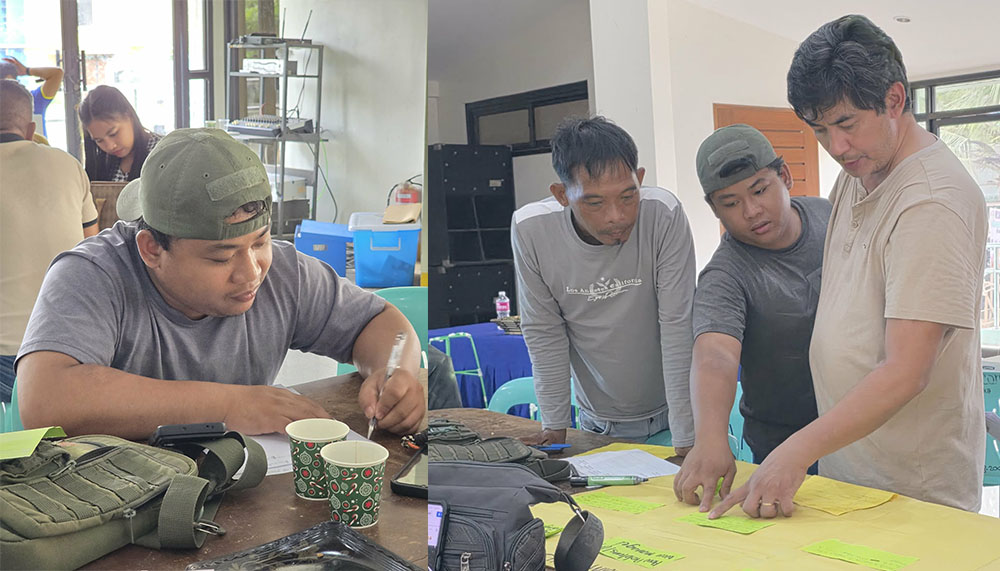
By Yvonne Gracious T. Elegado,   CORDILLERA, Philippines — The Department of Social Welfare and Development Field Office Cordillera Administrative Region (DSWD FO CAR) Kapit-Bisig Laban sa Kahirapan – Comprehensive and Integrated Delivery of Social Services (KALAHI-CIDSS) conducted the Municipal Resilience Planning Workshop Training on Disaster Risk Reduction and Climate Change Adaptation (DRR-CCA) for Barangay Resilience Team (BResT) and Municipal Resilience Team (MResT) members under the Panahon ng Pagkilos: Philippine Community Resilience Project (PCRP) modality, from 2 to 31 July 2026, across 135 barangays in the Cordillera. The training was conducted in partnership with the Municipal Disaster Risk Reduction and Management Office (MDRRMO) and the Bureau of Fire Protection (BFP). It covered the municipalities of Luba, Daguioman, and Malibcong in Abra; Conner, Kabugao, and Calanasan in Apayao; Bokod and Buguias in Benguet; and Sagada and Sadanga in Mountain Province. The BResT is a group of community volunteers who lead resilience-building activities at the barangay level, while the MResT serves as the coordinating body that guides and provides technical assistance to community resilience planning at the municipal level. The training equipped participants with an understanding of the risks their communities face and how to reduce them. It covered the basics of disaster risk, such as the hazards present in their area and how prepared or vulnerable their community is. It also explained how climate change is making these hazards worse, and how the choices communities make, like where they build their homes, affect how much damage a disaster can cause. Participants also learned simple ways to prepare for, respond to, and recover from disasters, as part of building a more resilient and climate-ready community. The training also included basic first aid, equipping participants with practical skills they can use during emergencies. With the DRR-CCA training complete, covered barangays are now set to move into the Participatory Risk and Vulnerability Assessment (PRVA), where the BResT and MResT will work with residents to identify and map out the specific risks facing their communities, bringing them a step closer to shaping their Municipal Resilience Plan. By Yvonne Gracious T. Elegado, Project Development Officer III

Progressive Rehabilitation in Action

Environment

  Environmental management is deeply rooted in the values of OceanaGold (Philippines), Inc. and central to how the Didipio Mine operates. As of December 2025, OGP has successfully revegetated 55 hectares, or 16 percent, of the 345 hectares that have been disturbed over the life of the mine. That figure reflects progressive rehabilitation, meaning areas are restored in phases as soon as they become available, rather than waiting for the end of mine life. This is part of a long-term, regulated closure and rehabilitation plan designed to restore the full disturbed footprint over time. The 55 hectares already revegetated demonstrate that rehabilitation is actively underway. As part of our Mining Forest Program (MFP) and the National Greening Program (NGP), 2.1 million trees have been planted and donated within the FTAA and beyond—verified by the Department  of Environment and Natural Resources (DENR) and the Mines Geosciences Bureau (MGB Region II). Through our conservation and rehabilitation efforts, we help safeguard ecologically vulnerable native species such as Mayapis, Tangile, Olayan, and Balete that are within OGP’s designated reference ecosystem. The rehabilitated areas are designed to reflect the original forest’s species composition, structure, and ecological function.

CHSO issued sanitary orders to Baguio 334 establishments

Baguio City

BAGUIO CITY, Philippines  – A total of 334 establishments in the city have been issued sanitary orders by the Environmental Health and Sanitation Division of the City Health Services Office (CHSO) from January to July this year for violation of Presidential Decree No. 856, or the Sanitation Code of the Philippines. In his report to Mayor Benjamin Magalong, Sanitation Division Head Albert Pay-an said this was the result of their regular inspections as part of the city’s thrust to ensure compliance with public health and sanitation standards. Of the total establishments cited, 166 were food establishments, 141 private water sources and 27 non-food establishments which were found to have violated sanitation regulations. For the month of July 2026 alone, 74 sanitary orders were issued consisting of 42 for food establishments, 25 for private water sources and 7 for non-food establishments. Pay-an said the most common violations among food establishments were the lack of health certificates and personal protective equipment among employees. He said 15 percent of the erring food establishments were cited due to the presence of contaminants in food.  These were ordered to immediately cease operations and conduct general cleaning and pest control and were allowed to reopen only upon the office’s reinspection and certification that it has complied with all the required corrective measures. Among the water sources which include commercial deep wells and water refilling stations, those issued sanitation orders failed the routine bacteriological water quality test.  These were ordered to stop operations, conduct the necessary maintenance, undergo retesting and submit passing laboratory results before resuming operations. For non-food establishments that include salons and barber shops, the usual ground was the lack of health certificate of workers, improper garbage disposal and failure to maintain cleanliness. Pay-an said the issuance of sanitary orders serves as a corrective measure requiring establishments and private water source operators to address identified deficiencies and comply with health and sanitation requirements within the prescribed period. He reminded business owners and operators to strictly observe sanitation standards and maintain compliance with existing health regulations to help protect public health and ensure the safety of residents and visitors. – Aileen P. Refuerzo    

Enhancing U.S.-Philippines Counterterrorism Cooperation

Vis-Min

PAGADIAN CITY, Philippines —The U.S. Embassy in the Philippines and the Zamboanga del Sur provincial government signed an agreement establishing a Php30.8-million ($500,000) law enforcement training program, demonstrating the United States’s commitment to working with the Philippines to deter terrorist threats against Americans and Filipinos. Under the agreement, the U.S. Department of State’s Antiterrorism Assistance (ATA) program will provide permanent and dedicated training facilities in Pagadian City to host recurring specialized training courses for the Philippine National Police (PNP). “This investment in Pagadian reflects our confidence in the PNP and our conviction that a safer, more capable PNP means a safer Philippines, a safer United States, and a stronger Alliance between our two nations,” said Daniel Art, the U.S. Embassy’s Acting Senior Regional Security Officer. Since 2006, the United States has facilitated ATA courses for more than 10,000 Filipino law enforcement personnel that helped improve their capabilities to investigate, respond to, and mitigate terrorist threats and incidents.  An estimated 2,000 PNP, as well as other law enforcement personnel, are expected to train at these new facilities in Pagadian every year. “This partnership will enhance the capabilities of our law enforcers in deterring and preventing acts of terrorism.  It will strengthen the security and stability of our government not only in the province of Zamboanga del Sur but most especially in Mindanao and even the whole country,” said Zamboanga del Sur Gov. Divina Grace Yu. As the United States and the Philippines also commemorate the 80th anniversary of diplomatic ties, this enhanced partnership will work to secure the two countries’ ties for years to come.  

As Philippines Nears 100% Internet Access, DICT Recognizes Globe in Advancing the Vision

Business

For decades, expanding internet access and connectivity across an archipelago of more than 7,000 islands has remained one of the Philippines’ greatest infrastructure challenges. Today, sustained investments in digital infrastructure, strong collaboration between government and the private sector, and the launch of satellite-to-mobile technology are bringing the country closer than ever to the shared vision of connecting every Filipino, with 100% internet access now within reach. Recognizing Globe’s contribution to this national effort, the Department of Information and Communications Technology (DICT) honored the company with the Digital Bayani sa Last Mile Award and a Special Recognition Award during the culmination of National ICT Month observed all throughout June of 2026, which also marked the agency’s 10th anniversary. The awards recognize Globe’s role in advancing digital transformation, expanding inclusive connectivity, and helping bridge the digital divide. Throughout National ICT Month, DICT underscored the importance of expanding digital access through stronger collaboration across government, industry, and communities, recognizing that meaningful connectivity is key to building a more inclusive digital future. “We are now close to achieving 100% internet access nationwide, a milestone we expect to reach by the end of July. This progress is the result of sustained investments, innovation, and strong collaboration between government and the private sector, as we continue working to turn the long-standing vision of President Ferdinand R. Marcos Jr. into reality,” said DICT Secretary Henry Aguda. Globe President and CEO Carl Cruz said the recognition affirms the importance of collaboration, especially for heavy investments in digital infrastructure. “Connectivity creates opportunities. It helps students learn, enables businesses to grow, empowers families, and gives communities access to essential services. We are honored by this recognition from the DICT, and we will continue investing in advanced technologies and partnerships to further improve the digital experience all over the country.” Globe continues to invest in the infrastructure needed to support the country’s growing digital economy. In 2025 alone, the company deployed more than 1,500 new 5G sites and added over 115,000 fiber-to-the-home lines, extending reliable connectivity to more communities. While terrestrial networks remain the foundation of the country’s digital infrastructure, Globe is expanding connectivity beyond traditional mobile coverage through Globe Starlink. By complementing its existing network with satellite-powered mobile connectivity, the company is helping extend access to remote locations while strengthening network resiliency, bringing the country closer to fulfilling universal connectivity. These efforts support the government’s broader Digital Backbone agenda, led by the Philippine Digital Infrastructure Project (PDIP), which aims to build, expand, and integrate high-capacity national fiber-optic networks across the country. Together, these initiatives are helping provide faster, more affordable, and more resilient internet connectivity to Filipinos from the northernmost provinces to the southernmost communities. As the DICT marks a decade of advancing the country’s digital transformation, Globe remains committed to investing in technologies and partnerships to ensure that more Filipinos, wherever they are, can stay connected and participate in the country’s digital future.

Modernizing public transportation, improving ports remain among PBBM’s agenda

Region 4

By Charmaine Odong-Pangan   LUCENA CITY, Philippines — President Ferdinand R. Marcos Jr. on Monday during his fifth State of the Nation Address (SONA) urged all stakeholders in the transport sector to work together to expedite the long-awaited modernization of the country’s public transportation system. “Hinihiling ko ang suporta ng buong industriya upang mapaandar na natin sa lalong madaling panahon ang ating minimithing Modernisasyon ng mga Pampublikong Sasakyan. Titiyakin natin na magiging makatao, magaan, at makatarungan ang pagpapatupad nito. Tulad ng aking binanggit, dapat mataas ang kalidad, matibay, at maghahatid ng pangmatagalang ginhawa sa taumbayan ang lahat ng pampublikong imprastraktura,” President Marcos stated in his address. In the CALABARZON region, the President himself recently conducted a port inspection at the newly upgraded Lucena Port Passenger Terminal Building (PTB) in Lucena City, Quezon along with the Philippine Ports Authority (PPA) as part of his commitment to modernizing the country’s maritime gateways and improving passenger comfort. During the inspection, he underscored the need for safe and modern port facilities to provide the commuting public with efficient and reliable transportation services between the CALABARZON region, MIMAROPA, and other nearby island provinces, ensuring a safer, more convenient, and more comfortable travel experience. “This was necessary to be done because the traffic going to Lucena Port is approximately 500,000 travelers every year kaya’t kailangan talagang i-upgrade na ang ating mga facilities para matulungan ang ating mga traveling public, hindi sila masyadong mahirapan,” the Chief Executive said during the inspection on July 21. The PTB, built with a P153.43-million investment from the PPA’s corporate budget, is expected to offer safer and more convenient travel for passengers and contribute to strengthening regional connectivity, boosting trade, and driving economic growth in Southern Luzon. With a capacity of 928 passengers, the upgraded terminal is equipped with modern, safer facilities, including fully air-conditioned waiting areas, automated ticketing machines, an enhanced ventilation system, and 144 solar panels that support energy-efficient and sustainable port operations. These improvements are designed to meet the growing demand for safe, reliable, and convenient passenger travel, particularly as the PPA’s records show that approximately 500,000 travelers use the Port of Lucena as their gateway each year. PPA General Manager Jay Santiago expressed hopes that more Filipinos will benefit from the improvements of the upgraded Passenger Terminal Buildings (PTBs) as the Marcos administration continues to implement its port terminal modernization agenda. “We hope na makikita ng mga kababayan natin ito, ma-e-engganyo sila na hindi na sila kumbaga magkakaroon ng agam-agam sa pagbiyahe, sa pagdaan sa ating mga pantalan dahil makikita nila kumportable na ang pagbiyahe, kumbenyente, at kung ano man ang mangyari, matuloy man o hindi matuloy ang kanilang biyahe, sigurado sila, kumpiyansa sila, relax sila, at magaan ang kanilang pagbiyahe dahil maganda ang pasilidad,” Santiago said during the port inspection. Dating back to 2024, President Marcos inaugurated the Batangas Passenger Terminal Building at the Port of Batangas in Batangas City. Since its inauguration, the facility has continued to enhance tourism connectivity, encourage investments, improve the movement of agricultural goods, and stimulate local economies, underscoring the administration’s commitment to promoting inclusive growth through the modernization of the country’s transport infrastructure. From its original capacity of 2,500 passengers, the Batangas PTB has been upgraded to accommodate up to 8,000 passengers. The facility can now serve around 12.8 million passengers annually and offers expanded facilities for vehicle traffic, providing improved services that continue to benefit the Filipino public. Amid the recent surge in fuel prices brought about by the Middle East conflict, the country has felt the impact of the crisis, particularly Filipino commuters who rely on public transportation as a more accessible and affordable means of travel. The Marcos Jr. administration affirms its focus on enhancing the country’s public transportation system to expand its reach, modernize facilities and its services, and provide more convenient mobility for the Filipino people. President Marcos stated in his SONA, “Kaya pinagtutuunang mabuti ng Administrasyon ang ating mga tren, mga busways, transport hubs at integrated terminals, at ang pagpapaganda at pagpapalawak ng mga paliparan at pantalan sa buong bansa. Ito ay upang mas malawak at malayo ang naaabot, tumaas ang kapasidad, at maging moderno at mas maginhawa ang serbisyo.” As one of the country’s major industrial hubs, the CALABARZON region hosts numerous manufacturing zones, industrial parks, and economic zones, making port modernization vital as these facilities play a vital role in facilitating the movement of raw materials, finished goods, and agricultural products while strengthening supply chains and helping decongest Manila-based ports. (COP/PIA CALABARZON)

Scroll to Top