
Street Journal Multimedia Services

Region 2

 ₱618 million public-funds push to modernized provincial hospital

Region 2

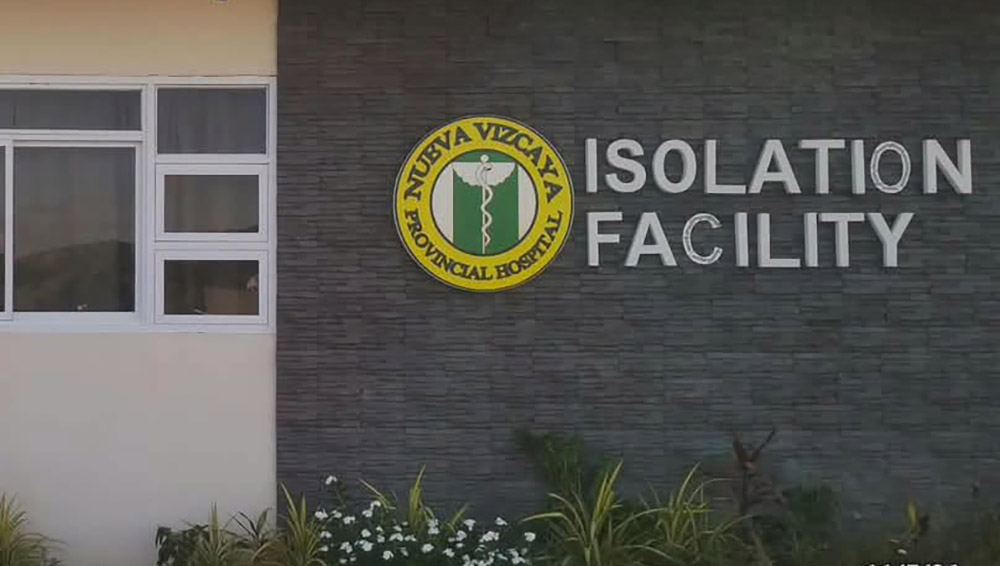
By Rachel Magday   NUEVA VIZCAYA, Philippines — More than ₱618 million in funding and proposed allocations has been listed for upgrades at the Nueva Vizcaya Provincial Hospital (NVPH), as the provincial government seeks to modernize its buildings, equipment and services. The latest additions, approved under the province’s 2026 supplemental budget, include ₱8.596 million for preventive maintenance of the hospital’s CT scanner and ₱3.5 million for the repair and improvement of its Level 2 biomolecular laboratory. The budget also provides ₱2.5 million for antibacterial vinyl flooring in the main building, ₱3 million for hospital rehabilitation and ₱2.5 million for a fence around the sewage treatment plant. Gov. Jose V. Gambito said the investments reflected his administration’s commitment to modernizing NVPH, stressing that improvements must extend beyond its physical facilities and equipment. “Modernizing NVPH is not just about improving its buildings, facilities and equipment. It is also about providing every patient with reliable, quality care,” he said. An update from hospital chief Dr. Arlene I. Jara listed ₱224.31 million from the Department of Health’s Health Facilities Enhancement Program (DOH-HFEP) for the seven-phase Medical Arts Building. The first five phases, funded from 2018 to 2023, have been completed. The sixth phase, allocated ₱50 million in 2024, was reported to be 42 percent complete. The seventh phase, allocated ₱50 million in 2025, was listed as awarded, with a notice to proceed dated Sept. 28, 2026. The provincial government also funded the main hospital building and charity ward projects. The first two phases, allocated ₱50 million in 2018 and ₱38.15 million in 2019, were reported completed. The third phase, funded with ₱140 million in 2021, was completed on March 31, 2025. A supplemental ₱2.6 million was requested to repair damage attributed to Typhoon Uwan. Jara said ₱16.7 million in provincial allocations for facility and equipment upgrades over the past two years had been implemented. Another ₱15.7 million was allocated to modernize the hospital’s health information system, which is under procurement. The equipment program also includes more than ₱11 million in 2025 DOH-HFEP funding and ₱50 million in 2026 DOH-HFEP funding for various medical equipment. The hospital update listed ₱9.7 million in World Bank-funded support for isolation facilities. Additional funding was sought for electrification and a transformer after the project contract expired, while another ₱5 million under DOH-HFEP was identified to complete the facility. Hospital chief Dr. Jara said the ₱25-million Sewage Treatment Plant was completed in September 2024. She added that a transformer had since been installed and that the provincial government allocated ₱2.5 million for a fence around the facility.  
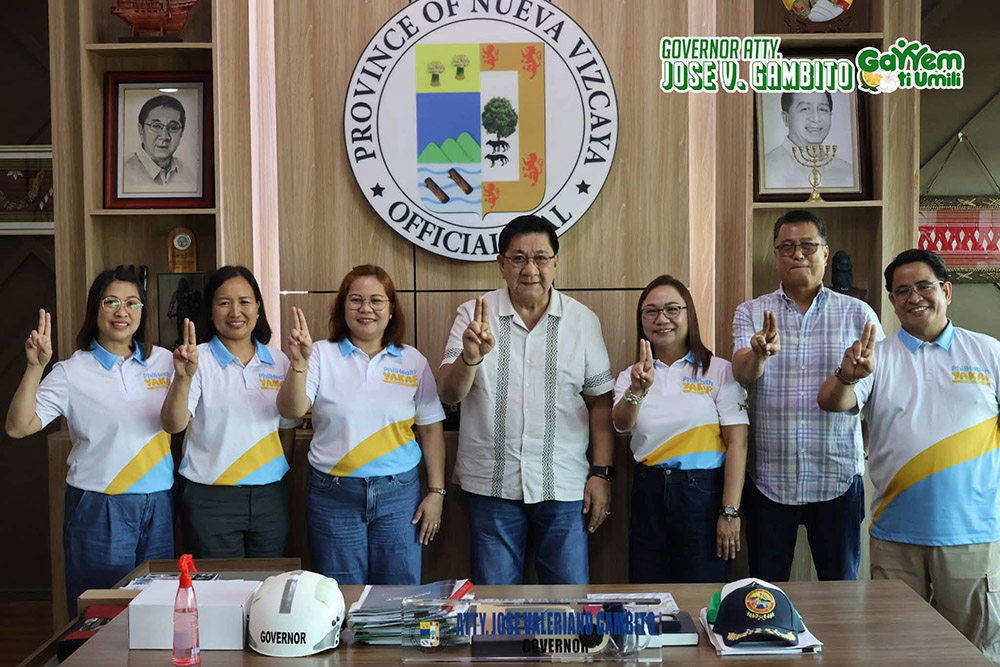
Gambito backs PhilHealth GAMOT Program, pushes wider YAKAP enrollment in NV

Region 2

By Rachel Magday     NUEVA VIZCAYA, Philippines — Governor Jose V. Gambito has pledged the provincial government’s support for PhilHealth’s expanded outpatient medicine benefit, as he pressed for closer coordination to ensure that more Nueva Vizcaya residents can access consultations, diagnostic tests and essential maintenance drugs. Gambito expressed support for the Guaranteed and Accessible Medications for Outpatient Treatment, or GAMOT, program during a courtesy call by PhilHealth officials led by Acting Regional Vice President Dr. Salvacion S. Madarang. Provincial Health Officer Dr. Anthony S. Cortez joined the meeting at the governor’s office on Nov. 3, ahead of the program’s launch at the Carlos M. Padilla Convention Center. The governor said the province would help encourage residents to enroll in PhilHealth’s Yaman ng Kalusugan, or YAKAP, program, the agency’s primary care initiative and the entry point for members seeking GAMOT benefits. Under GAMOT, qualified PhilHealth members may receive essential outpatient and maintenance medicines worth up to P20,000 a year. Madarang said YAKAP seeks to shift health care toward prevention by allowing members to consult doctors and undergo health assessments even before they develop serious illnesses. “The goal of YAKAP is for a member to be seen by a doctor even before he or she gets sick. It is more of a preventive program rather than a curative one,” Madarang said. She clarified that PhilHealth membership alone does not automatically qualify an individual for YAKAP services. Members and their dependents must register with an accredited YAKAP facility to avail themselves of the program’s benefits. Enrolled members may receive regular primary care consultations, medical assessments and a First Patient Encounter, which includes a baseline health evaluation, physical examination and review of medical history by a YAKAP physician. The program also covers up to 13 baseline laboratory tests and selected screening services for breast, lung, liver and colorectal cancers. Members may access essential outpatient and maintenance medicines through the GAMOT benefit after consultation and assessment. Madarang said all 15 rural health units in Nueva Vizcaya, along with the Provincial Health Office, have been accredited under the YAKAP program. Six hospitals operated by the provincial government and three private facilities—PLT Hospital, Sentro Health Medical Diagnostic Center and CFA Long Care Diagnostic Center have also been accredited for YAKAP services. Grovic Health Care Facility has been accredited for the GAMOT program. The rollout also introduced the GAMOT Tracker application, a tool intended to help beneficiaries and health-care providers monitor the availability and dispensing of covered medicines. A YAKAP caravan, PhilSys registration and on-site PhilHealth assistance were likewise conducted to help residents enroll in the program, update their records and access government health services          

PBBM administration boosts farm productivity with 11 solar-powered irrigation projects in Isabela

Region 2

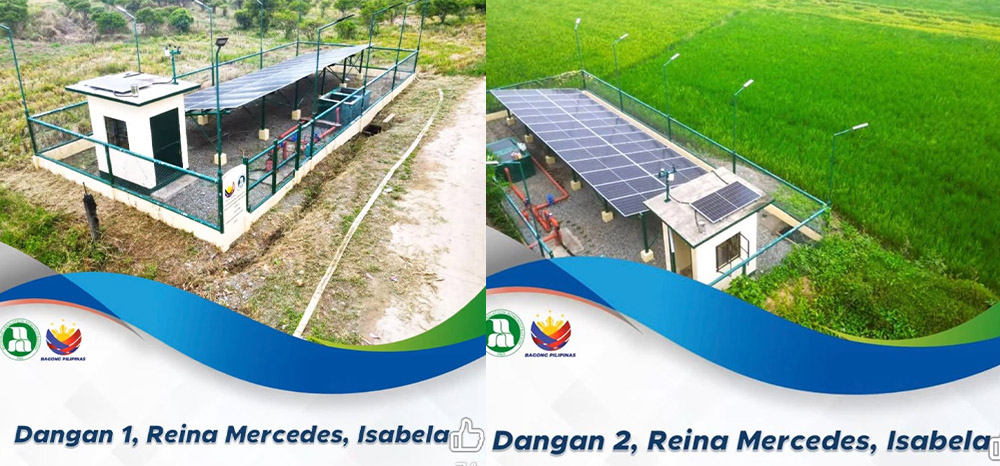
By Merlito G. Edale Jr.   CITY OF ILAGAN, Isabela, Philippines — The National Irrigation Administration-Magat River Integrated Irrigation System (NIA-MARIIS) inaugurated 11 solar-powered irrigation projects on October 22, 2026, as part of continuing efforts to expand irrigation access, improve farm productivity, and support food security under the administration of President Ferdinand R. Marcos Jr. NIA-MARIIS Department Manager Michael Gileu Dimoloy underscored the importance of alternative irrigation systems in helping farmers cope with potential rainfall shortages and ensuring a more reliable water supply for their crops. The projects are located in the municipalities of Naguilian and Reina Mercedes, Isabela. In Naguilian, the projects are Mansaibang, 1A Palattao, and 1B Palattao. In Reina Mercedes, they are Mallalatang, Tungi, Villador, Mallatang Grande, Turod, Dangan 1, Dangan 2, Cutog Grande 1, and Cutog Grande 2. Powered by solar energy, the facilities are expected to provide additional irrigation support to farmlands with limited access to existing irrigation systems, helping farmers manage water supply challenges and maintain crop productivity. Dimoloy said the initiative highlights the potential of renewable energy in developing sustainable irrigation solutions, particularly in agricultural communities beyond the reach of conventional irrigation facilities. “The projects are expected to improve access to irrigation, strengthen farmers’ capacity to sustain crop production, and contribute to the national government’s food security initiatives,” he said. Dimoloy reaffirmed NIA-MARIIS’ commitment to developing irrigation facilities and implementing programs responsive to farmers’ needs and the requirements of the agricultural sector. He said the inauguration of the 11 facilities marks another step toward expanding irrigation services and strengthening agricultural resilience in Isabela and the wider Cagayan Valley region. (OTB/MGE/PIA Isabela) Photo courtesy of LGU Reina Mercedes PIO

Nueva Vizcaya shines anew, wins top national tourism award

Region 2

By Rachel Magday   NUEVA VIZCAYA, Philippines — The province of Nueva Vizcaya strengthened its standing as one of the country’s rising tourism destinations after clinching the Grand Winner award for Best Tourism Promotions Brochure at the 2026 Association of Tourism Officers of the Philippines (ATOP) Pearl Awards. The province also secured the second runner-up award for Best Event Hosting (Local) and was named a finalist in the category of Best Institutionalized Program for Culture and the Arts, underscoring its expanding tourism and cultural-development initiatives. The awards recognized the sustained efforts of the Nueva Vizcaya Provincial Tourism and Culture Office (PTCO), led by Marichelle O. Costales, and the tourism development agenda of Gov. Jose V. Gambito’s administration. The awards recognized the sustained efforts of the Nueva Vizcaya Provincial Tourism and Culture Office (PTCO), led by Marichelle O. Costales, and the tourism development agenda of Gov. Jose V. Gambito’s administration. Costales received the honors on behalf of Nueva Vizcaya during the ATOP Pearl Awards’ grand awards night on Oct. 21 in Ormoc City, Leyte, held as part of the association’s national convention from Oct. 20 to 22. The ATOP Pearl Awards trophies were designed by internationally acclaimed Cebuano furniture designer Kenneth Cobonpue, whose works are known for combining indigenous Filipino craftsmanship, natural materials and contemporary design. Nueva Vizcaya’s winning tourism brochure stood out among entries from local government units across the country for its effective presentation of the province’s destinations, cultural heritage, local products and community-based experiences. The province’s strong showing reflected the Gambito administration’s innovative tourism agenda, which positions Nueva Vizcaya as a destination for both culture and adventure. Alongside its eco-tourism, heritage and agri-tourism attractions, the province is being developed as the country’s paragliding capital and a premier adventure hub—opening new livelihood opportunities for communities and local enterprises. The 2026 ATOP Pearl Awards gathered 606 entries from local government units nationwide. Of these, 201 were selected as national finalists across 15 competitive categories. Entries were assessed using the R.E.S.T. framework, which considers resilience, environment, sustainability and tourism standards. “This recognition is more than an award for Nueva Vizcaya’s tourism brochure and programs. It is an affirmation of our continuing commitment to bring the beauty, culture, heritage and people of our province to the national spotlight,” Gambito said. “We will continue to pursue sustainable and inclusive tourism that creates opportunities for our communities, protects our environment and gives every Vizcayano a greater reason to be proud of our province,” he added.      

Gambito appeals for patience as quarry shift drives up sand, gravel prices

Region 2

By Rachel magday   NUEVA VIZCAYA, Philippines – Governor Jose V. Gambito appealed to residents and contractors to bear with current prices of sand, gravel and other construction aggregates, saying the recent increases are temporary and tied to the province’s transition to a tighter quarry-permit system. Gambito said the provincial government is shifting quarry operations from the old communal quarry areas to a concession-based system, following recommendations of the Provincial Mining Regulatory Board (PMRB), chaired by Mines and Geosciences Bureau Regional Director Mario Ancheta. The governor said he is required to implement the PMRB recommendation or risk possible legal action, stressing that the regulatory change is meant to curb illegal mining, protect riverbeds and address disruptions in the supply of construction materials. “The price increase was not ordered by me,” Gambito said. “If it were only up to me, I would even give it for free to the people. But that is not possible because we are governed by laws, and the government also needs the taxes from quarry operations to fund projects for the people.” Gambito said the transition has limited the number of fully permitted quarry operators, contributing to higher prices of aggregates in the province. He said the processing of quarry permits has also been delayed by the requirement for applicants to secure an Environmental Compliance Certificate from the Department of Environment and Natural Resources’ Environmental Management Bureau. Once more applicants receive concession permits, Gambito said, prices are expected to decline as competition among quarry operators increases. “Let us just be patient for a while,” he said. “Once the transition stage is completed, the price of sand and gravel will stabilize.” The governor acknowledged that some operators already granted quarry permits have raised their prices because of continuing increases in fuel costs and other operating expenses. The PMRB recently passed a resolution, upon Gambito’s motion, urging the Sangguniang Panlalawigan to overhaul the province’s quarry-tax ordinance and put safeguards in place against escalating sand and gravel prices. The board warned that higher aggregate prices are affecting public infrastructure projects and consumers. Forester Arlene S. Tarranco, head of the Provincial Environment and Natural Resources Office and secretariat of the PMRB, said seven operators have so far received permits for commercial sand and gravel extraction. She said the local government of Aritao has been issued a government gratuitous permit under a concession-type arrangement, while other municipalities have been granted conditional gratuitous permits valid until the end of November. More than 100 applications for quarry concessions remain pending as applicant complete requirements, including the Environmental Compliance Certificate, Tarranco added

Make Justice a Right for All, not a previledge of the powerful- Gambito

Region 2

By Rachel Magday   𝐁𝐀𝐘𝐎𝐌𝐁𝐎𝐍𝐆, 𝐍𝐮𝐞𝐯𝐚 𝐕𝐢𝐳𝐜𝐚𝐲𝐚 — Justice must not be a privilege of the powerful but a right accessible to the poor, vulnerable and unheard, Gov. Jose V. Gambito told more than 300 lawyers attending the three-day Integrated Bar of the Philippines (IBP) Northern Luzon Convention, held here from Oct. 15 to 17. “Justice must never be limited to the powerful or privileged. It must be accessible to the poor, the vulnerable, and those whose voices are too often unheard,” Gambito said at the convention’s opening program at the Carlos M. Padilla Convention Center in the provincial capitol. IBP members from Regions 1 and 2 and the Cordillera Administrative Region convened under the leadership of National President Allan G. Panolong, Northern Luzon Governor Voltaire B. Garcia and Nueva Vizcaya Chapter President Marlon Madamba. The convention’s theme is “Empowering Justice, Embracing Diversity: Amianan Standing in Solidarity, Serving with Inclusivity.” Gambito said lawyers must put that commitment into practice by using the law to defend rights, preserve dignity and help ensure that people can access justice. “We must be advocates not only in courtrooms, but in our communities. We must be defenders not only of legal rights, but of human dignity,” he said. Gambito who is also a lawyer by profession, linked the legal profession’s work with the responsibilities of government, saying both share the purpose of improving people’s lives. Public policies, programs and decisions, he said, must serve the welfare of the people. The governor also encouraged delegates to explore Nueva Vizcaya’s tourist destinations during their stay, saying he hoped they would discover the province’s natural beauty and experience its hospitality. Nueva Vizcaya is hosting the IBP Northern Luzon Convention for the first time—a milestone Gambito said was especially meaningful to him as a lawyer, longtime IBP member and governor.

House approves bill adding 4 trial courts in Nueva Vizcaya

Region 2

By Rachel Magday   NUEVA VIZCAYA  Philippines — The House of Representatives has approved on third and final reading a bill seeking to establish four additional Municipal Trial Court branches in Nueva Vizcaya, a measure aimed at bringing court services closer to residents and easing access to justice in far-flung communities. House Bill No. 11171 proposes the creation of new Municipal Trial Court (MTC) branches in the towns of Diadi, Quezon, Santa Fe and Alfonso Castañeda. The measure now moves to the Senate, where a counterpart bill must be deliberated upon and approved before it can advance further in the legislative process. If the Senate approves its version, lawmakers will reconcile any differences between the House and Senate measures through a bicameral conference committee. The final enrolled bill will then be submitted to the President for signature. Rep. Cayton said the House approval marked another important step toward improving access to judicial services for residents of Nueva Vizcaya. “This is another significant step in bringing court services closer to the Vizcayanos,” Cayton said. He said the additional court branches would help make it easier for residents to seek legal remedies and access justice without having to travel long distances to other court stations. Cayton also reaffirmed his commitment to push for measures that would deliver concrete benefits to the Novo Vizcayanos.  

DIDIPIO-OceanaGold turned over water system project

Region 2

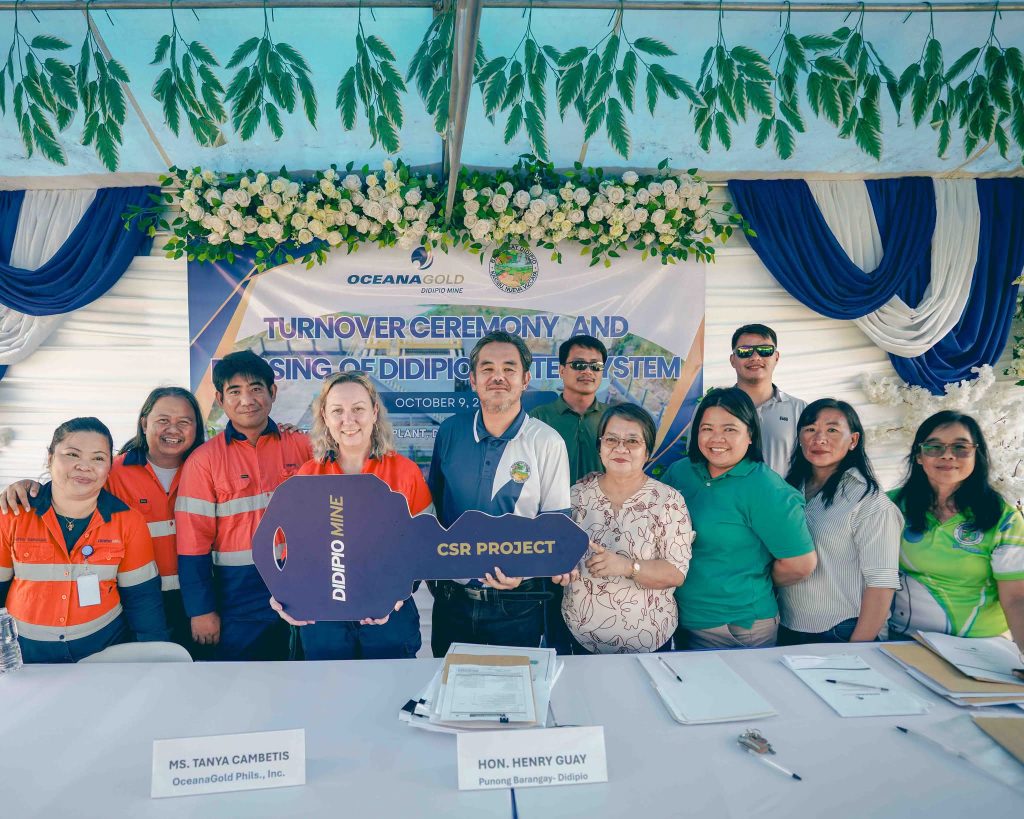
DIDIPIO – OceanaGold (Philippines), Inc. (OGP) has officially turned over the Didipio Water System to the community, completing its final infrastructure commitment under the 2013 Memorandum of Agreement (MOA). Construction began on February 8, 2023. The system sources raw water from Napagayan Creek, which forms part of the Napagayan Watershed, and currently brings water to around 400 households in the Didipio community, which is home to more than 800 households. With a designed capacity to serve up to 1,500 households, the system has the potential to extend its reach and support the community’s growing water needs over the long term. The system features a 35,000-liter (35-cubic-meter) reservoir and uses gravity-fed distribution to deliver water without a pressurized network. Its projected design life is 50 years before major repairs, although regular maintenance will remain essential to sustaining its operations. Supporting Community Management Following the turnover, the Didipio Water Service Cooperative (DIWASECO), a community-based cooperative, will take responsibility for the system’s operations and management. To support the transition, OGP will provide 15 months of operational support from October 2026 to December 2027. This assistance is intended to help DIWASECO establish stable operations as it assumes responsibility for managing the infrastructure and sustaining water services. The continued effectiveness of the system will depend on responsible management, regular maintenance, and appropriate water-quality monitoring. The transition also underscores the importance of building local capacity to manage essential community services over time. Completing a Long-Standing Commitment The turnover fulfills OGP’s final infrastructure commitment under the 2013 MOA, which also covered a multipurpose gym, an administration building, a three-story educational facility, and more than 150 kilometers of roads. Together, these infrastructure projects support different aspects of community development, including education, public facilities, connectivity, and access to essential services. The completion of the water system marks a significant milestone in OGP’s infrastructure commitments to the Didipio community. With the system now under DIWASECO’s management and operational support in place through December 2027, the focus shifts to maintaining reliable service and ensuring the infrastructure continues to benefit the households it serves. For the community, the turnover represents both the completion of a long-standing commitment and a shared responsibility to sustain access to water for years to come.

Cagayan Valley hospitals commit to ‘Safe Care for Life’ at patient safety summit

Region 2

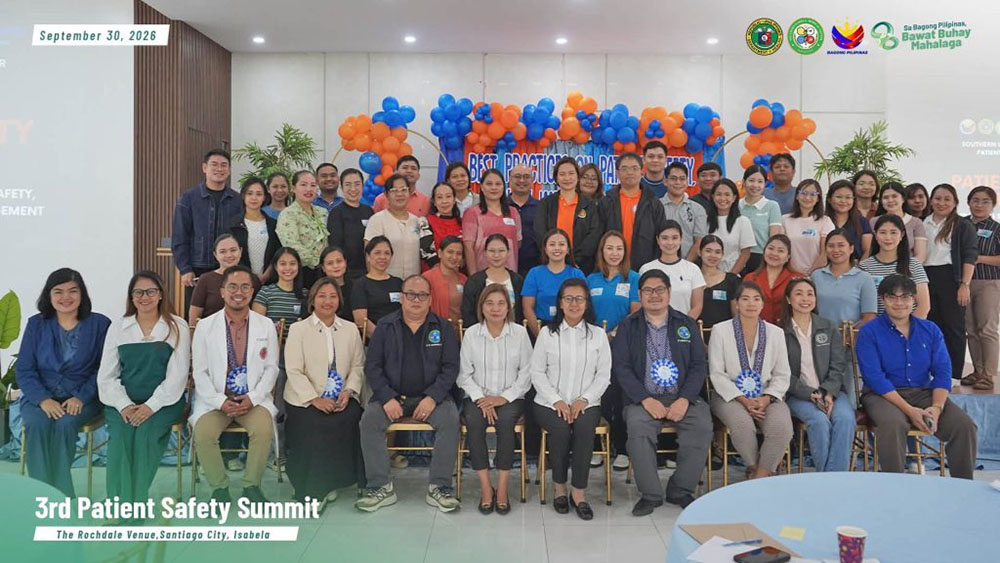
By Merlito G. Edale, Jr.   CITY OF ILAGAN, Isabela, Philippines — Healthcare leaders from public and private hospitals across Cagayan Valley have renewed their commitment to making patient safety an everyday practice, rather than limiting it to compliance requirements, during the 3rd Patient Safety Summit held in Santiago City on September 30. Organized by the Southern Isabela Medical Center (SIMC), the summit carried the theme “Safe Care for Life” and brought together patient safety champions, quality improvement officers, and hospital administrators to share best practices and strengthen collaboration among healthcare institutions in the region. SIMC Officer-in-Charge and Medical Center Chief II Dr. Butch Loreto O. Garcia III said the summit was intended to provide hospitals with an opportunity to learn from one another and identify practices that could improve the safety of healthcare delivery. “We created this summit not to claim that everything has been achieved, but to share our journey, learn from one another, and share meaningful practices that can make healthcare safer,” Garcia said. He emphasized that patient safety challenges cannot be addressed by a single institution, noting that solutions developed by one hospital could help others facing similar concerns, while innovations from one team could inspire improvements in another. Dr. Ferdinand M. Benbenen, regional director of the Cagayan Valley Health Center for Development (CVCHD), challenged hospital leaders to take a more active role in building a culture of patient safety. “Patient safety is a leadership responsibility, not committees and paperwork,” Benbenen said. He urged hospital leaders to demonstrate their commitment through proper allocation of resources, prompt action on near-miss reports, and support for frontline healthcare workers. Benbenen said a culture of safety starts with leadership but must ultimately be demonstrated at the bedside. He also encouraged healthcare institutions to view adverse events as opportunities to identify gaps, learn from them, and improve systems rather than simply as failures. Meanwhile, Dr. Ma. Theresa G. Dalmacio, chief of the Allied Health Professional Service of SIMC, underscored the responsibility of healthcare workers in protecting patients and maintaining public trust. “We are not just healthcare workers. We are guardians of trust. We are keepers of the sacred oath. We are the ones who stand in the gap between harm and healing,” Dalmacio said. She identified three key elements in advancing patient safety: patient safety as the value, quality improvement as the method, and risk management as the shield. The summit featured technical sessions on best practices in public and private hospitals, continuous quality improvement, and learning from harm through event reporting. Among the resource speakers were Dr. Reachel A. Sanidad, Dr. Angelie Merci Porto, Dr. Jason T. Suquila, and Dr. Christian Mark B. Mariano. The activity culminated in the formal launching of the Patient Safety Team Region 2 and the establishment of a Viber community to facilitate continuing communication and collaboration among participating hospitals. Garcia urged the participants to bring home “new ideas, renewed commitment, and the courage to act” and translate the lessons from the summit into concrete improvements in their respective institutions. The summit underscored that patient safety is a continuing responsibility that must be reflected in everyday healthcare practice, from management decisions and hospital systems to actual patient care at the bedside. (OTB/MGE/PIA Isabela)    

Scroll to Top