Street Journal Multimedia Services

Author name: Street Journal

Enhancing U.S.-Philippines Counterterrorism Cooperation

Vis-Min

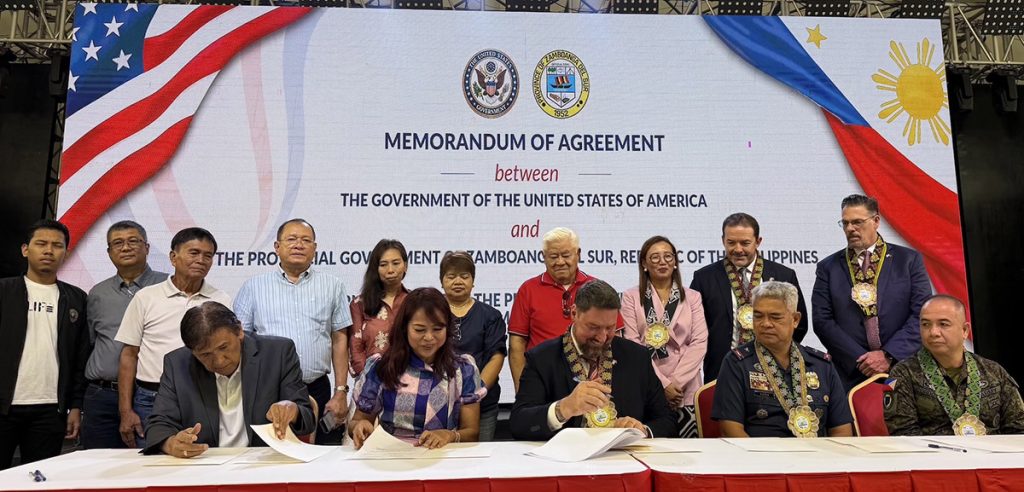
PAGADIAN CITY, Philippines —The U.S. Embassy in the Philippines and the Zamboanga del Sur provincial government signed an agreement establishing a Php30.8-million ($500,000) law enforcement training program, demonstrating the United States’s commitment to working with the Philippines to deter terrorist threats against Americans and Filipinos. Under the agreement, the U.S. Department of State’s Antiterrorism Assistance (ATA) program will provide permanent and dedicated training facilities in Pagadian City to host recurring specialized training courses for the Philippine National Police (PNP). “This investment in Pagadian reflects our confidence in the PNP and our conviction that a safer, more capable PNP means a safer Philippines, a safer United States, and a stronger Alliance between our two nations,” said Daniel Art, the U.S. Embassy’s Acting Senior Regional Security Officer. Since 2006, the United States has facilitated ATA courses for more than 10,000 Filipino law enforcement personnel that helped improve their capabilities to investigate, respond to, and mitigate terrorist threats and incidents.  An estimated 2,000 PNP, as well as other law enforcement personnel, are expected to train at these new facilities in Pagadian every year. “This partnership will enhance the capabilities of our law enforcers in deterring and preventing acts of terrorism.  It will strengthen the security and stability of our government not only in the province of Zamboanga del Sur but most especially in Mindanao and even the whole country,” said Zamboanga del Sur Gov. Divina Grace Yu. As the United States and the Philippines also commemorate the 80th anniversary of diplomatic ties, this enhanced partnership will work to secure the two countries’ ties for years to come.  

As Philippines Nears 100% Internet Access, DICT Recognizes Globe in Advancing the Vision

Business

For decades, expanding internet access and connectivity across an archipelago of more than 7,000 islands has remained one of the Philippines’ greatest infrastructure challenges. Today, sustained investments in digital infrastructure, strong collaboration between government and the private sector, and the launch of satellite-to-mobile technology are bringing the country closer than ever to the shared vision of connecting every Filipino, with 100% internet access now within reach. Recognizing Globe’s contribution to this national effort, the Department of Information and Communications Technology (DICT) honored the company with the Digital Bayani sa Last Mile Award and a Special Recognition Award during the culmination of National ICT Month observed all throughout June of 2026, which also marked the agency’s 10th anniversary. The awards recognize Globe’s role in advancing digital transformation, expanding inclusive connectivity, and helping bridge the digital divide. Throughout National ICT Month, DICT underscored the importance of expanding digital access through stronger collaboration across government, industry, and communities, recognizing that meaningful connectivity is key to building a more inclusive digital future. “We are now close to achieving 100% internet access nationwide, a milestone we expect to reach by the end of July. This progress is the result of sustained investments, innovation, and strong collaboration between government and the private sector, as we continue working to turn the long-standing vision of President Ferdinand R. Marcos Jr. into reality,” said DICT Secretary Henry Aguda. Globe President and CEO Carl Cruz said the recognition affirms the importance of collaboration, especially for heavy investments in digital infrastructure. “Connectivity creates opportunities. It helps students learn, enables businesses to grow, empowers families, and gives communities access to essential services. We are honored by this recognition from the DICT, and we will continue investing in advanced technologies and partnerships to further improve the digital experience all over the country.” Globe continues to invest in the infrastructure needed to support the country’s growing digital economy. In 2025 alone, the company deployed more than 1,500 new 5G sites and added over 115,000 fiber-to-the-home lines, extending reliable connectivity to more communities. While terrestrial networks remain the foundation of the country’s digital infrastructure, Globe is expanding connectivity beyond traditional mobile coverage through Globe Starlink. By complementing its existing network with satellite-powered mobile connectivity, the company is helping extend access to remote locations while strengthening network resiliency, bringing the country closer to fulfilling universal connectivity. These efforts support the government’s broader Digital Backbone agenda, led by the Philippine Digital Infrastructure Project (PDIP), which aims to build, expand, and integrate high-capacity national fiber-optic networks across the country. Together, these initiatives are helping provide faster, more affordable, and more resilient internet connectivity to Filipinos from the northernmost provinces to the southernmost communities. As the DICT marks a decade of advancing the country’s digital transformation, Globe remains committed to investing in technologies and partnerships to ensure that more Filipinos, wherever they are, can stay connected and participate in the country’s digital future.

Modernizing public transportation, improving ports remain among PBBM’s agenda

Region 4

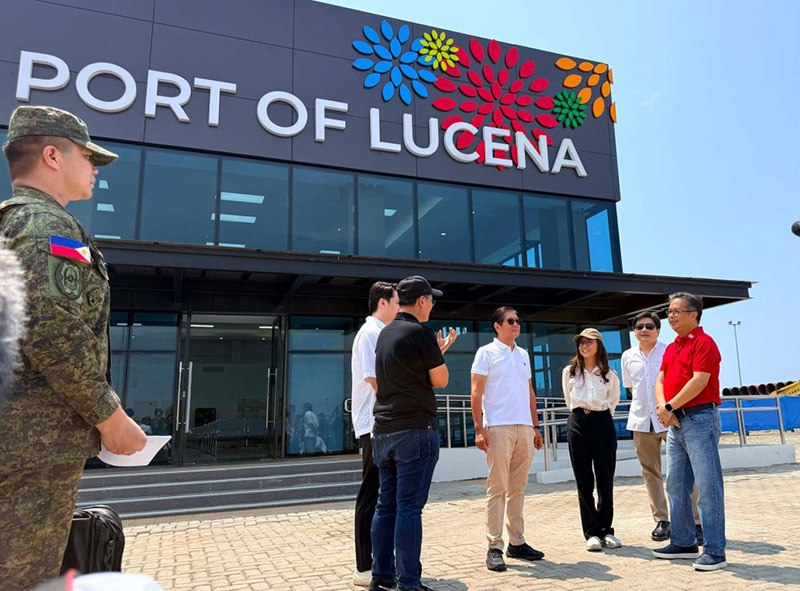
By Charmaine Odong-Pangan   LUCENA CITY, Philippines — President Ferdinand R. Marcos Jr. on Monday during his fifth State of the Nation Address (SONA) urged all stakeholders in the transport sector to work together to expedite the long-awaited modernization of the country’s public transportation system. “Hinihiling ko ang suporta ng buong industriya upang mapaandar na natin sa lalong madaling panahon ang ating minimithing Modernisasyon ng mga Pampublikong Sasakyan. Titiyakin natin na magiging makatao, magaan, at makatarungan ang pagpapatupad nito. Tulad ng aking binanggit, dapat mataas ang kalidad, matibay, at maghahatid ng pangmatagalang ginhawa sa taumbayan ang lahat ng pampublikong imprastraktura,” President Marcos stated in his address. In the CALABARZON region, the President himself recently conducted a port inspection at the newly upgraded Lucena Port Passenger Terminal Building (PTB) in Lucena City, Quezon along with the Philippine Ports Authority (PPA) as part of his commitment to modernizing the country’s maritime gateways and improving passenger comfort. During the inspection, he underscored the need for safe and modern port facilities to provide the commuting public with efficient and reliable transportation services between the CALABARZON region, MIMAROPA, and other nearby island provinces, ensuring a safer, more convenient, and more comfortable travel experience. “This was necessary to be done because the traffic going to Lucena Port is approximately 500,000 travelers every year kaya’t kailangan talagang i-upgrade na ang ating mga facilities para matulungan ang ating mga traveling public, hindi sila masyadong mahirapan,” the Chief Executive said during the inspection on July 21. The PTB, built with a P153.43-million investment from the PPA’s corporate budget, is expected to offer safer and more convenient travel for passengers and contribute to strengthening regional connectivity, boosting trade, and driving economic growth in Southern Luzon. With a capacity of 928 passengers, the upgraded terminal is equipped with modern, safer facilities, including fully air-conditioned waiting areas, automated ticketing machines, an enhanced ventilation system, and 144 solar panels that support energy-efficient and sustainable port operations. These improvements are designed to meet the growing demand for safe, reliable, and convenient passenger travel, particularly as the PPA’s records show that approximately 500,000 travelers use the Port of Lucena as their gateway each year. PPA General Manager Jay Santiago expressed hopes that more Filipinos will benefit from the improvements of the upgraded Passenger Terminal Buildings (PTBs) as the Marcos administration continues to implement its port terminal modernization agenda. “We hope na makikita ng mga kababayan natin ito, ma-e-engganyo sila na hindi na sila kumbaga magkakaroon ng agam-agam sa pagbiyahe, sa pagdaan sa ating mga pantalan dahil makikita nila kumportable na ang pagbiyahe, kumbenyente, at kung ano man ang mangyari, matuloy man o hindi matuloy ang kanilang biyahe, sigurado sila, kumpiyansa sila, relax sila, at magaan ang kanilang pagbiyahe dahil maganda ang pasilidad,” Santiago said during the port inspection. Dating back to 2024, President Marcos inaugurated the Batangas Passenger Terminal Building at the Port of Batangas in Batangas City. Since its inauguration, the facility has continued to enhance tourism connectivity, encourage investments, improve the movement of agricultural goods, and stimulate local economies, underscoring the administration’s commitment to promoting inclusive growth through the modernization of the country’s transport infrastructure. From its original capacity of 2,500 passengers, the Batangas PTB has been upgraded to accommodate up to 8,000 passengers. The facility can now serve around 12.8 million passengers annually and offers expanded facilities for vehicle traffic, providing improved services that continue to benefit the Filipino public. Amid the recent surge in fuel prices brought about by the Middle East conflict, the country has felt the impact of the crisis, particularly Filipino commuters who rely on public transportation as a more accessible and affordable means of travel. The Marcos Jr. administration affirms its focus on enhancing the country’s public transportation system to expand its reach, modernize facilities and its services, and provide more convenient mobility for the Filipino people. President Marcos stated in his SONA, “Kaya pinagtutuunang mabuti ng Administrasyon ang ating mga tren, mga busways, transport hubs at integrated terminals, at ang pagpapaganda at pagpapalawak ng mga paliparan at pantalan sa buong bansa. Ito ay upang mas malawak at malayo ang naaabot, tumaas ang kapasidad, at maging moderno at mas maginhawa ang serbisyo.” As one of the country’s major industrial hubs, the CALABARZON region hosts numerous manufacturing zones, industrial parks, and economic zones, making port modernization vital as these facilities play a vital role in facilitating the movement of raw materials, finished goods, and agricultural products while strengthening supply chains and helping decongest Manila-based ports. (COP/PIA CALABARZON)

PH seen to produce more seaweed as DA operates bioreactor

Region 5

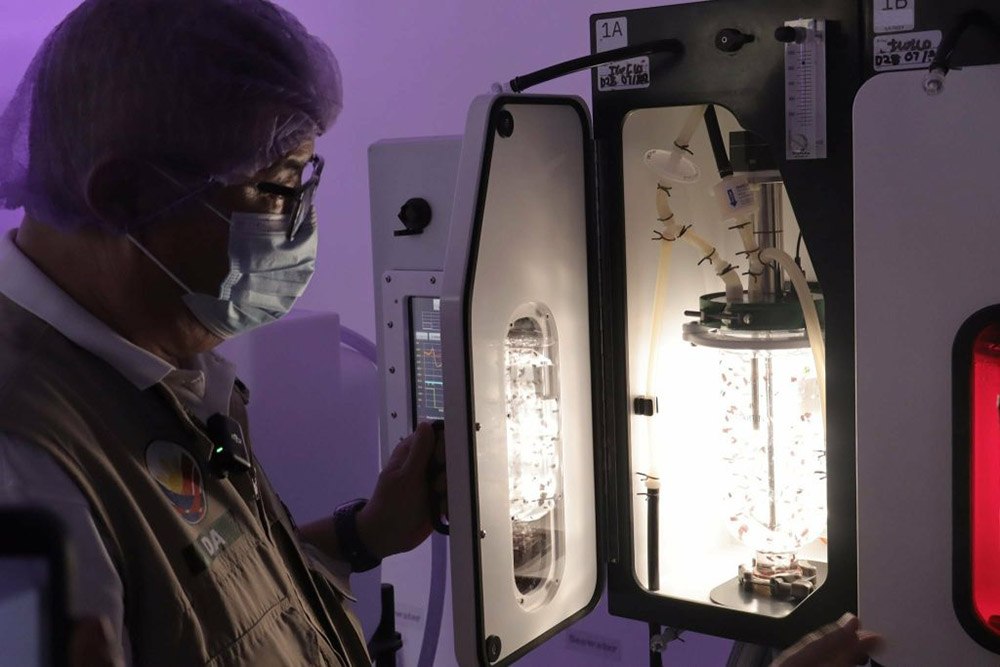
By Benilda Recebido   SORSOGON CITY, Sorsogon, Philippines — Agriculture Secretary Francisco Tiu Laurel Jr. inspected the country’s seaweed bioreactor facility at the Bureau of Fisheries and Aquatic Resources-National Seaweed Technology Development Center (BFAR-NSTDC) in Barangay Cabid-an, Sorsogon City on Monday, July 20. During his visit, the agriculture chief emphasized that the project aligns directly with President Ferdinand ‘Bongbong’ Marcos Jr.’s directive to invest heavily in the seaweed sector, which remains one of the country’s top fisheries exports. The newly established bioreactor project is designed to resolve the industry’s chronic shortage of high-quality planting materials. The facility, which began operating in March this year, houses a huge 1,250L photobioreactor system explicitly optimized for macroalgae use. It operates around the clock to generate culture materials without relying on seasonal weather patterns. According to Tiu Laurel, once fully operational, the facility will break away from traditional production constraints. The facility will mass-produce premium planting materials 24 hours a day using advanced cultivation techniques,” he said. “Its production capacity will jump tenfold compared to traditional methods, which are capped at just 10 tons per month, and we target a 95 percent survival and growth rate for distributed seedlings, a massive improvement from the historical 60 percent to 70 percent success rate that often led to wasted labor for farmers,” he added. According to Tiu Laurel, the Philippines has only scratched the surface of its marine potential. “While the local industry currently relies on just five commercially viable seaweed varieties, hundreds of other types remain vastly untapped,” he said. The Sorsogon research facility will use its new machinery to accelerate research and development. Scientists will now have the technology to cross-breed species and develop high-yielding hybrids. Also, the DA plans to expand seaweed utilization beyond food, exploring its high-value applications in pharmaceuticals and industrial sectors, and eventually, to position the Philippines as the global leader in seaweed production. The project operates under the direct supervision of the DA and its attached bureau, the BFAR. Laurel noted that securing high-quality planting materials is the most critical component needed to revitalize local aquaculture. “We are on the way to making our seaweed industry number one in the world,” Laurel stated, affirming the government’s commitment to empowering local seaweed farmers and maximizing the country’s marine economy. (Raiza Lucido contributed to this report/PIA Bicol/Sorsogon)

Northern Samar’s 17th town now under Stable Internal Peace and Security Condition

Vis-Min

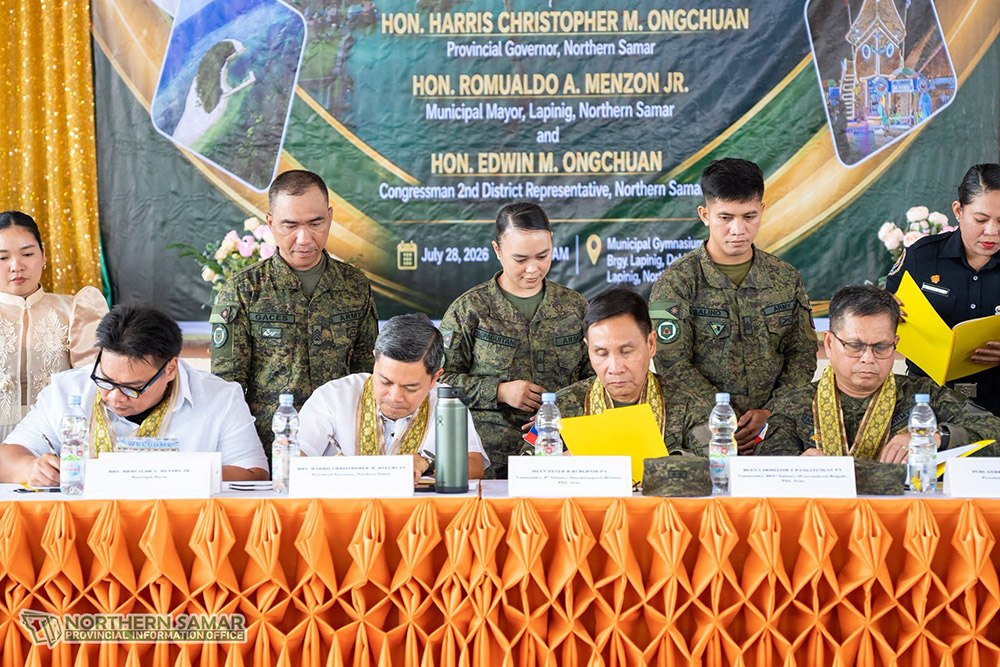
NORTHERN SAMAR, Philippines — Lapinig, Northern Samar’s boundary municipality with Eastern Samar and home to 15 barangays, was formally declared under the Stable Internal Peace and Security Condition (SIPSC) on July 28, 2026, marking another significant milestone in the province’s sustained pursuit of lasting peace, security, and development. Once known as an insurgency hotspot, Northern Samar has made significant strides in restoring peace and stability with Lapinig’s declaration, the third municipality in the Second Congressional District to attain the status, joining Laoang and San Roque. At present, 17 of the province’s 24 municipalities have now achieved SIPSC status, leaving seven municipalities continuing their efforts toward the same milestone. The declaration was marked by the ceremonial signing of the Memorandum of Understanding and the Pledge of Commitment, reaffirming the collective resolve of national and local government agencies, security forces, and community leaders to uphold peace and strengthen public safety. A landmark in Northern Samar’s peace and development journey, the event was graced by Governor Harris Christopher M. Ongchuan; Lapinig Mayor Romualdo A. Menzon Jr., along with other LGU officials and department heads; Rev. Fr. Cleofas Añonuevo, Priest of St. Bonaventure Parish; Mapanas Mayor Ronn Michael L. Tejano; Jipapad Mayor Benjamin E. Ver; Major General Peter B. Burgonio, Commander of the 8th Infantry Division, Philippine Army; 803rd Infantry Brigade Commander BGEN Carmelito T. Pangatungan; 80th IB Commander LTCol Tim C. Clavel; NSPPO Provincial Director PCOL George B. Buyacao Jr.; BFP OIC Provincial Fire Marshal FSINSP Darwin D. Orsolino; DILG Provincial Dir. Geraldine C. Maquelabit; MLGOO Romie B. Horca, and other stakeholders, whose presence has deepened the province’s shared commitment to sustaining peace, strengthening local governance, and fostering closer collaboration among government institutions and communities.

Gov.Pam pushes for first physiotheraphy, rehabilitation center for PWD’s

Vis-Min

CEBU, Philippines — Gov. Pamela Baricuatro on Thursday announced plans to establish what could become the first provincial government-run Physiotherapy and Rehabilitation Center for Persons with Disabilities (PWDs) during the Provincial PWD Month Celebration. The proposed rehabilitation center will be housed inside the Provincial Capitol’s Wellness Center, which is currently undergoing renovation. It will also serve as home of the Provincial Disability Affairs Division (PDAD). With the theme, “Rights First, Legislation Forward – Strategic Action for Equal Participation and Inclusive Development,” the celebration was organized by the Provincial Social Welfare and Development Office (PSWDO) to reaffirm the provincial government’s commitment to promoting the rights, welfare, and inclusion of persons with disabilities. As part of the celebration, the Provincial Health Office (PHO) provided free health and wellness services, including medical consultations, blood sugar testing, uric acid and cholesterol screening, as well as the distribution of reading glasses and multivitamins to participating PWDs. In her message, Gov. Baricuatro emphasized that advancing the welfare of persons with disabilities should remain a year-round commitment. “As we gather for this closing celebration, I don’t see this as the end of the PWD Month. I believe this is just the beginning. Because promoting the rights, welfare, and inclusion of people with disabilities is not a one-month responsibility. It is something we must uphold every single day,” the governor said. She also administered the oath of office to the newly elected officers of the PWD Federation. Outgoing federation officers were recognized for their service and dedication through the awarding of Plaques of Appreciation. Board Member Dason Lorenz Lagon, Chairman of the Committee on Differently-Abled Persons, presented the orientation on the Provincial Disability Affairs Division (PDAD), highlighting its renewed direction of providing stronger coordination and more responsive services for the PWD community. “Our office will not simply be an administrative office; it will become a place where PWDs are heard and respected—a bridge connecting the PWD community to government services and opportunities, an advocate for accessible programs in education, employment, healthcare, and livelihood, and a partner in ensuring that laws protecting persons with disabilities are fully implemented and felt at the grassroots level,” Lagon said. Meanwhile, Dr. Jera Armendarez, Area Vocational Rehabilitation Center Training Superintendent of DSWD-7, discussed disability awareness and the services offered through the agency’s Non-Residential Facility for Persons with Disabilities (PWDs) Also present was Chief of Staff Ricci Reluya, representing Board Member Lakambini Reluya, Chairperson of the Committee on Women, Family, and Minors.    

P62.7M marijuana seizes from four arriving passengers at NAIA

NCR

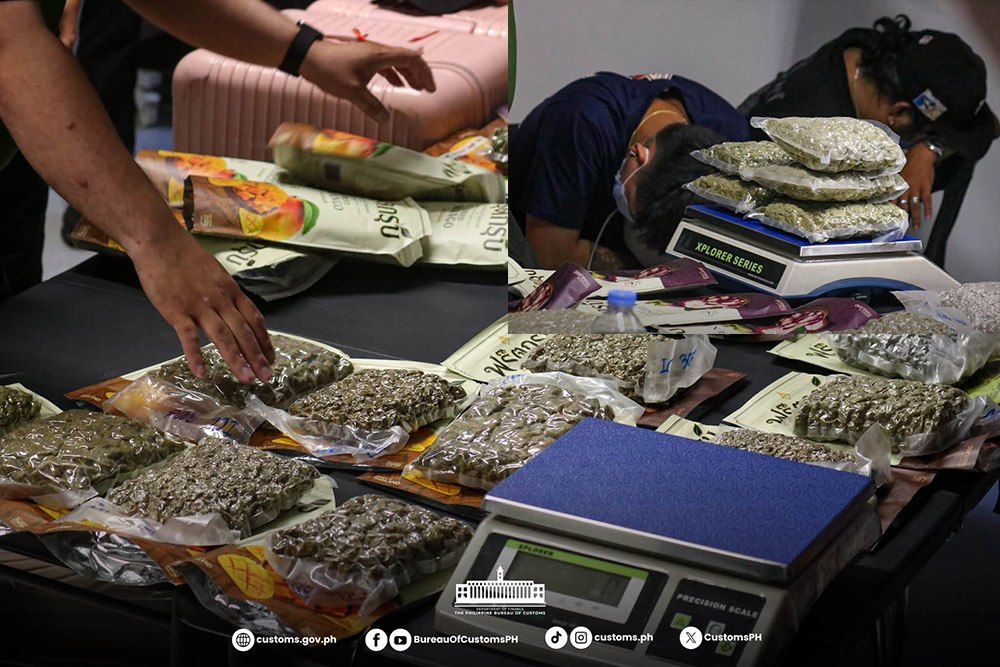
The Bureau of Customs (BOC), the Philippine Drug Enforcement Agency (PDEA), and the Inter-Agency Drug Interdiction Task Group arrested four (4) arriving passengers found carrying approximately 41,851 grams of marijuana with an estimated value of over ₱62 million during a joint anti-drug interdiction operation at the Ninoy Aquino International Airport Terminal 3. The passengers arrived from Bangkok, Thailand on 30 July 2026, during routine baggage screening, personnel from the X-Ray Inspection Project (XIP) flagged their luggage after suspicious images indicated the possible presence of prohibited substances. In accordance with established Customs procedures, the passengers were referred for a thorough physical examination of their baggage. A K9 inspection conducted by the PDEA further indicated the possible presence of dangerous drugs. A subsequent 100% examination resulted in the discovery of approximately 41,851 grams of suspected marijuana concealed inside the passengers’ baggage. The seized illegal drugs have an estimated street value of ₱62,776,500. The operation was conducted through the coordinated efforts of the BOC, Enforcement and Security Service–Customs Anti-Illegal Drug Task Force (ESS-CAIDTF), NAIA Inter-Agency Drug Interdiction Task Group (NAIA-IADITG), Customs Intelligence and Investigation Service (CIIS), X-Ray Inspection Project (XIP), PDEA, and Bureau of Immigration. The entire operation was documented with Body-Worn Cameras (BWCs) to ensure transparency, accountability, and compliance with procedures. The four passengers were arrested and turned over to PDEA for the filing of appropriate charges for violation of Section 4 (Importation of Dangerous Drugs) of Republic Act No. 9165, otherwise known as the Comprehensive Dangerous Drugs Act of 2002, in relation to Republic Act No. 10863, or the Customs Modernization and Tariff Act (CMTA). District Collector Atty. Maria Yasmin M. Obillos-Mapa lauded the coordinated efforts of the operating units and partner law enforcement agencies, emphasizing that the successful apprehension demonstrates the Port of NAIA’s heightened vigilance in detecting and intercepting illegal drugs. She reaffirmed the Port’s commitment to maintaining the integrity of the country’s premier international gateway through the strict enforcement of customs laws. In support of President Ferdinand R. Marcos Jr.’s directive to strengthen border security and intensify the campaign against illegal drugs, she sustained collaboration with partner agencies in securing the country’s borders. Commissioner Ariel F. Nepomuceno commended the successful operation, saying, “Hindi tayo titigil sa pagbabantay sa ating mga airports. Patuloy nating palalakasin ang intelligence operations, paggamit ng makabagong teknolohiya, at pakikipagtulungan sa ating mga partner agencies upang matiyak na walang iligal na droga ang makakalusot at malalagay sa panganib ang ating mga kababayan.”

DoT-CAR joins Western Philippines International Tourism Showcase in Olongapo

Region 3, Tourism / Health

OLONGAPO CITY, Philippines — The Department of Tourism – Cordillera Administrative Region (DOT-CAR) is participating in the Western Philippines International Tourism Showcase (WPITS) from July 30 to August 1, 2026, at the SMX Convention Center in Olongapo City. The event, supported by tourism leaders and stakeholders such as the Network of Independent Travel & Allied Services Philippines, Inc. (NITAS) and the Hospitality Alliance of Subic Bay Freeport Zone (HAS), serves as a pivotal platform for promoting the diverse tourism offerings of the Western Philippines and beyond. The event kicked off with the Culture of Tourism Seminar on July 30, featuring experts who discussed tourism success strategies, regenerative practices, and connectivity. Following the seminar, the official Opening Ceremonies in the afternoon featured a distinguished roster of speakers who underscored the importance of regional collaboration in tourism, including messages from Olongapo City Mayor Hon. Rolen Paulino Jr., Subic Bay Metropolitan Authority Chairman Hon. Eduardo Aliño, and DOT Region III Regional Director Richard Daenos. Also present were during the Opening Ceremonies were DOT-Region 4A Regional Director Maritess Castro, DOT-NCR Regional Director Catherine Agustin DOT-CAR Regional Director Jovi Ganongan and Former DOT Secretary Mina Gabor For the Cordillera region, this participation is a vital opportunity to increase travel demand and strengthen the region’s brand as a premier hub for sustainable mountain and cultural tourism. Discover the wonders of the highlands—come visit the DOT-CAR at the SMX Convention Center, open until August 1, 2026.

DSWD, DENR strengthen partnership for inclusive community development

Baguio City

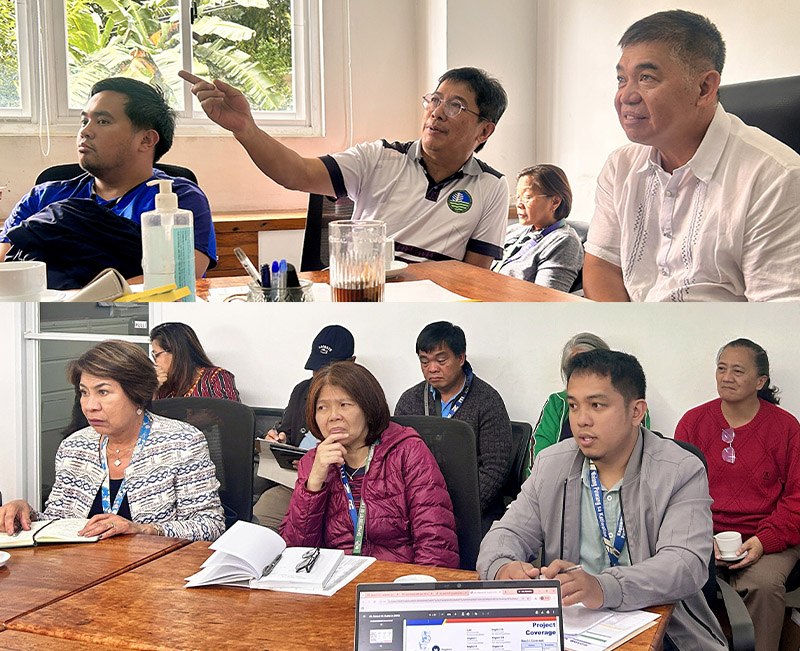
By Yvonne Gracious T. Elegado   BAGUIO CITY — The Department of Social Welfare and Development Field Office Cordillera Administrative Region (DSWD FO CAR) and the Department of Environment and Natural Resources (DENR-CAR) converged on 29 July 2026 to strengthen coordination between the two agencies in support of inclusive, resilient community development across the region. DSWD-CAR’s Kapit-Bisig Laban sa Kahirapan-Comprehensive and Integrated Delivery of Social Services (KALAHI-CIDSS) Regional Program Management Office led the discussions with DENR-CAR, represented by Regional Executive Director Paquito T. Moreno Jr., Environmental Management Bureau-CAR Regional Director Jean C. Borromeo, and the Mines and Geosciences Bureau-CAR. During the meeting, DSWD FO CAR indicated that the KALAHI-CIDSS Panahon ng Pagkilos: Philippine Community Resilience Project (PCRP) is still in its early implementation stage, as the exact project sites and beneficiary communities have yet to be identified, pending municipalities’ review of the Municipal Resilience Plans (MRP), which are prepared through community-level profiling and planning activities under the program. As a member of the program’s Regional Steering Committee (RSC), DENR-CAR agreed to designate representatives to a technical working group that will support coordination between the two agencies. DENR personnel will also take part in community-level activities early on, allowing DENR to guide communities on environmental considerations even before project sites are finalized. Both agencies likewise discussed a two-stage framework for Protected Area Management Board (PAMB) clearances, covering approval for the program’s implementation within protected areas, followed by clearance for specific subproject sites once these are confirmed in September this year. Both agencies reaffirmed their commitment to ensuring that environmental stewardship supports community empowerment and the delivery of vital infrastructure across the region. By Yvonne Gracious T. Elegado, Project Development Officer III      

Scroll to Top