
Street Journal Multimedia Services

Author name: Street Journal

AboitizPower breaks ground on 60-MW Naga BESS in Cebu

Vis-Min

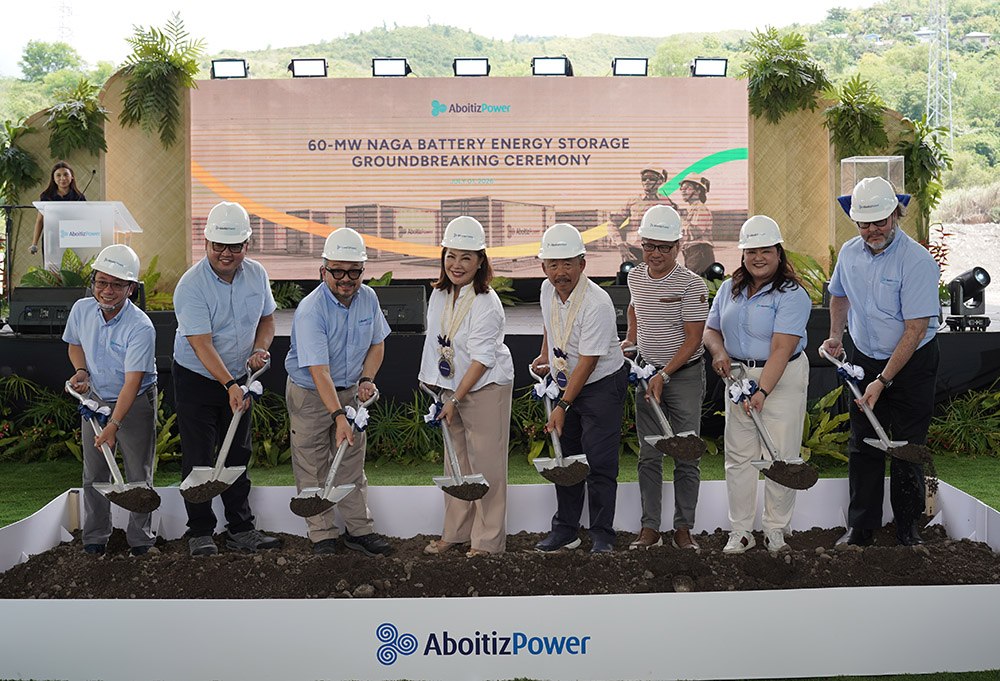
NAGA CITY, Cebu, Philippines — Aboitiz Power Corporation (AboitizPower) officially broke ground on the Naga Battery Energy Storage System (BESS) project, an investment that aims to help strengthen grid reliability and support the growing energy needs of the Visayas. The project will build a 60-megawatt standalone BESS within the Naga Power Plant Complex in Barangay Colon, Naga City, Cebu. The facility is expected to provide contingency and regulating reserve services that will support the grid’s ability to respond to fluctuations in electricity supply and demand. A BESS is a type of energy storage that uses a set of batteries to store surplus electricity which is released when needed to augment supply or improve the quality of the electricity in the power system. “The Department of Energy commends AboitizPower for their continued confidence in the Philippine energy future. Your investment demonstrates the innovation and sustainability that can go beyond what we have been dreaming of,” said Energy Undersecretary Mario Marasigan. “While we continuously convince and invite investment in renewable energy technologies, we need this technological support to create a reliable and efficient system.” Built by the National Power Corporation (NAPOCOR) in the 1980s, the Naga Power Plant Complex was acquired by AboitizPower in 2018 through the government’s privatization program. The BESS project marks the site’s transformation from thermal power generation to energy storage. In response to the Visayas’ evolving energy ecosystem, the site’s legacy coal and diesel-fired units were decommissioned and demolished, demonstrating AboitizPower’s strategy of growing and diversifying its asset portfolio in support of the Philippines’ energy transition. “Before we can attract more investments, we must also ensure that we have the infrastructure to support them,” said Cebu Governor Pamela Baricuatro. “Projects like this 60-megawatt battery energy storage system give us greater confidence that Cebu can continue to grow while maintaining a stable and reliable power supply.” “Naga BESS represents transformation in action. It reflects our efforts to strengthen the energy system by investing in people, infrastructure, and technology to enhance flexibility, resilience, and reliability of the grid,” added AboitizPower Transition Business Group President Celso C. Caballero III. As more variable renewable energy capacity enters the power grid, energy storage plays an increasingly important role in maintaining grid stability. BESS, in particular, serves as fast-acting, short-term duration assets capable of rapid response to demand fluctuations, providing vital support to system operations. The Naga BESS project is part of AboitizPower’s broader strategy of a balanced energy mix portfolio, in support of the Philippine Energy Plan. It is expected to begin commercial operations by 2027.                      
Filipino fish for the Filipino people

NCR

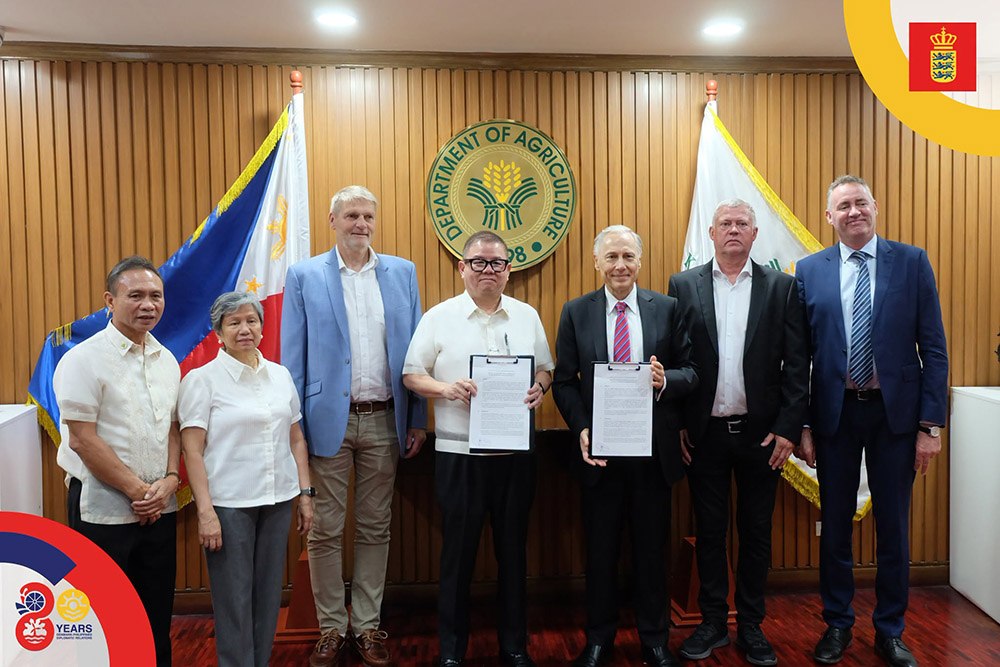
Denmark and the Philippines will launch a pilot project introducing modern midwater trawl technology to Philippine waters, which will contribute to the country’s food security. Signed by the Department of Agriculture- Philippines Bureau of Fisheries and Aquatic Resources (BFAR Philippines) and the Embassy, through the support of the Danish Fish Technology Cluster, the Partnership Agreement marks a new phase in bilateral cooperation as the two countries celebrate 80 years of diplomatic relations. The technical cooperation will facilitate the: Increased local fish supply through optimized pelagic fishing Implementation of sustainable methods to reduce bycatch, minimize habitat impact, and lower carbon emissions in fishing Conduct of hydro-acoustic surveys and biomass mapping in the West Philippine Sea and Pacific Seaboard for science-based policy and resource management Through the partnership, we are proud to bridge Danish technological expertise with the Philippines’ commitment to a more productive fisheries sector and sustainable marine resource management.  

The opportunities and challenges in solar power generation

Environment

By Suiee Suarez, AboitizPower VP for Corporate Affairs   Opportunities can be gained from solar power generation, but so do some challenges. Nonetheless, the sheer quantity of solar projects — from grid-scale to residential rooftop — suggests that the advantages far outweigh the drawbacks. The most cited advantage of scaling solar power generation is how it maximizes a clean and indigenous source of energy, helping reduce reliance on imported fossil fuels. Considering today’s global context, more domestic energy sources can indeed shield the Philippines to some degree from the risks associated with geopolitics and global trade. The share of renewable energy to Philippine gross power generation continues to expand, from 22% in 2024 to 25% in 2025, driven in part by the energization of more and more solar power facilities. With thousands in megawatts in committed projects and thousands more under the Green Energy Auction Program, the country expects more solar projects to help bring it to a milestone by 2040: a power mix that produces 50% from renewable energy. Additionally, there are many behind-the-meter solar PV installations — both registered and unregistered — that allow Filipinos to generate their own electricity and offset some grid use. Broken down, an estimated 1,398.25 megawatts of solar rooftop installations are utility scale, 202.03 megawatts are commercial, and 245.8 megawatts are residential, according to a solar mapping tool by the Institute for Climate and Sustainable Cities. The surge in solar can be attributed not just to accommodative government policy, but also to the preconditions of having a lot of solar irradiation and having a sound business case. The International Energy Agency (IEA) estimated 20,000,000 megawatts of untapped solar and wind potential in Southeast Asia, which they said is “roughly 55 times the region’s current total generation capacity”. At the same time, the price of solar PVs has consistently gone down, costing around $2.50/watt in 2010 to about $0.25/watt today, representing a tenth of what it cost a decade and a half ago. The decline in the cost of modules, inverters, labor, and installation now makes it easier to scale solar power generation. But both grid scale and behind-the-meter solar also introduces more complexity to the power grid. At its daily production peak, a system with a high penetration of solar power generation will oversupply at mid-day. However, as solar starts to decrease by 3:00pm, an afternoon peak in demand might already be developing or is already in full swing. By the time an evening peak in demand occurs at around 7:00pm, solar is totally unavailable. Simultaneously, households using behind-the-meter solar PV installations without batteries return back to sourcing power from the grid. This makes the management of the grid — to balance supply and demand — become more difficult. The good news is that energy storage technologies can capture solar’s oversupply and deploy that power during the demand peaks in the late afternoon to early evening to support the power grid. However, the tradeoff is how energy storage would entail an extra expense that would add to solar’s levelized full cost of electricity. Today, the levelized full cost of electricity of solar with energy storage still tends to be more expensive than fossil fuel alternatives. As such, we might also have to wait for the total installed cost of Integrated Renewable Energy and Energy Storage Systems (IRESS) to come down. “Integrating more variable renewables into the grid may lead to higher short-term costs; but a growing number of projects are combining solar, wind, storage, and digitalisation — enhancing economic performance and facilitating integration,” the IRENA noted. Another caveat is the fact that batteries only have a finite amount of charge-discharge cycles and the capacity degrades over time. Consequently, these assets will eventually require replacements, and thus add to the cost of maintaining the system for the duration of the life of the IRESS facility. Moreover, investments in power plants in general are also outpacing investments on grids, which serve as the networks and safeguards for generated electricity to reach its customers. According to the IEA, while there is about a trillion dollars on new generation capacities, there is just “some $400 billion being spent on grids”. In the Philippines, considering the variability and intermittent supply of solar, the grid will need dispatchable flexible generation that will kick in immediately to pick up the slack. Besides other power generation capacities and energy storage, power network expansion and upgrades are also necessary. Indeed, solar power is a clean source of energy that the country can harness in its own backyard. But there is always a catch, and with solar it’s the need to accommodate its natural limitations with a technology or alternative power source that we’re all willing to pay for as a society.                      

39 awardees first Cordillera Media Sports Awards, NARS

Sports

By Pigeon M. Lobien   BAGUIO CITY, Philippines — Nearly 40 athletes, coaches, sportsmen and institutions are to be honored in the first Cordillera Media Sports Awards and Newsmen Achievement Recognition in Sports on July 13 at the Baguio Country Club. Leading the awardees are Southeast Asian Games double medalists Justin Kobe Macario and Islay Erika Bomogao as 36 individuals will be given citation by the Amianan Balita Ngayon and the Media for Sports Development. The two earned a gold and bronze medals in the biennial competitions in Bangkok, Thailand held in December last year. Macario was the country’s first gold medalist when he ruled the men’s poomsae competition before he joined two Filipino teammates to take the bronze medal in team poomsae. Bomogao earned a bronze medal in wai kru before ruling the combat side’s 45 kilogram. The two will be joined by fellow SEAG gold medalists in Jones Llabres Inso (men’s taijiquan/taijijian), Hussein Lorana (800 meters run) and Zyra Bon-as in kickboxing (48 kg. women’s low kick), as well as Joshua Pacio, who retained his ONE Championship strawweight title by beating Jared Brooks to conclude their trilogy. SEAG 2025 silver medalist in kickboxing men’s 57 kg. light kick Whinny Bayawon will be among those recognized in the event backed by the Philippine Sports Commission, BCC and Hotel, Restaurant Association of Baguio. Other SEAG 2025 medalist who will be re cognized are: Kalinga’s Hergie Bacyadan (boxing), Abra’s Kurt Barbosa (taekwondo – kroyugi) and Renalyn Dacquel (kickboxing), Mariane Mariano (jiujitsu), Godwin Langbayan (jiujitsu), Jean Claude Saclag, Gina Iniong Araos and Denzel John Alipio in mixed martial arts, Krisna Malecdan (wushu women’s duilian barehanded), Xander Alipio (wushu sanda), Gerard Loy (shooting – men’s open division), Jomar Balangui (kickboxing – men’s 60 kg.), Jason Baucas (wrestling men’s Greco-Roman 77 kg.) and Josh Ramos (aquathlon all men relay). Young athletes who made names in the national and international competitions include Lyre Ngina (muay Thai), National Master Mhage Sebastian in chess and Inigo Anton (car racing). Honored coaches will be Bryan Olod (kickboxing), Edzel Ngina and Billy Alumno (muay Thai), husband-wife tandem Jet and Lou Ann Ramos (triathlon), Ariston Bucalan (football), Mark Sangiao (MMA), Eduard Folayang (MMA).   Boxing promoter Brico Santig will be given citation also in the awards backed by the Municipality of La Trinidad, the Association of Barangay Council, councilors Peter Fianza and Maximo Edwin, Jr., the Baguio Water District, the Rotary Club of Summer Capital and Team Timmy. The first three recipients of the NARS will be Tony Candelaria for wushu, two-time Olympian Hector Begeo and Cordillera Career Development College founder James Malaya. The three institutions to be honored in the NARS are the Fil-Am Invitational Golf Tournament for celebrating its 75th year in November and December last year, the Baguio Center Mall Non-Master Chess Tournament and the Baguio-Benguet Educational Athletic League.        

Magalong highlights sustainable development at Luzon MLS Summit 2026

Baguio City

BAGUIO CITY, Philippines  — Mayor Benjamin Magalong addressed real estate professionals and industry stakeholders during the recent Luzon Multiple Listing Services (MLS) Summit 2026, held at Baguio Country Club, where discussions focused on sustainable development and investment opportunities across Luzon. Magalong said it was an honor to be invited to deliver a message before real estate professionals, brokers, developers, industry leaders and other distinguished guests attending the summit. The event featured discussions on key development initiatives, including agri-industrial, residential, solar and logistics industrial projects. Sessions were led by MLS Chairperson Azineth Alvaira, together with MLS Core Team members Catherine Garcia and Celia Juan and Roberto G. Sarmiento. The summit served as a venue to address the challenges and opportunities facing the real estate and development sectors, particularly in infrastructure, technological transformation, sustainability, and economic growth. The mayor stressed that collaboration among government, industry leaders, and the private sector is essential in pursuing development initiatives that will contribute to a more prosperous future for the youth and succeeding generations. The activity brought together stakeholders from the real estate industry to exchange ideas and explore strategies aimed at promoting sustainable and inclusive development.-Gaby B. Keith        

Nueva Vizcaya tightens school safety amid rising campus violence concerns

Region 2

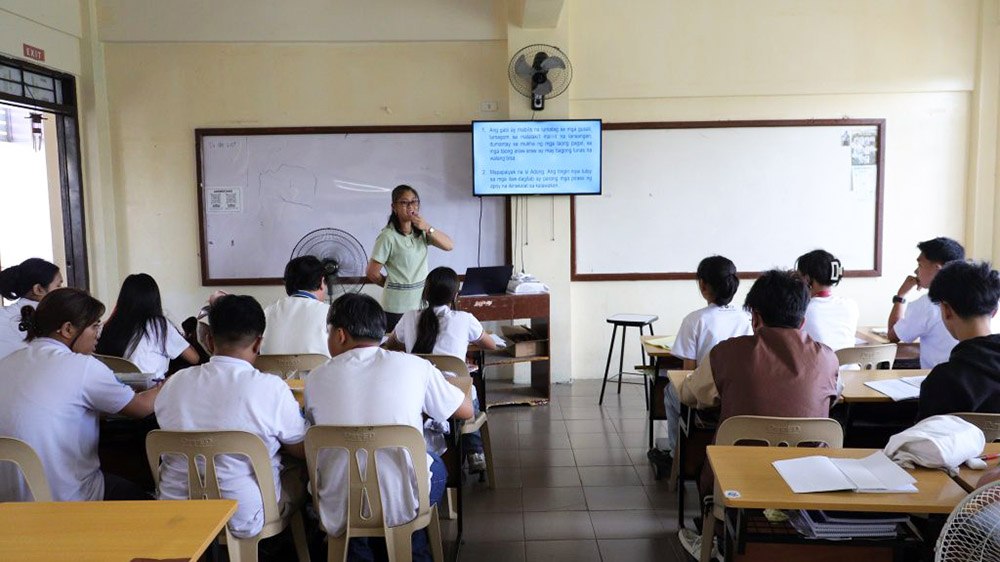
By Rachel Magday   NUEVA VIZCAYA, Philippines — Determined to keep schools as safe havens for learning, the Provincial Government of Nueva Vizcaya has moved to strengthen its School Safety and Security Plan through a joint special meeting of the Provincial Peace and Order Council (PPOC) and the Local School Board (LSB), led by Governor Atty. Jose V. Gambito held at the Nueva Vizcaya Provincial Police Office(NVPPO). The meeting underscored the province’s firm commitment to protecting learners from threats to their safety, security, and well-being, while ensuring that every school remains a secure and conducive environment for education. Governor Gambito emphasized the urgent need for stronger, more coordinated, and proactive measures to safeguard students, stressing that schools must be places where learners can study, grow, and thrive without fear. The meeting was held amid growing national concern over school safety following recent incidents of violence in educational institutions, including the fatal shooting at a public high school in Tacloban City. These incidents have renewed calls for stricter campus security, stronger anti-bullying efforts, expanded mental health support, and a comprehensive review of school safety and emergency preparedness protocols. Among the initiatives approved during the meeting was the production of anti-bullying advocacy video clips aimed at promoting respect, discipline, empathy, and responsible behavior among students, while increasing awareness of the harmful effects of bullying. Governor Gambito vowed to protect every learner; together with partner agencies, the provincial government will keep Nueva Vizcaya’s schools safe, nurturing, and focused on learning. “We will do everything to make sure every child can learn without fear,” Gambito said.    

Coffin placed along Ambuklao Road as stark reminder to motorists

CAR

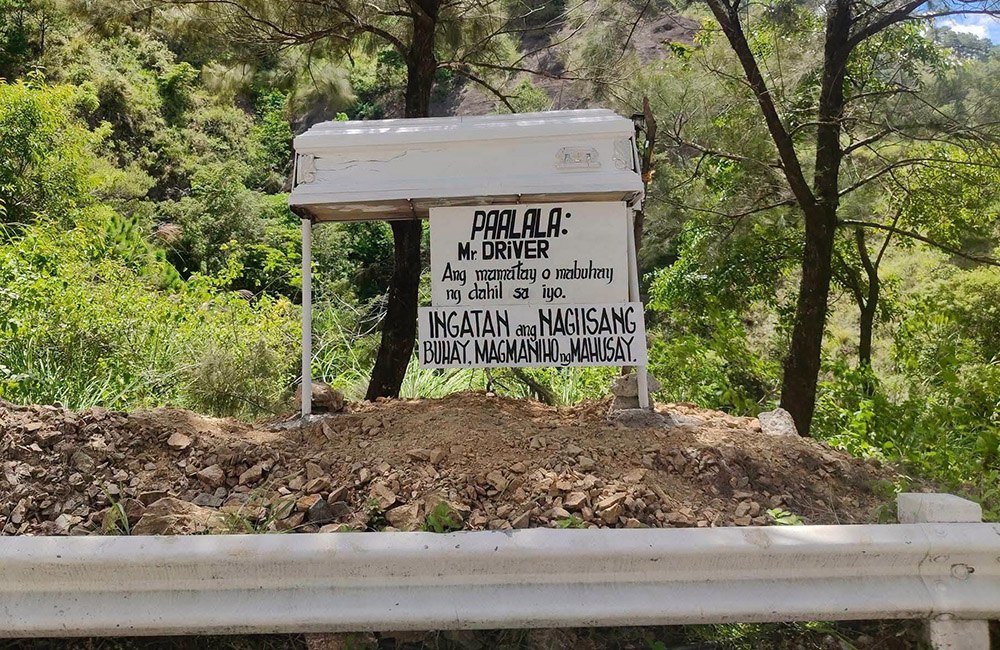
BENGUET, Philippines – A coffin placed on the side of the Benguet-Nueva Vizcaya Road in the Ambuklao Area is currently trending on social media as a warning to motorists. According to the barangay official of Barangay Ambuklao, they did not place it to intimidate, offend or disrespect people, but rather as a reminder to motorists to take care of their lives while driving on the zigzag Ambuklao Road. They also said that motorists should take the importance of road safety seriously, as many have been reported to have accidents along the zigzag Ambuklao Road due to reckless driving ““Paalala: Mr Driver, ang mamatay o mabuhay ng dahil sa iyo.INGATAN ang NAGIISANG BUHAY, MAGMANIHO NG MAHUSAY.” Ito ang nakalagay na pahayag sa ilalim ng kabaong. (Reminder: Mr. Driver, death or life is up to you. TAKE CARE OF YOUR ONLY LIFE, DRIVE WELL.” This is the message written under the coffin.) Barangay officials urge motorists to think carefully before speeding or driving carelessly on the region’s winding mountain highways, as the best trip is one that ends safely and drives as if someone is waiting for you at home. The 103-kilometer zigzag highway called Ambuklao Road (part of the Benguet–Nueva Vizcaya Road) an alternate route from Baguio City to Nueva Vizcaya, with an estimated travel time of more or less three hours was built in 2006 at a cost of ₱2.1 billion. Ambuklao Road is one of six historic major highways in and out of Baguio City, the last of which was the Baguio-Nangalisan,Tuba -La Union Road. These routes have evolved from being the main access road in the province to a major corridor in the region.  

DepEd implements ESMLE policy to apply stricter gadget ban, bag inspection for safety measures

Region 4

By Charmaine Odong-Pangan   LOS BAÑOS, Laguna, Philippines — In the wake of recent school incidents and violent threats in some areas of the country, the Department of Education (DepEd) reaffirmed during the Calabarzon Expanded Regional Intelligence Committee (ERIC) meeting on July 2  its commitment to enforcing DepEd Order No. 6, series of 2026, or the Guidelines on Ensuring a Safe and Motivating Learning Environment (ESMLE). The ESMLE policy includes the strict regulation of gadget usage during class hours to help students stay focused on learning, while promoting the safe and responsible use of the internet and other digital devices. “Sa ilalim ng policy na pinag-uusapan natin, ipinatutupad ‘yung bag inspection, sa ilalim nito mayroon ding visitor and vehicle inspection protocols, limitasyon sa paggamit ng gadgets habang may klase, angkop na sanctions sa mga paglabag, anti-bullying policy template, pagbibigay ng psychosocial support at mental health services,” Ramil Ginete, Project Development Officer IV of DepEd Calabarzon, shared during his presentation on the regional ERIC meeting. DepEd Calabarzon Regional Director Carlito Rocafort said these measures complement the intensified police presence in schools by the Philippine National Police (PNP) and the hiring of additional trained security personnel utilizing individual schools’ Maintenance and Other Operating Expenses (MOOE) funds to help ensure the safety of learners and the entire school community. “As of now, there is a presence of our policemen in the vicinity of our schools. Nag-increase po ang pulis sa visibility. We have increased also the hiring of trained security personnel,” Rocafort said. He added that DepEd Calabarzon is procuring additional handheld metal detectors for school security personnel, while various local government units have provided similar equipment and hired additional job order security personnel to enhance security around school perimeters. “Yung mga LGU natin, nagbigay din sila ng mga job orders na mga security personnel at karamihan po sa mga LGU, sila po ‘yung nag-shoulder ng procurement, para po dito sa mga metal detectors po natin. And we have also a DepEd Order na puwede na pong i-check ang mga bag nu’ng atin pong mga bata, ito po ay initial approach po natin sa Department of Education,” the director further stated. Rocafort emphasized the vital role of local governments in supporting the Department, noting that beyond providing financial assistance, LGUs also coordinate with barangay captains to mobilize force multipliers tasked with helping secure schools and ensure the safety of learners and teachers. Meanwhile, to speed up coordination and facilitate a swift police response in the event of another active shooting incident, each school was ordered to establish coordination channels and group chats with its respective City Component Police Station or Municipal Police Station. (COP/PIA CALABARZON)                  

DHSUD turns over 300 modular shelter units to Nagueño-beneficiaries

Region 5

NAGA CITY, Philippines — The Department of Human Settlements and Urban Development (DHSUD) has officially turned over 300 modular shelter units in Barangay Pacol, Naga City under the expanded Pambansang Pabahay para sa Pilipino (4PH) Program. The project aims to provide temporary and transitional housing assistance to families affected by relocation, disasters, fires, and government clearing operations. Mayor Leni Robredo expressed gratitude to the national government for the Bayanihan Village project, emphasizing its importance in giving displaced families a safe and secure temporary home while waiting for permanent housing. The initiative also includes plans for livelihood training, a clinic, playground, and community development facilities. | via Jason B. Neola, head of CMO-Public Information Office        

Scroll to Top