

Street Journal Multimedia Services

Author name: Street Journal

NTA engages Ilocos Norte stakeholders to address tobacco industry challenges

Region 1

By Mary Therese D. Ancheta and Paulene J. Paglumotan   BATAC CITY, Ilocos Norte, Philippines (PIA) — The National Tobacco Administration (NTA) convened local government units (LGUs), tobacco traders, and farmer groups on April 24 to address key challenges affecting the tobacco industry, including declining farmgate prices, oversupply, and market uncertainty. The consultative meeting convened stakeholders from LGUs, the private sector, and farmer organizations to assess current market conditions for Philippine tobacco and strengthen measures against smuggling, which continues affecting legal trade and pricing stability. NTA Administrator and Chief Executive Officer Belinda Sanchez said the dialogue aimed to promote shared responsibility among stakeholders to stabilize the industry, particularly amid oversupply of flue-cured Virginia tobacco in the Ilocos Region and nearby provinces. The NTA emphasized its goal of ensuring that farmers’ produce is fully purchased at fair and properly graded prices, in line with efforts to reduce post-harvest losses and improve market efficiency. “This meeting allows us to address current industry concerns collectively. Our shared goal is to support tobacco farmers and ensure their produce is properly valued,” Sanchez said. Engineer Randy Abella, NTA Ilocos Norte branch manager, underscored the importance of collaboration among stakeholders, noting strong participation as a sign of commitment to sustaining the local tobacco sector. Local officials raised concerns over the sharp decline in tobacco prices. Bacarra Mayor Nicomedes Dela Cruz Jr., president of the League of Municipalities of the Philippines–Ilocos Norte Chapter, reported that Class A tobacco prices dropped from over ₱100 per kilo last year to around ₱75 this season, significantly reducing farmer income. He also cited rising production costs, climate-related risks, and delays in the release of excise tax as factors affecting the timely delivery of farm support programs. Farmer representatives highlighted oversupply as a key issue, driven by increased planting both locally and overseas. Nestor Padron, president of the National Federation of Tobacco Farmers Associations and Cooperatives, said uncontracted farmers face greater difficulty in selling their harvest due to the absence of guaranteed buyers. Stakeholders also pointed to global oversupply, including increased production in major tobacco-producing countries, which has reduced demand for Philippine tobacco and pressured farmgate prices. In response, the NTA proposed strengthening contract-growing arrangements and exploring crop diversification options to help stabilize supply and improve farmer income. The meeting concluded with a commitment from stakeholders to expand participation in contract growing schemes, improve coordination among LGUs, NTA, and private firms, and strengthen market access and pricing mechanisms for farmers. The NTA will continue similar consultations in other tobacco-producing areas to refine interventions for the 2025–2026 cropping season. (AMB/MTDA/PJP, PIA Ilocos Norte)    

Nueva Vizcaya’s Brenda Zinampan named PSC Masters Athlete of the Year

Sports

By Rachel Magday   Brenda Ramos Zinampan of Bascaran, Solano, Nueva Vizcaya, was named Masters Athlete of the Year at the 3rd All-Women Sports Awards of the Philippine Sports Commission (PSC). The ceremony, held recently at the Philippine International Convention Center (PICC) in Pasay City, honored 83 female athletes and sports leaders for their achievements and contributions to Philippine sports. Zinampan, 48, received the award following her strong showing at the 23rd Asia Masters Athletics Championships in Chennai, India, where she won four gold medals in the Women’s 45+ division. She topped the 400-meter hurdles, 100-meter dash, 80-meter hurdles, and pole vault, cementing her status as one of the country’s top masters athletes. Zinampan began competing in athletics during her high school years through the Nueva Vizcaya Provincial Athletics Association Meet, later advancing to the CAVRAA Meet and the Palarong Pambansa. She stepped away from competition after Palarong Pambansa to pursue college studies and later focused on teaching and coaching. She returned to competitive athletics in her 40s and went on to achieve success in international masters competitions. The PSC All-Women Sports Awards recognizes the achievements of women in sports and their role in inspiring future generations of Filipino athletes.      

Globe champions resilient, secure connectivity as President and CEO Carl Cruz joins GSMA 6G and anti-scam summit in Tokyo

NCR

As global uncertainty and digital threats intensify, Globe is calling for a more disciplined and people-focused approach to the future of connectivity. In Tokyo, Globe President and CEO Carl Cruz participated in two key international engagements, joining industry leaders to contribute to discussions on 6G and strengthen collective action against online scams. Cruz took part in the Digital Nations Summit, where global telecom and technology leaders discussed the evolution of 5G-Advanced and the path toward 6G. He also joined industry discussions on combating digital fraud, including efforts under the United Against Scams initiative, reinforcing the need to embed trust and security at the core of the digital ecosystem. Cruz is also among global telecom leaders who signed the Tokyo Accord alongside representatives from NTT DOCOMO, KDDI, SoftBank, Rakuten Mobile, LG Uplus, the XG Mobile Promotion Forum, the 6G Forum, the Bharat 6G Alliance, and the GSMA, committing to the development of secure, inclusive, and resilient digital ecosystems. “Connectivity today carries far more than data. It carries trust, livelihoods, and the ability of people to stay connected in moments that matter most,” said Cruz. “As we look toward 6G, the priority is clear. We have to build networks that are resilient, secure, and dependable in everyday life, especially when conditions are most challenging.” From speed to stability At the Digital Nations Summit, Globe emphasized that the future of connectivity must move beyond peak performance metrics and focus on consistency. While 6G is expected to unlock new capabilities through AI-native infrastructure, Cruz underscored that what matters most to customers is a connection that works when they need it. For the Philippines, where geography and natural disasters continue to challenge infrastructure, this approach is critical. Globe highlighted the importance of hybrid connectivity models that combine terrestrial networks with satellite technologies to ensure continuous service across more than 7,000 islands. “Resilience is no longer optional. It is the standard people expect,” Cruz said. “A stable connection that holds under pressure is far more valuable than speed that cannot be sustained.” Strengthening trust in a high-risk digital environment In a separate engagement focused on online security, Globe underscored the urgency of strengthening digital trust as scams and cyber threats escalate globally. The company noted that in the Philippines, suspected fraud rates have reached 13 percent, more than double the global average of 5 percent, while 34 percent of users have experienced scams. These risks are rising alongside the rapid expansion of the digital economy, which is projected to reach $36 billion. Globally, scams have already resulted in an estimated $1 trillion in losses, reinforcing the need for stronger safeguards across networks and platforms. “Trust is the backbone of the digital economy,” Cruz said. “If people do not feel safe, they disengage. That is why security, privacy, and accountability must be built into the network from the start.” Globe shared that it has taken an active role in strengthening protection at scale, blocking 967 million scam and spam messages and more than 17,000 malicious domains in 2025 alone, alongside programs that engaged nearly 17,000 users to build digital safety awareness. A disciplined path to 6G Across both engagements, Globe maintained that innovation must translate into real-world value. As the industry begins shaping the 6G roadmap, the company is advocating for early engagement while remaining grounded in practical use cases and sustainable investments. Cruz highlighted the importance of regional collaboration, noting that Asia-Pacific’s diversity offers a unique opportunity to develop and scale solutions across different environments, from dense urban centers to remote communities. “We are not chasing technology for its own sake,” he said. “We are focused on what it enables. Better services, stronger economies, and a more secure digital environment for everyone.” As the telecommunications industry moves toward the next phase of innovation, Globe emphasized that progress must be guided by responsibility, ensuring reliable connectivity across both urban centers and hard-to-reach communities as digital transformation accelerates.  

DA trains Apayao farmers on drone tech to boost rice production

CAR

By Rod G. Asurin   APAYAO, Philippines (PIA) — The Department of Agriculture (DA) continues to step up efforts to modernize rice farming, training farmers in Apayao on drone technology to improve efficiency, reduce costs, and increase yields. Farmers in Barangay Emiliana, Santa Marcela took part in a hands-on demonstration showcasing drone-assisted direct seeding, field mapping, and automated application of fertilizers and pesticides on March 26, 2026. Participants in this activity include 64 farmer-cooperators in said barangay with around 120 hectares of rice fields. The farmers are beneficiaries of the DA’s Drones4Rice project, an initiative under the National Rice Program that promotes precision agriculture through the use of drones. According to DA-Cordillera Assistant Regional Rice Focal Person Bruce Daculan, local farmers were initially hesitant to adopt the technology during the first techno-demonstration, but said interest grew as farmers saw positive results from earlier demonstrations. He noted that drones help reduce production costs, lessens labor requirements, speeds up farm operations, and helps optimize input use compared to traditional methods. Meanwhile, National Rice Program consultant Dr. Andrew Villacorta encouraged the participants to promote the technology within their communities and consider value-adding strategies to increase income instead of relying solely on palay sales. During the activity, farmers also received guidance on proper fertilizer use based on soil analysis and local conditions to ensure efficient input use and better yields. Bessie Pascua, a first-time participant, said the activity helped them better understand how modern tools can improve their farming practices. “Malaking tulong po ito sa amin. Mas napadali ang trabaho at mas nakita namin ang benepisyo ng makabagong teknolohiya sa pagsasaka,” she said. The initiative is part of the government’s broader effort to modernize agriculture and strengthen food security under President Ferdinand R. Marcos Jr. ‘s development agenda. (JDP/RGA-PIA CAR  with reports from DA Rafis Cordillera)          

Beating the dry spell: How Aboitiz Renewables’ run-of-river facilities keep the water moving

Environment

Aboitiz Renewables, Inc., the renewable energy arm of Aboitiz Power Corporation (AboitizPower), maintains active power generation for the Luzon grid by optimizing mountain water runoff across its facilities in Benguet and Mountain Province. Operating nine run-of-river hydropower plants in Benguet and one in Mountain Province, the company leverages the steep Cordillera slopes to keep turbines spinning. By harnessing the intense pressure of water falling from great heights, these facilities generate electricity efficiently throughout the year, regardless of the season. To sustain this performance, the company maintains a 24-hour watch over its water sources through a specialized team of “Waterguards.” Stationed at the weirs, these personnel conduct hourly monitoring using staff gauges to ensure water levels remain sufficient for both power generation and ecological health. This real-time data is critical to the plant’s responsiveness; when levels begin to trend downward, the team takes proactive action by reducing the plant’s load. By calibrating generation to the exact volume available in the river, the facility ensures it only generates what the environment can sustainably provide. This operational precision is bolstered by the active protection of upstream watersheds. Through physical patrolling, fire-line maintenance, and community-led monitoring, the company prevents illegal encroachment and “kaingin” (slash-and-burn) farming. The team also employs bio-engineering—such as planting native trees and vetiver grass—to anchor steep slopes against erosion and landslides. These healthy forest perimeters act as a “natural sponge,” absorbing heavy rainfall to shield downstream residents from flash floods while regulating the flow during summer months. “The mountains provide a natural advantage,” says Dondi Laban, Assistant Vice President for Operations and Maintenance of Hedcor, Inc. “As water flows from high elevations, its natural pressure turns our turbines. We maintain a constant watch over the ‘ecological flow’ to ensure enough water reaches fish, plants, and local irrigation.” As the Philippines pursues a 35% clean energy mix by 2030, hydropower provides the essential flexibility and reliability the grid requires. Through these eleven facilities, Aboitiz Renewables ensures the natural strength of the mountains continues to move the nation forward when that energy is needed most. “Hydropower is more than a source of energy—it is a partnership with the rivers, the environment, and the people,” says Noreen Vicencio, First Vice President and General Manager for Hydro Operations of Aboitiz Renewables. “Every drop we harness helps communities thrive while ensuring the river keeps its life-giving flow.”  

BDO delivers ₱20.1 billion net income in Q1 2026

Business

Highlights: *Resilient results on sustained growth in core businesses *Gross loans grew by 16%, driven by broad‑based growth across all market segments *Asset quality continued to improve, with NPL ratio lower at 1.68% and NPL cover among the highest in the industry *Capital position remained strong, with a CET1 ratio of 13.3% and Book Value Per Share up 8% to ₱119.36   BDO Unibank, Inc. (BDO) reported a net income of ₱20.1 billion in the first quarter of 2026, 2% higher than ₱19.7 billion in the same period last year, supported by the sustained performance of its core businesses. Return on Average Common Equity (ROCE) stood at 12.8% for the period. The Bank delivered strong operational results, achieving mid-teens growth in loans and pre-provision operating profit, with asset quality continuing to improve. Net income was tempered by higher provisions, as the Bank is building strong reserves, primarily a pre‑emptive measure undertaken in response to evolving geo-political risk conditions. Net Interest Income grew by 11% as Gross Customer Loans increased by 16% to ₱3.8 trillion, boosted by the double-digit growth across all market segments. Total deposits expanded by 15%, with Current Account/Savings Account (CASA) growth accelerating to 7%. Non-interest income went up by 6%, while income from insurance operations rose by 27%. Asset quality improved, with the Non-Performing Loan (NPL) ratio declining to 1.68% from 1.77% in the same period last year. NPL coverage was at 132%. Shareholders’ equity increased by 9%, on the back of sustained earnings, with Book Value Per Share rising by 8% to ₱119.36. The Bank’s CET1 ratio was at 13.3%. BDO’s leading market position, diversified business franchise, and strong financial position underpin its ability to pursue sustainable long term growth and profitability while capturing emerging opportunities in a dynamic operating environment.

Magalong opposes 100 more e-taxi units in Baguio

Baguio City

BAGUIO CITY, Philippines — Mayor Benjamin Magalong has previously expressed opposition to the proposal to deploy additional taxi units in the city, saying the plan should undergo local consultations and should consider the city’s road and transportation constraints. Instead, Magalong proposed reducing the number of taxis while increasing public transportation vehicles with higher capacity to ease congestion. He cited data collected in the first four months of 2023 showing that taxis make up the largest share of vehicles on the city’s roads at 42 percent, followed by private vehicles at 31 percent, motorcycles at 16 percent, PUJs at 8 percent, and trucks and buses at 3 percent. Magalong will recall that he criticized the Land Transportation Franchising and Regulatory Board (LTFRB) for its proposal to deploy 100 electric taxis in the city. The proposal to deploy 100 full electric sedan taxis (e-Taxi) was submitted by Design Green and Smart Corporation through its subsidiary Romansa Mobility Land Transport Service. The company is seeking the city government’s approval and endorsement from the LTFRB-CAR for the franchising and operation of e-taxis in the city. According to Magalong, he will not allow the proposal in its current form, emphasizing that the city already has too many taxi units, and that while he prefers eTaxis in the city for environmental reasons, the permitting of additional units should follow a strict “one-in, one-out” policy to avoid worsening traffic congestion. “I will never allow this,” noting that franchising decisions are made by the LTFRB central office without proper consultation with regional offices and local government units.” He said the city government, which directly manages traffic conditions, should be involved in such decisions. In response, LTFRB Chairman Vigor Mendoza promised Magalong to immediately discuss the concerns with his team and expressed his willingness to arrange a courtesy meeting with city officials to plan specific measures. In a message to Magalong, Vigor said the agency has not opened any new franchises, including taxis in the city since he took office in October 2025 and future decisions will be made only with the city’s endorsement. “I assure you that we will not open any new franchise without consulting and obtaining your favorable endorsement,” Mendoza said in a text message to the mayor. Magalong welcomed the assurance and urged the LTFRB to help re-examine the city’s Local Public Transport Route Plan (LPTRP) pointing out the need to use data-driven methods in determining the appropriate number of public utility jeepneys (PUJs) and routes.  

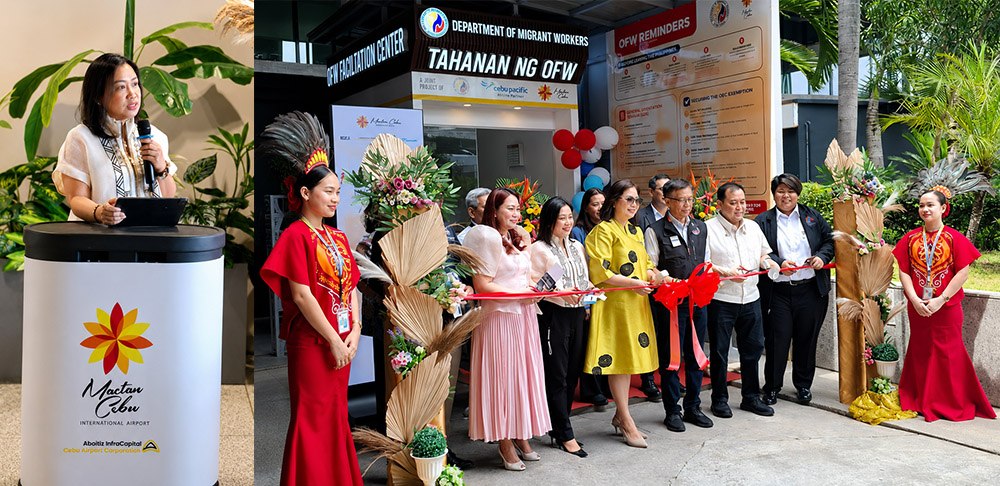
Nueva Vizcaya OFW center praised by OWWA, over 100 distressed workers receive aid

Region 2

By Rachel Magday   NUEVA VIZCAYA, Philippines — The Overseas Workers Welfare Administration (OWWA) Region II has lauded the Nueva Vizcaya OFW Welfare Center for its role in connecting the agency with overseas Filipino workers (OFWs) from the province, as the agency awarded livelihood and other assistance to more than 100 distressed migrant workers. OWWA Region 2 Reintegration Unit Head Alma Chavente said the provincial OFW center has become a crucial link for reaching Novo Vizcayano OFWs who experienced problems while working abroad. She noted that Nueva Vizcaya is currently the only province in the region with a center that serves both OFWs and their families, improving coordination and response times. Under the Balik-Pinas, Balik-Hanapbuhay program, qualified beneficiaries received up to P20,000 each in livelihood assistance to help them start small enterprises in their home communities. Recipients included OFWs repatriated from the Middle East who were affected by the ongoing crisis in the region. Chavente said some beneficiaries also received burial and medical assistance. Chavente added that beneficiaries previously completed Entrepreneurial Development Training provided by the Department of Trade and Industry to equip them with the skills needed to manage their chosen businesses. It can be recalled that even Department of Migrant Workers (DMW) Undersecretary Atty. Bernard Olalia commended the provincial government for pioneering programs for OFWs, particularly its financial literacy and family support initiatives. Olalia described the measures as a model that other local government units may replicate and praised efforts to institutionalize support for migrant workers through the OFW Welfare Center and complementary family programs. Gov. Atty. Jose V. Gambito reiterated the provincial government’s unwavering support for OFWs, urging beneficiaries to “invest their earnings abroad wisely.” He highlighted the province’s financial literacy program as a key component of that support,to help OFWs and their families manage remittances responsibly, plan for sustainable livelihoods and avoid common financial pitfalls. “This program, together with livelihood grants and training, will help turn assistance into lasting financial stability for migrant workers’ families,” Gov. Gambito said.      

Naga roll out rooftop solar project, firms offer P1-M panels for free

Region 5

NAGA CITY, Philippines — Mayor Leni Robredo is set to finalize an agreement with two private companies for the implementation of a solar power project for the Naga City government, following authorization from the Sangguniang Panlungsod to negotiate and enter into a formal contract. This came after the city government launched today, April 23 the Naga City Hall Rooftop Solar Power Project, which aims to install 200 photovoltaic (PV) panels on the rooftops of the Raul S. Roco Library and the Naga City People’s Hall. The project donor, Emerging Power, Inc., represented by Joseph Nocos, and contractor Ecological Energy Technologies, Inc., led by Fowell Justin “Icko” Tan, have committed to provide their products and services at no cost to the city government. Nocos said the 200 solar panels, valued at around P1 million, will help reduce the city’s electricity expenses by minimizing reliance on power supplied by the local electric cooperative. He emphasized that the panels will be provided free of charge. With the project in place, the city government is expected to cut its monthly electricity expenses by as much as P70,000 from an average consumption of about P200,000. The partner companies said their support is aligned with Robredo’s vision of improving the quality of life of Naga residents, especially at a time when the city government has limited resources to undertake such projects. Aside from the solar panels, Emerging Power, Inc. will also donate heavy equipment, including an excavator, dump trucks, wheel loaders, fuel trucks, water trucks, and a service vehicle. Robredo expressed her gratitude to the two private firms, noting that their support will help the city avoid additional expenses. I via Jason Neola    

Scroll to Top