
Street Journal Multimedia Services

Author name: Street Journal

SBMA, BJMP sign MOA for Adopt-A-Mangrove Program

Environment

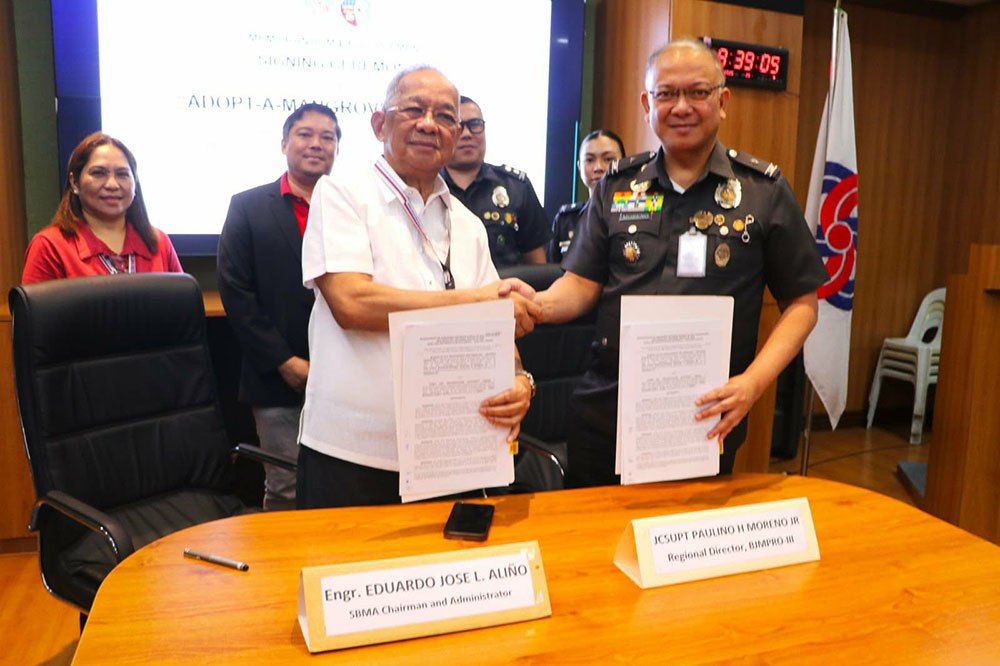
Subic Bay Freeport, Philippines  – The Subic Bay Metropolitan Authority (SBMA) and the Bureau of Jail Management and Penology (BJMP) signed a Memorandum of Agreement (MOA)  for the Adopt-A-Mangrove Program at the corporate boardroom of the administration building here on March 12, 2026. The MOA, which was signed between SBMA Chairman and Administrator Eduardo Jose L. Aliño and BJMP Regional Office 3 (BJMPRO3) Regional Director, Jail Chief Superintendent (JCSupt) Paulino H. Moreno Jr., stipulates the development of approximately 400 square meters of mangrove area within Subic Bay Freeport. Aliño explained that under the MOA, SBMA will designate an area within the SBFZ mangrove forest to be adopted by BJMPRO3. Mangrove seedlings from the agency’s Mangrove Nursery will also be provided. He added that SBMA will monitor and evaluate the adopted area annually. “And after completing the three-year program, SBMA will award BJMPRO3 with a Certificate of Completion upon turnover of the area to SBMA,” he added. Meanwhile, JCSupt Moreno assured that BJMPRO3 personnel will plant at least 100 seedlings and ensure the survival of the planted mangrove propagules in the SBMA-designated area. He also said that BJMPRO3 personnel will conduct regular cleanup activities, provide adequate manpower, and hand over the area to SBMA after three years. SBMA Ecology Center OIC Rossell L. Abuyo and BJMPPO Zambales Provincial Jail Administrator JSupt. Ferdinand G. Malabo witnessed the signing of the MOA along with other officials from the SBMA and BJMP. Subic Bay Freeport Zone hosts approximately 61 to 65 hectares of protected mangrove forests, primarily in areas such as Triboa Bay, Binictican, and Malawaan. These areas serve as crucial coastal protection, wildlife habitats, and ecotourism sites, with ongoing conservation efforts, including tree planting and rehabilitation, conducted by the SBMA Ecology Center and its partners.          
Young Vizcayano ranks Top 9 in Criminology Board Exam

Lifestyle

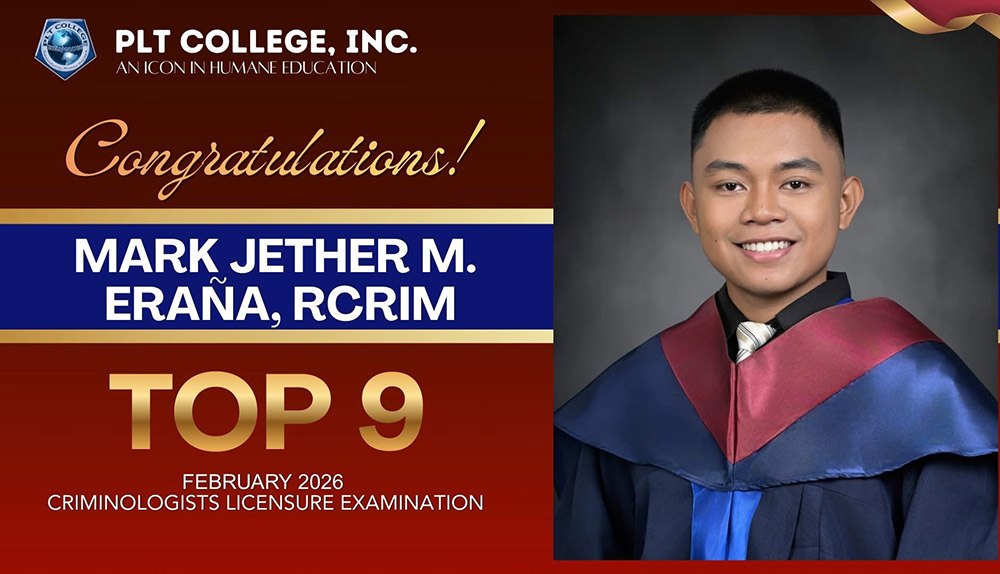
  By Rachel Magday    Provincial Government eyes P100,000 incentive A young Vizcayano has again made his mark in a national licensure examination after placing ninth in the February 2026 Criminologist Licensure Examination (CLE). Mark Jether M. Eraña, a graduate of PLT College and a resident of Bintawan Sur, Villaverde, secured the ninth spot nationwide with a rating of 91.90 percent, according to results released by the Professional Regulation Commission. Eraña, the son of Celso and Rosemarie M. Eraña, is a potential recipient of the P100,000 Topnotchers Incentive from the Nueva Vizcaya provincial government under the administration of Governor Atty. Jose V. Gambito. Under the province’s Topnotchers Incentive Ordinance, a P200,000 reward is granted to those who place first in any professional licensure examination, while those ranking from second to tenth receive P100,000 each. His achievement comes just a week after another young Vizcayano, Anthony George P. Lucero of Sto Domingo, Bambang, also a graduate of PLT College, ranked ninth in the recent Nurses Licensure Examination and is likewise expected to receive the same provincial incentive. Meanwhile, in the overall results of the criminology board exam, the King’s College of the Philippines–Bambang Campus was also recognized for its strong performance after placing among the Top 3 Best Performing Schools in the category of 101 to 199 examinees. The school posted a 95.37 percent passing rate, with 103 out of 108 examinees successfully passing the licensure examination.  

Zambales Provincial Gov’t implements 4-Day work, energy saving program

Region 3

By Ruben A.Veloria IBA, ZAMBALES, Philippines – In compliance with the Memorandum Circular from the Office of the President, the provincial government of Zambales is to implement strict energy conservation scheme amidst possible global energy crises due to on-going conflict in the oil-rich Middle East. Issuing the Executive Order, Zambales Gov. Hermogenes Ebdane Jr. directed all provincial offices and facilities to immediately implement “stringent energy conservation measures and adopt flexible work arrangements”. The EO is in compliance to the Memorandum Circular No. 114, series of 2026, from the Office of the President, which calls on all government agencies to significantly reduce electricity and fuel consumption. “With the volatility of global fuel prices and the rising demand for energy, we in the provincial government must lead by example,” Governor Ebdane stated. This order ensures continuous delivery of essential services to the people of Zambales, he added. Among the measures to be observed include: maintaining air-conditioning thermostats at a strict 24°C, switching off non-essential lights and electronics during lunch breaks and after hours, and utilizing power-saving settings on all office equipment; limiting official travel and out-of-town seminars, promoting virtual meetings. A Four Day A Week work schedules was also to be implemented at the Capitol Offices from Monday to Friday; while Fridays will be Work From Home scheme. Requiring skeletal force on Fridays are the provincial front line offices, including Provincial Accounting Office, Treasury, Disaster Risk Reduction and Management Office (PDRRMO), and General Services Office. Hospitals and Emergency Services Exempted Critically, all provincial hospitals—including President Ramon Magsaysay Memorial Hospital (PRMMH), San Marcelino District Hospital (SMDH), Candelaria District Hospital (CDH), and Ospital ng Sta. Cruz (OSC)—will continue 24/7 operations with no disruption to patient care. Gov. Ebdane is encouraging the local government units and agencies to implement measures to support the call of the President on energy saving, especially petroleum consumption, while the crisis in the Middle East intensifies. Meanwhile, the Zambales Police Provincial Office (ZPPO) warned against fuel hoarding or illegal transactions on petroleum products in support to Department of Energy (DOE) actions to maintain the fair distribution of gasoline supplies. PCOL Benjamin P. Ariola, Provincial Director ng ZPPO, delivery of petroleum products may be delayed, and hoarding will cause artificial shortages in the market which may cause severe effect to consumers and businesses. Col. Ariola instructed all police stations in the province to coordinate with the local officials to monitor the operations of the gasoline stations to make sure that they comply with the law. According to Col. Ariola, hoarding or over pricing of petroleum products are in violation of Batas Pambansa Blg. 33 and Presidential Decree No. 1865.

New Bolinao Community Hospital Breaks Ground

Region 1

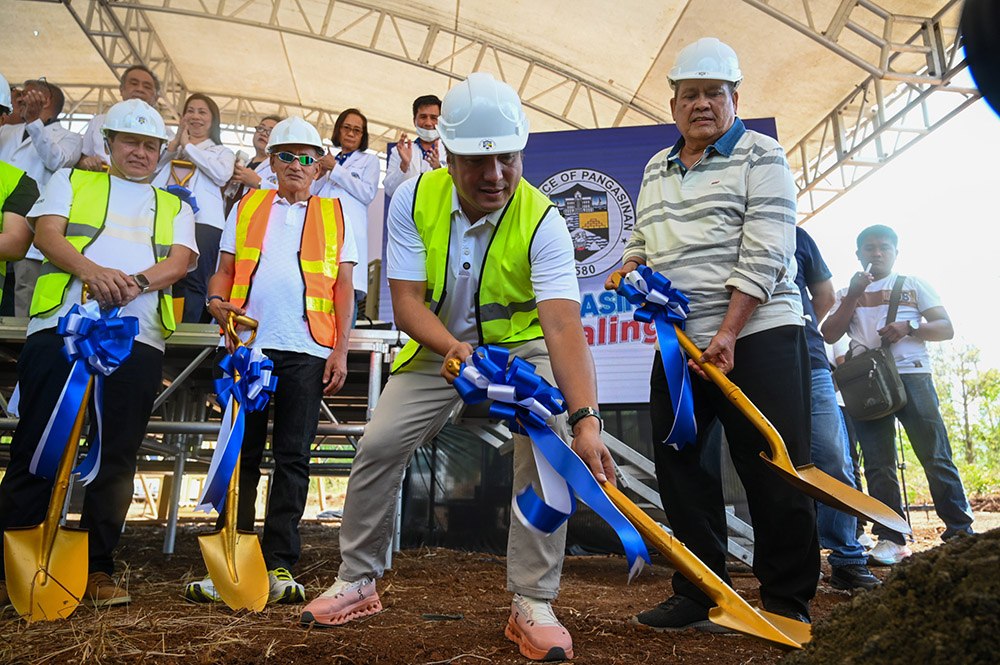
LINGAYEN, PANGASINAN, Philippines  – Governor Ramon V. Guico III led the groundbreaking ceremony for the new Bolinao Community Hospital (BCH) in Barangay Liwa-Liwa, Bolinao, Pangasinan, marking another significant milestone in the province’s healthcare development. Situated in an 18,459 square meter lot donated by the Local Government of Bolinao through Mayor Jesus ‘Boying’ F. Celeste , the new three-storey hospital will replace the existing 25-bed facility in Barangay Sampaloc, expanding its capacity to 64 beds and equipping it with modern medical equipment. BCH Chief, Dr. Genevive Rivera, disclosed that the facility will offer surgical services. Future plans for the hospital include hemodialysis center and provision of CT scan services. Local government officials, led by Mayor Boying and Vice Mayor Noli F. Celeste, joined Governor Guico in the ceremony, underscoring the provincial government’s commitment to improving public health infrastructure. First District Congressman Arthur F. Celeste, Sr. also expressed his full support to the project, highlighting its importance in delivering quality healthcare to the community. The project aims to provide faster, quality, and more accesible healthcare services to residents in Western Pangasinan. Governor Guico stated that the new Bolinao Community Hospital is a testament to the collective efforts of the provincial government and local leaders to prioritize the health and wellness of Pangasinenses. The upgraded hospital is expected to addresss the growing healthcare needs of the community, benefiting thousands of families in the area. Construction of the new hospital is a major step towards achieving the provimce’s health goals, ensuring that quality medical care is within reach for the more than 3.1 million Pangasinenses. (Ruby F. Rayat, photos by JP De Vera & Ervin Alcantara | PIMRO)

BENECO updates Baguio City on New Lifeline Rate Subsidy Program

Baguio City

The Baguio City Council has sought updates on the implementation of the Lifeline Rate Subsidy Program, a key initiative designed to assist marginalized electricity consumers. During the City Council’s regular session on March 9, 2026, representatives from the Benguet Electric Cooperative (BENECO) were invited to shed light on the program. BENECO General Manager Melchor Licoben, General Manager of BENECO, and Engr. Ramel Rifani briefed the City Council members on the updates and adjustments being made under the amended Lifeline Rate Law and amendment to the Electric Power Industry Reform Act (EPIRA) of 2001, formally known as Republic Act No. 9136. The new ERC resolution, which amends certain provisions of Republic Act No. 11552 enacted in 2021, was approved in February 2024 and is set for full implementation starting with the March 2026 billing period. The resolution raises the consumption threshold for qualified lifeline consumers from 45 kilowatt-hours (kWh) to 50 kWh per month. Under the new schedule, households consuming up to 50 kWh per month and registered under the Pantawid Pamilyang Pilipino Program (4Ps) will automatically receive a 100% discount on their electric bills. Non-4Ps consumers using 50 kWh or below may also avail of the subsidy, provided they secure a certification from the City Social Welfare and Development Office (CSWDO) confirming their status as indigent or marginalized households. Discount rates will follow a ladderized system based on consumption: 51-70 kWh: 35% discount 71-100 kWh: 20% discount As of the latest records, BENECO has 354 registered lifeline beneficiaries under the existing program. During the discussion, Councilor Betty Lourdes Tabanda inquired whether non-lifeline consumers are subsidizing the discounts for lifeliners. Licoben confirmed that a minimal charge equivalent to one centavo per kilowatt-hour is collected from non-lifeline consumers to sustain the fund. Any surplus or deficit in the collection will be adjusted through the fund’s administrator, ensuring the program’s stability. Licoben also noted that while lifeline consumers will benefit from the discounts, overall electricity bills are expected to slightly increase due to rising oil prices. He added that standard senior citizen discounts of 5% for consumption up to 100 kWh per month remain in effect. The Lifeline Rate Program, originally established under EPIRA, has been repeatedly extended, first for ten years in 2011, and again in 2021 for a new 50-year period ending in 2071. -Danella Corin David (SP PIO Intern/UB Polsci)

Learning Sustainability Beyond the Classroom at SM City Baguio

Environment

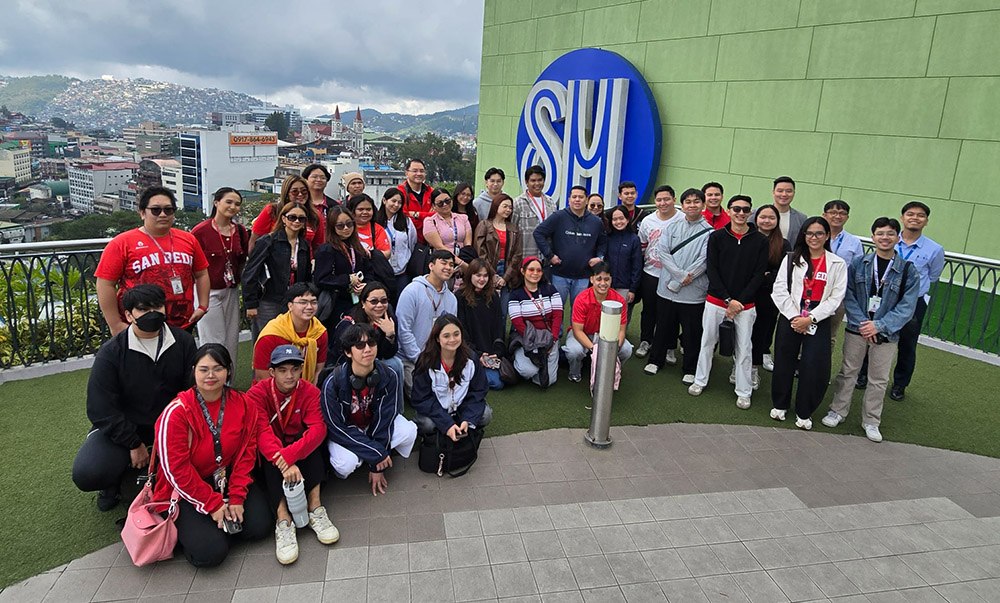
  BAGUIO CITY — Students from the College of Arts and Sciences of San Beda University recently visited SM City Baguio for a sustainability tour that highlighted the mall’s environmental initiatives and commitment to responsible operations. The visit offered students a closer look at how sustainability practices are integrated into everyday mall operations while supporting both the community and the environment. During the tour, students explored several sustainability features of the mall, including its open-air design, which allows natural light and ventilation to reduce energy consumption while creating a comfortable shopping environment. The group was also introduced to the mall’s rainwater catchment system, which helps collect and reuse rainwater for operational purposes and supports responsible water management. Another highlight of the visit was the Electric Vehicle (EV) charging station, which supports the growing shift toward cleaner transportation by providing convenient charging options for EV users. These initiatives demonstrate how environmental considerations are incorporated into the mall’s infrastructure and daily operations. Reflecting on the experience, Dr. Moses Angeles, Vice Dean for the College of Arts and Sciences of San Beda University, shared that the visit gave students a deeper appreciation of sustainability in practice. “I think one of the crucial things the students must have learned is not only about the actual output but the commitment of SM Baguio, that commitment really to become a sustainable institution not simply for the sake of business, not simply for the sake of commerce but it is about the community, about the environment and ultimately the commitment to preserve our common home.” The tour allowed students to connect academic learning with real-world sustainability practices, showing how businesses can actively contribute to environmental responsibility while serving the community. Through initiatives such as sustainability tours and educational visits, SM City Baguio continues to open its doors to institutions and organizations seeking to learn more about sustainability, environmental stewardship, and community-centered development.

Power up your BDO credit card with the best payment app in town

Business

Managing your spending is now as easy as a few taps on your phone. Whether you’re shopping or paying bills online, BDO Unibank (BDO) keeps pace with your busy lifestyle—giving you real-time control, security, and convenience right at your fingertips. Designed to simplify your financial routine, the BDO Pay app makes managing your BDO credit card intuitive and hassle-free. Instantly check your outstanding balance, track transactions, view statements, and see payment due dates in your app in real time. Security you control With BDO Pay, you can keep your credit card locked when you’re not using it and unlock it instantly when you need it, adding a layer of protection against unauthorized transactions. Activate your credit card, access e-statements, or file disputes directly in the payment app so you can skip the customer service calls. Everyday services, simplified You can request card re-delivery, apply for a Cash Advance PIN, or check the status of a credit card application, all by using BDO Pay. You can even request supplementary cards right from the app, making tasks quick and easy. More ways to pay Through BDO Pay’s Scan to Pay option, you can make purchases even without your physical credit card. Simply scan QR codes at merchant stores nationwide and complete your transactions securely, avoiding the risk of wrong transfers or fraudulent cash-ins. No need to pre-load funds and no more awkward delays at the counter due to insufficient funds. Easy access to Rewards Every qualified spend earns points when you pay with your BDO Credit Card linked to your BDO Pay. Convert your points to Cash Credit for more shopping or transfer points to your BDO Rewards or SMAC or SMAC prestige to enjoy member privileges. Go further every time you spend. By blending financial control with everyday lifestyle ease, BDO Pay transforms the BDO credit card into a smarter, more flexible tool. Simply perfect for today’s always-on, mobile-first way of life. Unlock exclusive dining deals and shopping rewards when you download BDO Pay and use it with your BDO Credit Card. Get it for free on the Apple App Store, Google Play Store, and Huawei AppGallery.

Building a Generation of Digital Leaders: Globe’s Digital Thumbprint Program Champions Safer Online Spaces

Lifestyle

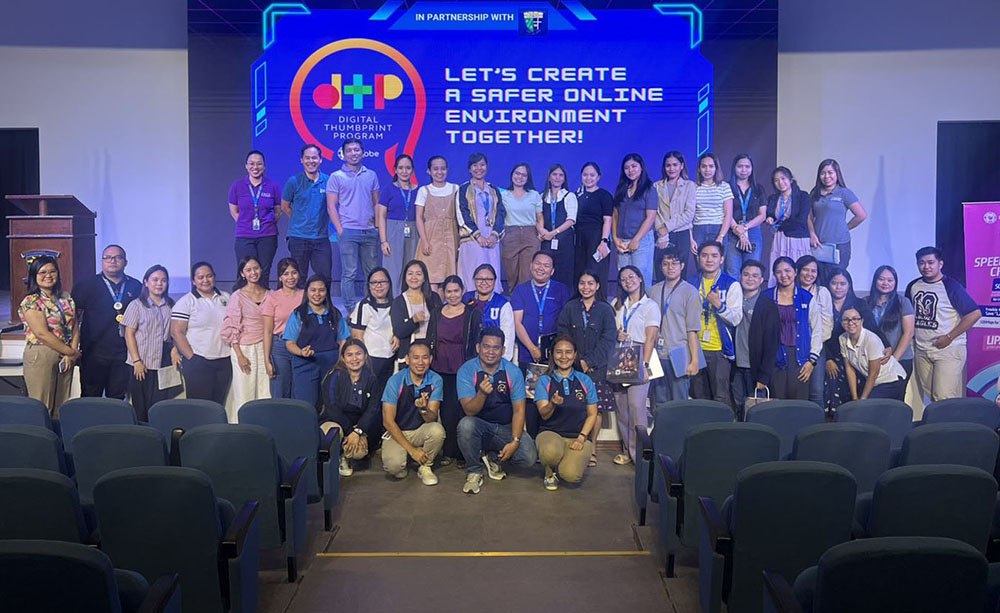
  Ten years after its launch, Globe’s Digital Thumbprint Program (DTP) has officially reached a historic milestone, reaching more than two million students and educators nationwide. What began in 2016 as a corporate initiative to teach online safety and responsibility has grown into a nationwide movement against fast-evolving digital risks. When classrooms shifted online during the pandemic, Globe adapted quickly, converting modules into digital courses on the Globe of Good YouTube channel. These resources have been viewed over 432,000 times, ensuring learning continues anytime, anywhere. DTP equips learners with practical skills to navigate the online world safely, from protecting personal data to practicing cyber ethics and responsible technology use. By turning awareness into action, the program empowers students not just to protect themselves but also to guide others in their communities. In 2019, Globe partnered with the Department of Education to strengthen DTP’s impact, integrating lessons on responsible online behavior into the K–12 values formation curriculum and giving millions of students and teachers structured guidance to navigate digital spaces safely. In 2025 alone, 16,560 students and teachers participated in DTP workshops and learning sessions nationwide. Taking the initiative further, Globe launched the Digital Thumbprint Student Ambassador Program in 2025 with Technological Institute of the Philippines as the pilot school. Student ambassadors will now act as peer mentors who will share digital safety knowledge to classmates and vulnerable communities and create a multiplying effect of awareness and protection nationwide. The 2026 curriculum now features 36 stackable modules, in recognition of the evolving digital landscape, including AI ethics, digital etiquette, Philippine cyber laws, and digital rights, designed to combat current threats that didn’t exist when the program began Structured across basic, intermediate, and advanced levels, the curriculum guides learners through each stage with facilitated training sessions, helping them build mastery and confidence in navigating the modern digital landscape “Reaching the 10-year mark is a testament to the urgency and importance of our mission. When we started in 2016, we talked about passwords; today, we are talking about AI ethics and digital empathy. With our new student ambassadors leading the charge, we are not just teaching safety; we are building a nation of digital guardians,” said Yoly Crisanto, Globe Chief Sustainability and Corporate Communications Officer. This commitment to digital literacy and online safety has also gained recognition. In the 2026 Consumer Choice Awards by Standard Insights, Globe earned Excellence in Digital Literacy and Safety, a new category introduced this year. Among professionals, Globe ranked highest in digital literacy, reflecting its role in enabling productivity and responsible digital engagement. Among students, its online safety initiatives also stood out, highlighting the growing importance of protection in an increasingly connected society. A decade in, DTP is more than a program; it is a legacy of #AlagangGlobe and action. By empowering students as digital leaders, Globe continues to help build a safer and more responsible digital Philippines, protecting digital thumbprints while inspiring the next generation to lead online with confidence. Drawing on the company’s DTP journey, Globe helped shape the global discourse on digital inclusion by contributing to the development of GSMA’s “The Business Imperative for Digital Inclusion”. This serves as a guide that helps mobile operators embed digital inclusion into their strategies, track progress, and report their impact transparently. This views digital inclusion as a holistic ecosystem, encompassing access, skills, meaningful use, and a supportive environment.  

P50M allocated to Kalinga for classroom building; nine priority schools endorsed

CAR

By Iryll Sicnao   TABUK CITY, Kalinga, Philippines — The provincial government has announced that P50 million is allocated to Kalinga under the government’s classroom building program, which seeks to fast-track the construction, rehabilitation, and repair of classrooms. Gov.  James Edduba endorsed nine schools to the Department of Education to be prioritized for the program based on several critical factors, including their location in remote and hard-to-reach communities, existing classroom shortages, structural deterioration of facilities, and the increasing number of learners. These priority schools are located in the towns of Balbalan, Rizal, Pinukpuk, and Tinglayan, particularly the Guinaang Dao-angan Primary School, Cadao Elementary School, Laytok Primary School, Balbalan Agricultural and Industrial School (Poswoy Extension), Balay Elementary School, Bayowong Elementary School, Calbayan Elementary School, Aguimitan Primary School, and Utah Community School. “These schools were identified as priority beneficiaries. Many of the schools serve upland and geographically isolated communities, where access to safe and adequate educational facilities remains a pressing concern,” the Kalinga provincial government said in a press release. The provincial government proposes that each school be provided with a one-storey, two-classroom school building to address their classroom shortages and improve learning conditions. President Ferdinand Marcos, in February, formalized a partnership between the DepEd and the provinces to address the country’s persistent shortage of learning spaces. Under the partnership, the DepEd will set technical standards, provide classroom designs, and provide funding, while the local government units will spearhead procurement and construction. Edduba assured the provincial government’s commitment to properly utilize the funding. “Once approved, the [provincial government] will monitor and supervise its implementation to ensure quality construction of each, assuring that the people’s taxes won’t go to waste and that the classrooms will truly serve their purpose, and that is to uplift the education for all Kalinga,” he stated. (JDP/IOS-PIA CAR, Kalinga)        

Scroll to Top