
Street Journal Multimedia Services

Author name: Street Journal

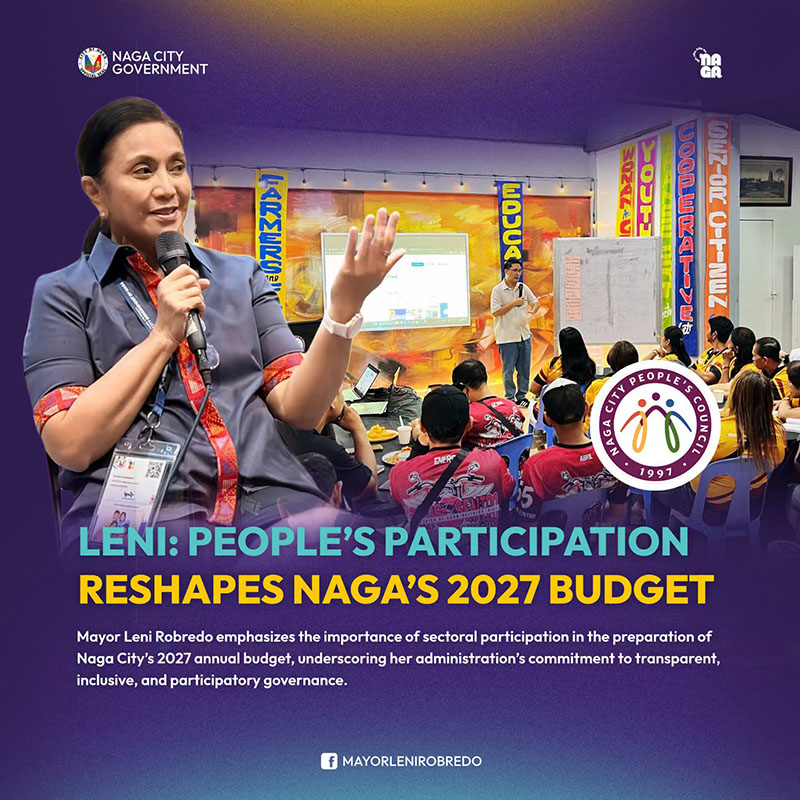
Leni: People’s participation reshapes Naga’s 2027 budget process

Region 5

      NAGA CITY, Philippines — Mayor Maria Leonor “Leni” Robredo said the city government’s ongoing preparation of its proposed 2027 annual budget reflects her administration’s commitment to strengthening participatory governance by giving various sectors a direct role in identifying and determining their respective budget priorities from the very start of the process. Robredo explained that, unlike in previous years when the City Budget Office, the City Mayor’s Office, and the various departments primarily prepared the annual budget before submitting it to the legislative body, her administration has adopted a more inclusive process that allows different sectors to participate in identifying and determining their respective budgetary priorities from the outset. She noted that this approach was supposed to have been implemented following the passage and approval of the People’s Budget Ordinance but was put into practice only in 2026, during her term as city mayor. She said the new process is in accordance with the People’s Budget Ordinance, which requires the participation of sectors in the preparation of the city’s annual spending program. “We created eight clusters chaired by city government personnel and co-chaired by members of the Naga City People’s Council (NCPC),” Robredo said, explaining that consultations with the different sectors have been conducted from day one of the budget preparation. The mayor acknowledged that this approach has made the process lengthier, as the executive branch is no longer solely responsible for identifying and consolidating the priorities that will be included in the proposed budget. However, she maintained that the additional time spent on consultations would not adversely affect the deliberation and approval of the 2027 spending program. Robredo said the proposed budget must first be presented to the City Development Council before it is submitted to the Sangguniang Panlungsod for deliberation, underscoring the importance of ensuring that the spending priorities have undergone the appropriate consultation and review. She stressed that her administration intends to abandon the old practice in favor of a more deliberate and participatory process, emphasizing that budget preparation must be undertaken carefully and systematically. “We cannot afford or tolerate insertions since day one of the budget preparations,” she said. Robredo cited the increasing participation of sectors in the formulation of the city’s budget as evidence of the progress made under the new system. She said that when she assumed office in 2025, only 21 percent of the budget came from sectoral priorities. By 2026, the figure had increased to 84 percent, indicating that sectors were no longer merely being consulted after the budget had been prepared but were already involved in its formulation from the beginning. Among the groups now given a direct role in the process is the artists and creatives sector, which, according to Robredo, is participating in budget preparation with such a mandate for the first time. For the mayor, the substance of the budget and the meaningful participation behind its preparation are more important than the speed with which the document is completed. She expressed confidence that the process would become faster and more efficient in the succeeding years as the different sectors and participating offices become more familiar with the new system. Naga City is the only local government unit in the country with a People’s Budget Ordinance, which was approved in 2017, institutionalizing the participation of citizens and organized sectors in the local budgeting process. The ordinance was authored by former City Councilor Mila Raquid-Arroyo. | via Jason B. Neola, CMO-Public Information Division head.      

PBBM expands digital support for public school teachers in Dagupan City

Region 1

By Rogelio “Odie” P. Mamaril III   DAGUPAN CITY, Philippines — Preparing classroom activities, developing instructional materials, and handling academic requirements are expected to become more convenient for public school teachers in Pangasinan following the government’s provision of computer equipment to support their work. For many teachers who previously relied on personally acquired computers to accomplish school-related responsibilities, the new laptops offer additional assistance in managing their workloads and adapting to the changing demands of education. President Ferdinand R. Marcos Jr. led the distribution of 209 laptops worth more than P8.6 million to teachers from 10 public schools in Dagupan City on Monday, November 9, with 72 units allocated to Dagupan City National High School (DCNHS) and the remaining 137 units distributed among nine other public schools. “We will continue to support our teachers. Along with these laptops, we are providing assistance and training to help you make the most of these devices in your teaching.,” Marcos Jr. said. “These tools are intended to help you prepare lessons, use digital teaching tools, and accomplish school-related tasks more quickly and efficiently.” The President also underscored the importance of equipping teachers with the necessary tools to improve the quality of education, saying that supporting educators also creates better learning opportunities for students. “When we provide our teachers with the tools they need for work, we are also ensuring that our children are learning better. We are giving our learners greater opportunities to compete with their peers around the world and a greater chance of succeeding in life,” Marcos said. The initiative seeks to enhance the quality of basic education by equipping teachers with modern digital tools that enhance classroom instruction, expand access to educational resources, and improve the delivery of learning in public schools. Dagupan City Mayor Belen T. Fernandez meanwhile expressed gratitude to the President for providing public school teachers with digital tools, recognizing their dedication and sacrifices in shaping the future of Filipino learners. “Today, the nation says to our teachers: Receive, and we are giving you the tools you deserve. You are putting technology in the hands of those who shape minds,” Fernandez said. Liezelle M. Duque, DCNHS Master Teacher III, said the newly distributed laptops will help teachers prepare lessons, integrate information and communications technology (ICT) into classroom instruction, and keep pace with advancements in digital education. “This is a great help to us, especially as technology continues to evolve. The initiative undertaken by the President, together with Secretary Angara, is a significant step toward helping us teachers keep pace with technological advancements,” Duque said. Marjorie Mendoza, DCNHS Teacher II, expressed happiness over receiving a government-provided laptop, which she said would be a big help in accomplishing school paperwork and other teaching-related tasks, after previously relying on a personally purchased device. “Thank you, President, for the opportunity and privilege of having this laptop. Malaking tulong po ito sa aming mga guro, lalo na sa paggawa ng school papers at iba pang gawain sa paaralan,” Mendoza said. (Thank you, President, for the opportunity and privilege of having this laptop. This is a big help for us teachers, especially in preparing school papers and other schoolwork.) Joining the President in leading the laptop distribution through the DepEd Computerization Program were First Lady Louise “Liza” Araneta-Marcos, Education Secretary Juan Edgardo “Sonny” M. Angara, Agrarian Reform Secretary Conrado M. Estrella, and key national and regional government officials. The distribution forms part of the government’s efforts to modernize public education, improve teachers’ capabilities, and ensure that both educators and learners benefit from the opportunities offered by digital technology. (CCMT/RPM, PIA Pangasinan)      

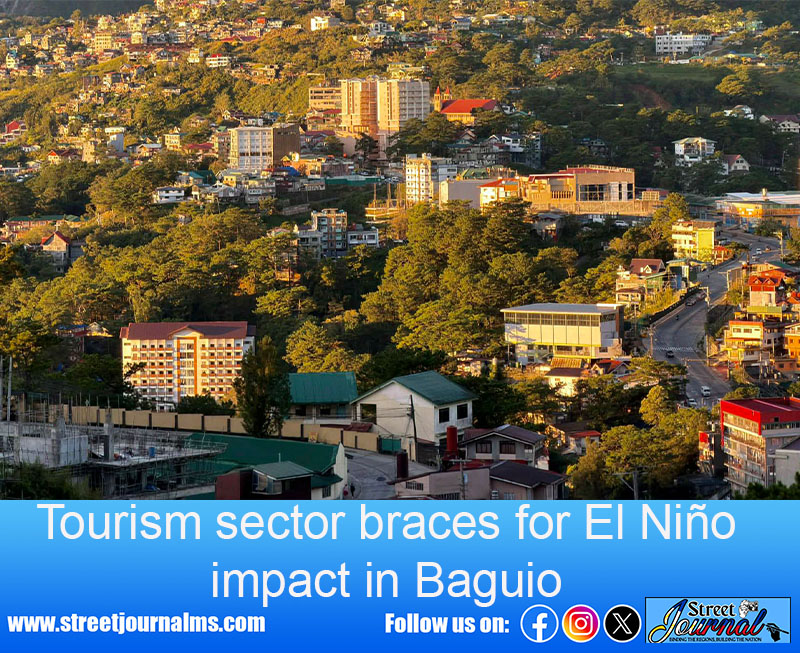
Tourism sector braces for El Niño impact in Baguio

Baguio City

BAGUIO CITY, Philippines — The tourism sector is now stepping up preparations for the expected impact of the El Niño phenomenon, especially as weather conditions are expected to affect major events in the city such as the approaching Christmas, the Panagbenga celebration in February, and summer activities in April and May. It was learned that the tourism and hospitality industry is working with the city government to implement measures to conserve water and mitigate the impact of possible supply disruptions. “We always encourage them to implement water conservation practices as visitor arrivals increase during the Christmas season and other peak periods and while El Niño will indeed have an expected adverse impact on our water supply, for a long time, water supply has always been a problem in our city so some establishments have long implemented their own conservation measures,” said City Tourism Officer Alec Mapalo. He said some of them have implemented their own conservation measures including rainwater harvesting and water recycling facilities. Mapalo said that through their own initiatives, the Hotels and Restaurants Association of Baguio (HRAB) and the Baguio Tourism Council (BTC) also held a conference last month at the Baguio Country Club to discuss practical and affordable ways to conserve and recycle water. Experts were invited to share methods on rainwater harvesting, water recycling, and sanitation practices that minimize water consumption. Mapalo said the activity also addressed the needs of smaller accommodation establishments that may find it difficult to invest in high-tech facilities. In addition, sanitation practices were also emphasized as maintaining clean establishments can require a large amount of water if not managed efficiently. “The initiative aims to encourage industry-wide preparedness rather than limiting conservation efforts to individual establishments,” Mapalo said. At the city government level, various departments are collaborating with the Baguio Water District and other government agencies on the El Niño contingency plan, which also includes the tourism sector. “Hopefully, through these preparations, we can minimize the impact of El Niño,” Mapalo said. He added that the city is also preparing for seasonal tourism operations, recognizing that increased visitor arrivals could put additional pressure on local resources. He said the city’s goal remains focused on the need to conserve water and other resources while ensuring that the city remains ready to accommodate residents and visitors. Based on the climate outlook available as of November 12, 2026, Baguio City and the rest of Benguet should prepare for drier-than-normal conditions and possible drought toward the end of December 2026. Although Baguio is normally cold during December because of the Northeast Monsoon (Amihan), the El Niño phenomenon may cause warmer days, reduced rainfall, and increased risk of water shortage. Baguio and all six Cordillera provinces are expected to experience dry spell conditions by November until December 2026. PAGASA forecasts that Benguet, including Baguio City and other parts in Cordillera projected to be under drought risk conditions by January–April 2027.

The Cathay Group orders 14 additional Airbus aircraft

Business

Hong Kong’s Cathay Group has placed a firm order for 14 additional Airbus aircraft, comprising 11 A330-900s and three A321neos, marking an important next step in the airline’s ongoing fleet modernisation and expansion plans. The 11 additional A330-900s build on the Group’s 2024 order for 30 aircraft, bringing its total firm commitment for the type to 41. The three additional single-aisle A321neos add to the Group’s previous order for 32 A321neo/A320neo placed in 2023. The fuel-efficient, latest-generation aircraft will support the Cathay Group’s regional and longer-haul operations, while enhancing passenger comfort and contributing to the Group’s sustainability goals. “The A330 and A320 aircraft families have been serving the Cathay Group well, and we are pleased to be adding more of these state-of-the-art, fuel-efficient aircraft to our fleet,” said Cathay Chief Operations and Service Delivery Officer Alex McGowan. “This latest order for 14 additional A330-900s and A321neos enables us to further expand and upgrade our fleet, supporting not only our regional operations across Asia-Pacific, but also providing greater flexibility to operate longer flights, further strengthening connectivity at our home hub, Hong Kong.” “This additional order from the Cathay Group, an experienced operator of the A330ceo and the A320 Family, is a strong endorsement of the value these aircraft bring in supporting the airline’s growth,” said Benoit de Saint-Exupery, Airbus EVP Sales of the Commercial Aircraft business. “Together the A330-900 and A321neo aircraft give the airline the flexibility to match capacity to demand, bringing versatility while benefiting from lower fuel burn and the efficiencies of a streamlined Airbus fleet. We are proud to support the Cathay Group through its exciting next stage of fleet renewal and growth.” Powered by the latest generation Rolls-Royce Trent 7000 engines, the A330neo is designed to fly up to 8,100 nautical miles / 15,000 kilometers non-stop and reduces fuel burn, CO₂ emissions and operating cost by 25% compared to previous generation competitor aircraft. The A330neo unique Airspace cabin offers passengers and crews the latest modern in-flight products for a comfortable flying experience. The A320 Family is the world’s most popular single-aisle aircraft, having won nearly 20,600 orders globally. The Family includes the largest member, the A321neo, offering unparalleled range and performance. The Family offers at least 20% fuel savings and CO₂ reduction compared to previous generation single-aisle aircraft, while maximising passenger comfort with one of the widest single-aisle cabins in the sky.

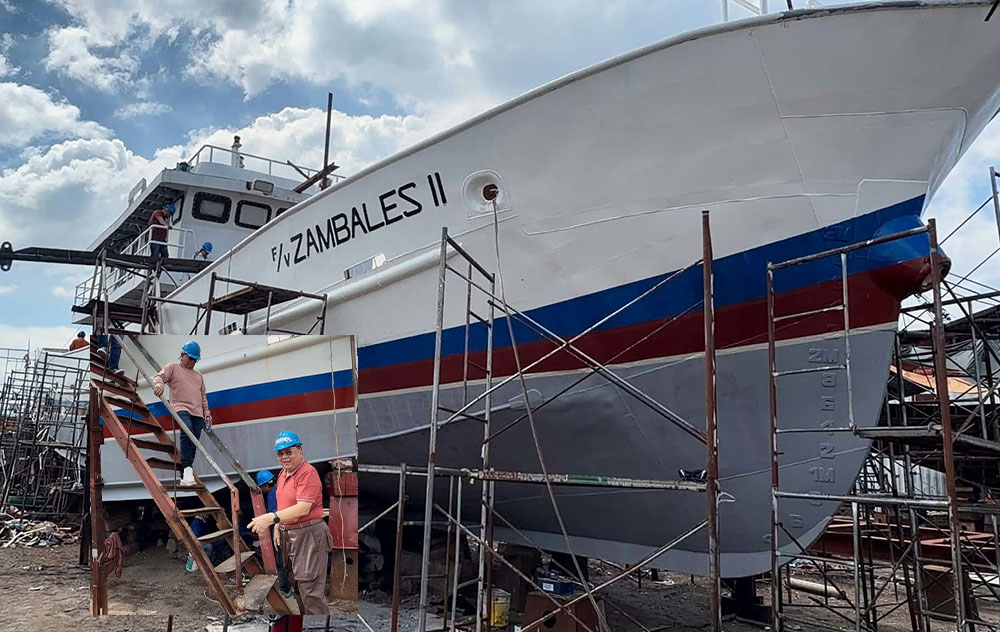
Zambales fishing industry eyes better catch as modern ‘harvester’ boat nears completion

Region 3

By Ruben A Veloria   IBA, Zambales, Philippines – The province’s local fishing industry is expecting to yield more catch as modern and brand new ‘harvester’ vessel is expected to be delivered to fishing group later this year. This was announced by Zambales Governor Hermogenes Ebdane Jr., after his visit in Stoneworks Specialist Int’l. Corp., a Cavite-based boat manufacturer contracted by Zambales provincial government for the purchase of fishing vessels at par with foreign-made fishing boats and inspect the construction progress of the last and the biggest of the five fishing boats ordered by Zambales LGU, on November 12. Gov. Ebdane expressed his delight. “Soon our fishermen will catch more fish to sell. And the fishing industry will start to grow to provide stable jobs for our people.” Ebdane, who is also the concurrent chairman of the Zambales Maritime Development Council (ZMDC), the umbrella council of all fishermen association in the province said the boat which will be registered as F/V Zambales II will serve as “Harvester”, is a 30-meter (98.5 feet) long vessel, with a depth of 3 meters, and a body made of steel. It will be powered by two 400 HP diesel marine engines and can run with a maximum speed of 10 knots (18.5 KPH). It can stack 20 tons of catch in its storage hold. And can produce up to 2.5 tons of ice a day while at sea. As for the crews, the boat has a sleeping bunk for 12 crews, a main galley, toilet and shower room, and a 220AC/ 24VDC power supply. It is also compliant with all the necessary electronic equipment for safe navigation, including GPS and radar. The province is partnering with the Philippine Merchant Marine Academy (PMMA) for training of the boat crews and officers. Earlier this year, Gov. Ebdane led ZMDC in receiving three brand new motorized fishing vessels to augment the province’s fishing industry, including: two 45-footer fishing boats named F/V Zambales III and F/V Zambales IV, both have 125 HP Hyundai engine with a top speed of 18 knots. Each costs P5-Million; the third boat M/B The Province of Zambales, which will be used in patrolling the vicinity of the fishing ground usually visited by poachers. The body of the boats were made of one-inch fiber glass, which is stronger than the usual plyboards, and could withstand strong waves, like those of the standard deep sea fishing vessels abroad. Gov. Ebdane said purchasing of the new fishing boats is one of the four projects of the Province of Zambales that are being implemented to give the fishermen a long-lasting means of improved fishing methods. The other three methods are deep sea fishing, use of payao, and inland fishing, which were already in place. Ebdane said that with the assistance of the Bureau of Fisheries and Aquatic Resources (BFAR), the Office of the Governor was able to purchase 20 units of payao and anchored them to identified fishing areas, to invite more fish to the area, as payao serves as their shades and playing areas.    

Beyond the rain: Solar-powered irrigation brings hope, brighter future to farmers in Cagayan

Environment

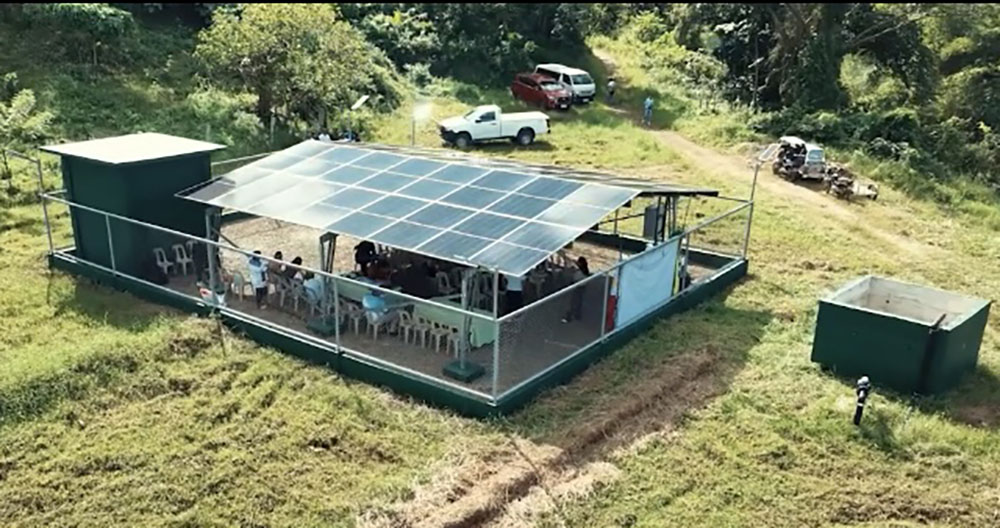
By MJ Roldan   For farmers whose livelihoods depend largely on the mercy of the skies, every drop of rain matters. When the rains stop, uncertainty sets in. Crops struggle, farmlands dry up, and an entire planting season’s hard work can be put at risk. In the farming communities in Santa Ana, Cagayan, where some agricultural lands remain beyond the reach of conventional irrigation canals, this has long been a familiar challenge. But for farmers in these communities, the prospect of waiting for rain to water their crops may soon become less daunting. The installation of two solar-powered irrigation systems by the National Irrigation Administration (NIA) is bringing renewed hope to farmers who have long needed a more reliable source of water for their farmlands. On November 6, 2026, NIA formally turned over two Solar Pump Irrigation Projects (SPIPs) to their respective Irrigators’ Associations (IAs) in Sitio Ugudan and Barangay Visitacion, marking another milestone in the government’s efforts to expand irrigation access and strengthen agricultural resilience. Each project is equipped with 32 solar panels and is expected to irrigate 15 hectares of farmland, benefiting a total of 30 farmers in the two communities. For these farmers, the facilities represent more than an additional source of irrigation. They offer an opportunity to cultivate their lands with greater confidence, reduce dependence on unpredictable rainfall, and secure the livelihoods that have sustained their families for generations. Bringing water where canals cannot reach While conventional irrigation canals have helped transform many agricultural communities, some farmlands remain difficult to serve because of their elevation and geographical location. This is where solar-powered pumping systems can make a difference. Engr. Rowila S. Macoco, system head of the Visitacion Irrigation System, explained that the projects were strategically established in areas that conventional irrigation infrastructure cannot adequately reach. “These solar projects are being installed in areas that our irrigation canals cannot reach. These are usually high-elevation areas where extensive tracts of farmland remain unirrigated,” Macoco said. She explained that the solar facility in Ugudan was established in response to farmers’ requests for irrigation services that would bring water to their agricultural lands. The project, which serves the Ugudan Communal Irrigation System, is expected to irrigate 15 hectares and benefit 15 farmer-beneficiaries. Macoco emphasized that extending irrigation services to these underserved areas is particularly important amid increasing climate variability and the threat of the El Niño phenomenon. “These solar-powered facilities are a great help, especially during the El Niño phenomenon, as they allow us to reach areas that our conventional irrigation systems cannot serve,” she said. By harnessing solar energy to operate water pumps, NIA is helping address irrigation gaps and provide farming communities with an alternative means of accessing water, particularly during periods of insufficient rainfall. Blessing for farming families For the farmers themselves, the arrival of the solar irrigation facilities is a welcome development after years of hoping for a more dependable water supply. In communities where farming remains the primary source of income, access to irrigation can determine whether farmers can continue cultivating their lands or leave portions of them unproductive. Pablito Buyco Agra Jr., president of CAVICIA Pangkat 3, expressed gratitude to the government for providing their community with a solar pump irrigation project. He described the facility as a significant intervention for small-scale farmers, particularly because their area lacks a dependable surface water source. “This government project is a great help to us small-scale farmers. Even without a river as a water source, this solar pump will greatly benefit our farms, as we have no other available water source to operate conventional water pumps,” Agra said. The project draws water from an underground source, with solar energy powering the pumping system to deliver water to agricultural areas. For Agra, the development opens up the possibility of expanding their cultivated land beyond the 50 hectares they currently farm. “I am confident that we may be able to cultivate more than the 50 hectares we currently farm,” he said. His optimism reflects the potential of irrigation infrastructure to improve agricultural productivity. With more accessible water, farmers may be able to cultivate additional areas, increase production, and strengthen their capacity to sustain their livelihoods. Agra also expressed appreciation to NIA and President Ferdinand R. Marcos Jr., hoping that similar projects would continue to reach communities in need. “We hope that projects like this will continue so that the lives of us farmers can improve,” he added. Greater security In Ugudan, where farmers have long relied on rainfall to water their crops, the new irrigation facility is seen as a much-awaited answer to the community’s needs. Fredie A. Castro, president of the Ugudan Sta. Maria Irrigators’ Association, said the project holds particular significance for the community, where farming is the primary source of livelihood. He recalled how farmers had long hoped for an irrigation facility that would help them overcome the limitations of rain-dependent agriculture. “We have long hoped for a project like this; that is why we are truly grateful. It is a great blessing from the Lord, especially since our area relies solely on rainfall for irrigation,” Castro shared. For farmers in rainfed areas, uncertainty over rainfall often translates into uncertainty in agricultural production. Prolonged dry spells can affect crop development, reduce yields, and threaten the income of farming households. With the solar pump irrigation facility, Castro believes farmers will have a more dependable source of water once the project becomes fully operational. “Once this project becomes operational and is put to use, it will be a great help to our farmers,” he said. He added that even during severe El Niño conditions, the facility could provide an alternative water source to help sustain their agricultural activities. For a community that has long waited for this kind of assistance, the project brings relief and renewed confidence in the future of farming. A sustainable future While providing irrigation infrastructure is an important step toward improving agricultural production, sustaining its benefits also requires the active participation of the

Food bank and donation system pushed in Cavite to combat food waste

Region 4

By Patricia Bermudez   TRECE MARTIRES CITY, Cavite, Philippines — The Sangguniang Panlalawigan of Cavite Province is pushing for a measure to establish a Food Bank and Food Donation system to minimize food wastage and provide healthier eating options. In a Joint Hearing of the Committees on Health, Nutrition, and Population, the Sangguniang Panlalawigan reviewed the provisions of the proposed measure that aimed to deliver healthy meals especially for marginalized sectors. Board Member Jasmin Maligaya-Bautista said that the proposed Food Donation Program and Food Bank System will help minimize food wastage and push for responsible food consumption. “Tinalakay po natin ang panukalang ordinansa na naglalayong magtatag ng Food Donation Program and Food Bank System sa lalawigan ng Cavite upang mabawasan ang food wastage at masiguro na ang mga pagkaing maaari pang mapakinabangan ay maipamamahagi sa mga higit na nangangailangan.” Moreover, Maligaya-Bautista expressed her optimism that their collective efforts will bring more programs pushing for environmental protection, responsible consumerism, and malasakit. “Naniniwala po tayo na sa pamamagitan ng pagtutulungan, mas mapapalawak natin ang mga programang nagtataguyod ng wastong pangangalaga sa kapaligiran, responsableng pagkonsumo, at malasakit sa kapwa.” By diverting produce from becoming food waste, food donation drives help the environment by conserving water, energy and agricultural labor. It also helps address malnutrition among children and the elderly who struggle with food insecurity. Findings by the Department of Science and Technology-Food and Nutrition Research Institute (DOST-FNRI) show that average daily plate waste rose by 69 percent in 2023 to 130 grams, from 77 grams in 2018 to 2019. Data also showed that Rice remained the most wasted food item, accounting for 64.9 percent of total plate waste, followed by vegetables at 12.9 percent and fish at 9.3 percent. Plate waste refers to edible food left uneaten after meals, whether discarded or given to animals, reflecting the gap between food prepared and food consumed. (PB-PIA CALABARZON, with reports from Jasmin  Maligaya-Bautista)  

NIA activates Magapit pumps to ensure water supply for 2027 dry-season cropping

Region 2

By Gene V. Baquiran   TUGUEGARAO CITY, Cagayan, Philippines — The National Irrigation Administration (NIA) has started delivering irrigation water to farmers under the Magapit Pump Irrigation System (MPIS) for land preparation and planting activities for the 2027 dry cropping season. The two main electric pumps at the Magapit Pumping Station were switched on, signaling the start of water distribution across its service area. The operation follows the irrigation schedule agreed upon during the October meeting of the System Management Committee (SMC), which coordinates the system’s water distribution activities. NIA-MPIS System Head Engr. Chantilly V. Rubia inspected the pumping facility to check the equipment, monitor water flow into the main canals, and ensure that the distribution system was operating properly. She said the two electric pumps were functioning efficiently to ensure the timely delivery of irrigation water and prevent disruptions to farmers’ land preparation and planting activities. “We are ensuring that the pumping facilities are operating efficiently so that irrigation water reaches our farmers according to the agreed schedule. This will help them prepare their fields and begin planting on time,” Rubia said. Rubia added that the timely start of irrigation operations was made possible through preparations and coordination among the system management, operations personnel, and Irrigators’ Associations. Coordination is important for managing water distribution across the area and ensuring farmers receive irrigation water according to the agreed schedule. “Our close coordination with the Irrigators’ Associations allows us to respond to the needs of farmers and manage water distribution more effectively throughout the cropping season,” she said. Early implementation of irrigation operations is expected to help farmers maximize planting opportunities, support agricultural productivity, and sustain food production in the areas served by the Magapit Pump Irrigation System. NIA continues to coordinate with its stakeholders to ensure the efficient delivery of irrigation services throughout the 2027 dry cropping season. (ALM//GVB/PIA Region 2, Cagayan, with reports from NIA Region 2) Photos courtesy of NIA Region 2              

BCDA welcomes incoming PCEO Nepomuceno; recognizes outgoing PCEO Bingcang’s 30 years of service

Region 3

The Bases Conversion and Development Authority (BCDA) welcomes Mr. Ariel F. Nepomuceno as its incoming President and Chief Executive Officer, as the agency builds on its gains and pursues new opportunities to contribute to the country’s economic growth. Nepomuceno brings a combination of public-sector leadership and private-sector experience that will serve BCDA well as it advances its development agenda. He previously served as the Commissioner of Bureau of Customs and Administrator of the Office of Civil Defense and Executive Director of the National Disaster Risk Reduction and Management Council. Before that, he held senior positions at the Bureau of Customs, including Deputy Commissioner for the Enforcement Group. His private-sector experience adds a business and operational perspective to his leadership background. A magna cum laude graduate of the University of the Philippines, he also holds an Executive MBA from the Asian Institute of Management. His experience in government operations, institutional management, and enterprise leadership is expected to help BCDA strengthen its capacity to attract strategic investments, accelerate project development, and forge partnerships that translate government assets into economic opportunities for Filipinos. Tenure marked by growth, milestones BCDA also recognizes outgoing PCEO Joshua M. Bingcang for his 30 years of service to the institution. He joined BCDA in September 1996 as a Project Development Officer III and rose through the ranks before becoming the agency’s president and chief executive. Under his leadership, BCDA emerged as one of the country’s fastest-growing investment promotion agencies (IPA), rising to become the Philippines’ third top-performing IPA. From 2022 to 2026, the agency remitted Php37 billion to the National Government, supporting national development and the modernization of the Armed Forces of the Philippines. In 2026 alone, BCDA generated Php145 billion in investments and secured commitments for 11,800 jobs in 2026. Among the key achievements of Bingcang’s tenure was strengthening Clark as a major infrastructure and investment hub, anchored by Clark International Airport (CRK) and the completion of the 19.8-kilometer One Clark Boulevard which connected the Clark Freeport Zone, Clark Aviation Capital, and New Clark City. Bingcang also played a central role in positioning New Clark City as a potential hub for advanced manufacturing, semiconductors, artificial intelligence and other strategic industries under the Philippines’ participation in the US-led Pax Silica initiative. The proposed advanced manufacturing hub in New Clark City is envisioned as a major component of the country’s effort to move up the global technology value chain. The planned hub is projected to generate significant economic activity and employment once fully operational. His tenure also saw key milestones across BCDA’s development portfolio, including the advancement of New Clark City, the resolution of long-standing legal challenges in Camp John Hay, the recovery of operational control over Poro Point Seaport, and the continued development of strategic properties in Metro Manila. All these milestones supported President Ferdinand R. Marcos Jr.’s economic agenda to strengthen infrastructure, attract investments, and generate jobs in the country. Beyond infrastructure and investment, Bingcang also championed programs aimed at ensuring that BCDA’s developments generate tangible benefits for surrounding communities. The agency also expanded community-oriented initiatives involving youth development, sports, education, environmental protection and support for communities. Programs such as the BCDA Youth Rising Cup in Tarlac, which supports the development of young athletes, and the Ayta Ethno-Botanical Center (AEBC), which promotes sustainable farming and livelihood opportunities for Indigenous Peoples (IPs), reflect the agency’s commitment to community development. These milestones reflect BCDA’s continuing work to transform former military bases and other government properties into productive economic centers that attract investments, generate employment, and create opportunities for Filipinos. As Engr. Bingcang moves on to his next assignment at the Philippine Economic Zone Authority (PEZA), BCDA wishes him success in his continued public service. “Serving BCDA for 30 years has been a meaningful journey and a great privilege. I am proud of what we have achieved as an institution, made possible by the dedication of our people and the support of our partners. As I take on a new role in public service, I am confident that BCDA will continue to build on these gains, create new opportunities, and deliver better lives for Filipinos,” Engr. Bingcang said. With the transition in leadership, BCDA remains focused on its mandate and the opportunities ahead. BCDA looks forward to sustaining its investment momentum, strengthening its development portfolio, and delivering lasting value for the Filipino people.  

Scroll to Top