
Street Journal Multimedia Services

Author name: Street Journal

Sto. Tomas City, Batangas SDO  leads reading literacy in PH

Region 4

By Danny Estacio   CITY OF STO. TOMAS, Batangas, Philippines – The City School Division Office (SDO) of the Department of Education got the lowest percentage of struggling readers, which brought local learning to the top on a national level, said here on Monday, March 30. This was the result of the recently concluded Comprehensive Rapid Literacy Assessment (CRLA) conducted at the beginning of SY 2025-2026, where the City of Sto. Tomas Schools Division posted the lowest percentage of struggling readers at 23.43%, leading the country in literacy, as announced by  City Mayor Arth Jhun Aguilar Marasigan Marasigan said that it is the outcome of the power of the partnership among the local government, educators, and stakeholders to exemplify reading habits to young learners. Marasigan added that collaborative efforts between the local government units and the education sector had been manifested as the city was recognized by the Department of Education’s Second Commission on Education with the lowest number of struggling readers. The fresh achievement highlights the many sacrifices of our teachers who give extra time to bring meaningful change to students’ learning behavior, said Marasigan. The recognition has proven the important role of each sector of society in shaping the education system in the country, he added. Marasigan said that the city has institutionalized ties with the city’s SDO through the local school board, expanding the membership and strengthening its core to take urgent action to address the learning crisis. LGU, in partnership with SDO has scaled up health and nutrition for our young learners by implementing feeding programs and executing the Academic Recovery and Accessible Learning (ARAL) program, which enables learners struggling in reading, mathematics, and science to attain essential learning competencies. Marasigan administration’s securing proper education for young citizens has been one of his many priorities, ensuring that no one is denied equitable access to learning opportunities and formulating policies that would guarantee quality education for young Tomasinos. Dr. Neil Angeles, head of the City School Division Office, is thankful to the local government for providing essential materials most helpful in bringing back the love of reading for school children. Angeles added that aside from mentorship and guided reading sessions, easily accessible reference and reading materials, and available digital learning tools provided by the city government are crucial in meeting the ideal educational outcome. Parents’ active involvement in making home reading a habit for their children helps accelerate literacy development, and family support indeed makes a difference, said Angeles. Marasigan expressed gratitude to the effort of the City School Division Office for bringing local learning to the top of the educational arena on a national level.    

𝗡𝗮𝗴𝗮 𝘀𝘁𝗲𝗽𝘀 𝘂𝗽 𝗛𝗼𝗹𝘆 𝗪𝗲𝗲𝗸 𝘀𝗲𝗰𝘂𝗿𝗶𝘁𝘆, 𝘁𝗿𝗮𝗳𝗳𝗶𝗰 𝗽𝗹𝗮𝗻𝘀 𝗮𝗺𝗶𝗱 𝗲𝘅𝗽𝗲𝗰𝘁𝗲𝗱 𝗶𝗻𝗳𝗹𝘂𝘅

Region 5

NAGA CITY, Philippines — Authorities have ramped up preparations to ensure public safety, security, and efficient traffic management as the city braces for an influx of pilgrims, tourists, and returning residents during Holy Week. The Public Safety Office (PSO), headed by Executive Director Renne Gumba, in coordination with the Naga City Police Office led by City Director PCol. Gilbert Farinas, is undertaking inspections and deployment planning in key areas, including the Central Bus Station, churches, and other religious and tourist destinations. Resorts, particularly those located in the city’s upper barangays, have also been included in the coverage, as these are expected to draw vacationers during the long holiday. Mayor Leni Robredo said the preparations are primarily aimed at preventing traffic congestion due to Holy Week processions, and ensuring a swift response to possible emergencies, noting that no extraordinary incidents are anticipated despite the expected surge in passengers, especially Nagueños returning home for the observance. Raynor Rodriguez, head of the City Disaster Risk Reduction and Management Office, said the city will operationalize its Summer Vacation (SumVac) initiative to ensure readiness for any eventuality. The peak period is expected from April 2 to 5, 2026, covering Maundy Thursday, Good Friday, Black Saturday, and Easter Sunday, with activities beginning on Palm Sunday on March 29. As a pilgrimage city and a top religious and tourist destination, Naga is expected to draw a high turnout of visitors. Meanwhile, the Metro Naga Development Council through its Tourism, Arts and Culture Cluster has launched the Metro Naga Faith Tourism Circuit, a unified spiritual journey that brings together the 18 member Local Government Units (LGUs) of the Metro Naga Development Council (MNDC), each offering a unique expression of faith, culture, and devotion during the Holy Week. Anchored in the long-standing religious traditions of the Archdiocese of Caceres, with Naga City as the “Pilgrim City” and spiritual hub, this circuit invites pilgrims to embark on a meaningful pilgrimage within towns and communities—each stop reflecting centuries-old Bicolano faith practices. In the coming months, MNDC Tourism, Arts and Culture cluster will also launch Metro Naga River Cruise, Food Tourism and Sand, Surf and Sun Projects. MNDC Executive Director Hubert Brocales said that the River Cruise and Food Tourism component will highlight river-based activities, riverbank attractions, and local cuisines and signature dishes from member LGUs. These tour packages are currently being consolidated into a single portfolio which aims to boost local tourism and economic activity within the Metro Naga. I via Jason Neola

DA eyes location for Bio-Safe facility in Subic Bay Freeport

Environment

Subic Bay Freeport, Philippines – The Department of Agriculture (DA) is considering to locate a Bio-Safe facility in this premier Freeport zone to ensure the security of agriculture, fisheries, and fertilizer supply chains against risks of smuggling and disease. Early this week, the DA-Inspectorate and Enforcement (DA-IE) unit, led by Undersecretary Carlos Carag met with Subic Bay Metropolitan Authority (SBMA) officials represented by Chief-of-Staff Atty. Von F. Rodriguez, at the corporate boardroom of the administration building, where the former discussed its mandate to establish a Bio-Safe facility or an examination facility in strategic locations in the country. The said facility is part of the government’s initiatives for the ₱1-billion Bio-Safe biosecurity program for 2026, which aims to examine all agricultural products before they are even allowed entry through the piers and go through Bureau of Customs (BOC) processes. According to the DA Inspectorate and Enforcement Unit, the department is eyeing the establishment of such facilities at the Manila International Container Terminal (MICT), the Port of Subic, and the Port of Davao as part of the first phase of the said program. The Bio-Safe biosecurity program aims to strengthen border controls, enhance on-ground enforcement against smuggling, and prevent food supply disruptions and price shocks. Its core objectives include preventing disease outbreaks, specifically targeting transboundary animal diseases such as African Swine Fever (ASF) and Avian Influenza (Bird Flu) to prevent supply shocks and price spikes. Another objective is to strengthen border control by enhancing the detection rate of agricultural smuggling, tightening sanitary/phytosanitary filters on imports, and economic protection, which aims to avoid massive industry losses, such as the estimated ₱200 billion lost due to past ASF outbreaks.

PCTO Calls for measured implementation of Konektadong Pinoy Act amid National Energy Emergency

Business

The Philippine Chamber of Telecommunication Operators (PCTO) hereby respectfully submits this statement of concern in light of the prevailing national energy emergency and its significant impact on the telecommunications sector. The PCTO acknowledges the importance of the Konektadong Pinoy Act and its objectives of expanding digital connectivity for all Filipinos. However, in consideration of the extraordinary circumstances currently facing the nation, the PCTO respectfully urges all relevant government agencies and regulators to give immediate and serious attention to the following: EXTENDED AND SPACED POLICY CONSULTATIONS Given the magnitude and urgency of the national energy emergency, the PCTO requests that policy consultations pertaining to the various issues such as the access list, dig once policy, SMPF, infrastructure sharing & cybersecurity and others related to the implementing rules under the Konektadong Pinoy Act be extended and appropriately spaced. Compressed timelines and simultaneous consultation processes place an undue burden on stakeholders whose operational capacities are presently strained. Adequate spacing of consultations will ensure that inputs are substantive, well-considered, and genuinely reflective of the entire industry stakeholders’ position. DUE CONSIDERATION FOR INTERNAL OPERATIONAL AND COST PRESSURES The ongoing national energy emergency has given rise to significant internal challenges for telecom operators, including increased operational costs, supply chain disruptions, workforce constraints, and heightened demand for essential connectivity services. The PCTO respectfully requests that regulators give due consideration to these compounding pressures when crafting and enforcing policy timelines, compliance requirements, and related obligations under the law. 28 th Floor, The Globe Tower, 32 nd Street corner 7 th Avenue, Bonifacio Global City, Taguig ∙ Tel 7797 4268 ∙ Fax 7797.2697 FULL UTILIZATION OF THE ONE-YEAR SMPF PROMULGATION PERIOD The Konektadong Pinoy Act provides a period of one (1) year for the promulgation of the Spectrum Management and Policy Framework (SMPF). The PCTO strongly appeals for the full and meaningful use of this statutory period to allow for comprehensive consultation, collaborative drafting, and thorough review among all spectrum stakeholders. Rushing the SMPF process risks producing a framework that is inadequately aligned with technical realities, market conditions, and the long-term interests of both industry and the public. MORATORIUM ON POLICY ISSUANCES DURING THE CRISIS PERIOD Considering the foregoing, the PCTO respectfully appeals that, for the duration of the ongoing national energy emergency, the Government refrain from unduly rushing the release of any circular, directive, or policy that would materially affect the telecommunications industry. A moratorium and proper extension of time for stakeholder consultations is not merely a procedural accommodation, it is a practical necessity. The overriding urgency at this time is to ensure that the telecommunications industry remains operational, financially viable, and fully capable of keeping critical telecom infrastructure functional and resilient. Stability in the sector is not an industry interest alone, it is a public interest, as connectivity has proven indispensable in times of national crisis. The PCTO remains committed to working constructively with all government agencies toward the shared goal of advancing digital connectivity for every Filipino.

FULBRIGHT, CHED, DOT launch consortium to position Philippines as global study hub for U.S students

Lifestyle

MANILA, Philippines – The Philippines is officially opening its doors to American students seeking academic credit and cultural immersion in Southeast Asia. The Consortium for Study Abroad in the Philippines (CSAP) was officially launched on Tuesday, March 24, in a high-level ceremony led by the Philippine-American Educational Foundation (Fulbright Philippines), the Commission on Higher Education (CHED), the Department of Tourism (DOT), the Department of Foreign Affairs (DFA), and the U.S. Embassy in the Philippines. The initiative unites 15 of the country’s top Higher Education Institutions (HEIs) into a streamlined network, creating a direct pipeline for U.S. universities to send students to the Philippines for short-term courses, semester exchanges, and faculty-led programs. Turning the Tide on Student Mobility For decades, the flow of education has been predominantly one-way, with Filipinos traveling to the U.S. for studies. CSAP seeks to attract more American students by promoting Philippine universities as destinations for study and cultural immersion, positioning the country as a hub for international education. “CSAP is more than just a network; it is a unified national gateway built on four strategic pillars: Standardized Academic Rigor, Uniform Duty of Care, ‘Living Laboratories,’ and Streamlined Mobility,” said July Amador III, Executive Director of Fulbright Philippines. “By providing this structured pathway, we ensure that students and scholars gain not only global-standard academic knowledge but also a deeper appreciation of the cultures and communities that shape our societies.” Jessica Simon, U.S. Embassy Counselor for Public Affairs, affirmed the importance of educational exchanges as a cornerstone of the U.S.-Philippines relationship, especially as the two countries celebrate the 80th anniversary of diplomatic relations in 2026. “Today, there is a growing interest among American students to pursue academic and field-based experiences in the Philippines, particularly in marine biology, agriculture, environmental science, and other disciplines.,” Simon said.  “Beyond academic growth, at its core, welcoming U.S. students and faculty for cultural exchange and collaborations unite people and cultures. The United States remains committed to deepening our partnership with the Philippines through scholarships and exchanges to empower our people, develop our workforce, and prosper together.” (Left to right) Department of Tourism Assistant Secretary Christine Joy E. Cari, U.S. Embassy in the Philippines Counselor for Public Affairs Jessica Simon, Commission on Higher Education Chairperson Shirley C. Agrupis, Department of Foreign Affairs Assistant Secretary Raquel Solano, and PAEF Executive Director Julio S. Amador III lead the joint ceremonial button press to officially activate the Consortium for Study Abroad in the Philippines (CSAP) digital portal. A Government-Backed Initiative The launch featured keynote support from CHED Chairperson Shirley Agrupis, who emphasized the importance of the role of CSAP in bringing universities together. “Global education today runs on reliability.” Agrupis stated. “Partner institutions need to know that programs are comparable, credits can be transferred, and students will be supported from admission to completion.” Education Tourism To strengthen education tourism, Asec. Christine Joy Cari mentioned the ongoing transformative projects of DOT. “Through flagship programs such as the Voluntourism and the Philippine Experience Program, a cultural immersion initiative showcasing Filipino heritage and gastronomy across multiple regions, we are providing learners and visitors meaningful engagements with our culture and communities,” she said. The CSAP Network The founding members of CSAP include Ateneo de Davao University, UP Los Baños, UP Visayas, and Silliman University. The consortium offers programs ranging from Marine Biology and Tropical Medicine to Development Studies and Asian Politics. For more information on partner institutions and programs, visit https://csap.fulbright.org.ph Established on March 23, 1948, PAEF is a non-profit, binational organization sponsored by then U.S. and Philippine governments. It is the oldest continuously active Fulbright commission in the world and the oldest international scholarship in the Philippines. PAEF has awarded grants to more than 3,000 Filipinos and close to 1,000 Americans to pursue graduate degree study, teaching, and research in the Philippines and the United States.            

SSS further expands social security coverage of JO, COS workers in Northern Luzon

Baguio City

BAGUIO CiITY, Philippines – The Luzon North 1 Division of the Social Security System (SSS) continues its efforts in 2026 to expand social security coverage and protection of Job Order (JO) and Contract of Service (COS) workers from various government agencies through the KaSSSanga Collect Program (KCP). Through newly signed partnerships with the Provincial Environment and Natural Resources Office (PENRO) of Ilocos Norte and Benguet State University (BSU) in La Trinidad, more than 800 JO and COS workers will be covered as self-employed members, with contributions conveniently deducted from their monthly salaries and remitted to the SSS. “This structured system removes the burden on workers to pay individually and helps ensure consistent contribution remittance to maintain active SSS membership,” SSS Vice President for Luzon North 1 Division Normita Cruz said. Around 127 JO and COS workers from PENRO Ilocos Norte will be registered, with the agency subsidizing P300 of their monthly SSS contributions. At BSU, around 700 workers will also be covered as SSS members, with contributions conveniently deducted from their monthly salaries. Cruz clarified that JO and COS workers in government agencies are not covered under the Government Service Insurance System (GSIS) Law, prompting the need to expand SSS coverage within the professional sector. “Through the KCP, these government workers shall have access to a wide range of SSS benefits, including sickness, maternity, disability, retirement, death, and funeral, as well as loan privileges,” Cruz said. The monthly contribution for self-employed members ranges from P760 to P5,280, depending on the member’s declared monthly income. This amount already includes Employees’ Compensation (EC) contribution, which ranges from P10 to P30. “The EC Program provides additional benefits to employed and self-employed members in case of work-related sickness, injury or death,” added Cruz. She encouraged other interested government agencies to participate in the program, noting that SSS branches are open to discuss partnership arrangements and program details. “Interested agencies are always welcome to visit our branches and learn more about the benefits of the KCP. This initiative is a meaningful way to show appreciation and recognition for the valuable contributions of JO and COS workers in advancing governance initiatives,” Cruz concluded.

Grand Ammungan Festival reduced to one-day event amid Austerity Drive 

Region 2

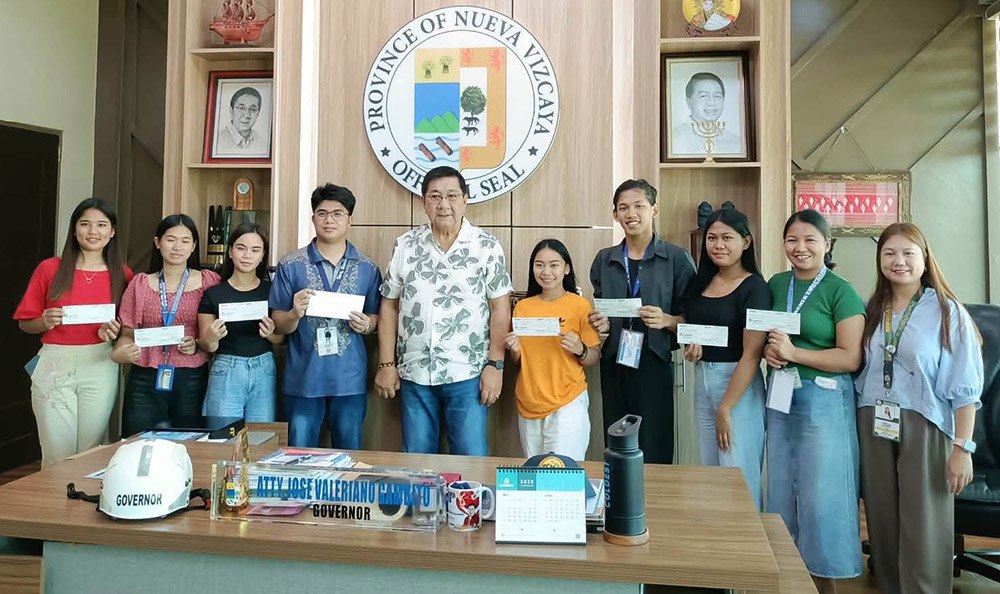
By Rachel Magday   NUEVA VIZCAYA, Philippines — The 2026 Grand Ammungan Festival (GAF), the annual founding anniversary celebration of the province, will be compressed into a one-day event from its original five-day schedule, in line with a belt-tightening directive from Governor Atty. Jose V. Gambito, as the provincial government moves to conserve funds and redirect savings into financial assistance for sectors severely affected by the ongoing fuel price crisis linked to global tensions in the Middle East. Festival Director General Eunice Galima -Gambol said the decision reflects a broader austerity program aimed at ensuring that public resources are used prudently while addressing the immediate needs of Novo Vizcayanos grappling with rising costs of basic commodities and transportation. Originally scheduled from May 20 to 25, the Grand Ammungan Festival was set to feature major crowd-drawing events such as the Travel and Tourism Expo, the Saniata ti Nueva Vizcaya pageant, Street Dancing Competition and a grand concert. The downsizing marks a significant shift in what has traditionally been one of the province’s biggest annual celebrations. In her official statement, Gambol underscored that the move was reached after careful deliberation and anchored on principles of unity, prudence, and fiscal discipline. “This will be a modest but meaningful celebration to commemorate the history and spirit of our great province,” she said, noting that her role as a public servant compels her to prioritize the welfare of the people over festivities. She added that resources saved from the scaled-down event would be channeled to critical programs and aid initiatives, particularly for vulnerable sectors bearing the brunt of the economic strain. While the announcement confirms the shift to a one-day observance of the province’s foundation anniversary, Gambol did not specify which activities from the original lineup will be retained or adapted for the condensed program. Despite the scaled-down celebration, Gambol assured the public that the essence of the Grand Ammungan Festival—honoring the rich cultural heritage and unity of Nueva Vizcaya—will remain at the forefront. Gambol also called on residents to remain resilient and united as the province navigates the challenges posed by global economic pressures.

Northern Samar weaves livelihood and opportunities through Abaca

Vis-Min

NORTHERN SAMAR, Philippines —  In the quiet farms of Northern Samar, abaca is more than just a crop; it is the primary source of income for many Nortehanon families. From planting to stripping the fiber, abaca farming provides food on the table and supports the education of children. Today, the province stands as one of the top abaca producers in Eastern Visayas, supplying nearly 65% of the region’s total output. In 2025 alone, Northern Samar produced 6,766.16 metric tons of fiber, reflecting the strength of an industry built on hard work and dedication. With more than 12,000 hectares of plantations, abaca in Northern Samar has evolved from a traditional crop into a symbol of growth and opportunity. The province has invested in processing centers, farmer training programs, and technical guidance, turning its abaca industry into a hub of livelihood, innovation, and sustainable development that benefits both local communities and the global market. Reinforcing this vision, the Provincial Government through the Provincial Economic Development and Investment Promotions Office (PEDIPO), in coordination with the Silvino Municipal Tourism Office, conducted a site inspection of Silvino Lubos, known for its rich abaca resources, as part of its initiative to establish the proposed Ibabao Abaca Industrial Park. The proposed site spanning 3 to 5 hectares, provides ample space for processing facilities and support infrastructure. Its strategic location and accessibility make it a strong candidate for abaca-based enterprises while also offering opportunities for farm tourism, such as farm visits, product demonstrations, and cultural experiences that benefit the local community. This initiative highlights the importance of inter-agency support in assessing the viability and potential of the project. With strong production output and emerging industrial opportunities, abaca is seen more than an economic crop but also a lifeline that sustains families, strengthens communities, and shapes the future of Northern Samar. From the hands of dedicated farmers to the industrial hubs, the abaca fiber continues to weave opportunities for generations of Nortehanons. Source: PEDIPO

DAR turns over farm equipment to Ifugao farmers’ group

CAR

IFUGAO, Philippines — The Department of Agrarian Reform (DAR) has turned over P208,000 worth of farm machinery and equipment to a farmers’ organization in Barangay Aduyongan here, aiming to improve productivity and strengthen community-based agriculture. The assistance was granted on March 26 to the Aduyongan Agrarian Reform Farmers Organization (ARFO), an agrarian reform beneficiaries’ group supported by the DAR Provincial Office of Ifugao, led by Provincial Agrarian Reform Program Officer II Elpidio C. Santos. Funded under the Climate Resilient Farm Productivity Support Program (CRFPSP) – Sustainable Livelihood Support for Disaster-Affected Areas (SLSDAA), the package includes two rotavators, two power sprayers, two water pumps, three brush cutters, and one pelletizer machine. Distributed equipment is expected to ease manual labor, speed up farm operations, and increase crop yields among members. “Dagituy nga naited ket arapaap tayo nga maaddaan iti gamit tapno iti kasta ket adda usaren tayo nga agtalon. Ket tatta nga addan, ikkan tayo kuma iti importansya dagituy nga equipment. Sapayla kuma ta babaen agituy nga naited nga FMEs ket ag-increase iti produksyon ti ani tayo nga farmers. Tulungan tayo daytuy nga organization tayo tapno ag thrive ken madi nga ag-fail,” said Barangay Captain Jose Balajo. thanked DAR for the support, saying the equipment had long been a goal of the organization. Chief Agrarian Reform Program Officer Leonor C. Bascos reminded the group that government assistance comes with responsibility, stressing the need to properly manage and maintain the equipment. She warned that failure to use the equipment effectively could lead to its reassignment to other beneficiaries. An orientation on the proper use of the machinery was conducted following the turnover to promote sustainability and accountability among members. A memorandum and trust agreement was also signed to formalize the responsibilities of both DAR and the farmers’ group in the use and safekeeping of the equipment. The turnover was witnessed by members of the community, including PARCCOM representatives.  

Scroll to Top