Street Journal Multimedia Services

Author name: Street Journal

Modernized Burnham Lake expected to be completed in May

Baguio City

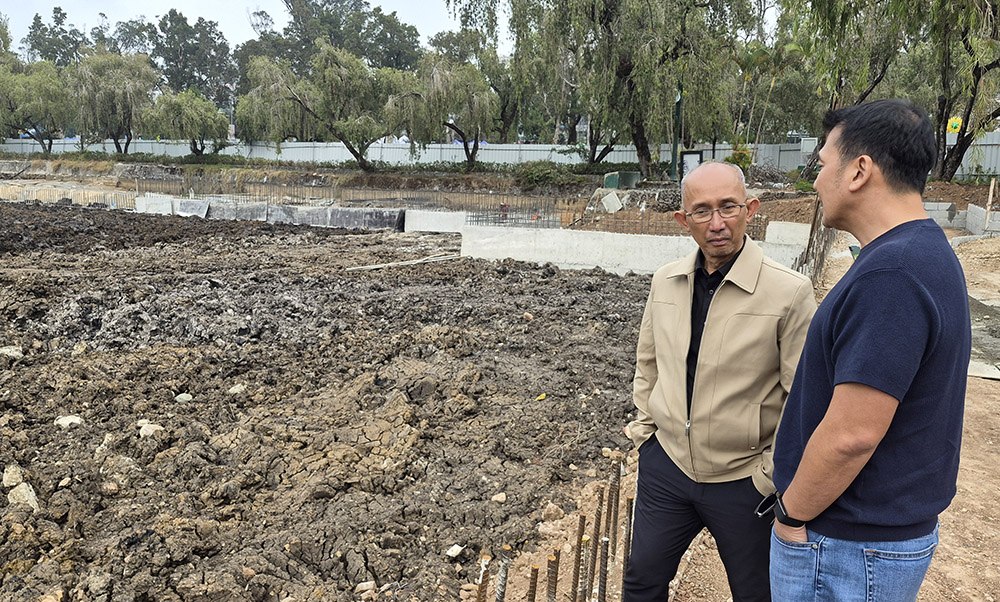
  BAGUIO CITY, Philippines — Tourism Infrastructure and Enterprise Zone Authority (TIEZA) General Manager Mark Lapid, along with Mayor Benjamin Magalong, personally inspected the ongoing rehabilitation of Burnham Park in Baguio City, on the afternoon of February 26. The P400 million fund for the rehabilitation of Burnham Park is a testament to TIEZA’s commitment to Baguio City to modernize the main public park in the Summer Capital, which is expected to be completed by May 2026. Lapid, along with agency officials, inspected the ongoing dredging operation and rehabilitation of the lake as Phase 1 of the project with a P100 million budget, which is a priority work. Contractor Dungan Constructors & Trading Corp. explained and Moment Diagram Builders Joint Venture informed Lapid and Magalong that the excavation works are about 40 percent complete, while the slope protection measures—considered the most technically challenging—have reached about 70 percent complete. Lapid and Magalong expressed confidence and joy at seeing the smooth progress of the rehabilitation in relation to the right path in its implementation. Lapid said the agency remains committed to providing continued funding support to ensure the completion of the rehabilitation, which aims to preserve the park’s historical value while improving its facilities for residents and tourists. According to Magalong, “It is really time for us to have a modern park, especially Burnham, which is a center for tourism, once the lake is completed, the skating rink, Children’s Park and other parts of the park will follow, along with upgrading pedestrian pathways, restoring landscaped areas, improving drainage systems, and improving recreational facilities such as boating areas, promenades, and public facilities. “This could have been done long ago because there was already a P400 million fund allocated, but during the pandemic, we withdrew it because our government needed funds to purchase medicine. So now that we have recovered and have the funds, I told the Mayor to start the rehabilitation, even if it is by phase by phase,” Lapid explained. Magalong thanked TIEZA for fulfilling its promise to continue the rehabilitation of Burnham Park, to address the effects of aging infrastructure, environmental degradation, and increasing tourist activity. (By Rose Frejane A.Cruz)    
Magalong thanks PBBM for P56-M LGSF Assistance for Baguio

Baguio City

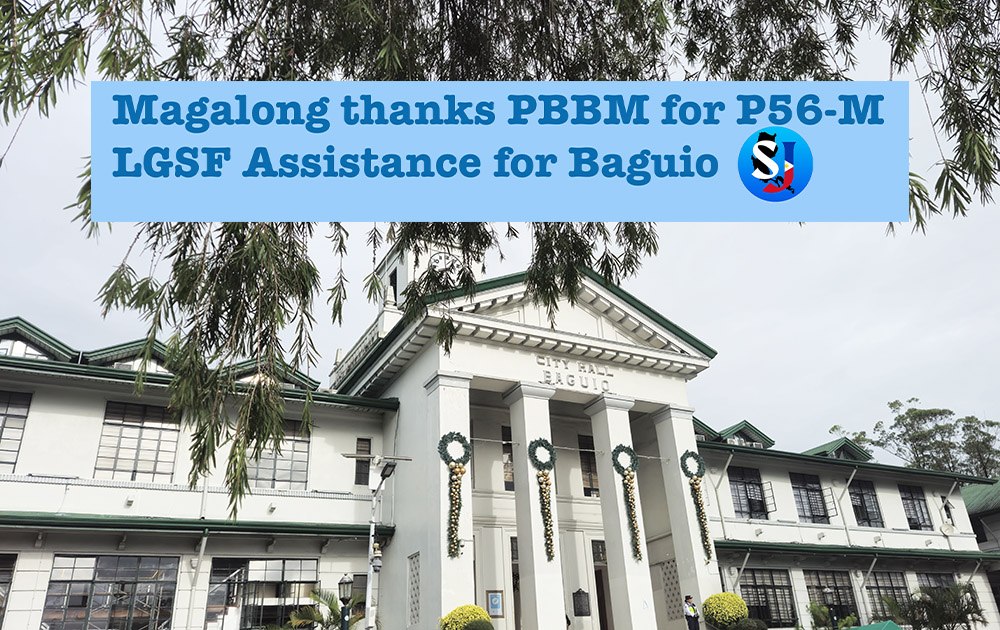
BAGUIO CITY, Philippines —  The City Government of Baguio has been approved as a beneficiary of the 2026 Local Government Support Fund-Financial Assistance (LGSF-FA) under the Bagong Pilipinas Rice Program, with a total allocation of P56 million. Mayor Benjamin Magalong announced the development after receiving a letter from President Ferdinand R. Marcos Jr. dated February 23, 2026 affirming the grant of the assistance intended to provide rice subsidies to qualified families. The P56 million allocation for the city is part of the almost P58-billion LGSF allocation for 2026 which aims to provide direct support to families and communities nationwide and will be downloaded straight to the local government unit in a direct and digitized manner to ensure faster implementation. President Marcos expressed confidence in the city’s leadership, emphasizing that the funds must be utilized transparently and in accordance with existing government budgeting, accounting, and auditing laws. “As a former Local Chief Executive myself, I entrust to you and to all our local governments the efficient, equitable, and effective delivery of social services and economic development programs so that this much-needed support is delivered and felt by every ordinary Filipino,” the President said. In response, the mayor thanked the President for the assistance and assured that the distribution of the assistance in the City will not be influenced by political interests. “Rest assured that there will be no ‘epal’ in the distribution to beneficiaries. The assistance will go directly to the people who truly need it,” the mayor said. “With the direct release of funds to LGUs, he said implementation will now be more transparent, efficient and equitable,” he added. Magalong noted that in the past, similar programs were reportedly controlled by influential members of Congress. He expressed appreciation that the program is “no longer politicized.” He also assured residents that proper guidelines will be followed to ensure fair identification of beneficiaries and accountable use of the funds. Further details on the implementation and distribution schedule are expected to be announced soon. According to the President, the Bagong Pilipinas Rice Program LGSF-FA aims to provide 60 kilos of rice annually to over five million Filipino families nationwide. Under the program, each qualified family will receive 10 kilos of rice for six months every year. He said the P58-billion LGSF will also support other priority projects, including health facility upgrades, disaster preparedness initiatives, farm-to-market roads, electrification and water supply systems.(By Aileen P. Refuerzo)

Ortega to ensure efficient rollout of PBBM’s “Sa Bagong Pilipinas,Bawat Bayan Makikinabang”

Region 1

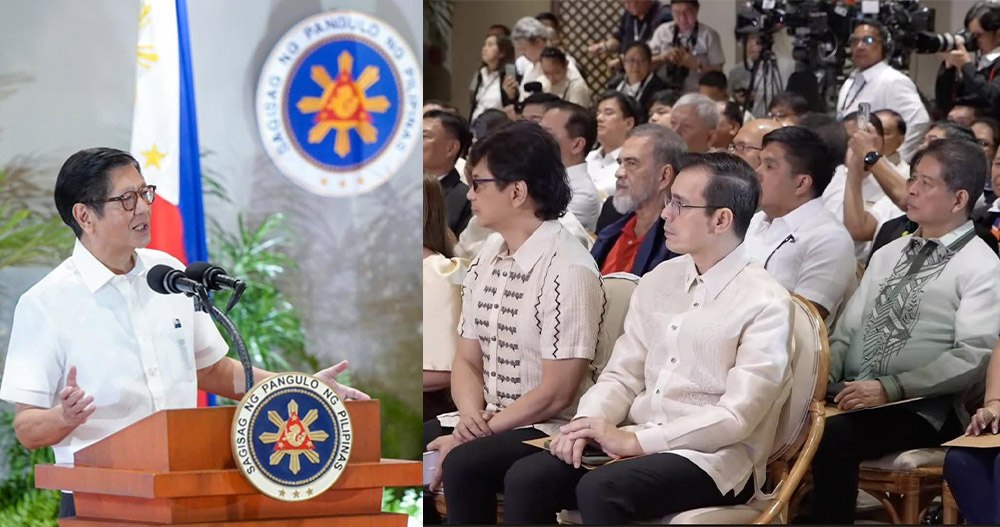
LA UNION, Philippines — Gov. Mario Eduardo C. Ortega sets his eyes on the efficient eventual implementation of the initiative of President Ferdinand “Bongbong” Marcos Jr. called “Sa Bagong Pilipinas, Bawat Bayan Makikinabang,” launched in Malacañang on February 23, 2026. Gov. Mario is one of the local chief executives who attended the gathering, where the President gave his directives on strengthened implementation of services in local communities. The program aims to elevate the national government’s support for all local government units (LGUs) by making local projects “felt immediately and equitably across every community.” In his message to the Governors and Mayors, President Marcos said, “our local government must be empowered to respond to the needs of the people.” As such, PBBM ordered the increase in the allocation for the Local Government Support Fund (LGSF), the national government’s funding assistance to LGUs for a wide range of local projects. “We thank the President for this very meaningful initiative. He was once a Governor himself, that’s why he knows very well what the needs of the LGUs are,” Gov. Mario said. “I have full confidence that the Provincial Government of La Union will efficiently localize this new program. Our systems are in place to ensure that this help from the national government will directly respond to the needs of our local communities,” the Governor said. The LGSF serves as a bridge between the national government and local communities, funding numerous projects that have improved the lives of constituents.      

Globe Business and Call Center Studio introduce GO Cloud Contact Center to bring AI-powered customer support to Philippine SMEs

Business

  Globe Business Leadership Team together with Call Center Studio Team L-R: Omar Osman, Jonti Cristobal, Erkan Turkkan, Marc Kerveillant, Angie Po, Cenk Soyak, KD Dizon, Mustafa Dogan, Marissa Cahigan, Dennis Wong, Amir Seyf, Bertug Demir   The introduction of GOCCC specifically addresses the evolving needs of Philippine organizations, ranging from burgeoning small and medium businesses to established leaders in the IT-BPM, financial services, healthcare, and retail sectors. While many enterprises rely on outdated on-premise systems that are often expensive to maintain and difficult to scale, GOCCC offers an agile alternative. By removing barriers posed by heavy infrastructure, the platform allows hybrid and remote teams to deploy a sophisticated contact center environment that scales with the business. “In a service-driven economy like the Philippines, the quality of customer engagement is a critical differentiator for any growing enterprise,” said KD Dizon, Vice President and Head of Globe Business. “With the launch of GO Cloud Contact Center, we are moving beyond basic connectivity to provide a platform where AI and omnichannel capabilities are no longer luxury features, but standard tools for local businesses. By modernizing the contact center, we are enabling our partners to meet their customers on any channel they prefer, ensuring that the Filipino brand of service remains competitive, responsive, and future-ready.” A key differentiator is accessibility. By operating on a subscription-based model, GOCCC democratizes access to high-tier technology, enabling organizations to scale their operations precisely alongside their actual requirements and resources. This flexible approach, combined with deployment cycles completed in days rather than weeks, ensures that sophisticated customer experience tools are within reach for enterprises at any stage of their journey. “Cloud technology should not be reserved for large-scale global players alone,” said Cenk Soyak, CEO and Co-Founder of Call Center Studio. “Our partnership with Globe Business brings global expertise and local reliability together, making an AI-driven customer experience achievable for Philippine businesses of all sizes.” Customers also benefit from Globe’s enterprise-grade service-level agreements (SLAs), robust infrastructure, and dedicated support. This partnership provides a secure and reliable foundation for businesses as they scale their operations from legacy setups to more agile, cloud-based operations.        

Nueva Vizcaya to receive nearly P370 million from DILG Local Government Support Fund

Region 2

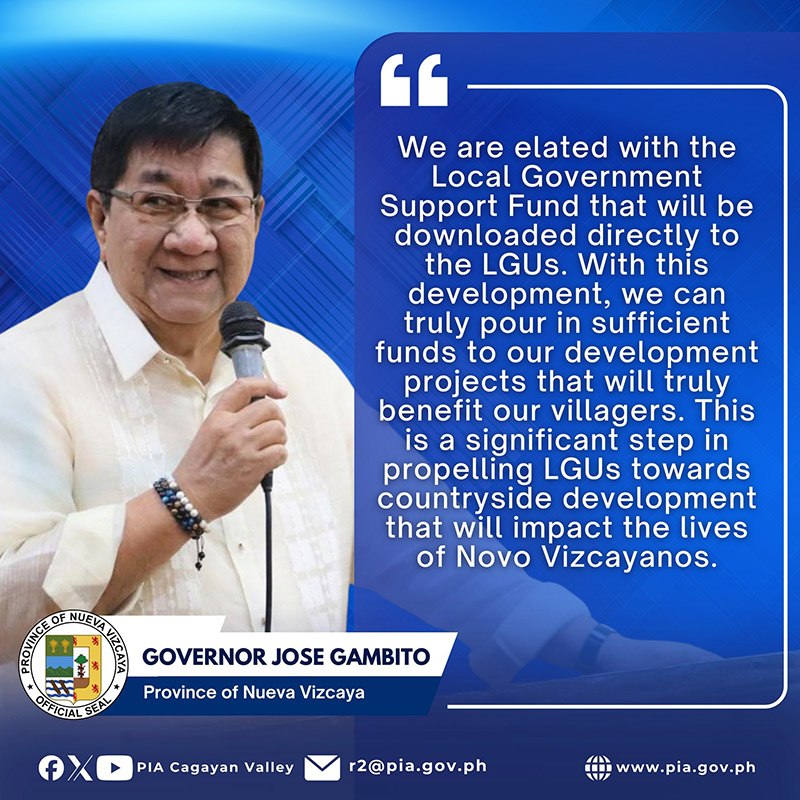
By Rachel Magday NUEVA VIZCAYA, Philippines — The Provincial Government of Nueva Vizcaya and its 15 municipal local government units (LGUs) will receive nearly P370 million from the Local Government Support Fund (LGSF) of the Department of the Interior and Local Government(DILG). This was conveyed by President Ferdinand Bongbong Marcos Jr. to Governor Atty. Jose V. Gambito during the launch of the “Sa Bagong Pilipinas, Bawat Bayan Makikinabang” program held at the Heroes Hall in Malacañan Palace on February 23, 2026. The program is designed to strengthen the national government’s support for all local government units (LGUs) and ensure that the benefits of national progress are felt “immediately and equitably” across communities nationwide. It also aims to close the “opportunity gap” by translating national economic stability into improved household security, with progress measured through the well-being of Filipino families. “The message is clear: empower our local leaders. P58 billion from the Local Government Support Fund is now moving directly to our local government leaders—faster, clearer and more transparent,” Marcos said. “Our local leaders know their communities best. They see the problems first. They hear the people first. Now they have the resources to act.” Under the LGSF, the Nueva Vizcaya provincial government is expected to receive P160 million in Financial Assistance to Local Government Units (FALGU). Of that amount, P80 million will be used to fund the national government’s Rice Support for Families program, which will provide rice subsidies to poor and vulnerable families in the province. The remaining P80 million will be allocated for infrastructure and development projects, including roads, hospitals, rural health stations and medical equipment, water systems, renewable energy use in buildings, solar lighting, multipurpose halls, and a sports stadium. Gov. Gambito underscored the significance of the President’s decision to directly release funds to LGUs, describing it as a transformative step toward empowered local governance. “On behalf of Nueva Vizcaya, I thank President Marcos for this decisive action. Giving our LGUs direct access to resources is a clear commitment to inclusive growth and development across the countryside,” he said. He added that the measure will speed up the rollout of priority programs and serve as a concrete investment in the long‑term progress of Nueva Vizcaya residents. Meanwhile, 15 municipal LGUs in Nueva Vizcaya are set to receive P10 million each. Exceptions are Ambaguio, which already received P49.5 million; Villaverde, P30 million; and Bagabag, P10 million—allocations that are already being implemented in those municipalities.      

PBBM infra push spurs more inclusive, transit-led growth phase for BGC

NCR

Bonifacio Global City (BGC) is entering a more inclusive and transit-anchored phase of growth as major infrastructure projects converge with long-term urban planning reforms under the national development agenda of President Ferdinand R. Marcos Jr. At the center of this shift is the Metro Manila Subway, one of the Marcos administration’s flagship transport initiatives being implemented by the Department of Transportation (DOTr). The DOTr is leading the subway’s construction and coordination across national and local agencies, positioning it as the backbone of a more integrated mass transit system for Metro Manila. President Marcos Jr. last week led the groundbreaking of the 1.33-kilometer segment connecting Shaw Boulevard Station in Pasig City to Lawton Avenue Station in Taguig City, including stations within Uptown Bonifacio Global City. With planned stops near Kalayaan Avenue and the eastern portion of BGC, the district is set to gain direct underground rail access to Ninoy Aquino International Airport and major hubs in Quezon City in under 30 minutes. The subway will feature seamless interconnections with existing and planned railway lines, including Light Rail Transit (LRT) Line 1, Metro Rail Transit (MRT) Line 3, MRT-7, LRT-2, MRT-4, and the North-South Commuter Railway, strengthening Metro Manila’s linkages with nearby provinces. For the Bases Conversion and Development Authority (BCDA), which oversees BGC, the subway addresses the district’s long-standing reliance on private vehicles and creates the foundation for stronger transit-oriented development. “National infrastructure investments are allowing BGC to mature into a more commuter-focused and accessible district,” said BCDA President and CEO Engr. Joshua M. Bingcang. “When mass transit becomes embedded in the estate, it improves mobility, strengthens property fundamentals, and supports long-term competitiveness.” Improved rail access is expected to increase pedestrian activity within walking distance of future stations, benefiting residential condominiums, office developments, and retail corridors along BGC. People-centric redevelopment Parallel to rail development, strategic redevelopment is reshaping key areas of the district. The former Fort Strip property along 5th Avenue in BGC is being repositioned for higher-density, mixed-use development aligned with the district’s next-stage urban model. This enabled the opening of a new 7th Avenue road segment toward 32nd Street, restoring continuity to the district’s street grid and improving mobility between Uptown and High Street. These projects are reinforced by a broader and more people-centric recalibration of BGC’s master plan. BCDA, in partnership with SyCip Gorres Velayo & Co., is currently refreshing the BGC Master Development Plan, aligning land use with upcoming transport infrastructure, enhancing walkability, expanding green spaces, and integrating smart systems for traffic and utilities management. This is also linked to BCDA’s national push for model transit-oriented developments. The BCDA has partnered with the Japan International Cooperation Agency (JICA) and coordinated with relevant government agencies to develop a roadmap for transit-oriented development (TOD) in the Philippines. The collaboration aims to align land use planning, infrastructure investment, and value capture mechanisms around major rail corridors. Under this framework, BGC serves as a practical example of how infrastructure and land management can be synchronized. By clustering residential, commercial, and civic spaces around transit nodes, density is supported by mobility rather than road expansion. This approach reduces congestion pressure while improving daily accessibility. Industry assessments continue to identify BGC as one of Metro Manila’s most resilient submarkets, supported by steady tenant demand and established infrastructure. The integration of subway connectivity, redevelopment initiatives, and TOD-based planning positions the district for sustained growth grounded in accessibility and urban efficiency. “With infrastructure aligned to land use and guided by a clear transit-oriented framework, BGC is moving into a more inclusive phase of growth,” Engr. Bingcang said. “Accessibility is no longer a constraint. It becomes a driver of long-term value.” BCDA noted that lessons from BGC’s evolution will inform similar strategies in other growth centers such as New Clark City, as the agency advances a broader model of sustainable and people-centered urban development across its economic zones.

La Union parades 17 Mesmerizing Mekmek

Region 1

GOAT — Greatest of All Time? In La Union, that title isn’t just for sports legends. It’s proudly worn by the four-legged stars of the livestock industry, and they showed up in style. As one of the province’s strongest economic pillars, livestock production continues to power local livelihoods. The Provincial Government isn’t just focused on it. It is cultivating, nurturing, and championing the industry to ensure it grows stronger each year. This commitment was on full display when the Provincial Government of La Union, through the Office of the Provincial Veterinarian, paraded 17 of the cutest goats around the San Fernando City Plaza during the opening of the La Union Agri Trade Fair on February 23, 2026. The delightful parade was part of the festivities for the 176th La Union Founding Anniversary. Provincial Veterinarian Dr. Domingo Bobby C. Calub III said this activity aimed to spotlight the province’s booming goat industry and highlight goat meat as a vital economic resource for La Union’s farmers and communities. Seventeen goats — coming in male-female pairs —  proudly represented different towns across the province. Their respective Municipal Agriculture Offices and City Veterinary Office carefully scouted the most mesmerizing mekmek, the Ilokano nickname for goat, to take part in the parade. The entries showcased not only healthy livestock but also the dedication and hard work of local raisers behind them. And what’s a parade without a little flair? The mekmek strutted around the plaza in colorful and creative costumes. There was a bride and groom duo that looked ready to say “I do,” a swaggering cowboy mekmek straight out of the Wild West, and other charmingly dressed contenders that drew cheers, laughter, and countless photo snaps from the crowd. The mekmek of the Municipality of Naguilian, both doe and buck, stole the spotlight and was hailed as the Most Amazing Mekmek. Municipality of Balaoan, both buck and doe, got first place. The municipality of Santol got the second place for buck category and Municipality of Tubao got the third place for doe category. Indeed, being the GOAT is both an honor and a spectacle. Meanwhile, Governor Mario Eduardo C. Ortega reaffirmed the PGLU’s unwavering support for farmers and livestock raisers, emphasizing that agriculture remains a major economic thrust of the province. With initiatives like the Agri Trade Fair and the Parade of GOATs, La Union continues to celebrate not only its heritage but also the hardworking hands and hooves that help drive its progress. Because in this province, the GOAT isn’t just the greatest of all time. It is also the greatest of the farm.        

CIAC set to open expansive community park space near Clark airport​​

Region 3

CLARK FREEPORT ZONE, Pampanga, Philippines —The Clark International Airport Corp. (CIAC) announced that the newly built Clark Aviation Capital (CAC) Picnic Grounds, located along Gil Puyat Avenue near the Clark International Airport (CRK), will soon open as a community park space for visitors to the Freeport Zone. The modernized picnic grounds are designed to serve as an accessible public space at no cost, offering amenities such as jogging and walking paths, recreational and wellness facilities, an amphitheater, a playground, a pet park, and expansive open areas. The development will also feature a storm water reservoir or catch basin for flood mitigation, ample parking areas, park benches, coffee shops, community gardens, and food and beverage stalls, making it suitable for family outings, picnics, recreational activities, and tourism. Project planners ensured the preservation of the site’s dense concentration of century-old acacia trees planted in the early 1900s during the American colonial period, with no trees felled during construction. The Clark Picnic Grounds form part of CIAC’s Seven Flagship Projects under its Urban Renewal and Heritage Conservation Program, which aims to implement modern urban planning principles and promote sustainability within the Clark Freeport Zone. Once completed, the CAC Picnic Grounds will complement other designated outdoor areas in Clark, including the Clark Parade Grounds, Bicentennial Park, and Air Force City Park. The project’s initial phase of development, covering five hectares of the nine-hectare CIAC property, is almost complete and is expected to open to the public soon. CIAC said the project is intended to strengthen community engagement and enhance public spaces within the Clark Freeport Zone. “As we develop the Clark Aviation Capital, we are committed to creating sustainable and inclusive public spaces that improve quality of life and foster stronger communities,” CIAC President Jojit Alcazar said. As the aviation and land development arm of the Bases Conversion and Development Authority (BCDA), CIAC continues to advance efforts to transform the Clark civil aviation complex into a premier global aviation and logistics hub.

𝗣𝗕𝗕𝗠 𝗶𝗻𝘀𝗽𝗲𝗰𝘁𝘀 𝗡𝗮𝗴𝗮 𝘄𝗮𝘁𝗲𝗿𝘄𝗮𝘆𝘀, 𝘁𝘂𝗿𝗻𝘀 𝗼𝘃𝗲𝗿 𝗣𝟱𝟬𝟬-𝗠 𝗳𝗼𝗿 𝗝𝗠𝗥 𝗖𝗼𝗹𝗶𝘀𝗲𝘂𝗺 𝗿𝗲𝘁𝗿𝗼𝗳𝗶𝘁𝘁𝗶𝗻𝗴

Region 5

By vJason Neola   NAGA CITY, Philippines – President Ferdinand Marcos Jr. on Saturday, Feb. 21, personally inspected key waterways in the city that require de-clogging and assessed the structural condition of the Jesse M. Robredo Coliseum (JMR) following damages caused by recent earthquakes and typhoons. The President was joined by Mayor Leni Robredo and Public Works Secretary Vince Dizon, along with heads of concerned national government agencies, in a high-level inspection that underscored coordination between Malacañang and the LGU. During the visit, President Marcos formally turned over a P500-M check to the city government, earmarked exclusively for the renovation and retrofitting of the JMR Coliseum. The funding will transform the facility into a dual-purpose, world-class structure that will serve both as Naga’s primary evacuation center during disasters and as a premier venue for major city events and sports competitions. The coliseum sustained structural damage in previous calamities, prompting the city to seek national assistance for its rehabilitation. Mayor Robredo welcomed the support, saying the retrofitting will ensure the safety of evacuees and event-goers while strengthening the city’s disaster preparedness infrastructure. As part of “Oplan Kontra Baha,” the President, together with Secretary Dizon and Mayor Robredo, personally inspected dredging operations at Sagop Creek, one of the critical waterways contributing to flooding in nearby barangays. The flood mitigation initiative focuses on clearing creeks and drainage systems to restore proper water flow and prevent perennial flooding, especially during heavy rains. According to reports presented during the inspection, some 2,350 cubic meters of silt and sludge have already been removed from the city’s creek systems. National agencies committed to fast-track complementary interventions, including continued dredging, drainage improvement, and long-term flood control planning. The visit highlighted rare but significant collaboration between the national government under President Marcos and the Robredo-led local government of Naga. The President was welcomed by city officials, barangay captains, department heads, and local athletes, who gathered to witness the inspection and the ceremonial turnover of funds. The morale boost comes at a time when the city is in the thick of implementing various approaches, strategies, and innovations drawn from a series of high-level policy gatherings it recently convened, namely, the Basura Summit 2026: Naga City Solid Waste Management and Environmental Sustainability Summit, the Naga City Anti Drug Abuse Summit 2026, the Naga City Sports Stakeholders Summit 2026, and the Naga City Traffic, Transport and Mobility Summit 2026. Recommendations and action points from these summits are now being translated into concrete programs and reforms aimed at strengthening governance, public safety, environmental protection, grassroots sports development, and urban mobility across the city. City officials expressed optimism that the national government’s support will accelerate Naga’s infrastructure recovery and reinforce its long-term resilience against natural disasters. |

Scroll to Top