

Street Journal Multimedia Services

Author name: Street Journal

Nueva Vizcaya’s skies soar anew with Paragliding comeback

Region 2

By Rachel Magday   NUEVA VIZCAYA, Philippines – Nueva Vizcaya reopened its skies to paragliding on Friday, April 3, with the launch of the “Skyridge” take-off site in Barangay Tiblac, Ambaguio, ending a two-year lull in organized flying activities. The event, dubbed the “Grand Re-Awakening,” formally revived paragliding operations in the province and signaled its renewed push as an adventure tourism destination. Governor Atty. Jose V. Gambito led the inauguration rites alongside Department of Tourism Regional Director Troy Alexander G. Miano, Ambaguio Mayor Ronelio B. Danao, and paragliding pioneer Violet Lucasi. The Skyridge site will host organized flights and competitions, with landing designated at Green Lake View Adventure Park in Barangay Masoc, Bayombong. Lucasi said activities lined up for the reopening include the Skymazing Race, a solo flight competition, tandem flights, and a target-landing contest. Pilots from South Korea, Indonesia, and Germany joined the event, highlighting its growing international appeal. Governor Gambito said the relaunch is expected to boost local tourism, create economic opportunities for hospitality and outdoor recreation enterprises, and expand Nueva Vizcaya’s reach among both domestic and international adventure travelers. He added that establishing a paragliding pilot school in the province is a priority initiative under his administration. The program aims to develop local talent, professionalize training, and strengthen safety standards as Nueva Vizcaya builds its air sports industry.

Balikatan Exercises in Quezon: AFP and U.S Forces break ground for new classroom

Region 4

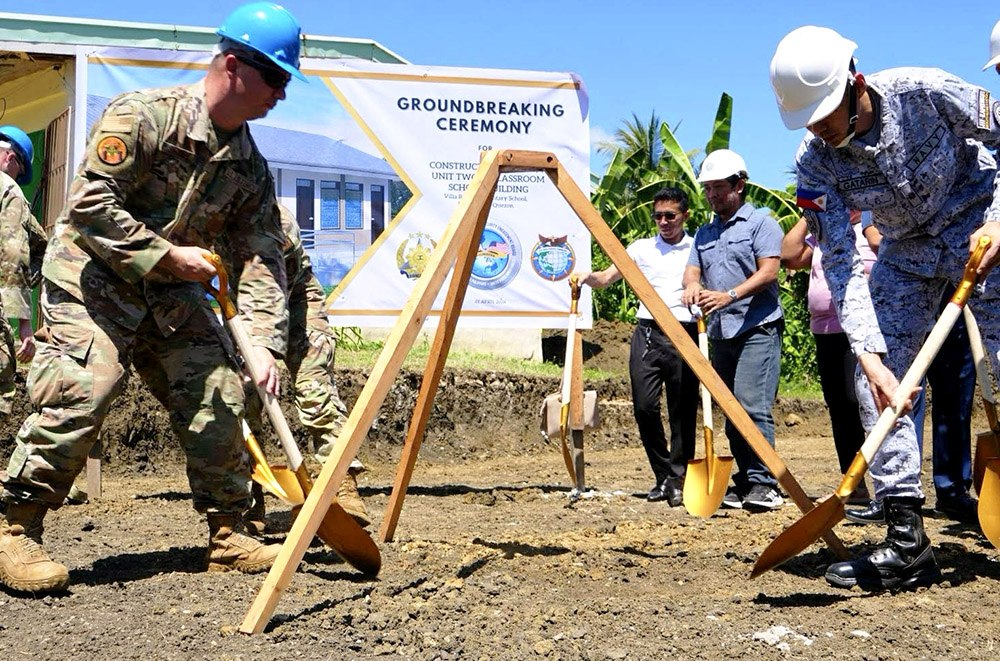
By Danny Estacio   SAN NARCISO, Quezon, Philippines  – The combined engineering forces of the Armed Forces of the Philippines (AFP)- Southern Luzon Command (SOLCOM), and the Aviation Engineer Group of the United States Air Force conducted a groundbreaking ceremony for the construction of one unit, two-classroom school building at Villa Reyes Elementary School on April 1, in this town. The Philippine Army-564th Engineer Construction Battalion, and the United States Indo-Pacific Command-356th Aviation Engineer Group of the United States Air Force are responsible for undertaking the project part of the Engineer Civil Action Program (ENCAP) and was attended by the contingents from the Armed Forces of the Philippines, led by the Battalion Commanders of the 564th Engineer Construction Battalion and the 85th Infantry Battalion, United States Counterparts, representatives from the local government unit (LGU) of San Narciso, and the local police.   The project reflects the enduring commitment, strengthened unity, and close cooperation between the Philippines and the United States, as both nations work side by side in advancing community development. Exercise Balikatan stands as a powerful testament to the resilient and steadfast alliance between the two countries. The construction of a 7-meter by 18-meter classroom building, complete with a comfort room, is scheduled to be completed by May 15, 2026. Once completed, the additional classrooms are expected to benefit approximately 573 students for School Year 2026–2027. This initiative will provide a safer, more conducive, and adaptable learning environment while addressing the growing demand for classroom space. With only 11 existing classrooms, the addition of two new ones will help ease congestion and overcrowding, thereby enhancing the quality of education and supporting a more effective teaching and learning process. Ultimately, this development will serve both present and future generations of students within the community. The Humanitarian Civic Assistance conducted under Exercise Balikatan continues to enhance access to education and essential services for local communities, while strengthening community resilience and deepening bilateral ties. The AFP and U.S. Forces emphasize that, beyond enhancing protective capabilities and combat mobility, joint activities such as ENCAP also promote meaningful community engagement through sustainable and people-centered development initiatives. Army Lt. Gen. Cerilo C. Balaoro Jr., commander of the Southern Luzon Command, emphasized the value of collaborative efforts in advancing education and community development. He said that initiatives under Exercise Balikatan not only enhance military interoperability but also deliver tangible and lasting benefits to local communities. Balaoro expressed appreciation to partner units, local government stakeholders, and community members for their continued cooperation, noting that these projects reflect the shared commitment of the Philippines and the United States to building resilient, peaceful, and progressive communities.      

15 year-old student rise in Pencak Silat

Sports

BAGUIO CITY, Philippines — At 15 years of age, Delenriz O. Avila from the Summer Capital has already carved a name for herself in the world of sports, particularly in Pencak Silat. A student of Pines City National High School under the Special Program in the Arts (SPA), she balances academic and athletics with discipline, determination and heart. Avila initially ventured into the sporting arena in grade 9 where she decided to take Pencak Silat over other options because of its unique techniques and challenging nature. Unlike other sports, Pencak Silat provided her with an opportunity to challenge her power, strength and imagination. She was inspired to demonstrate that a fighting sport is not for men only and accepted the challenge despite the training and hard work schedules because she had her parents to motivate her. Their encouragement continues to fuel her passion and persistence. The biggest challenge she faced was overcoming her nerves and adrenaline rushes during competitions especially when matched against strong opponents at national games. Her fears were overcome through prayer, self-trust, and positive thinking. Avila remembers her coach, Arnold Cayso, who often reminds her: “Mind over matter”, and this mantra became her anchor in moments of doubt. As a student, maintaining grades is crucial and she manages her time by heading straight to training after school, then completing missed activities at night–even if it means staying up late, as her dedication ensures she excels both in academics and sports, proving that discipline is the key to balance. Getting a medal was a state of utter joy and surprise since out of 35 players nationwide, she was one of only four to bring home a medal. This was not a personal win, but a win on behalf of her school, and Baguio City. Avila’s experience made her realize that one should be disciplined, religious and have self-confidence because she believes that without these, dreams remain out of reach. Prayer, she says, is vital, as it provides strength and guidance in every match. Her message to aspiring student-athletes is clear: train wholeheartedly, maintain discipline and always listen to your coach because success is built on persistence and respect for guidance. For those who are pursuing Pencak Silat, Avila leaves a powerful reminder: One step at a time. You won’t win or get a medal instantly–you must endure the hardships before triumph. Pursue with effort and perseverance. -Mariane Torres/PIO Baguio Intern/gabykeith      

Tourism decline in Baguio this Holy Week

Baguio City

By Rose Frejane A. Cruz   BAGUIO CITY, Philippines – The decline in tourists in the Summer Capital and neighboring areas of Benguet is being felt this Holy Week. Mayor Benjamin Magalong admitted earlier the decline in tourists after the Panagbenga Festival, which was followed by the gasoline crisis caused by the war in the Middle East. “Our tourist arrivals dropped by 40 to 50 percent during the successive increases in gasoline prices and maybe this Holy Week our tourists might increase by 60 percent, but after this, our tourism will definitely drop again,” Magalong said. He said he spoke to bus companies who actually reduced their trips by 50 percent and even the hotel and transients association and reported that their respective bookings during the Holy Week were low. According to Peter Ng, owner of a large hotel in the city, since the gasoline crisis began until this Holy Week, their hotel bookings have dropped by 40 percent. “This crisis has had a huge impact, not just me, all businesses, big or small, are really feeling the economic downturn. Right now, I have reduced the number of workers, or rather, they are alternates.” Ng stated. Andrew Pinero, spokesperson for the Hotel and Restaurant Association of Baguio, said that bookings at establishments have dropped by about 40 to 50 percent since early March. He said that after the Panagbenga Festival, it is normal for tourist arrivals and hotel bookings to increase during the Holy Week and Summer Vacation, but this year the demand is very low. Occupancy rates that usually reach 80 to 90 percent during the summer have dropped to about 40 percent, reflecting the stress on the local tourism industry. He said that most hotels and restaurants are now using their own tricks such as promos and discounts to attract tourists as the Summer Vacation begins. In the biking area in Burnham Park, where the previous rental fee for a bicycle was P100, it is now only P50 or P100 for two bicycles, to attract the few visitors who come here. In the neighboring town of La Trinidad, where the Strawberry Farm is a tourist hotspot, now the number of tourists here is dwindling. “Before, during this Holy Week, my farm was full of tourists picking strawberries, it was fun to see so many of them, but now it is sad that there are almost no visitors,” stated Marife Agad, farm owner.

Globe promotes the Financial Health of Filipinos facing New Economic Hurdles

NCR

MANILA, Philippines — As the surge in global oil prices and Middle East tensions continue to impact the cost of basic necessities, Globe is doubling down on its mission to provide Filipinos with a digital lifeline. By bridging the gap between basic access and true financial health, the company is empowering citizens to exercise greater prudence and resilience in an increasingly challenging economic landscape. While account ownership in the Philippines grew to 50.2% as of 2024, the current global climate has highlighted the urgency of moving beyond mere access. At the recent Manila Times Economic Forum, World Bank Lead Economist Gonzalo Varela noted that many Filipinos remain in a “vulnerability trap,” where one in four citizens are just one “economic shock”, such as a spike in fuel prices or a sudden illness, away from falling back into poverty. To mitigate these shocks, Globe is aggressively expanding its network to serve as a critical bridge for the Bangko Sentral ng Pilipinas’ (BSP) framework for financial health. In an era where every peso is vital, reliable connectivity allows households to practice digital prudence: bypassing expensive transport costs by transacting from home, accessing real-time price monitoring for goods, and building emergency funds via mobile apps to avoid high-interest predatory debt. Strategic Tech Enabler This effort was the focus of a recent high-level discussion between senior leaders from BSP and Globe Telecom. The briefing, attended by BSP Managing Director Eugene C. Teves, centered on technologies that help Filipinos transact more safely and efficiently in today’s digital Philippine economy. By serving as a strategic tech enabler, Globe is helping the BSP build a digital ecosystem where Filipinos can stretch their budgets through more affordable and innovative services. Globe’s Chief Commercial Officer Darius Delgado said: “At Globe, we see ourselves as more than a telco. We provide the ‘rails’ that keep the economy moving. In these times of global volatility, our network acts as a stabilizer, ensuring that commerce and essential services remain accessible and cost-effective for every Filipino.” In direct response to the escalating tensions in the Middle East, Globe recently mobilized roaming goodwill offers to ensure that overseas Filipinos remain connected to their families during this critical time. Globe provided a complimentary roaming package, including 1GB of data, 15 minutes of calls, and 15 SMS, to customers in affected areas such as Saudi Arabia, the UAE, Qatar, Kuwait, and Bahrain. For those in Iran and Iraq, Globe extended load assistance and billing adjustments. This initiative underscores Globe’s role as a proactive partner in times of crisis, ensuring that communication remains a bridge for safety rather than an added financial burden. Innovative Deployment Globe is directly tackling the infrastructure hurdles that traditionally drive-up service costs. Through pioneering partnerships with Lynk Global and Starlink, Globe has piloted Direct-to-Device (D2D) technology, allowing standard LTE phones to connect via satellite in remote areas. Additionally, by tapping Transcelestial to roll out 400 wireless laser links, Globe is delivering fiber-class speeds without the need for traditional, costly, and time-consuming trenching. By utilizing these “non-traditional” methods to lower the cost of deployment, Globe aims to pass these efficiencies directly to the consumer. This ensures that even as the prices of physical goods rise, the cost of staying connected and doing business remains within reach for the average family. “Connectivity is the backbone of how people work and save today,” said Carl Cruz, Globe President and CEO. “Our goal is to ensure that our network translates into real-world benefits: consistent service that is affordable enough to help many Filipinos weather the current economic storm.” These local efforts also prepare the country for its broader role in the region. As the Philippines prepares for the 2026 ASEAN Chairmanship and the push for ASEAN Regional Payments Connectivity, Globe’s network ensures the digital ecosystem is ready for faster, cheaper remittances and more efficient cross-border trade—further elevating the Philippines’ standing and protecting the economic interests of its citizens.

180 incidents of child abuse recorded in Baguio in 2025

Baguio City

By Rose Frejane A.Cruz   BAGUIO CITY, Philippines – The City Social Welfare and Development Office reported a total of 180 incidents of Child Abuse were recorded of which 65 cases were filed, while 115 cases were not filed in the year 2025. In the data, 50 were physical abuse; 31 were incest rape; 23 were sexual abuse; 19 were neglect; 17 were acts of lewdness; 15 were emotional abuse; 12 were sexual molestation; 11 were incest-related rape (RA 11862) and two were Trafficking in Persons. The 180 cases of data in 2025 show a decrease from the 271 reported cases in 2024, where 48 were filed while 223 were not yet filed. In the said data, 53 were, while 117 were female victims, of which 17 belonged to the age group of 0-5; 15 were 6-8 years old; 23 were 9-11 years old; 82 were 12 to 15 years old, and 34 were 16-17 years old. It was further stated that 32 of the perpetrators were unrelated to their victims, while the rest could be family, neighbors, stepmothers, girlfriends, classmates, in-laws, playmates, landlords, family friends and acquaintances. For Children in Conflict with the Law (CICL), data from January to December 2025 shows 168 cases of which 24 were female and 144 were male; 129 were students and 39 were OSY. Most of them, 111 belonged to the age group of 12 to 15 years old; while 47 were 16 to 17 years old, and there were five each for the age groups of 9 to 11 and 18 to 20. Their offenses included robbery, physical harm, assault, alleged frustrated murder, slight physical harm, attempted murder, sexual molestation, alleged sexual abuse, alleged rape, carnapping, robbery, rape, murder, grave coercion; alleged statutory rape, robbery, extortion and physical harm. In this regard, interventions are being implemented through coordinated efforts from government agencies while citing data from Child Abuse (CA), Children in Conflict with the Law (CICL) and Children at Risk (CaR) cases in 2025 at the recently held first quarter meeting of the Local Council for the Protection of Children (LCPC). These interventions include strengthening child protection systems, community awareness campaigns, support for families at risk, and collaboration with schools and non-governmental organizations (NGOs). Medical, financial, food, educational, and livelihood assistance is available through the CSWDO, such as temporary shelter, counseling, psychological first aid, life skills, parenting sessions, value building, and referrals to protective custody. Safety assessment, debriefing, physical examination, referral, transportation, facilitation of sworn statements, and ongoing monitoring are also provided through the Health Services Office (HSO), Baguio City Police Office (BCPO), Baguio General Hospital and Medical Center (BGHMC), in coordination with other agencies.        

Sto. Tomas City, Batangas SDO  leads reading literacy in PH

Region 4

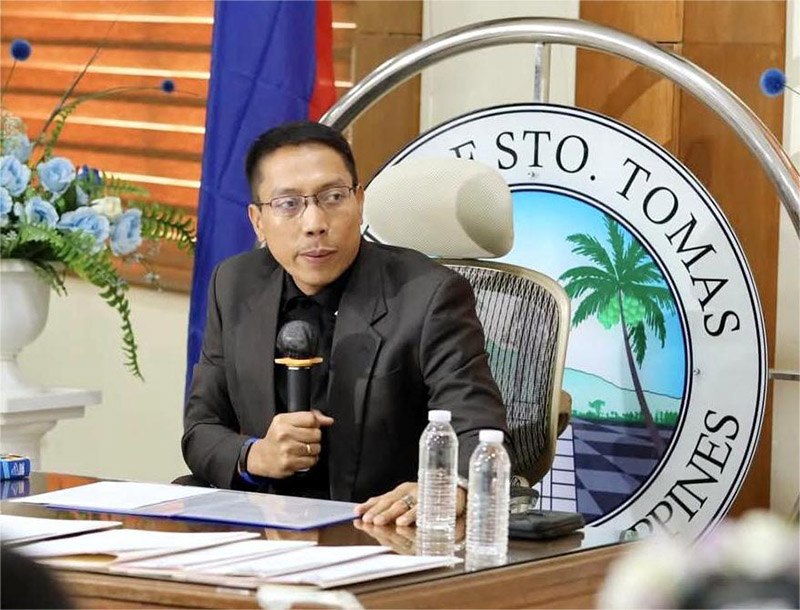
By Danny Estacio   CITY OF STO. TOMAS, Batangas, Philippines – The City School Division Office (SDO) of the Department of Education got the lowest percentage of struggling readers, which brought local learning to the top on a national level, said here on Monday, March 30. This was the result of the recently concluded Comprehensive Rapid Literacy Assessment (CRLA) conducted at the beginning of SY 2025-2026, where the City of Sto. Tomas Schools Division posted the lowest percentage of struggling readers at 23.43%, leading the country in literacy, as announced by  City Mayor Arth Jhun Aguilar Marasigan Marasigan said that it is the outcome of the power of the partnership among the local government, educators, and stakeholders to exemplify reading habits to young learners. Marasigan added that collaborative efforts between the local government units and the education sector had been manifested as the city was recognized by the Department of Education’s Second Commission on Education with the lowest number of struggling readers. The fresh achievement highlights the many sacrifices of our teachers who give extra time to bring meaningful change to students’ learning behavior, said Marasigan. The recognition has proven the important role of each sector of society in shaping the education system in the country, he added. Marasigan said that the city has institutionalized ties with the city’s SDO through the local school board, expanding the membership and strengthening its core to take urgent action to address the learning crisis. LGU, in partnership with SDO has scaled up health and nutrition for our young learners by implementing feeding programs and executing the Academic Recovery and Accessible Learning (ARAL) program, which enables learners struggling in reading, mathematics, and science to attain essential learning competencies. Marasigan administration’s securing proper education for young citizens has been one of his many priorities, ensuring that no one is denied equitable access to learning opportunities and formulating policies that would guarantee quality education for young Tomasinos. Dr. Neil Angeles, head of the City School Division Office, is thankful to the local government for providing essential materials most helpful in bringing back the love of reading for school children. Angeles added that aside from mentorship and guided reading sessions, easily accessible reference and reading materials, and available digital learning tools provided by the city government are crucial in meeting the ideal educational outcome. Parents’ active involvement in making home reading a habit for their children helps accelerate literacy development, and family support indeed makes a difference, said Angeles. Marasigan expressed gratitude to the effort of the City School Division Office for bringing local learning to the top of the educational arena on a national level.    

𝗡𝗮𝗴𝗮 𝘀𝘁𝗲𝗽𝘀 𝘂𝗽 𝗛𝗼𝗹𝘆 𝗪𝗲𝗲𝗸 𝘀𝗲𝗰𝘂𝗿𝗶𝘁𝘆, 𝘁𝗿𝗮𝗳𝗳𝗶𝗰 𝗽𝗹𝗮𝗻𝘀 𝗮𝗺𝗶𝗱 𝗲𝘅𝗽𝗲𝗰𝘁𝗲𝗱 𝗶𝗻𝗳𝗹𝘂𝘅

Region 5

NAGA CITY, Philippines — Authorities have ramped up preparations to ensure public safety, security, and efficient traffic management as the city braces for an influx of pilgrims, tourists, and returning residents during Holy Week. The Public Safety Office (PSO), headed by Executive Director Renne Gumba, in coordination with the Naga City Police Office led by City Director PCol. Gilbert Farinas, is undertaking inspections and deployment planning in key areas, including the Central Bus Station, churches, and other religious and tourist destinations. Resorts, particularly those located in the city’s upper barangays, have also been included in the coverage, as these are expected to draw vacationers during the long holiday. Mayor Leni Robredo said the preparations are primarily aimed at preventing traffic congestion due to Holy Week processions, and ensuring a swift response to possible emergencies, noting that no extraordinary incidents are anticipated despite the expected surge in passengers, especially Nagueños returning home for the observance. Raynor Rodriguez, head of the City Disaster Risk Reduction and Management Office, said the city will operationalize its Summer Vacation (SumVac) initiative to ensure readiness for any eventuality. The peak period is expected from April 2 to 5, 2026, covering Maundy Thursday, Good Friday, Black Saturday, and Easter Sunday, with activities beginning on Palm Sunday on March 29. As a pilgrimage city and a top religious and tourist destination, Naga is expected to draw a high turnout of visitors. Meanwhile, the Metro Naga Development Council through its Tourism, Arts and Culture Cluster has launched the Metro Naga Faith Tourism Circuit, a unified spiritual journey that brings together the 18 member Local Government Units (LGUs) of the Metro Naga Development Council (MNDC), each offering a unique expression of faith, culture, and devotion during the Holy Week. Anchored in the long-standing religious traditions of the Archdiocese of Caceres, with Naga City as the “Pilgrim City” and spiritual hub, this circuit invites pilgrims to embark on a meaningful pilgrimage within towns and communities—each stop reflecting centuries-old Bicolano faith practices. In the coming months, MNDC Tourism, Arts and Culture cluster will also launch Metro Naga River Cruise, Food Tourism and Sand, Surf and Sun Projects. MNDC Executive Director Hubert Brocales said that the River Cruise and Food Tourism component will highlight river-based activities, riverbank attractions, and local cuisines and signature dishes from member LGUs. These tour packages are currently being consolidated into a single portfolio which aims to boost local tourism and economic activity within the Metro Naga. I via Jason Neola

DA eyes location for Bio-Safe facility in Subic Bay Freeport

Environment

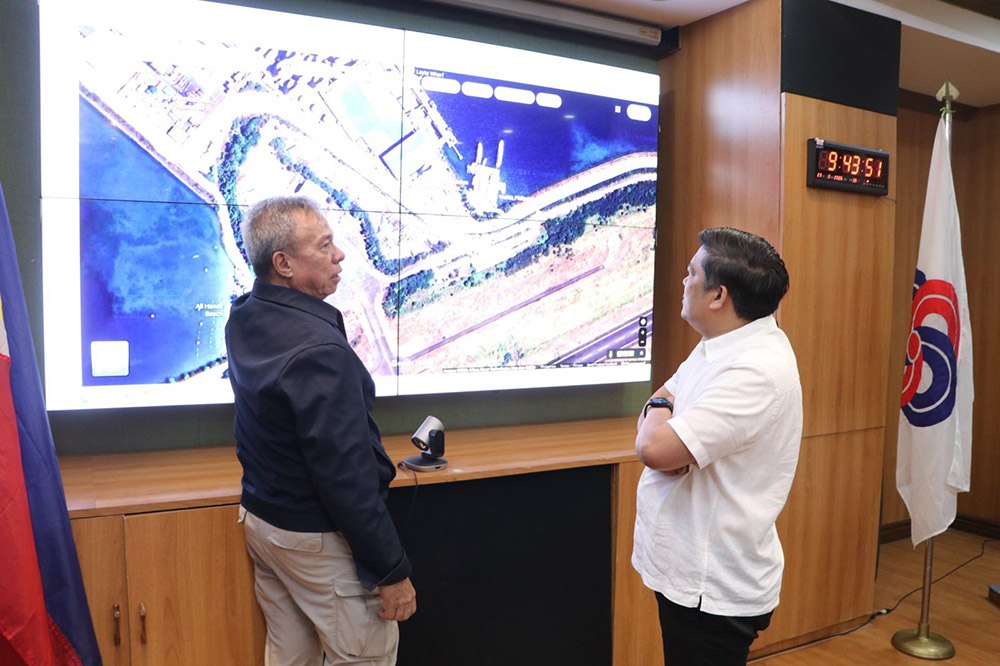
Subic Bay Freeport, Philippines – The Department of Agriculture (DA) is considering to locate a Bio-Safe facility in this premier Freeport zone to ensure the security of agriculture, fisheries, and fertilizer supply chains against risks of smuggling and disease. Early this week, the DA-Inspectorate and Enforcement (DA-IE) unit, led by Undersecretary Carlos Carag met with Subic Bay Metropolitan Authority (SBMA) officials represented by Chief-of-Staff Atty. Von F. Rodriguez, at the corporate boardroom of the administration building, where the former discussed its mandate to establish a Bio-Safe facility or an examination facility in strategic locations in the country. The said facility is part of the government’s initiatives for the ₱1-billion Bio-Safe biosecurity program for 2026, which aims to examine all agricultural products before they are even allowed entry through the piers and go through Bureau of Customs (BOC) processes. According to the DA Inspectorate and Enforcement Unit, the department is eyeing the establishment of such facilities at the Manila International Container Terminal (MICT), the Port of Subic, and the Port of Davao as part of the first phase of the said program. The Bio-Safe biosecurity program aims to strengthen border controls, enhance on-ground enforcement against smuggling, and prevent food supply disruptions and price shocks. Its core objectives include preventing disease outbreaks, specifically targeting transboundary animal diseases such as African Swine Fever (ASF) and Avian Influenza (Bird Flu) to prevent supply shocks and price spikes. Another objective is to strengthen border control by enhancing the detection rate of agricultural smuggling, tightening sanitary/phytosanitary filters on imports, and economic protection, which aims to avoid massive industry losses, such as the estimated ₱200 billion lost due to past ASF outbreaks.

Scroll to Top