
Street Journal Multimedia Services

Environment

STT GDC Philippines accelerates AI-Ready Infrastructure with 40.5MW Renewable Energy Deal

Environment

ST Telemedia Global Data Centres (STT GDC) Philippines, a joint venture between Globe Telecom, ST Telemedia Global Data Centres, and Ayala Corporation, has signed a 10-year renewable energy power supply agreement with MPower. The agreement secures 40.5 megawatts (MW) of clean energy to power the company’s STT Fairview and STT Cavite data center campuses. The agreement strengthens the ability of the country’s digital infrastructure to support growing demand for cloud services, artificial intelligence, and online platforms that Filipinos rely on every day. Data centers power many of the services people use today, from online banking and e-commerce to video streaming, digital payments, and business platforms. As demand for these services continues to grow, so does the need for computing power and electricity. Securing renewable energy helps ensure that the expansion of digital infrastructure remains responsible and sustainable. “AI and digital services are evolving at an unprecedented pace, and the infrastructure supporting them must scale responsibly,” said Carlo Malana, President and CEO of STT GDC Philippines. “By securing long-term renewable energy, we are ensuring that the mission-critical platforms our customers depend on every day are powered by sustainable sources, keeping carbon neutrality at the core of our operations.” The renewable energy supply will support the operations of STT Fairview 1 and the STT Cavite data center campus, which provide critical infrastructure for enterprises and technology providers operating in the Philippines. The move also supports STT GDC Philippines’ broader sustainability commitments, including its goal to achieve carbon neutral operations by 2030. STT GDC Philippines continues to expand its footprint to support the country’s growing digital needs. Its STT Fairview 1 facility has commenced operations, with several megawatts of IT load already deployed and operating for customers, while STT Cavite 2 has been energized and is currently undergoing testing and commissioning. As demand for cloud services, artificial intelligence, and digital platforms continues to rise, initiatives that combine resilient infrastructure with renewable energy will play an increasingly important role in ensuring that the Philippines’ digital growth remains both reliable and sustainable.                  

Globe Secures Back-to-Back Wins as Most Sustainable and Most Active Mobile Network for Environment at 2026 Consumer Choice Awards

Environment

For the second consecutive year, Globe was named Most Sustainable Mobile Network and Most Active Mobile Network for the Environment at the 2026 Consumer Choice Awards by Standard Insights, reinforcing its leadership in responsible technology and sustainable business practices. The recognition, along with Excellence in Digital Literacy and Safety, also marks the fourth time Globe has been honored for sustainability by Standard Insights. The Standard Insights Consumer Choice Awards is a research-driven recognition program based in New York, USA that honors brands across industries based on consumer sentiment and data. These wins signal that environmental, social, and governance performance has become a decisive factor in the Philippine telco landscape. As the Philippines remain at risk to climate change, consumers are recognizing providers that demonstrate environmental action, such as the use of renewable energy. The nationwide survey, which gathered insights from over a thousand Filipino mobile subscribers, highlighted the critical role of trust: 70.5 percent of respondents rely on a single mobile plan for all their connectivity needs. When one provider carries nearly every aspect of a person’s digital life, trust, reliability, and responsible business practices become non-negotiable factors in consumer choice. “We endeavor to give more for our customers when they use the Globe network,” said Yoly Crisanto, Chief Sustainability and Corporate Communications Officer at Globe. “Globe considers its impact on the environment, how it protects people online, and how it contributes to national progress. We use the latest advanced technology to provide more convenience and better value for money for our customers.” Globe’s commitment to sustainability practices is anchored on science-based targets, as the first publicly listed Philippine company to secure validation and approval from the Science Based Targets initiative (SBTi) for its near-term and net-zero greenhouse gas reduction targets. This ambition also makes Globe a Climate Action Faster Forward participant in the UN Global Compact. The company’s broader ESG agenda also covers circularity through its Trade-In Program and various social impact initiatives such as GoGIVE and social impact initiatives under Globe of Good. Beyond ESG-related recognitions, Globe also secured the following awards in the Standard Insights’ survey: – Best Mobile Network in the Philippines – Best Network Coverage – Best Internet Speed – Most Competitive and Affordable Prices and Fees – Most Reliable Network Signal – Best Ads, Marketing Campaigns, and Brand Identity As the industry evolves, Globe’s continued recognition signals that responsible connectivity has become central to how Filipinos define value and leadership in the digital age.

DA eyes location for Bio-Safe facility in Subic Bay Freeport

Environment

Subic Bay Freeport, Philippines – The Department of Agriculture (DA) is considering to locate a Bio-Safe facility in this premier Freeport zone to ensure the security of agriculture, fisheries, and fertilizer supply chains against risks of smuggling and disease. Early this week, the DA-Inspectorate and Enforcement (DA-IE) unit, led by Undersecretary Carlos Carag met with Subic Bay Metropolitan Authority (SBMA) officials represented by Chief-of-Staff Atty. Von F. Rodriguez, at the corporate boardroom of the administration building, where the former discussed its mandate to establish a Bio-Safe facility or an examination facility in strategic locations in the country. The said facility is part of the government’s initiatives for the ₱1-billion Bio-Safe biosecurity program for 2026, which aims to examine all agricultural products before they are even allowed entry through the piers and go through Bureau of Customs (BOC) processes. According to the DA Inspectorate and Enforcement Unit, the department is eyeing the establishment of such facilities at the Manila International Container Terminal (MICT), the Port of Subic, and the Port of Davao as part of the first phase of the said program. The Bio-Safe biosecurity program aims to strengthen border controls, enhance on-ground enforcement against smuggling, and prevent food supply disruptions and price shocks. Its core objectives include preventing disease outbreaks, specifically targeting transboundary animal diseases such as African Swine Fever (ASF) and Avian Influenza (Bird Flu) to prevent supply shocks and price spikes. Another objective is to strengthen border control by enhancing the detection rate of agricultural smuggling, tightening sanitary/phytosanitary filters on imports, and economic protection, which aims to avoid massive industry losses, such as the estimated ₱200 billion lost due to past ASF outbreaks.

Sun‑Powered Spaces: How SM Is Transforming Malls into Energy Hubs

Environment

  To reduce congestion to the power grid and improve power availability to the communities it serves, SM Prime Holdings Inc. (SM Prime) has implemented the use of rooftop solar power systems across its properties and nationwide network of SM Supermalls. Since its pioneering installation of solar panels over SM North EDSA in 2014, clean solar energy generated through SM is now large enough to power a city as large as Mabalacat, Pampanga or Mandaue, Cebu. “The use of solar power enables SM Supermalls to elevate the service we provide to our customers by embedding sustainability into our daily operations,” said SM Supermalls President Steven Tan. “When Filipinos visit their most-loved SM malls, they are entering a space that actively helps preserve the environment through responsible resource management, reducing carbon emissions while ensuring more resources remain available for our surrounding communities.” Maximizing space makes room for energy efficiency SM currently utilizes 65 hectares of space for its rooftop solar panels—which is almost as big as the entire SM Mall of Asia complex, but has also applied innovative ways to maximize mall space for energy efficiency.  

SBMA, BJMP sign MOA for Adopt-A-Mangrove Program

Environment

Subic Bay Freeport, Philippines  – The Subic Bay Metropolitan Authority (SBMA) and the Bureau of Jail Management and Penology (BJMP) signed a Memorandum of Agreement (MOA)  for the Adopt-A-Mangrove Program at the corporate boardroom of the administration building here on March 12, 2026. The MOA, which was signed between SBMA Chairman and Administrator Eduardo Jose L. Aliño and BJMP Regional Office 3 (BJMPRO3) Regional Director, Jail Chief Superintendent (JCSupt) Paulino H. Moreno Jr., stipulates the development of approximately 400 square meters of mangrove area within Subic Bay Freeport. Aliño explained that under the MOA, SBMA will designate an area within the SBFZ mangrove forest to be adopted by BJMPRO3. Mangrove seedlings from the agency’s Mangrove Nursery will also be provided. He added that SBMA will monitor and evaluate the adopted area annually. “And after completing the three-year program, SBMA will award BJMPRO3 with a Certificate of Completion upon turnover of the area to SBMA,” he added. Meanwhile, JCSupt Moreno assured that BJMPRO3 personnel will plant at least 100 seedlings and ensure the survival of the planted mangrove propagules in the SBMA-designated area. He also said that BJMPRO3 personnel will conduct regular cleanup activities, provide adequate manpower, and hand over the area to SBMA after three years. SBMA Ecology Center OIC Rossell L. Abuyo and BJMPPO Zambales Provincial Jail Administrator JSupt. Ferdinand G. Malabo witnessed the signing of the MOA along with other officials from the SBMA and BJMP. Subic Bay Freeport Zone hosts approximately 61 to 65 hectares of protected mangrove forests, primarily in areas such as Triboa Bay, Binictican, and Malawaan. These areas serve as crucial coastal protection, wildlife habitats, and ecotourism sites, with ongoing conservation efforts, including tree planting and rehabilitation, conducted by the SBMA Ecology Center and its partners.          

Learning Sustainability Beyond the Classroom at SM City Baguio

Environment

  BAGUIO CITY — Students from the College of Arts and Sciences of San Beda University recently visited SM City Baguio for a sustainability tour that highlighted the mall’s environmental initiatives and commitment to responsible operations. The visit offered students a closer look at how sustainability practices are integrated into everyday mall operations while supporting both the community and the environment. During the tour, students explored several sustainability features of the mall, including its open-air design, which allows natural light and ventilation to reduce energy consumption while creating a comfortable shopping environment. The group was also introduced to the mall’s rainwater catchment system, which helps collect and reuse rainwater for operational purposes and supports responsible water management. Another highlight of the visit was the Electric Vehicle (EV) charging station, which supports the growing shift toward cleaner transportation by providing convenient charging options for EV users. These initiatives demonstrate how environmental considerations are incorporated into the mall’s infrastructure and daily operations. Reflecting on the experience, Dr. Moses Angeles, Vice Dean for the College of Arts and Sciences of San Beda University, shared that the visit gave students a deeper appreciation of sustainability in practice. “I think one of the crucial things the students must have learned is not only about the actual output but the commitment of SM Baguio, that commitment really to become a sustainable institution not simply for the sake of business, not simply for the sake of commerce but it is about the community, about the environment and ultimately the commitment to preserve our common home.” The tour allowed students to connect academic learning with real-world sustainability practices, showing how businesses can actively contribute to environmental responsibility while serving the community. Through initiatives such as sustainability tours and educational visits, SM City Baguio continues to open its doors to institutions and organizations seeking to learn more about sustainability, environmental stewardship, and community-centered development.

Shincheonji Volunteers expand outreach efforts to more communities

Environment

  Shincheonji Volunteers continue to expand community outreach efforts across the country through initiatives that provide immediate assistance while promoting volunteerism and environmental stewardship. In Barangay Nagpayong, Pinagbuhatan, Pasig City, the nonprofit volunteer group conducted the “Kain Na! Tara Na! Community Pantry and Feeding Program,” bringing together nearly 100 participants, including 78 beneficiaries composed of adults and children, alongside 29 volunteers. Families received fresh vegetables and home-cooked meals prepared by volunteers, while children enjoyed interactive games that created a lively and welcoming atmosphere for the community. The activity was organized in partnership with Patok-Kenneth Neighborhood Association Inc., a homeowners association in Barangay Pinagbuhatan. Ma. Cristina Corpuz, secretary of the association, expressed appreciation for the initiative, noting that the outreach provided meaningful help to families in the community while strengthening unity among residents. Shincheonji Volunteers – Manila, together with Barangay Pinagbuhatan, plans to continue bringing the same initiative to other areas within the barangay to extend assistance to more families. Meanwhile in Cebu, the group carried out a clean-up drive in Lapu-Lapu City, clearing a heavily littered area and removing plastic waste and debris that pose risks to public health and the environment. The activity was conducted in collaboration with Barangay Gun-ob Waste Management, highlighting the importance of responsible waste disposal and demonstrating how volunteer-driven initiatives can transform neglected spaces into cleaner and safer communities. Through its outreach efforts, the group aims to reflect the biblical principle found in Matthew 5:16 — encouraging acts of service to shine before others and inspiring communities to recognize good works and honor God. Shincheonji Volunteers is a global volunteer organization affiliated with the Shincheonji Church of Jesus, serving communities through humanitarian initiatives such as blood donation drives, disaster response, education programs, and environmental clean-up campaigns. For updates on upcoming activities, the public may visit the Shincheonji Volunteers PH Facebook page at fb.com/shincheonjivolunteersph.        

Nueva Vizcaya pushes climate-smart farming, signs deal to scale AWD irrigation program

Environment

By Rachel Magday   NUEVA VIZCAYA, Philippines — The provincial government of Nueva Vizcaya has taken a major step toward climate-resilient agriculture after Governor Atty. Jose V. Gambito signed a new partnership agreement to expand a modern irrigation system designed to boost rice yields while conserving water. The Memorandum of Understanding (MOU) was signed between the provincial government and Verde Carbon Capture Inc. (VCCI), represented by project developer and manager Hamsha Saz, to continue and widen the implementation of the Alternate Wetting and Drying (AWD) Technology Project across irrigated rice farms in the province. The initiative promotes Alternate Wetting and Drying, a climate-smart irrigation practice that allows rice fields to dry to a certain level before being re-irrigated, rather than keeping them permanently flooded. The approach helps farmers save water, reduce greenhouse gas emissions, and potentially increase yields. VCCI, a company under Green Carbon Inc., will spearhead the project, while Nueva Vizcaya State University (NVSU) will serve as the academic partner and lead implementer for technical support and field monitoring in target farming communities. The AWD initiative was first showcased in 2025 in selected rice areas of Villaverde, Solano, Bayombong, and Dupax del Norte, covering 23.6 hectares and involving 18 participating farmers. The expansion aims to cover more than 1,000 hectares initially, with a target of over 5,000 hectares during the current cropping season. The agreement also outlines a 10-year roadmap to gradually roll out AWD across irrigated lowland rice farms throughout Nueva Vizcaya. Additional expansion areas include rice lands in Bambang, Bagabag, and Quezon, along with further sites in Bayombong, Villaverde, and Solano. According to Elbert A. Sana, AWD project staff at NVSU, the expansion is expected to involve 24 irrigators’ associations representing 6,316 farmers across the province. Initial results from the pilot sites showed promising gains for participating farmers. Sana said rice fields using AWD recorded higher production compared with the traditional continuous flooding method, where paddies remain constantly submerged. The AWD practice is widely recommended by the International Rice Research Institute and the Department of Agriculture as a climate-smart approach to rice farming. Under the system, irrigation water is temporarily withheld until the water table drops to about 15 centimeters below the soil surface, after which fields are irrigated again. This cycle reduces water use while lowering methane emissions commonly produced in continuously flooded rice fields. Governor Gambito emphasized that the provincial government is fully backing initiatives that can raise farm productivity and improve the livelihoods of rice growers. Beyond irrigation improvements, he said the province is also working to establish a rice processing center or “rice hub”aimed at helping farmers stabilize palay prices, one of the persistent challenges faced by rice producers in Nueva Vizcaya. “With programs like AWD and the planned rice hub, we are strengthening support systems that will help our farmers increase production and secure better returns,” Gambito said.      

Why solar farms keep grass growing: safeguarding communities, waterways

Environment

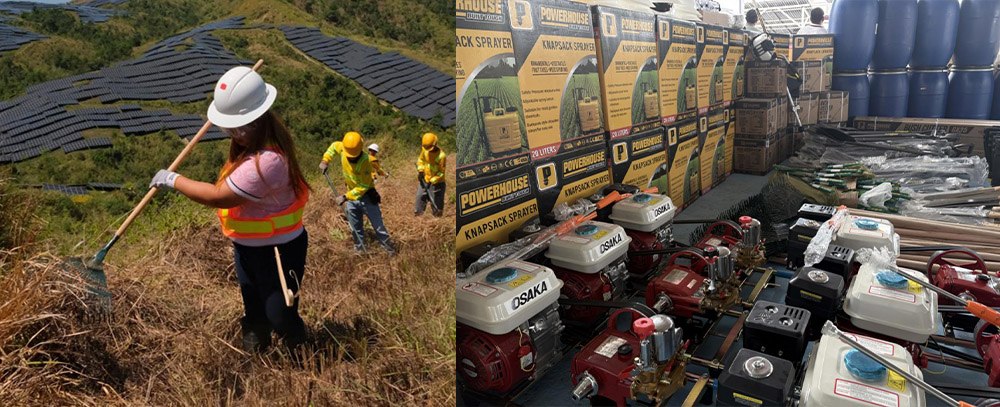
In tropical countries like the Philippines, sunlight is abundant almost all year. It’s what makes solar energy such a powerful opportunity for clean electricity. But what happens to the land beneath all those solar panels? With intense heat and heavy rains common in the tropics, open land can quickly dry out, harden, or erode. Left unmanaged, soil can wash away into rivers and communities during strong downpours. That’s why modern solar farms are designed not just to generate power—but also to protect the land they sit on. Under and around solar panels, grass plays a quiet but important role. “Grass under the panels still gets some sunlight from the sides, which is enough for photosynthesis,” explained Cris Vincent Alidon, Vice President for Engineering and Execution at Aboitiz Renewables, Inc. Panels are spaced to allow morning and afternoon light in, while providing shade at noon when the sun is strongest. The result is a cooler microclimate where vegetation can thrive. The benefits go both ways. Healthy grass stabilizes the soil, slows down rainwater, and reduces runoff—lowering the risk of flash floods or landslides. In turn, the cooler ground temperature can also help solar panels operate more efficiently. Engineers also plant stronger grasses along the edges of panels where rainwater naturally drips. These act like natural barriers, slowing water flow and preventing soil erosion. It’s a simple but effective solution that protects nearby waterways and communities. Solar farms that are planned well help grass grow, keep soil safe, and handle rainwater,” said Leo Lungay, Vice President and General Manager for Solar and Wind at Aboitiz Renewables. “Clean energy and caring for nature can work well together, helping both people and the environment.” In places where sun and rain are both abundant, solar farms are proving that renewable energy doesn’t have to come at the expense of the land. With thoughtful design and respect for local ecosystems, they can generate electricity while nurturing the ground beneath them. Sometimes, the future of energy isn’t just about what’s above the panels — but what’s growing below them.

Scroll to Top