


By Christopher Hedreyda
LOS BAÑOS, Laguna, Philippines (PIA) — As Southeast Asia remains among the region most vulnerable to climate change and biodiversity loss, ASEAN and its member states, together with like-minded countries and organizations, convened a series of technical sessions to discuss ways to mobilize and align funding for climate and biodiversity action, as well as examine how these issues affect growth, productivity, and public finance systems.
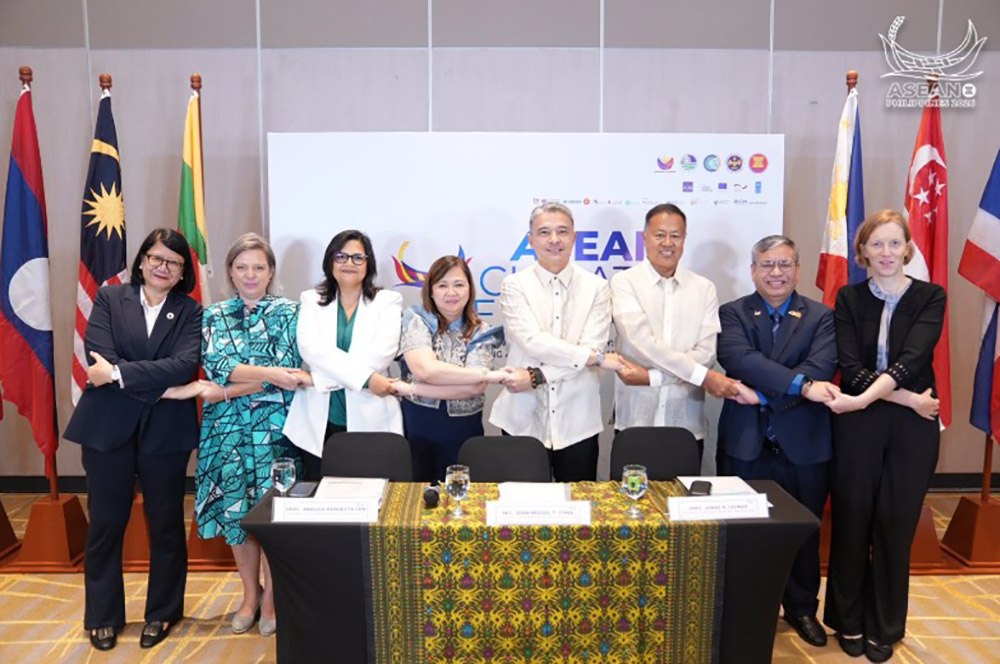
The ASEAN Centre for Biodiversity (ACB) and the Department of Environment and Natural Resources (DENR) co-hosted the ASEAN Climate Week 2026 from April 27 to May 1, a regional forum held under the Philippines’ ASEAN Chairship for 2026.
During the event, ACB presented the activities of the United Kingdom (UK)-funded ASEAN-UK Green Transition Fund (GTF), which advances integrated climate solutions across Southeast Asia through nature-based approaches, inclusive climate finance, and the development of a roadmap aimed at producing a report on financing just transition strategies.
The activities, implemented under the GTF’s Nature-based Solutions (NbS) and Climate Policy and Institutional Capacity Development pillars, reflect the UK Government’s continuing commitment to supporting ASEAN’s climate priorities through targeted funding, technical expertise, policy engagement, and long-term partnerships with ASEAN institutions and member states.
“Through the Green Transition Fund-–the flagship programme of the UK Mission to ASEAN—we are supporting action on nature-based solutions, climate finance, and inclusive energy transitions that strengthen resilience and protect livelihoods across Southeast Asia,” UK Ambassador to ASEAN Helen Fazey said in her speech.
Fazey added that the UK looks forward to continuing its close collaboration with ASEAN and its member states as the region advances its climate ambitions and targets.
For DENR Secretary Juan Miguel Cuna, the Philippine chairship is anchored on the directive of President Ferdinand R. Marcos Jr. to pursue evidence-based, investment-led, and transformative climate solutions.
He added that climate action efforts must deliver tangible improvements in people’s everyday lives and provide stronger protection, especially for vulnerable communities.
“We convene at a critical moment, ASEAN Member States have raised ambitions through updated [Nationally Determined Contributions] but the urgent challenge before us is implementation: translating commitments into policies, programs and investment-ready projects that deliver measurable outcomes for our people,” Cuna said.
He added that the ASEAN Climate Week is also about ensuring that climate plans translate into real protection and an improved quality of life for communities.
Among the ASEAN-UK GTF-funded initiatives in the Philippines is the “Advancing Learning and Capacities in ASEAN on Mitigation: Financing and Nature-Positive Just Transition” (ALAM) Project, which seeks to explore strategic opportunities for increasing climate finance flows in the region.
Civil society organizations across ASEAN are also being mobilized through the ALAM Project to gather grassroots voices, insights, and recommendations on achieving a just and inclusive transition in Southeast Asia.
While the session did not produce binding commitments from member countries and attendees, it established a clear roadmap to institutionalize whole-of-economy financing, reposition Nationally Determined Contributions (NDCs) as investment-ready portfolios, expand direct access for local governments, and harness digital tracking tools to promote transparency and strengthen investor confidence.
As the effects of climate-induced hazards become more frequent and costly, the session sends out a clear message: to protect livelihoods and public finances, ASEAN member states and partner countries must urgently align policies, data systems, and financial flows to make climate resilience an integral part of national budgeting and development planning. (CH/PIA-CALABARZON; with reports from ACB)