
Street Journal Multimedia Services

CAR

Coffin placed along Ambuklao Road as stark reminder to motorists

CAR

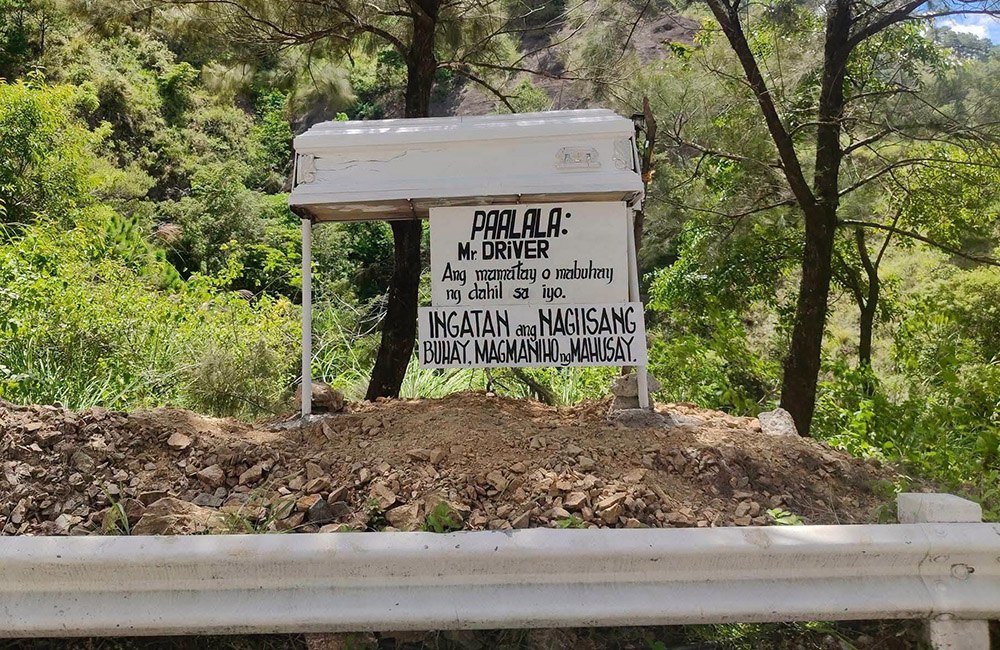
BENGUET, Philippines – A coffin placed on the side of the Benguet-Nueva Vizcaya Road in the Ambuklao Area is currently trending on social media as a warning to motorists. According to the barangay official of Barangay Ambuklao, they did not place it to intimidate, offend or disrespect people, but rather as a reminder to motorists to take care of their lives while driving on the zigzag Ambuklao Road. They also said that motorists should take the importance of road safety seriously, as many have been reported to have accidents along the zigzag Ambuklao Road due to reckless driving ““Paalala: Mr Driver, ang mamatay o mabuhay ng dahil sa iyo.INGATAN ang NAGIISANG BUHAY, MAGMANIHO NG MAHUSAY.” Ito ang nakalagay na pahayag sa ilalim ng kabaong. (Reminder: Mr. Driver, death or life is up to you. TAKE CARE OF YOUR ONLY LIFE, DRIVE WELL.” This is the message written under the coffin.) Barangay officials urge motorists to think carefully before speeding or driving carelessly on the region’s winding mountain highways, as the best trip is one that ends safely and drives as if someone is waiting for you at home. The 103-kilometer zigzag highway called Ambuklao Road (part of the Benguet–Nueva Vizcaya Road) an alternate route from Baguio City to Nueva Vizcaya, with an estimated travel time of more or less three hours was built in 2006 at a cost of ₱2.1 billion. Ambuklao Road is one of six historic major highways in and out of Baguio City, the last of which was the Baguio-Nangalisan,Tuba -La Union Road. These routes have evolved from being the main access road in the province to a major corridor in the region.  

Cordillera leaders support regional autonomy, 39th Cordillera Month kick-off

CAR

LA TRINIDAD, Benguet, Philippines — Representatives and local chief executives from the six provinces and the city of Baguio expressed support for regional autonomy during the 39th Cordillera Month Kick off ceremony held at the Benguet Sports Complex Gymnasium, Wangal, La Trinidad, Benguet on July 1, 2026. Hosted by the Provincial Local Government Unit, together with the Regional Development Council- CAR, through its Economic Development (EconDev) Committee as lead, this year’s month-long celebration carries the theme, “𝘚𝘮𝘢𝘳𝘵 𝘊𝘰𝘳𝘥𝘪𝘭𝘭𝘦𝘳𝘢: 𝘌𝘯𝘢𝘣𝘭𝘪𝘯𝘨 𝘓𝘰𝘤𝘢𝘭 𝘌𝘯𝘵𝘦𝘳𝘱𝘳𝘪𝘴𝘦𝘴 𝘵𝘩𝘳𝘰𝘶𝘨𝘩 𝘋𝘪𝘨𝘪𝘵𝘢𝘭 𝘛𝘳𝘢𝘯𝘴𝘧𝘰𝘳𝘮𝘢𝘵𝘪𝘰𝘯 𝘢𝘯𝘥 𝘈𝘤𝘤𝘦𝘭𝘦𝘳𝘢𝘵𝘦𝘥 𝘙𝘦𝘨𝘪𝘰𝘯𝘢𝘭 𝘈𝘶𝘵𝘰𝘯𝘰𝘮𝘺.” As host Governor, Benguet Governor Dr. Melchor D. Diclas welcomed delegates from across the Cordillera and reaffirmed the province’s support for the region’s long-standing aspiration for autonomy. He emphasized that realizing regional self-governance required the continued unity, cooperation, and collective commitment of Cordillerans, while honoring the leaders, elders, and advocates whose efforts have sustained the autonomy movement through the years. Diclas also called on government officials, stakeholders, and communities to continue advancing the autonomy agenda through dialogue, collaboration, and shared responsibility, stressing that an autonomous Cordillera would enable the region to pursue more responsive governance and inclusive, sustainable development. Solidarity messages supporting the pursuit of regional autonomy were also delivered by RDC Chairperson and Apayao Governor Elias C. Bulut, Jr., represented by RDC Co-Chairperson Arnel M. Cabanisas; Congressman Mauricio G. Domogan, with councilor Fred L. Bagbagen representing Mayor Benjamin B. Magalong of Baguio City; Hon. Armando I. Lauro representing Congressman Eric Go Yap; Congressman Maximo Y. Dalog and Vice Governor Jose O. Dominguez representing Governor Bonifacio C. Lacwasan, Jr. of Mountain Province, Vice Governor Ana Marie A. Bersamin representing Governor Eustaquio P. Bersamin of Abra, and Mr. Ryan Mangusan representing Cong. Kenneth Paolo Tereng of KM Partylist. Messages were also conveyed through video messages by Ifugao Governor Jerry U. Dalipog and Kalinga Governor James S. Edduba. Vice Governor Marie Rose T. Fongwan- Kepes also expressed her message of support emphasizing the unity the cordilleran leaders have which can strengthen the pursuit of regional autonomy. Sealing the messages in a symbolic show of unity, Cordillera leaders, along with line agencies, private sector representatives, Civil Society Organizations and delegates from the six provinces and the City of Baguio, participated in the beating of the unity gong. The month-long celebration will feature major activities including the Fashion Show and Governor’s Night on July 14, the parade, ritual, and main program on July 15, and the culmination program on July 31.            

RDC-CAR creates regional bodies for KALAHI-CIDSS’ Panahon ng Pagkilos implementation in Cordillera

CAR

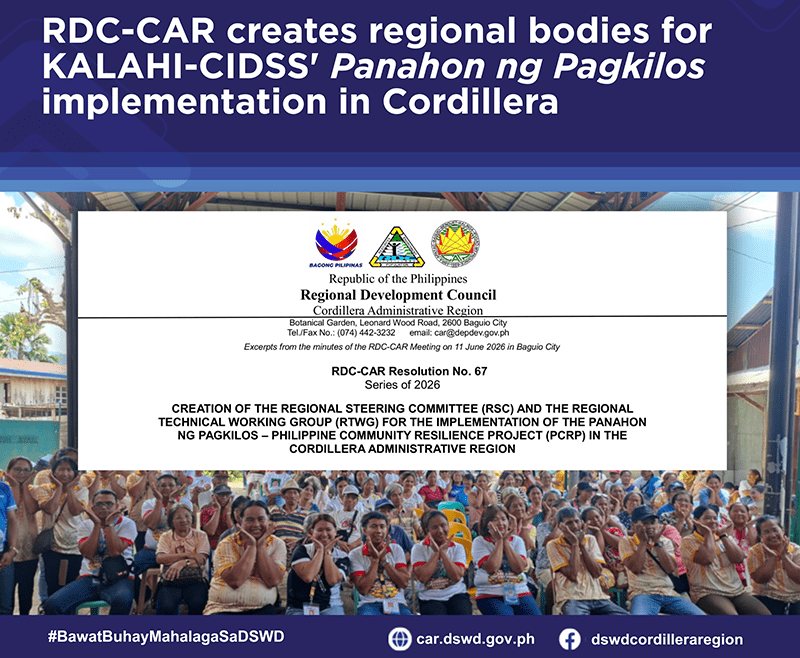
By Yvonne Gracious T. Elegado   CORDILLERA, Philippines — The Regional Development Council of the Cordillera Administrative Region (RDC-CAR) approved the creation of the Regional Steering Committee (RSC) and the Regional Steering Committee-Technical Working Group (RSC-TWG) through Resolution No. 67, Series of 2026, to ensure coordinated and effective implementation of the Panahon ng Pagkilos: Philippine Community Resilience Project (PCRP) in the region during its meeting on June 11 in Baguio City. Through Resolution No. 67, Series of 2026, the council formally constituted the two bodies that will provide policy guidance, inter-agency coordination, and technical support for the project at the regional level. Panahon ng Pagkilos is the newest modality of the Department of Social Welfare and Development (DSWD) Kapit-Bisig Laban sa Kahirapan – Comprehensive and Integrated Delivery of Social Services (KALAHI-CIDSS) program, anchored on community-driven development (CDD) principles. Implemented in partnership with various national government agencies, local government units, civil society organizations, and development partners, the project aims to strengthen the capacities of vulnerable communities to prepare for, respond to, and recover from the impacts of disasters and climate change, while expanding access to climate-resilient, disaster-responsive, and inclusive investments. Under the resolution, the RSC will be chaired by the Regional Director of DSWD-CAR, with the Regional Director of the Department of the Interior and Local Government (DILG)-CAR serving as co-chairperson. Assistant Regional Directors or equivalent senior officials from the Department of Environment and Natural Resources (DENR), Department of Health (DOH), National Anti-Poverty Commission (NAPC), Department of Agriculture (DA), National Commission on Indigenous Peoples (NCIP), Department of Economy, Planning, and Development (DEPDev), Department of Finance (DOF), Office of Civil Defense (OCD), Department of Science and Technology (DOST), and Civil Society Organizations will serve as members. The Department of Education (DepEd), Department of Agrarian Reform (DAR), Office of the Presidential Adviser on Peace, Reconciliation and Unity (OPAPRU), Commission on Audit (COA), Department of Budget and Management (DBM), and Department of Public Works and Highways (DPWH) will sit as ex-officio members. The RSC-TWG will be composed of designated technical representatives from DSWD, DILG, NAPC, NCIP, DENR, and DA, with DSWD Field Office-CAR serving as the lead agency and secretariat. The resolution specifies that members must hold at least Division Chief-level positions or equivalent to ensure timely technical deliberation and decision-making. The creation of both bodies was endorsed by the Regional Social Development Committee (RSDC) through Resolution No. 03, Series of 2026, and was taken up during the RSDC’s second quarter committee meeting on 19 May 2026 before being elevated to the RDC-CAR for approval. Following the completion of Municipal Orientations across covered areas, Barangay Assemblies are now ongoing in 135 target barangays across Abra, Apayao, Benguet, and Mountain Province, marking the active rollout of the Pagkilos in the Cordillera Administrative Region. #DSWD-CAR, KALAHI-CIDSS RPMO, Yvonne Gracious T. Elegado, Project Development Officer III    

SNAP-Benguet earns EMB-CAR BADANG Excellence Award on Solid Waste Management 

CAR

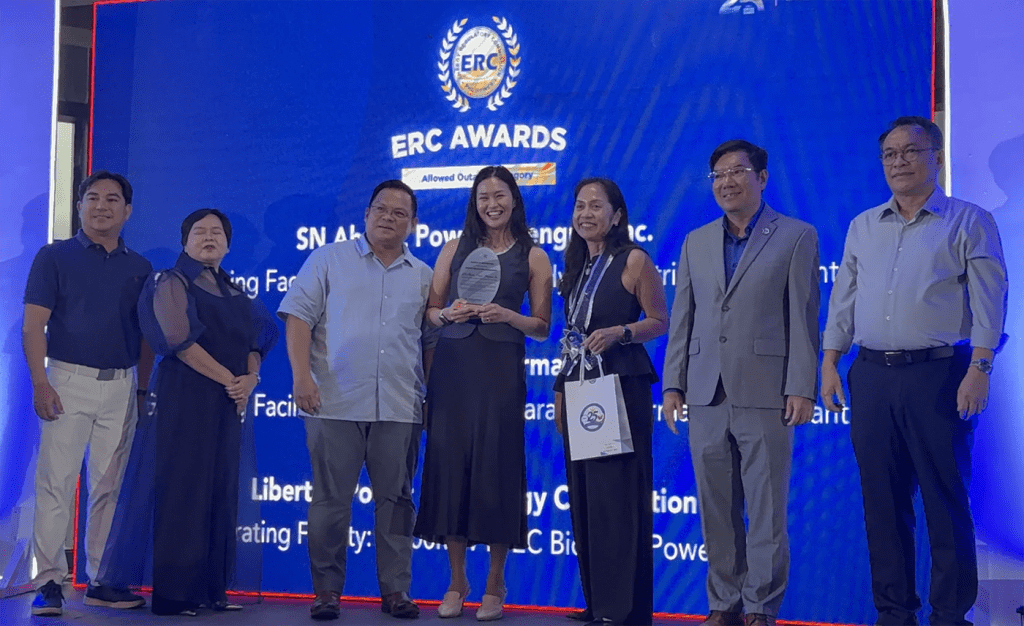
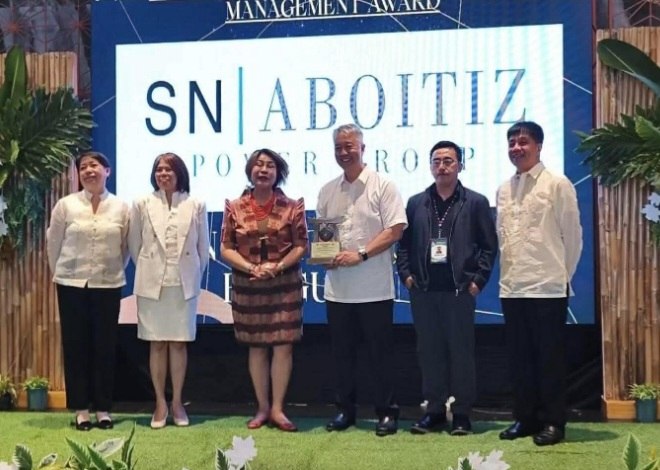
SN Aboitiz Power Benguet Inc. (SNAP-Benguet) received the BADANG Excellence Award for Solid Waste Management for its exemplary solid waste management practices during the 9th Cordillera Environmental Summit, on June 30, 2026 in Baguio City. Awarded by the Environmental Management Bureau–Cordillera Administrative Region (EMB-CAR), the BADANG Excellence Awards recognize industries and institutions with outstanding environmental programs and best practices that contribute to sustainable development and environmental protection in the Cordillera Region. Categories include Hazardous Waste Management, Wastewater Treatment and Water Conservation, Air Quality Monitoring and Management, Solid Waste Management, and Environmental IEC Leadership. SNAP-Benguet’s recognition reflects its sustained environmental initiatives, including the operation of a Material Recovery Facility that recovers recyclable materials and supports the waste management needs of nearby communities, the implementation of color-coded waste segregation systems, the installation of log booms and a semi-automated trash rack cleaning machine to collect floating debris in dam reservoirs, and the conduct of regular clean-up drives. These efforts are anchored on the company’s ISO 14001-certified environmental management system. SNAP-Benguet has also been recognized as a regional champion and national finalist in the Gawad Kaligtasan at Kalusugan (GKK) Awards and received global recognition in 2024 for its occupational safety and health programs at the ASEAN-Occupational Safety and Health Network (ASEAN-OSHNET) Awards in Singapore. The award underscores SNAP-Benguet’s continued commitment to advancing Environmental, Social, and Governance (ESG) principles through environmental stewardship, safe operations, that create lasting value for the communities where it operates.            

PROCAR ranks No.3 Nationwide in Service of Warrants of Arrests

CAR

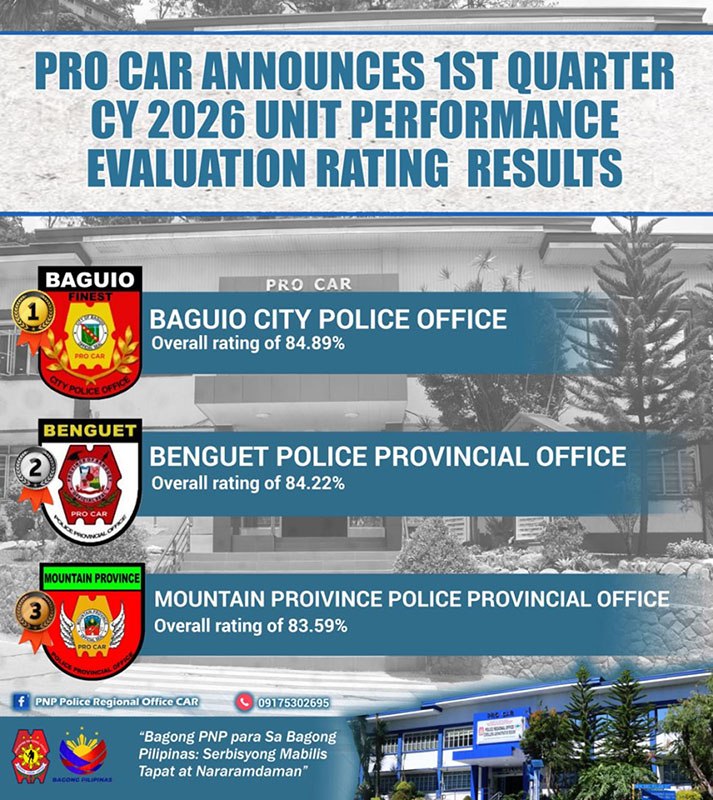
CAMP DANGWA, Benguet, Philippines — The Police Regional Office Cordillera Administrative Region (PRO CAR) achieved third place in law enforcement nationwide in the Service of Warrants of Arrest (WOA) from 2012 to 2026. Based from the Directorate for Investigation and Detective Management (DIDM) Baseline Data on Wanted Persons from January 1, 2012 to May 31, 2026, PRO CAR recorded a Service Efficiency Rate of 76.99% with 23,871 successfully served warrants of arrest; Arrest Efficiency Rate of 93.13% for Most Wanted Persons (MWP), successfully arresting 1,708 MWPs and Arrest Efficiency Rate of 73.68% for Other Wanted Persons (OWP) successfully arresting 26,360 OWPs across the region. The accomplishment reflects the dedication, professionalism, and coordinated efforts of PRO CAR’s provincial, city, municipal, and station-level police units in conducting intelligence-driven operations, strengthening inter-unit collaboration, and working closely with the judiciary and other law enforcement agencies to implement outstanding warrants. For the public, a high arrest efficiency rate means fewer wanted individuals remain at large to threaten neighbors, or avoid punishment. It reinforces the message that the law is not optional—and that law enforcers are actively closing the gap between impunity and accountability. Moving forward, PRO CAR remains committed to maintaining this high arrest efficiency through timely, lawful enforcement operations, sending a clear message that the region is a very difficult place for fugitives to hide.

DOST offline library brings vast learning resources to remote Abra school

CAR

By Christian Allister Tubadeza   TUBO, Abra, Philippines — In a community where internet connectivity remains a challenge, a new digital learning resource is opening access to educational materials for students and teachers of Tubtuba Elementary School (TUES) in the remote village of Tubtuba, here. Recently installed at the school, the Science and Technology Academic and Research-Based Openly-Operated KioskS (STARBOOKS) from the Department of Science and Technology (DOST) is expected to assist learners in accessing educational materials despite the absence of internet service. Barangay Tubtuba is approximately 80 kilometers away from the capital town of Bangued. During rainy seasons, the safest and most convenient route for vehicles is via the Municipality of Quirino in Ilocos Sur Province, since traversing through the Municipal Hall of Tubo is risky due to rockslides and mudslides. For years, teachers in Tubtuba have relied heavily on printed references and limited learning materials to supplement classroom instruction. With the deployment of STARBOOKS, students now have access to thousands of science and technology resources, educational videos, digitized publications, and interactive learning materials through a stand-alone offline digital library. Dubbed as the country’s first digital science library in a box, STARBOOKS allows users to explore a vast collection of information without the need for an internet connection, making it particularly valuable for geographically isolated and disadvantaged areas such as Tubtuba. TUES School Principal Elizabeth Macalingay Manggalis said she is delighted that the digital library can operate entirely offline. She said that aside from helping the students, the STARBOOKS will also aid the teachers of TUES in their lesson plans. “Daytoy STARBOOKS ket dakkel ti tulong na lalo ta offline. Adu ti karga ti STARBOOKS nga mabalin nga usaren dagiti teachers kasta met dagiti students mabalin da ti agbrowse uray adu da ta adda met router na so this will be of great help for our pupils,” she said. (This will help us a lot, especially working offline. It is loaded with materials that can be used by teachers and students simultaneously because it has a router, so this will be a great help for the pupils.) DOST-Abra Science and Research Specialist Mark Jay Trinidad also shared that the STARBOOKS will run even during a power outage since it is equipped with Solar Panels, Uninterrupted Power Source (UPS) and routers. He emphasized that the priority beneficiaries are those in Geographically Isolated and Disadvantaged Areas (GIDAs). “Ang priority natin dito ay ‘yung mga nasa GIDA areas especially ‘yung mga walang internet connectivity. Since it is offline, magagamit siya kahit walang internet. May thousands of topics na puwedeng gamitin ng teachers and students,” he explained. Meanwhile, Abra Police Provincial Office (PPO) Revitalized-Pulis Sa Barangay Focal Person (R-PSB) Master Sergeant Albie May Liyad explained that the intervention was identified and facilitated through the efforts of the R-PSB of the Abra PPO, which recognized the need for additional educational support in the community and coordinated with DOST to bring the technology to the school. “Base po sa need assessment ng Revitalized-Pulis Sa Barangay team natin dito, na-identify na itong schools, kailangan nila ng STARBOOKS. Ngayon nandito na ‘yung project so nagpapasalamat tayo sa DOST kasi binigay nila ‘yung kailangan ng school,” Liyad shared. The deployment of STARBOOKS in isolated areas highlights the whole-of-nation approach in ensuring that learners in far-flung areas are not left behind in an increasingly digital world. (JDP/CAGT – PIA CAR, Abra)    

Convoy of Hope Philippines visited Kabayan

CAR

KABAYAN, Benguet — The Local Government of Kabayan, formally welcomed the delegation of Convoy of Hope Philippines during their first meeting at the Conference Hall, Municipal Building, Poblacion. The gathering marked the start of a significant partnership, with Kabayan chosen as the pilot municipality in the Cordillera Administrative Region (CAR) for Convoy of Hope’s comprehensive feeding program. Mayor Rex Alvin Aquisan, with the support and presence of Vice Mayor Sario M. Minas, Punong Barangays led by Honorable Amy Joanne A. Belting, Child Development Workers (CDWs), Department of Education -Kabayan District, and the LGU departments, warmly expressed gratitude to Convoy of Hope for their commitment to supporting the community, particularly the younger generation. He emphasized that the initiative is a vital step toward ensuring the health and educational success of Kabayan’s children, noting that the LGU is ready to collaborate in sustaining programs that uplift vulnerable groups. During the meeting, the parties agreed to conduct a 20-day trial feeding program in selected schools, after which an assessment will be undertaken before the signing of a one-year contract. The program is designed as a nutrition-specific intervention targeting at-risk and vulnerable children aged 2–14 years, as well as pregnant and lactating mothers. It will be strategically implemented through school-based and community-based approaches to maximize reach and impact. The feeding program will operate five days a week for a continuous 180-day cycle, using fortified rice meal products and approved recipes to ensure nutritional adequacy. Implementation will be carried out in partnership with local organizations, with special attention to Geographically Isolated and Disadvantaged Areas (GIDA). To strengthen sustainability, nutrition education and training will be provided to parents and volunteers, including sessions on food preparation and handling facilitated by the Nutrition Services Unit (NSU). Children will also receive vitamin and micronutrient supplementation to support growth and immunity, while a robust monitoring and evaluation system will be in place to measure effectiveness and guide improvements. Convoy of Hope, a faith-based humanitarian relief organization founded in 1994 in the United States, is globally recognized for its programs in feeding, disaster response, women’s empowerment, agriculture, and community development. In the Philippines, the organization has partnered with local governments to combat malnutrition and promote holistic community development. The meeting highlighted the shared vision of LGU Kabayan and Convoy of Hope: to build healthier, stronger communities through compassion-driven initiatives. With Kabayan as the pilot site, the collaboration is expected to bring lasting benefits to children and families, setting a model for future expansion across the region.

Aboitiz Renewables creates sustainable livelihoods among Benguet tribes through hog-raising

CAR

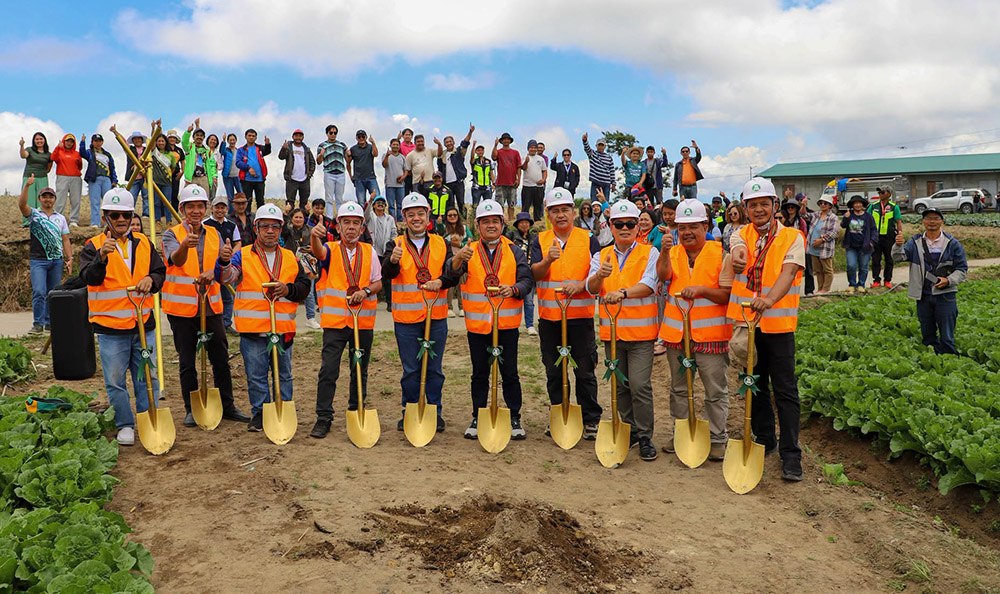
TUBA, Benguet, Philippines —  Aboitiz Renewables, Inc., the renewable energy arm of Aboitiz Power Corporation (AboitizPower), is supporting a community-based hog-raising initiative for indigenous communities in Tuba, Benguet — helping local families build a sustainable source of income that can grow over time. The project benefits members of the Ibaloi, Kankanaey, and Kalanguya tribes under the Tuba Ancestral Domain Indigenous Peoples Organization (TADIPO). Through hog raising and breeding, community members can build productive assets, improve household income, and pass on opportunities to the next generation. To get the project off the ground, Aboitiz Renewables provided 20 piglets and 1,000 kilograms of feeds — giving TADIPO the foundation to run a community enterprise built on self-reliance. For many indigenous families, the initiative is more than an additional income source. It supports food security, addresses daily household needs, and opens doors for future generations. TADIPO President Zaldy Guileng underscored what the project means for his community. “This is more than just a source of income. It is an opportunity for our communities to build sustainable livelihoods while strengthening the values of hard work, cooperation, and stewardship that have long been part of our way of life. Through initiatives like this, families can provide for their needs while creating opportunities for future generations,” Guileng said. Noreen Vicencio, First Vice President and General Manager for Hydro Operations at Aboitiz Renewables, echoed the significance of building on what communities already have. “The Ibaloi, Kankanaey, and Kalanguya tribes have a long tradition of valuing self-sufficiency and communal advancement. Seeing that channeled into concrete financial prospects for local households is what makes this initiative meaningful — it works with the community’s own strengths to build income streams that can last,” Vicencio said. Through initiatives such as the community hog-raising project, Aboitiz Renewables continues to work alongside its host communities in creating sustainable progress, stronger livelihoods, and shared prosperity.

ARBOs in Benguet renew market agreement with institutional buyers

CAR

  LA TRINIDAD, Benguet, Philippines — Two Agrarian Reform Beneficiary Organizations (ARBOs) in Benguet renewed their marketing agreements with government institutions on June 10, strengthening market access for farmers and supporting efforts to promote food security and sustainable livelihoods in the province. The agreement was formalized during a Kumustahan Session and Renewal of Marketing Agreement organized by the Department of Agrarian Reform Provincial Office (DARPO) Benguet through the Partnership Against Hunger and Poverty (PAHP) Program. The renewed partnership involves the Bokod Sulfur Spring Multipurpose Cooperative (BSSMC) and Taba-ao Cuba Multipurpose Cooperative (TACUMPC), together with the Benguet Provincial Jail (BPJ), with the Philippine National Police Benguet Police Provincial Office (PNP BPPO), Bureau of Jail Management and Penology (BJMP), and the Provincial Local Government Unit (PLGU) of Benguet serving as witnesses. OIC-Provincial Agrarian Reform Program Officer II (PARPO II) Lailani A. Cortez said the collaboration aims to create lasting benefits for agrarian reform beneficiaries and Persons Deprived of Liberty (PDLs) while contributing to inclusive and sustainable community development. “This partnership is anchored on service, compassion, and shared responsibility,” Cortez said, expressing hope for its continued implementation and expansion. Provincial Jail Administrator JCINSP Jaime Batuyog Jr. also expressed support for increasing the procurement of agricultural products from partner ARBOs, underscoring the importance of collective action in improving livelihoods and fostering stability within communities. Meanwhile, PMAJ Edwin Sergio of the PNP BPPO’s Police Community Affairs and Development Division (PCADD) thanked DARPO Benguet and the partner ARBOs, describing farmers as the “living source” of food for communities and institutions. He encouraged members to sustain honest livelihood activities, emphasizing that gains earned through hard work and integrity are more meaningful than those obtained through dishonest means. The agreement was signed by PARPO II Cortez, BPJ Warden Peter Tip-ac, represented by Joseph M. Pul-oc, and the chairpersons of BSSMC and TACUMPC, Nicanor P. Sison, represented by Gil B. Amdos, and Prudencio L. Lacasandile, respectively. Under the agreement, DARPO Benguet will serve as the coordinating and monitoring body between the ARBOs and institutional buyers. The ARBOs committed to supplying quality agricultural products at reasonable prices while complying with existing procurement policies. In turn, the BPJ, BJMP, and PNP committed to continue procuring products from partner ARBOs in support of government efforts to strengthen local agricultural enterprises, enhance food security, and help alleviate poverty among farmers and PDLs. Representing Governor Melchor Diclas, Leo Calabias congratulated the ARBOs for forging partnerships with institutional buyers and reiterated the provincial government’s support for the initiative. He also encouraged the organizations to maximize available assistance programs for civil society organizations, including loan facilities that could help expand their operations.  

Scroll to Top