Street Journal Multimedia Services

CAR

La Trinidad Cooperative turn over solar lights

CAR

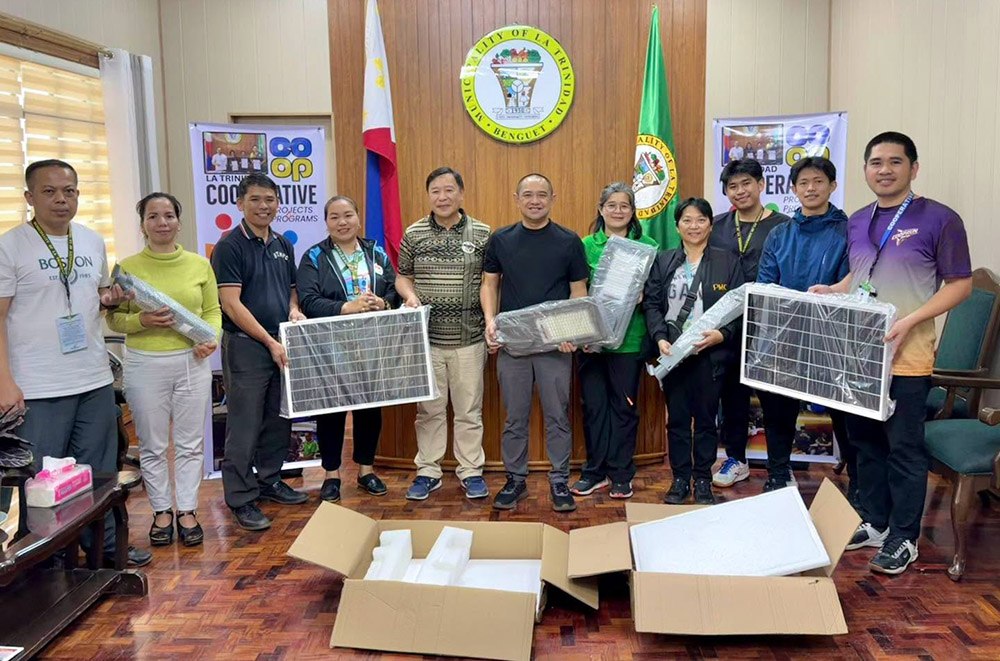
LA TRINIDAD, Benguet, Philippines — The La Trinidad Cooperative Development Council (LTCDC) with its Chairperson Albert Paul Dimas has turned over to the municipal local government, led by Mayor Roderick Awingan, 77 pieces of solar lights through their project called “Kooperatibulb” on July 24. Awingan, who co-chairs the LTCDC, said the municipal LGU shall install the solar lights, worth P500,000.00 in coordination with the different barangay LGUs. The latter shall be responsible for the maintenance of the solar lights, which will last for 10 years. Cooperative Development Officer Orlando Pacya said the initiative is in response to the call of the mayor for binnadang for the town, involving all sectors of the community. “This is one of the best practices of our Coop Council, where the needs of the community are being addressed through the binnadang of our different cooperatives in partnership with the municipal LGU,” Pacya said. There are 172 registered cooperatives in La Trinidad that make up the Coop council. The solar lights will be installed along barangay roads, pathways, schools, among others according to the list earlier submitted by the barangay captains, as evaluated by the MLGU. The project complements the existing project of the MLGU on solar light installations called, “Project Tanglaw: Solar-Powered Safe Waiting Sheds Initiative”. (By Ofelia Empian)    

DSWD KALAHI-CIDSS completes First Barangay Assembly across 135 Cordillera Barangays

CAR

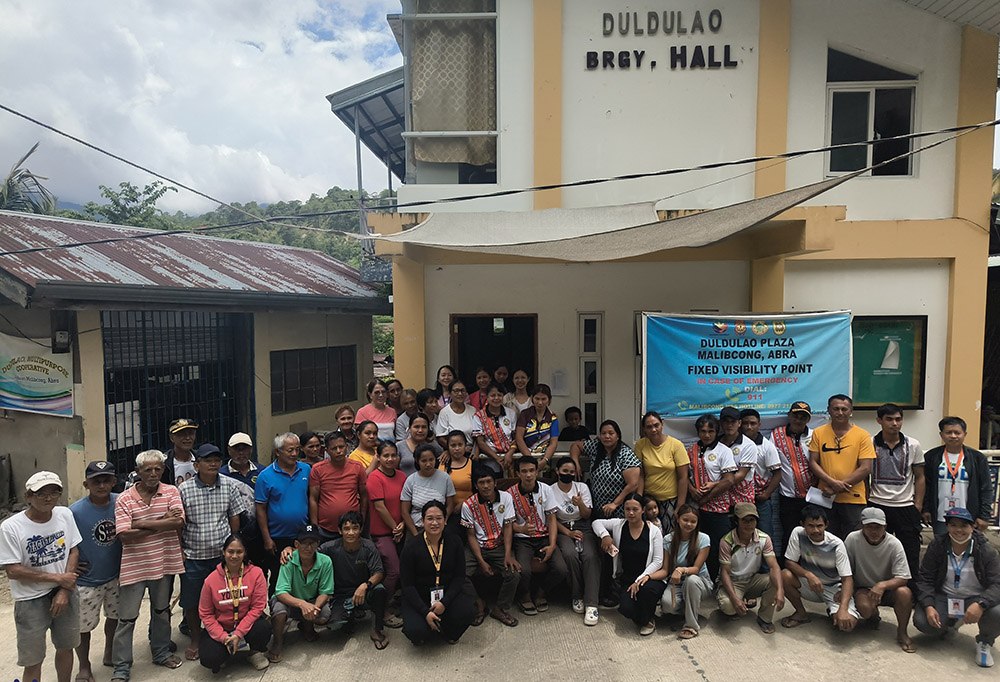
CORDILLERA, Philippines — The DSWD KALAHI-CIDSS conducted the First Barangay Assembly (BA) for the Panahon ng Pagkilos: Philippine Community Resilience Project (PCRP) across 135 barangays in the provinces of Abra, Apayao, Benguet, and Mountain Province in the Cordillera region from 13 June to 20 July 2026. The municipalities of Luba, Daguioman, and Malibcong in Abra; Conner, Kabugao, and Calanasan in Apayao; Bokod and Buguias in Benguet; and Sagada and Sadanga in Mountain Province conducted assemblies in their respective barangays, mobilizing household heads, barangay officials, and community leaders and volunteers. As part of the Community Resilience Implementation Process (CRIP), the First BA laid the groundwork in bringing the project closer to the communities it aims to serve. It provided a platform where residents were introduced to the project, gained a deeper understanding of its goals, and learned how they can actively take part in shaping the future of their communities. During the assembly, community members also selected their Barangay Resilience Team (Brest), a group of community volunteers who will help lead the next activities in their respective barangays. With the barangay assemblies now complete, all covered areas under the PCRP modality are currently undergoing Disaster Risk Reduction and Climate Change Adaptation (DRR-CCA) activities, which help communities understand the hazards and risks in their area and how these can be addressed together. This will be followed by the Participatory Risk and Vulnerability Assessment (PRVA), where the BRest team will work with residents to identify and map out the specific risks facing their barangays. By Yvonne Gracious T. Elegado, Project Development Officer III

Five KALAHI-CIDSS Subprojects Wrapped Up Early in Abra

CAR

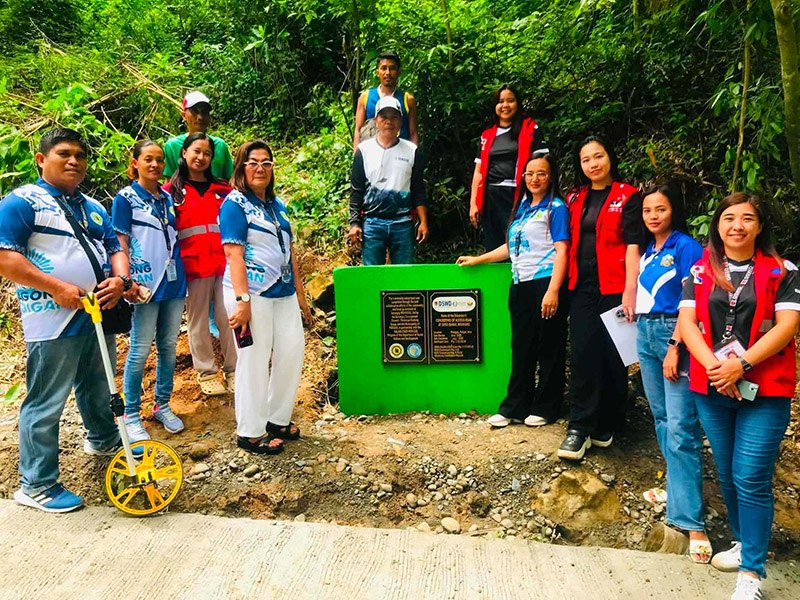
PIDIGAN, Abra, Philippines – Five community-prioritized infrastructure subprojects under the Department of Social Welfare and Development Field Office Cordillera Administrative Region’s (DSWD FO CAR) Kapit-Bisig Laban sa Kahirapan–Comprehensive and Integrated Delivery of Social Services (KALAHI-CIDSS) Program were completed ahead of the prescribed 90-calendar-day implementation period in the Municipality of Pidigan, benefiting a total of 1,078 households. Implemented through the Kapangyarihan at Kaunlaran sa Barangay–Community-Driven Development (KKB-CDD) modality, the subprojects include the Construction of Drying Pavement in Barangay Pamutic, Concreting of Access Road in Barangay Naguirayan, Improvement of Slope Protection at Sitio Proper in Barangay Sulbec, Concreting of Access Road at Sitio Banay in Barangay Monggoc, and Improvement of Access Road at Sitio Proper in Barangay Garreta. The projects were completed between 10 June and 14 July 2026. These interventions address priority infrastructure needs identified by the communities through the community-driven development (CDD) process. The drying pavement in Barangay Pamutic gives farmers a post-harvest facility to help preserve the quality of their produce, while the access road projects in Barangays Naguirayan, Monggoc, and Garreta improve road accessibility, facilitate the transport of agricultural products, and give residents safer access to schools, health facilities, markets, and other essential services. The slope protection project in Barangay Sulbec helps prevent soil erosion and enhances the safety of nearby residents and community facilities. The five subprojects have a combined cost of Php 4,944,143.43, funded through KALAHI-CIDSS grants and counterpart contributions from the local government units. The remaining two community-prioritized subprojects under the program are currently under implementation and are expected to be completed within the prescribed timeframe. KALAHI-CIDSS is a poverty alleviation program of the DSWD that empowers communities to identify, prioritize, and implement development projects that address locally identified needs through participatory planning and decision-making, while strengthening community participation in local governance and development. By Yvonne Gracious T. Elegado, Project Development Officer III

51 Kalinga agrarian reform beneficiaries take oath, undergo orientation on DAR programs

CAR

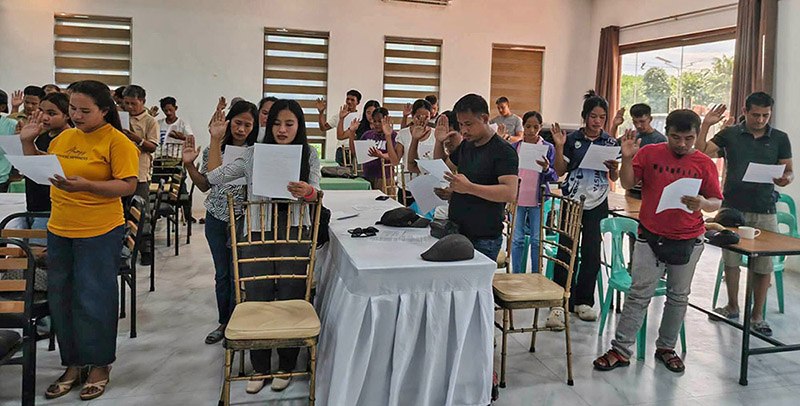
TABUK CITY, Kalinga, Philippines —Fifty-one Agrarian Reform Beneficiaries (ARBs) from various barangays in Tabuk City took their oath and underwent an orientation on agrarian reform laws, policies, and support services on July 16, 2026, as part of the Department of Agrarian Reform’s (DAR) continuing efforts to prepare beneficiaries for land ownership and the eventual issuance of their individual land titles. The activity, organized by the Land Tenure Improvement Division (LTID) of DAR-Kalinga at Red Star Hotel and Event Place in Bulanao, aimed to equip beneficiaries with the legal knowledge, responsibilities, and government interventions available under the Comprehensive Agrarian Reform Program (CARP). Engr. Joseph Calderon described the orientation and oath-taking as an important milestone in the beneficiaries’ agrarian reform journey. He urged the participants to preserve and productively cultivate the lands awarded to them instead of selling them, emphasizing that the properties should serve as a lasting source of livelihood for their families and future generations. The orientation covered key agrarian reform programs and policies, including the Certificate of Condonation with Release of Mortgage (CoCRoM) under Republic Act No. 11953, land acquisition and distribution processes, relocation and subdivision surveys, Land Transfer Clearance procedures, and documentary requirements for agricultural land transactions. Participants were also introduced to the Agrarian Reform Beneficiaries Development and Sustainability Program (ARBDSP), which provides support services such as organizational strengthening, farm productivity interventions, climate-resilient agriculture initiatives, and enterprise development. Resource persons encouraged beneficiaries to organize and actively participate in Agrarian Reform Beneficiary Organizations (ARBOs) to improve their access to government assistance and development programs. An open forum allowed the beneficiaries to raise concerns regarding land surveys, legal land transfers, DAR clearances, and available support services, with resource speakers providing clarifications on the Department’s policies and procedures. In the afternoon, Presiding Judge Hon. Tshaine B. Taguinod-Maggay of the Municipal Trial Court in Cities (MTCC) of Tabuk City administered the oath to the 51 beneficiaries. She reminded them that while agrarian reform grants them the opportunity to own land, it also carries the responsibility of protecting, cultivating, and managing it in accordance with the law.

BENECO projects another hike in July, expects rates to normalize by September

CAR

The Benguet Electric Cooperative, Inc. (BENECO) is projecting another increase in consumers’ electricity bills this July of about P0.60 per kilowatt-hour, attributing the adjustment to higher electricity prices in the Wholesale Electricity Spot Market (WESM) amid the ongoing conflict in the Middle East. BENECO said electricity rates are expected to return to normal by September. This was announced by BENECO General Manager Melchor Licoben during the Baguio City Council’s legislative inquiry on July 13, 2026 regarding last month’s increase in electricity bills. The City Council’s legislative inquiry was prompted by the noticeable increase in electricity rates charged to BENECO consumers which rose by P1.9409/kWh, or about 20%, from P9.7041/kWh in May to P11.6500/kWh in June. The electric bill comprises four components: generation cost, transmission cost, distribution cost, and other support charges. According to Licoben, the increase in June electricity bills was primarily due to higher generation costs. He said BENECO sources about 50% of its electricity from Thermal Luzon, Inc. (TLI), whose generation rate increased by 10%, while another 33% is purchased through the WESM where electricity prices rose by 57%. He further explained that the increase in generation costs in almost all distribution utilities was triggered by the ongoing conflict in the Middle East. He said the resulting increase in electricity rates was temporarily cushioned by the Energy Regulatory Commission’s P6.00 cap on coal prices. However, the cap remained in effect for only one month, after which electricity prices in the WESM reverted to market-based pricing. However, Licoben announced that the new contract between BENECO and Mansiloc Power Co. Ltd. (MPCL) would be formalized on July 26, 2026, ending the cooperative’s exposure to the WESM. He said the agreement would benefit both BENECO and its consumers as the impact of higher WESM prices would be minimized through the lock-in rates agreed upon by both parties. The general manager likewise clarified that BENECO’s billing cycle has a one-month lag, meaning the increase in electricity bills in June reflected the higher electricity rates in May. Amid volatile electricity prices in the WESM which continue to affect consumers’ electricity bills, BENECO has several projects in the pipeline following the successful construction and operation of the 3.24-megawatt Man-asok Hydroelectric Power Plant in Buguias. “Although the Man-asok Power Plant currently meets only 3 percent of our electricity demand, it proves that BENECO can generate its own power supply,” he said. BENECO is pursuing the following initiatives: A 10-megawatt minihydro power plant in Adaway, Kabayan with a Notice to Proceed issued by A 10-megawatt mini-hydroelectric power plant in Adaway, Kabayan, for which the Department of Energy has issued a Notice to Proceed; A nine-megawatt solar energy project in Tabaan Sur; The exploration of other potential sites in Bakun, Kapangan, and Tuba; and Partnerships with developers in Benguet to provide additional power generation capacity beyond BENECO’s existing contracted supply. Licoben said these projects are expected to help stabilize electricity rates for consumers in Baguio and Benguet. –Jordan G. Habbiling  

150,816 children targeted for measles rubella vaccination in Cordillera

CAR

BAGUIO CITY, Philippines – With the theme “Chikiting Ligtas.Sa Bagong Pilipinas, Bawat Bata ay Ligtas mula Tigdas” the Department of Health is now targeting 150,816 children in the entire Cordillera region to be vaccinated under the Measles Rubella Supplementary Immunization Activity (MR SIA) by the month of August. According to Jeffrey Tamondong, Health Education and Promotion Officer of the Department of Health (DOH), MR SIA will cover all children aged 6 to 59 months, regardless of their previous vaccination status, as long as there is a minimum interval of four weeks since their last vaccination. Tamondong said there is no cure for measles and rubella, but vaccination helps prevent serious illness, hospitalization, and death. He noted that an unvaccinated child infected with measles can transmit the disease to up to six other individuals. He also assured that MR vaccines have been proven safe and effective, and that health workers are ready to immediately monitor and manage possible adverse effects after vaccination. In Baguio City, a total of 25,335 children aged 6 to 59 months are scheduled to be vaccinated with MR SIA in barangays throughout the health district starting August 3, according to Sonia Wakat-Insas, nurse coordinator of the City Health Services Office. Wakat-Insas said that fixed vaccination sites, including health centers, health stations, private clinics, hospital outpatient departments (OPDs), and other health facilities, will be open daily throughout the campaign. Preparatory activities include the placement of spot maps identifying all fixed vaccination sites to provide advance information to health workers, parents, and other clients. The campaign will be conducted in collaboration with the health districts of Asin, Atab, Atok Trail, Aurora Hill, Campo Filipino, City Camp, Engineers Hill, Irisan, Loakan, Lucban, Mines View, Pacdal, Pinsao, Quezon Hill, Quirino Hill, and Scout Barrio. Children aged 6 to 11 months will receive a blue vitamin A capsule containing 100,000 international units (IU), while those aged 12 to 59 months will receive a red capsule containing 200,000 IU. Additionally, infants vaccinated between the ages of 6 and 11 months will follow the regular MMR vaccination schedule at least four weeks later.

CMDC: Mankayan drilling is exploration, not mining

CAR

Company cites completed consent process   MANKAYAN, Benguet, Philippines — Crescent Mining and Development Corporation (CMDC) today reaffirmed that its current activities in Mankayan are limited to exploration drilling under duly issued government permits, and renewed its invitation to community leaders to resolve outstanding concerns through dialogue. Exploration, not mining The work now underway is exploration drilling under CMDC’s Exploration Work Program approved by the Mines and Geosciences Bureau on August 28, 2025. The program’s sole purpose is to gather geological data for a pre-feasibility study — to determine whether future development of the deposit is feasible. No ore is being extracted, no land is being excavated beyond narrow patches land for drill pads, and no mineral processing is taking place. Drilling is confined to specific, limited sites within the tenement; it does not involve the entire 533.4-hectare area. Should studies eventually show that development is feasible, mining could not simply proceed. Further negotiations with the community, endorsements from local government units, an Environmental Compliance Certificate, and additional government approvals would all be required. The Environmental Impact Assessment study which is required to be conducted in this period was also postponed. CMDC also confirmed that open-pit mining is not being considered at any stage. The deposit’s depth and geometry make it unsuitable for open-pit methods; studies to date indicate. A completed, NCIP-supervised consent process CMDC’s Mineral Production Sharing Agreement (MPSA No. 057-96-CAR), originally granted in 1996, was renewed by the DENR in March 2022 for a second 25-year term, on the condition that a Certification Precondition be obtained from the National Commission on Indigenous Peoples (NCIP). That condition has been fulfilled. The Free, Prior and Informed Consent (FPIC) process — initiated in October 2021 and facilitated by the NCIP over nearly four years — included community assemblies in all twelve barangays of the Mankayan ancestral domain, conducted twice per barangay, followed by a decision-making stage completed in August 2024 under rules agreed at the outset: one vote per barangay, simple majority. A majority of barangays voted in favor. A Memorandum of Agreement between CMDC and the Mankayan Ancestral Domain was signed on December 18, 2024, and the NCIP Commission En Banc — after separately hearing the barangays that voted no — approved the issuance of a Certification Precondition under CEB Resolution No. 2025-10-09-051. The CP was signed by the NCIP Chairperson on September 29, 2025. CMDC acknowledges that a petition questioning the CP is pending before the NCIP, filed in April 2026, and respects that process. The company is confident in the integrity of the FPIC undertaken. A record of restraint and engagement  When the Municipal Mayor issued a Cease and Desist Order in October 2025, CMDC voluntarily complied and suspended activities while the issues raised were addressed. Following written advice from MGB-CAR (November 2025) and the Anti-Red Tape Authority (December 2025) that the order fell outside LGU jurisdiction over a validly permitted exploration period, the Mayor repealed the CDO through Executive Order No. 21, Series of 2026, on April 4, 2026. CMDC has continued to seek dialogue, including a meeting with municipal and barangay officials in the months following the issuance of the CDO from Mayor Cesar Pasiwen until June 16, 2026 where they announced that they will resume the drilling activities. During the June 16 dialogue some participants even urged the company to go ahead with the plan. Environmental safeguards during drilling Even at the exploration stage, CMDC implements site-specific environmental controls: lined drill pads and mud pits that contain drilling fluids and cuttings; collection and storage of topsoil for restoration; hole sealing in accordance with MGB guidelines; regular water, air, and noise quality testing; and full rehabilitation of drill sites — previous sites have been returned to landowners and are again productive farmland. The company also planted 6,000 to 7,000 benguet pine trees, coffee, and bamboo seedlings annually across Guinaoang, Bulalacao, and neighboring barangays. Drill sites are documented, and CMDC welcomes community observers to verify that activities remain within the approved exploration scope. Respect for community concerns CMDC recognizes that some residents of Barangays Bulalacao and Guinaoang hold genuine concerns about the project’s potential impact on farmlands, water, and livelihoods. The company takes these concerns seriously. As a commitment to allay the fears of the community, CMDC, through its President, Engr. Ronnie Siapno executed an affidavit of undertaking that was attached to the Certification Precondition and the Memorandum of Agreement with the Indigenous People of Mankayan. (Press Release) About CMDC: Crescent Mining and Development Corporation holds MPSA No. 057-96-CAR covering 533.4 hectares in Mankayan, Benguet, renewed for a second 25-year term to 2046. CMDC is affiliated with Blackstone Minerals Ltd (ASX:BSX).

Abra mango grower’s livelihood rises with agricultural drone from DOST

CAR

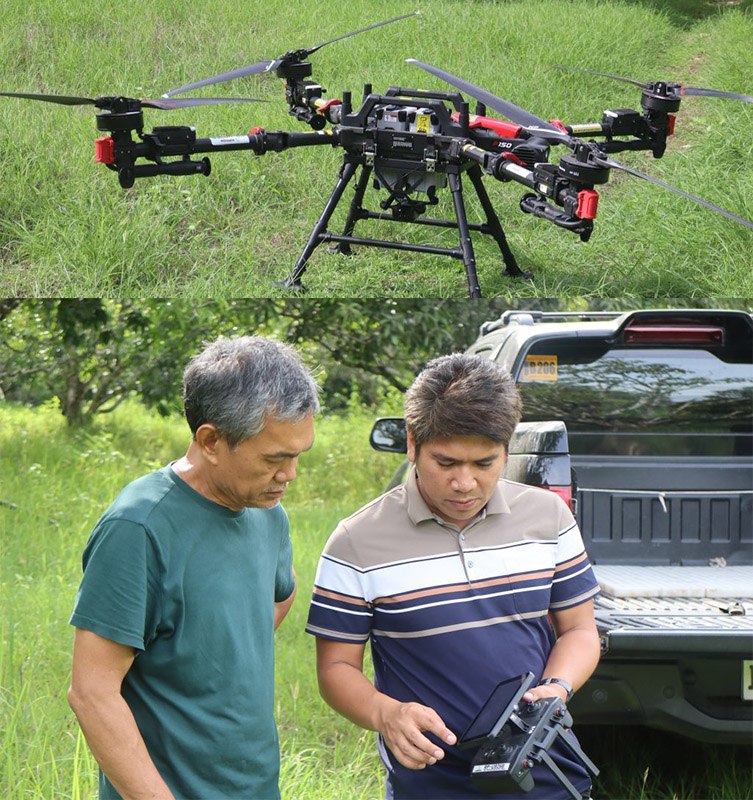
By Christian Alllister G. Tubadeza   From traditional farming to precision agriculture   PEÑARRUBIA, Abra, Philippines  — For decades, mango farmer and entrepreneur Arnel Valera relied on conventional methods to manage his sprawling mango plantation in Abra. With over 3,000 mango trees spread across 20 hectares of land, spraying fertilizers and crop protection products was a labor-intensive task that required significant time, manpower, and resources. The challenge takes flight Through the Department of Science and Technology Community Empowerment through Science and Technology (DOST-CEST) Program, Valera recently received an XAG P150 Pro agricultural drone worth P1.780 million, providing a modern solution to improve productivity, precision and efficiency in his mango farm. The intervention also includes free drone operation training, assistance in securing the necessary license to operate, and drone registration, ensuring that the technology can be used safely, efficiently, and in compliance with regulatory requirements. As the owner of AVV Food Products, a local enterprise known for its dried mango products, the quality of his processed products depends heavily on the condition of the mangoes harvested from his farm. However, managing thousands of trees using traditional spraying methods often meant higher labor costs and longer working hours. For Valera, the drone’s precision application capability also allows inputs such as insecticides and fertilizers to be used more efficiently, reducing wastage while ensuring that each tree receives the necessary treatment. “Mas mapadaras ti panag spray mi ken makatipid ti labor, makasave ti time ken mapabassit ti input ti insecticide kada fertilizer ta mas accurate pannakai-apply na daytoy drone. Dakkel nga value daytoy isu nga dakkel ti tulong ti DOST ta awan ti interest daytoy mabayadan babaen ti CEST,” he said. (It expedites the process of spraying and saves me labor costs and time. It will also lessen my input of insecticide and fertilizers since the drone is accurate in applying such. This is a great value so I thank the DOST because I will not be paying for any interest through CEST.) Using advance transmission system, the drone can automatically map out its flight path to the locations where the spraying of insecticide and fertilizers is needed. By automating a task that traditionally requires several workers and many hours in the field, the drone offers a practical solution to modern agricultural challenges. DOST-Abra Science Research Specialist Rose Crizzle Cabangbang explained that the assistance provided to AVV Food Products reflects the agency’s commitment to supporting local enterprises through science and technology interventions. “Enterprises here in Abra, most especially ‘yong mga enterprises who engage in food processing, sila ang puwedeng mabigyan ng equipment or machineries through CEST. Basta kumpleto sila sa permits and business registration, we will assist them,” she said. Cabangbang emphasized that the CEST Program is designed to help qualified micro, small, and medium enterprises improve their operations by providing access to appropriate technologies and equipment. Through these interventions, DOST aims to strengthen local industries, enhance productivity, and create more economic opportunities within communities. Through the support of the DOST CEST Program, a local mango grower and food processor is embracing precision agriculture, proving that modern technology can help rural enterprises flourish while cultivating a more productive and sustainable future for Abra’s agricultural sector. (JDP/CAGT – PIA CAR, Abra)

43 irrigation projects ground breaks in Mountain Province

CAR

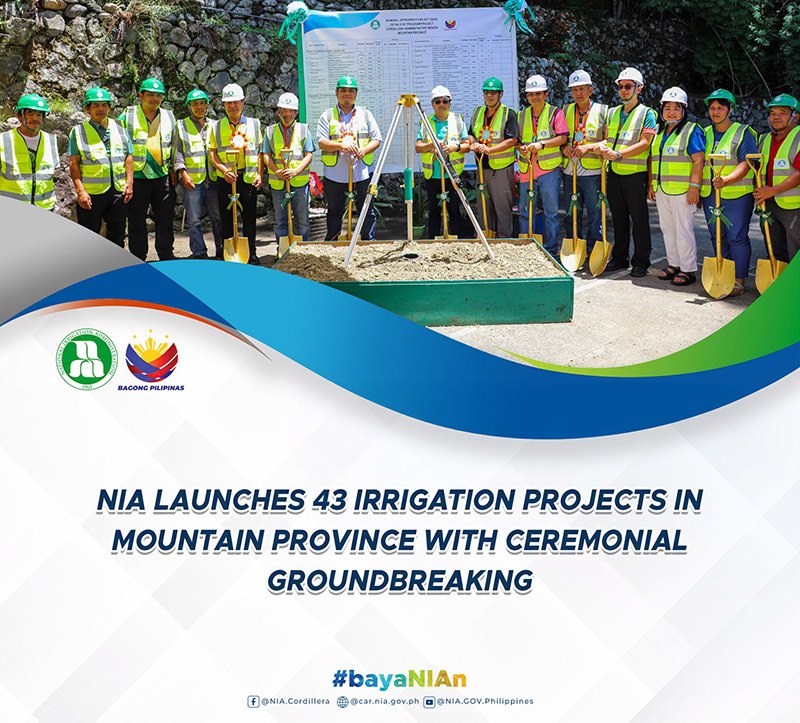
MOUNTAIN PROVINCE. Philippines – A total of 43 irrigation projects for the province this CY 2026 were presented in a ceremonial groundbreaking ceremony on July 8. The groundbreaking ceremony is led by NIA-CAR Regional Manager Ronilio Cervantes, Congressman Maximo Dalog, Jr. of the Lone District of Mountain Province, Montañosa Federation of Irrigators’ Associations President Ezra Gomez, and other officials. With a total budget allocation of ₱140 million, these 43 projects in the 10 municipalities of Mountain Province aims to serve a total area of 483 hectares, in which 165 hectares are considered new area. A total of 1,927 farmers and their families are estimated to use these irrigation projects when completed. Of these, 19 are new small irrigation projects (SIP), 5 are solar-powered pump irrigation projects, 9 projects are intended for restoration focusing on bringing abandoned or non-operational communal irrigation systems (CIS) back into service, 10 projects are for the repair of existing CIS (fix specific damages within existing CISs to ensure more efficient irrigation delivery. The 43 projects are distributed across the municipalities as follows: 10 projects in Bauko, 6 in Bontoc, 2 in Barlig, 4 in Besao, 4 in Sagada, 1 jointly covering Sagada and Besao, 5 in Paracelis, 2 in Sadanga, 3 in Natonin, 3 in Sabangan, and 3 in Tadian. Also leading the ceremonies are Hon. Alfonso Ligos, Jr., president of the Liga ng mga Barangay of Mountain Province, Provincial Governor represented by Provincial Administrator John Likigan, Engr. Abraham Akilit, former regional manager of NIA-CAR, NIA Mountain Province Satellite Office employees led by Provincial Head Winston Daoas, and presidents of various Irrigators’ Associations. Cong. Dalog said that project implementation is a shared responsibility, with irrigators associations playing an important role in project implementation as they can be stewards and monitors so projects are long-lasting. He also expressed hopes for a national irrigation project through the proposed Upper Butigue Irrigation Project to serve the wide valleys in Paracelis. Meanwhile, NIA-CAR Regional Manager Cervantes expressed that the groundbreaking aims to inform various stakeholders and the public of the projects, urging also all irrigators associations to become more active partners in monitoring and inspection. He also informed that after completion, communal and small irrigation projects are turned over to duly formed Irrigators’ Associations for operation and maintenance. Also, during the ceremony, a total of ₱283,618 operation and maintenance (O&M) subsidies were presented to MOFIA for distribution to various irrigators’ associations in Mountain Province. IAs are encouraged to continue with their O&M activities within their irrigation systems, submit reports and accomplishments to NIA to be able to continually claim their subsidies.

Scroll to Top