

Street Journal Multimedia Services

Business

BDO opens public offer for PHP5B ASEAN Sustainability Bonds

Business

BDO Unibank, Inc. (BDO or the “Bank”) has launched the public offer of its Peso-denominated Fixed-Rate Sustainability Bonds with a minimum aggregate issue size of PHP5 billion. This marks the Bank’s fifth Peso-denominated ASEAN Sustainability Bond, following an aggregate of PHP286.7 billion Sustainability Bonds in four prior issuances since January 2022. The net proceeds will be used to support the Bank’s lending activities and diversify funding sources and will be used and/or allocated by the Bank to finance and/or refinance eligible assets as defined in the Bank’s Sustainable Finance Framework. The Securities and Exchange Commission (“SEC”) has likewise confirmed that the proposed issuance complies with the requirements set forth under the ASEAN Sustainability Bond Standards and the SEC ASEAN Sustainability Bond Circular. The proposed issuance has a tenor of three (3) years and bears a coupon rate of 5.7125% per annum. The minimum investment amount is PHP500,000, with additional increments of PHP100,000 thereafter. The offer period will run from January 7 to 19, 2026, while the issue, settlement, and listing date will be on January 26, 2026. BDO reserves the right to amend the terms and the timing of the issuance as it deems necessary. Standard Chartered Bank is the Sole Arranger of the proposed issuance, with BDO Unibank, Inc. and Standard Chartered Bank as the Selling Agents, and BDO Capital & Investment Corporation as Financial Advisor. THE BONDS ARE SECURITIES EXEMPT FROM REGISTRATION UNDER SECTION 9.1(e) OF THE SECURITIES REGULATION CODE (“SRC”) AND AS SUCH WILL NOT BE REGISTERED UNDER THE SRC.            

BDO named only PH Bank in ASEAN Top 10 most valuable banking brands

Business

BDO Unibank (BDO) is the sole Philippine bank ranked among the top 10 most valuable banking brands in ASEAN, as recognized by Brand Finance, the world’s leading brand valuation consultancy, at the Asia Brand Gala 2025 in Singapore. Earlier in 2025, BDO was also named the Philippines’ most valuable brand for the second consecutive year, with its brand value rising 48% to US$ 3.7 billion. This accolade reflects BDO’s continued focus on enhancing customer experience, promoting financial inclusion, and driving operational excellence. Alex Haigh, Managing Director, Brand Finance Asia Pacific, shared “BDO’s consistent performance and strong reputation are testament to its ability to align brand strength with business results – pillars that continue to reinforce its leadership in the Philippine banking industry.”                            

Scam Threats to Online Filipinos Growing – GASA Study

Business

Globe and GASA PH Leads Industry Drive to Curb Online Scam   Filipinos are now dealing with scams almost as often as they check their phones. A new nationwide study  from the Global Anti-Scam Alliance (GASA) shows that an average Filipino encounters a scam attempt every two days. Six in ten individuals were successfully targeted at least once in the past year. The report, based on a survey of one thousand adults across the Philippines, mirrors what people encounter every day. Scams usually reach them through text messages and messaging apps, making it easy for fraudsters to blend in with regular conversations. Investment scams and unexpected money schemes remain the most common. Many victims felt overwhelmed or stressed, with some realizing too late that they have already been deceived. The report was released at the recent launch of the GASA Philippines Chapter, a multi-sector initiative chaired by Derick Ohmar Adil, Head of AI and Privacy Governance at Globe. The findings underline the need for a stronger, coordinated response across industries and sectors. Through its role in the chapter, Globe will help drive education efforts, strengthen threat intelligence sharing, and support closer industry coordination. The goal is to help Filipinos navigate the online space with more confidence and clearer protection. GASA has a global footprint and has long pioneered coordinated efforts that bring sectors together to protect consumers from scams. Globe recently accepted the chairmanship of the GASA PH Chapter, with Gogolook and Meta as vice chairs. This builds on earlier engagements with the Department of Information and Communications Technology (DICT) and other agencies that support a multi-sector approach to protecting Filipinos online. “The goal is to level the playing field for Filipinos,” Adil said. “Scams today move fast across different channels. No single organization can fix this alone. Collaboration is the only way forward. We want Filipinos to feel safe online and that Globe is their trusted partner to address these threats.” This partnership reflects a shared commitment across sectors to help Filipinos feel safer online. Work among partners and key stakeholders across sectors has already begun. In the months ahead, GASA PH and its members will refine the recommendations, focus areas, align stakeholders, and shape new ways of working, community education and awareness programs that address the realities Filipino users face today. Globe will take part in moving this effort forward through its role in the GASA PH Chapter, with the goal of helping build a digital environment where trust feels more certain and every Filipino feels supported.

Shared Responsibility, Shared Security: Strengthening Cloud Resilience in the Philippines

Business

Cloud computing now anchors the Philippines’ digital transformation, powering smarter banking, faster government services, and more connected businesses. But as cloud adoption accelerates, so does the question of accountability: who is truly responsible for keeping our data, applications, and systems secure? While cloud providers safeguard the underlying infrastructure, customers ultimately control their own data, configurations, and user access. This “shared responsibility” model is meant to balance trust and transparency, but in practice, it often creates gaps that attackers are quick to exploit. In a cloud-first Philippines, where information moves fluidly across hybrid and multi-cloud environments, human error remains the biggest vulnerability. The Local Threat Landscape The 2025 Fortinet–Cybersecurity Insiders State of Cloud Security Report highlights how confusion around shared responsibility remains one of the top risks for global organisations. Although providers secure the platforms, users, from enterprises to individual developers are accountable for what they build and host. In the Philippines, the challenge is amplified by the country’s rapid pace of digitalisation. The Department of Information and Communications Technology (DICT) reported millions of malicious attempts against government systems in 2024, while the National Cybersecurity Plan 2023–2028 identified malware, data leaks, and compromised websites among the most frequent incidents. These numbers reveal a simple truth: while innovation is moving fast, security readiness is still catching up. Bridging the Human and Technical Divide Before the cloud, organizations controlled every part of their IT environment, from servers, networks, to user devices. Now, with workloads spread across multiple platforms and third-party providers, a single misconfiguration or overlooked access setting can open the door to an attack. Cloud providers are responsible for platform integrity, but users must secure what they put inside it. That includes managing access credentials, protecting stored data, and applying patches promptly. Yet breaches continue to occur because people assume “someone else” is responsible. This mindset must change. Technology alone cannot close the security gap. Weak passwords, over-privileged accounts, and outdated systems remain among the most common causes of exposure. Filipino companies must empower every employee, and not just the IT team  to become a first line of defence. Cyber awareness should be part of everyday business culture, from the boardroom to the help desk. Building a Culture of Accountability Security begins with good governance and awareness. Enforcing multi-factor authentication and the principle of least privilege helps limit access to sensitive systems. Integrating security testing early into software development (DevSecOps) reduces vulnerabilities before deployment. Regular audits of configurations and permissions, especially in hybrid environments, prevent issues from going unnoticed. However, processes alone are not enough. The Philippines faces a growing shortage of cybersecurity professionals, compounded by uneven reporting on cyber incidents. This makes it harder for both public and private sectors to design effective defense strategies. To close this gap, leadership must make cybersecurity an organization-wide responsibility. Executives should champion clear governance frameworks for cloud security, invest in regular simulations and training, and ensure that accountability is shared across functions. Transparency through periodic reporting on vulnerabilities, vendor risks, and response plans, which builds trust and drives improvement. From Compliance to Confidence As cyber threats become more sophisticated, cloud and application security can no longer be treated as a compliance exercise. It must be seen as a pillar of digital trust and the foundation on which the country’s digital economy depends. The journey to a secure cloud ecosystem is not just about deploying technology; it’s about empowering people, enforcing governance, and embracing accountability at every level. When Filipino businesses, public agencies, and technology partners take collective ownership of cybersecurity, the Philippines moves closer to a cloud economy that is not only innovative but also resilient and trusted.              

Globe Customer Experience at the Core of Business Growth

Business

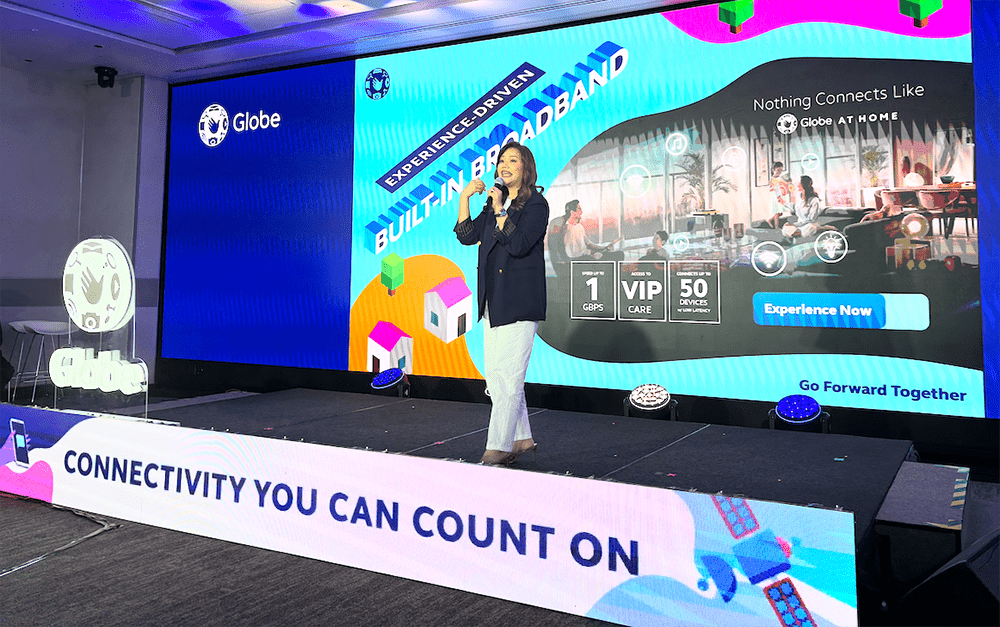
Globe’s long-term competitiveness has always been anchored on its Customer-First approach. This means that customer experience is not a support function but the very essence of its strategy, which underpins Globe’s broader growth trajectory and sustained momentum, as seen in the last two quarters. One of the things that would accelerate this Customer-First transformation is Globe’s recently announced cloud modernization initiative with Amazon Web Services. This initiative strengthens its capability to deliver more responsive, intelligent, and scalable digital services. By leveraging AWS advanced cloud capabilities, Globe is enhancing its use of AI-driven innovation, analytics, and modernized applications, enabling more proactive customer support, faster rollout of service enhancements, and deeper personalization of interactions across its entire customer base. Globe is working with AWS to expand its cloud infrastructure, modernize its B2B and digital platforms, and deploy AI-driven tools that enhance personalization and customer support. This includes upgrading its network management system, improving SIM activation processes, and developing advanced CX innovations. Omnichannel strategy Another pillar of this strategy is Globe’s reinvestment in physical touchpoints nationwide. After a period of selective consolidation, the company is doing a strategic expansion on its retail footprint to meet customers where they prefer to engage, whether online or face-to-face. This includes refreshed full-service stores in major malls such as Robinsons Manila, alongside new micro-format touchpoints in communities such as Vigan, Sorsogon City, Boracay, and Bohol. These stores have been redesigned to serve not just as sales hubs but as experience centers where customers can receive personalized assistance, explore lifestyle-driven broadband and mobile solutions, and access support with the warmth and responsiveness of Globe’s frontline teams. Globe President and CEO Carl Cruz emphasized that the company’s omnichannel service model is anchored on empathy and responsiveness. “Whether they are online or offline, we will be there for them. We will continue to study where our customers truly need us for face-to-face interaction, and we’ll meet them there,” he said. Intelligent service platforms This strong physical presence is matched by significant investments in intelligent service platforms. Globe continues to deploy AI-enabled customer tools, to personalized enterprise support at scale. Conversational AI capabilities are being advanced to be more responsive, understand local language and cultural nuances, that improves interactions and making digital support more intuitive for Filipino users. The company’s customer experience push extends across its broader ecosystem. Through this unified physical-digital framework, Globe ensures the improvements are consistently being made to provide more consistent and seamless engagement across channels. Retail agents are enabled to guide customers across channels using the GoBenta app and other digital platforms, while stores include self-service zones and community activation spaces that allow customers to transact at their own pace. At the same time, Globe has leveled-up its hyper-personalized offers across channels including GlobeOne and GCash, to provide customers the offers that fit them best depending on their profile, leveraging AI. Meanwhile, broadband hypercare communities on channels like Viber provide highly responsive localized support. This heightened focus on experience aligns closely with Globe’s performance momentum. As disclosed, mobile data revenues reached Php29.1 billion in the third quarter of 2025, while the company’s mobile subscriber base grew to 63.1 million which are clear indicators of rising engagement and trust. Globe’s network investments, including expanded 5G and fiber deployment, have underpinned this growth by providing faster, more consistent, and more reliable connectivity.  The customer-centric focus on network investments enabled Globe to be the most consistent mobile network in the country in the last four years according to Ookla®. Building value, building relationships For Globe, the strategy is straightforward: building value means building relationships. Customer experience is not merely transactional but the  backbone of loyalty, the catalyst for digital inclusion, and its true differentiator, especially relevant during these times that Filipinos are more economically challenged and they need a partner to tide them through. By combining the strength of its brands, network and distribution footprint, the intelligence of its AI-driven platforms, and now the accelerated innovation enabled by AWS, Globe is positioning itself to grow with purpose, anchored on care and elevated by technology, towards uplifting the lives of every Filipino.

Globe touts higher PH mobile contribution to GDP than global benchmark – GSMA study

Business

Globe affirmed that the Philippines is moving into a more connected and opportunity-rich phase of digital growth. Globe President and CEO Carl Cruz said the country’s momentum remains strong despite shifts in the global mobile landscape. “I’m hopeful and optimistic about the Philippine telecom industry because we still have many opportunities ahead,” Cruz said. “We have a young population, strong digital habits, and real demand. We need to further unlock that potential.” Cruz shared these insights at the GSMA Digital Nations Summit Manila, noting that while the contribution of mobile services to GDP has softened over time, the Philippines continues to outperform the global average. The GSMA Digital Nations APAC Report 2025 places the country’s mobile ecosystem contribution at 8.4 to 8.6 percent of GDP, higher than the global benchmark of 7.7 percent. The broader industry also continues to invest at levels well above global norms. Worldwide, operators invest around 16 percent of revenues in capital expenditures. In the Philippines, the industry invests about 37 percent, reflecting sustained expansion to meet nationwide demand. The Philippines remains one of the world’s most active digital communities. Filipinos spend nearly nine hours online each day, placing the country third globally for daily internet use. The Philippines also ranks sixth worldwide in adoption of AI tools such as ChatGPT, showing strong readiness to participate in the digital economy. Tower density remains low in relation to population size. The country has an estimated forty thousand towers serving more than 115 million people. Thailand, with only seventy million people, has around ninety thousand towers. The comparison highlights significant latent demand and the need for more efficient infrastructure builds. Artificial intelligence is expected to place increasing pressure on both wireless and fixed networks. Mobile networks alone cannot support future traffic requirements. AI will require higher-capacity fiber systems, scalable data transport, and lower latency. The development of a national fiber backbone is a critical step toward meeting these requirements, and early work from government agencies is establishing an initial framework. Other Globe leaders at the summit also contributed perspectives on infrastructure evolution, open API adoption, cybersecurity and scam prevention, AI readiness, and digital inclusion. Industry and government cooperation will play a major role in enabling these priorities, especially in areas involving shared infrastructure and standards. The country’s outlook remains positive. The Philippines has a young, tech-forward population and a policy environment that recognizes the importance of digital access. These conditions place Globe in a position to keep strengthening its network, platforms, and digital capabilities that support the country’s growth and help unlock more opportunities for Filipinos.

Globe Strengthens Cash Flow Position to Fuel the Next Phase of Growth

Business

Globe Telecom further enhances its fiscal position with strong growth from deliberate and efficient investments in its network and other critical infrastructure. With a healthy cash flow position and a sharper focus on digital innovation, the company is proving that sustainable progress is not just about spending more. In the first nine months of 2025, Globe kept operations strong, with EBITDA reaching ₱64.2 billion, fueled by back-to-back quarterly growth. This is equivalent to an EBITDA margin of 52.8%, exceeding full-year guidance and highlighting the company’s prudent cost management. Capital spending eased to a more sustainable ₱31.4 billion, down 23% year-on-year, as Globe moved toward more targeted investments that bring long-term value. Moreover, this is equivalent to 26% of gross service revenues, much lower than prior years and closer to regional levels. These efforts further strengthened the company’s positive free cash flow, ahead of expectations and gives the company more flexibility to invest in areas that make a difference, from improving connectivity to building new digital platforms. “We’ve learned that growth isn’t just about how much you build, but how well you build it,” said Globe President and CEO Carl Cruz. “Our financial strength gives us the space to focus on what truly matters: creating meaningful experiences for our customers and helping communities move forward in the digital age.” Beyond the numbers, Globe’s improved cash generation represents a mindset shift within the organization. The company is moving from heavy capital expansion toward more intentional, high-impact investments in areas such as mobile data, enterprise technology, cloud services, and digital solutions that empower both individuals and businesses. This evolution marks Globe’s readiness for a future where value creation is measured not only by scale but by relevance and impact. Globe’s financial position remains solid, with Gross Debt-to-EBITDA ratio of 2.69x, Net Debt to EBITDA at 2.40x, and a Debt Service Coverage Ratio of 3.74x, comfortably within bank covenant levels. The company continues to align its investments with emerging opportunities in connectivity, enterprise technology, and sustainability, creating a business built for both stability and innovation.  

BDO Pay rewards early holiday shoppers with a ₱500 cashback treat

Business

As the “ber months” bring the country into peak shopping mode, BDO Pay is giving Filipinos a smarter way to stretch their budget with a ₱500 cashback reward for those who hit ₱50,000 in Scan to Pay transactions during the holiday season. With this everyday payment app, you can pay straight from your linked credit card or savings account—no need to cash-in, no withdrawals, no bulky wallet. BDO Pay makes holiday shopping easy and simple, anytime of the year. Ready to shop smarter this season? Here are 3 ways BDO Pay helps: Scan to Pay in stores.Pay instantly at malls, boutiques, or bazaars—just scan or show your QR. No need to carry cash or worry about ATM fees, and it is faster and safer, too. Find the right deals for you.Discover exclusive discounts and Buy Now, Pay Later deals in the app, plus rebates and raffle promotions that you can easily sign up for.  Split the bill with family and friends. Buying gifts as a group is easy—simply enter the total and BDO Pay automatically divides the cost, tracks payments, and ensures everyone’s share is covered down to the centavo. But wait, there’s more! From October 15, 2025 to January 15, 2026, every Scan to Pay transaction with BDO Pay brings you closer to earning a happy holiday cash bonus. Just reach a cumulative spend of P50,000—with each transaction worth P1,000 or more—and a P500 cashback is yours! Download the app from the App Store, Google Play, or AppGallery. Simply sign in using your BDO Online username and password and you can start to scan, send, and pay with BDO Pay.

Cebu Pacific named strongest Asean Airline brand by Brand Finance

Business

Cebu Pacific (PSE: CEB), the Philippines’ leading carrier, has been recognized by Brand Finance as the strongest airline brand in the ASEAN region, underscoring the airline’s growing resonance with travelers and its reputation for value, reliability, and innovation. The award reflects Cebu Pacific’s consistent efforts to make air travel more accessible while strengthening customer trust and loyalty through service improvements, digital transformation, and community engagement. “Being named the strongest airline brand in ASEAN reminds us that our strength comes from our people. We are grateful to our pilots, cabin crew, ground operations, customer care teams, and colleagues across the business who work tirelessly to serve our passengers with care and professionalism. Their collective efforts have strengthened our brand and earned the trust of millions of travelers across the region,” said Candice Iyog, Cebu Pacific Chief Marketing and Customer Care Officer who personally received the award. “We are honored by the trust given to us, and we remain committed to making travel easier, friendlier, and more accessible for Filipinos and travelers across the region.” The recognition comes from Brand Finance’s latest valuation study, which provides a holistic view of brand strength by combining consumer perception and financial analysis. Drawing insights from 175,000 respondents across 41 countries, including 25,000 from the Asia Pacific region, the study measures awareness, consideration, and reputation across 31 sectors, covering 6,000 brands with nine years of data. Cebu Pacific achieved an AAA brand rating and a Brand Strength Index (BSI) score of 86.1. It also recorded an 86% increase in brand value to US$386 million this year from 2024. “Being the strongest airline brand in ASEAN means Cebu Pacific leads the region in these critical drivers of brand equity, outperforming competitors in both customer perception and operational reputation. This strength translates into greater resilience, and long-term growth potential. It reinforces Cebu Pacific’s strong position in the airline sector and the impact of its brand, marketing, and customer initiatives,” said Alex Haigh, Managing Director at Brand Finance Asia Pacific. Cebu Pacific entered the aviation industry on March 1996 and pioneered the “low fare, great value” strategy and has flown over 250 million passengers since inception. CEB offers the widest domestic network in the Philippines with 37 domestic and 26 international destinations, spanning across Asia, Australia, and the Middle East. Brand Finance is the world’s leading brand valuation consultancy. Bridging the gap between marketing and finance, Brand Finance evaluates the strength of brands and quantifies their financial value to help organizations make strategic decisions. Headquartered in London, Brand Finance operates in over 25 countries. Every year, Brand Finance conducts more than 6,000 brand valuations, supported by original market research, and publishes over 100 reports which rank brands across all sectors and countries.

Scroll to Top