Street Journal Multimedia Services

Baguio City

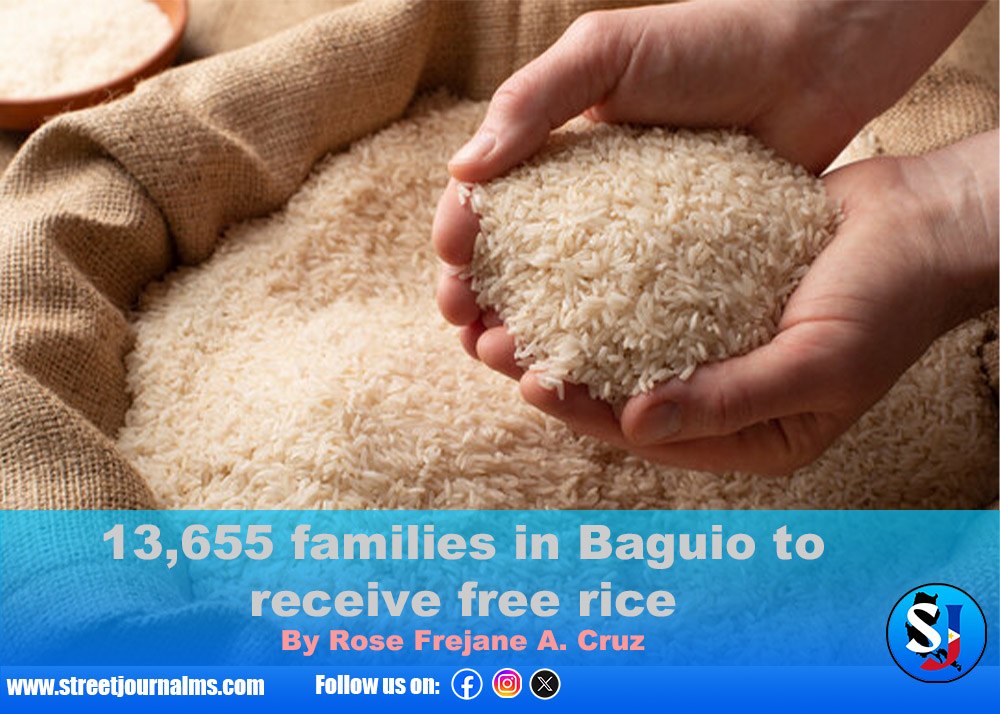
13,655 families in Baguio to receive free rice

Baguio City

BAGUIO CITY, Philippines – The City Social Welfare and Development Office (CSWDO) announced that a total of 13,655 families have qualified for the Rice Distribution Project in Baguio City. Under the program, which aims to ease the burden of rising food and living expenses on poor residents and vulnerable sectors, qualified families will receive rice subsidies from the government. The project is funded through a P56-million allocation from the national government under the 2026 Local Government Support Fund–Financial Assistance (LGSF-FA), pursuant to DBM-DILG Joint Circular No. 1, series of 2026. It is part of the Assistance to Indigent Individuals or Families–Food Assistance/Rice Distribution program. CSWD Officer Liza Bulayungan said the identified families can receive up to one cavan or 50 kilos of rice, although the amount may vary depending on the number of family members. The distribution is scheduled to be conducted weekly in May, July, September, and October, and some batches are expected to be released earlier. The rice will be distributed district-wise, either through clusters or through designated time slots at the Loakan National Food Authority (NFA) Warehouse, to ensure a smooth process. Bulayungan said the distribution will be conducted in close coordination with barangays and public utility jeepney (PUJ) associations to maintain an organized system and avoid congestion. According to Bulayungan, the registration and assessment of beneficiaries began on April 13, 2026, in various barangays and designated areas throughout the city, following the guidelines set by the CSWDO. Beneficiaries include poor families, senior citizens, solo parents, persons with disabilities, and qualified minimum wage earners who are bona fide residents of the city. In this regard, Mayor Benjamin Magalong once again thanked President Ferdinand R. Marcos Jr. for including Baguio City in the program. He also thanked the CSWDO for ensuring fair selection and accountability of beneficiaries, in fulfillment of his promise to the President that the distribution would be free from political influence, favoritism, and other irregularities. (By Rose Frejane A. Cruz)  

TESDA-CSITE graduate lands Top 4 in Registered Master Electricians Licensure Examination

Baguio City

BAGUIO CITY, Philippines — A technical-vocational graduate of the TESDA-Cordillera State Institute of Technical Education (CSITE) placed Top 4 nationwide in the Registered Master Electricians Licensure Examination, based on results released by the Professional Regulation Commission (PRC) on April 28, 2026. Mr. John Henry Solera Cubarol earned a national ranking of Top 4 with an average rating of 86 percent, placing him among the highest-performing examinees in the country. According to the PRC, 493 out of 882 examinees successfully passed the Registered Master Electricians Licensure Examination, which was conducted in various testing centers nationwide. Results were released within three working days after the final day of examinations. Cubarol is a graduate of the CSITE Baguio Main Campus under Batch 4 of the Diploma in Electrical Engineering Technology program. His achievement adds to the growing list of technical-vocational graduates who have successfully advanced into the ranks of licensed professionals. CSITE recorded a 100 percent passing rate among its examinees, with all four candidates successfully passing the licensure examination. The passers include Mr. Felix Kerdaten Cawayan, Mr. Brendan Marc Francisco Cocoy, and Mr. Melvin Guadna Padtoc, all graduates of Batch 3 of the same program. The result underscores the alignment of CSITE’s competency-based curriculum with prevailing Professional Regulation Commission (PRC) standards and industry competency requirements, affirming the institution’s sustained commitment to producing licensure-ready and industry-ready graduates.    

K-Culture Lights Up Baguio this May with 2026 Korea Festival

Baguio City

  BAGUIO CITY, Philippines — The vibrant celebration of Korean culture continues its journey across the Philippines as the Korean Cultural Center in the Philippines (KCC) brings the much-anticipated Korea Festival 2026 to Baguio City on May 9–10, 2026, from 12:00 PM to 8:00 PM, at SM City Baguio. First launched in 2022, Korea Festival has grown into one of KCC’s flagship events, showcasing diverse facets of Korean culture through immersive, interactive, and educational experiences. Traveling to different regions each year, the festival expands its reach while engaging new audiences across the country. This year’s destination, Baguio City—widely known as the Summer Capital of the Philippines—provides a fitting backdrop for the celebration. Recognized as a UNESCO Creative City of Crafts and Folk Arts (2017) and the first Philippine city inducted into the Hall of Fame of the ASEAN Tourism Standards after three consecutive wins of the ASEAN Clean Tourist City Award, Baguio stands as a vibrant hub of creativity, tradition, and cultural exchange. Set against the cool mountain air of the City of Pines, Korea Festival 2026 promises to bring K-culture dreamscapes to life through a dynamic mix of experiences. Immersive Booths & Cultural Experiences Festival-goers can explore a wide range of interactive booths and themed zones throughout the grounds, featuring traditional and modern K-culture. Guests can also discover Korea’s top travel destinations, explore the world of Korean creative industries, and learn about content protection in engaging and accessible ways. Hands-on activities include digital painting, Hangeul pop art, and the well-loved Hanbok-wearing experience, where visitors can dress in traditional Korean attire. Additional arts and crafts stations highlight both traditional and contemporary Korean creativity, offering fun and meaningful experiences for all ages. In celebration of the Philippine Chairship of ASEAN in 2026, the National Commission for Culture and the Arts will bring a dedicated ASEAN Corner, inviting visitors to explore the richness and diversity of Southeast Asian cultures through interactive elements such as storybooks, traditional crafts like puppets and masks, and games from ASEAN countries. Live Performances & On-Stage Highlights As the sun sets, the festival stage comes alive with dynamic cultural performances that bring together Korean and Filipino talent. Audiences can enjoy energetic K-pop cover dance showcases alongside traditional performances that celebrate heritage and artistry. Special highlights include performances by the Korea Taekwondo Association, the Suwon Gugak Association, and a traditional performance team from Baguio, whose vibrant showcases will keep the energy high throughout the evening and offer a memorable cultural experience for all attendees. Organized in partnership with the National Commission for Culture and the Arts (NCCA), the Korea Tourism Organization Manila Office (KTO), the Korea Copyright Protection Agency Manila Representative Office (KCOPA), the Korea Creative Content Agency Philippine Business Center Philippines Office (KOCCA), the Korea Agro-Fisheries and Food Trade Corporation Vietnam Office (aT), and SM City Baguio, the festival is free of charge and open to the public, inviting families, friends, and cultural enthusiasts to take part in this unique celebration.  

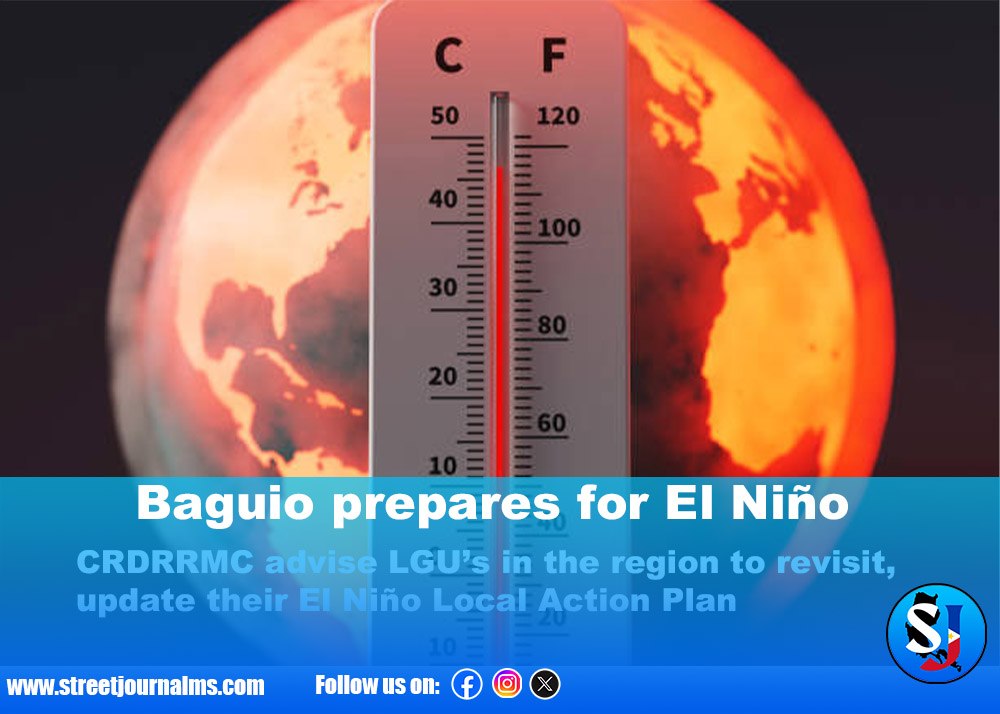
Baguio prepares for El Niño

Baguio City

CRDRRMC advise LGU’s in the region to revisit, update their El Niño Local Action Plan   BAGUIO CITY, Philippines — The city government has begun preparing for El Niño as the country braces for a prolonged dry spell which weather experts say has the potential to develop into a severe one dubbed as “Super El Niño.” As early as April 7, Mayor Benjamin Magalong had directed the City Disaster Risk Reduction and Management Office (CDRRMO) under Engr. Charles Bryan Carame to begin preparations for the drought. Magalong issued the directive during the Management Committee meeting noting forecasts that the country may experience up to six months of drought conditions, with below-normal rainfall expected to start in June and potentially persist until December. He said there is a need for early planning and coordination to mitigate the impact of water shortages, especially on communities, industries and essential services. He also urged departments to implement water conservation measures and ensure that contingency plans are in place. Carame said they are now working closely with other city departments and national agencies to monitor developments and carry out preparedness measures to safeguard residents against the effects of the anticipated El Niño. (Aileen P. Refuerzo) Meanwhile, the Cordillera Regional Disaster Risk Reduction and Management Council (RDRRMC) is advising local government units in the region to revisit and update their El Niño Local Action Plan. This, as the Philippine Atmospheric, Geophysical and Astronomical Services Administration (PAGASA) officially raised its El Niño Southern Oscillation (ENSO) Alert and Warning System to “El Niño Alert” on April 22. It cited the high likelihood of its development in the coming month and possible persistence into early 2027, which may bring drier-than-usual conditions, including dry spells and droughts in some parts of the country. During the Pre-Disaster Risk Assessment (PDRA) meeting, Engr. Larry Esperanza of the Baguio Synoptic Station shared that conditions in the tropical Pacific remain neutral though with a 62 percent chance, El Niño is likely to emerge as early as June 2026 and may persist with an 83 percent chance through at least the end of 2026. Esperanza also reported that though the country is under the dry season, there is still a possibility of rains due to localized thunderstorms. PAGASA also forecasted around one or two tropical cyclones to develop or enter the Philippine Area of Responsibility for the month of May. The RDRRMC members looked into El Niño-related situational reports and preparedness measures from the different provincial and city local government units in the region through their local DRRM Councils and some preparedness/readiness updates from the council’s disaster response pillar chaired by the Department of Social Welfare and Development. OCD-CAR Regional Director and RDRRMC Chairperson Albert Mogol, in his guidance, shared by OCD-CAR Operations Officer Stephanie Trinidad, advised LGUs to prepare for the possible impact of El Niño and to revisit and update their local action plans as earlier as possible. The OCD provided information on the National El Niño Action Plan Framework and guidance for the updating of the regional and local action plans. It reminded the importance of preparedness measures focusing on water, food, and energy security, as well as on health and public safety. (Aileen P. Refuerzo and JDP/CCD-PIA CAR)    

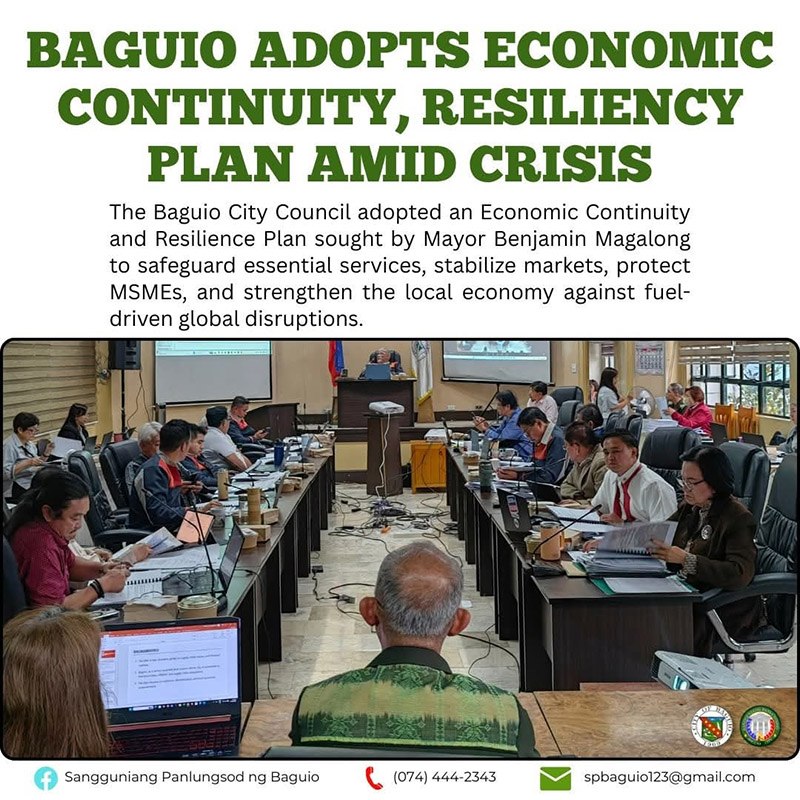
Baguio adopts economic continuity, resilience plan amid economic crisis

Baguio City

BAGUIO CITY, Philippines — The Baguio City Council approved and adopted the local Economic Continuity and Resilience Plan sought by Mayor Benjamin Magalong to ensure uninterrupted access to essential goods and services, stabilize the local market against price shocks, and protect vulnerable sectors and micro, small, and medium enterprises (MSMEs), during the regular session on April 20. This move is a response to ongoing global crises, particularly the fuel price hike resulting from geopolitical tensions in the Middle East. Magalong told the City Council that an economic downturn is being experienced amid national and global crises, warning that the situation may be worse than the COVID-19 pandemic. To strengthen the city’s resilience against a possible recession, Magalong said the plan will serve as a roadmap for economic activities over the next few years. “Before, our Gross Domestic Product at the national level was at the average of 6.0%. However, last year, the economy started experiencing a down trend. In the fourth quarter of 2025, our GDP already fell to 3.0%, with an average of 4.0% for 2025. For this year, it is expected that in the first quarter, our GDP will be below 2.0% due to weak consumer and government spending, with the downward trend expected to continue through the second and third quarters,” Magalong said. Magalong’s statement was consistent with the presentation of the City Budget Office on the city’s projected revenue for fiscal years 2026 to 2028. The city’s total income for FY 2026 is estimated at P3.5 billion, an increase from P2.6 billion in 2025, with local tax revenue and National Tax Allotment (NTA) having the biggest increase. However, total income is projected to decline to P3.3 billion in FY 2027 before slightly increasing to P3.4 billion in FY 2028. City Budget Officer Atty.Leticia Clemente said, this financial projection means the city will not be able to keep up with its growing needs while also cushioning the economic impact of the ongoing fuel and energy crisis. To remedy this, she said the executive offices are looking into the possibility of incorporating the resiliency and continuity plan into their respective budgets reviewing their projects/programs/activities (PPAs). Through collaboration among stakeholders in the tourism industry, the transport sector, MSMEs, civil society organizations, barangays, regional line agencies, and the city government’s department heads, this plan was created to ensure Baguio City’s economic stability and resilience amid emerging global challenges and disruptions. According to Arch. Donna Tabangin, head of the City Planning, Development, and Sustainability Office (CPDSO), Baguio City’s economy is highly service-driven, with services accounting for 71.7%. She said the continuity and resilience plan was formulated taking into account key economic drivers such as retail and trade, finance and business services, real estate, tourism and hospitality, and education and professional services. The plan aims to address the most probable and high-impact disruptions such as inflation and fuel price shocks, supply chain disruptions, power and water interruptions, tourism decline, financial crises, disasters, and pandemics. Under the plan, four priority levels are identified. Priority Level 1 receives first funding, first attention, and first protection. This level covers energy and water continuity programs such as solar and backup systems for critical facilities, load prioritization, barangay-level solar energy systems, rainwater conservation and recycling systems, emergency rationing protocols, and bulk water and alternative supply sources. Mobility/logistics (transport and fuel) and food supply stability are also under Priority Level 1. Programs under these areas include fuel prioritization, public transport subsidy, logistics system (delivery hubs), food price monitoring, rice distribution, local and regional food sourcing, and food assistance. Priority Level 2 covers MSMEs and employment, tourism, and digital infrastructure with programs such as MSME financing plus subsidies and incentives, emergency employment program or cash-for-work, skills training, digital payments, ISP redundancy, smart monitoring systems, domestic tourism campaigns, discounts for tourism enterprises and recovery activities, even-driven economy plus circular practices, and enhancement of the Baguio website VISITA. Financial stability and financing are classified under Priority Level 3 aimed at ensuring the local government remains financially capable of fulfilling its mandate. Programs under this level include revenue protection, cash flow forecasting, austerity measures, budget flexibility, expansion of local economic enterprises, public-private partnerships for projects, and the development of new income sources. Priority Level 4 focuses on building long-term resilience, with particular emphasis on the circular economy, waste-to-resource initiatives, renewable energy expansion, and urban agriculture and localization. The plan sets the following investment framework: Priority Level 1, P948.2 million; Priority Level 2, P58.1 million; Priority Level 3, P96.8 million; and Priority Level 4, P8.5 million, with a total average annual budget of P1.11 billion. Tabangin concluded that, if the plan is successfully implemented, the city will achieve stable employment and income, continuous business operations, stable prices and supply, strong LGU revenue base, sustained economic growth, and social and economic stability. (Jordan G. Habbiling)

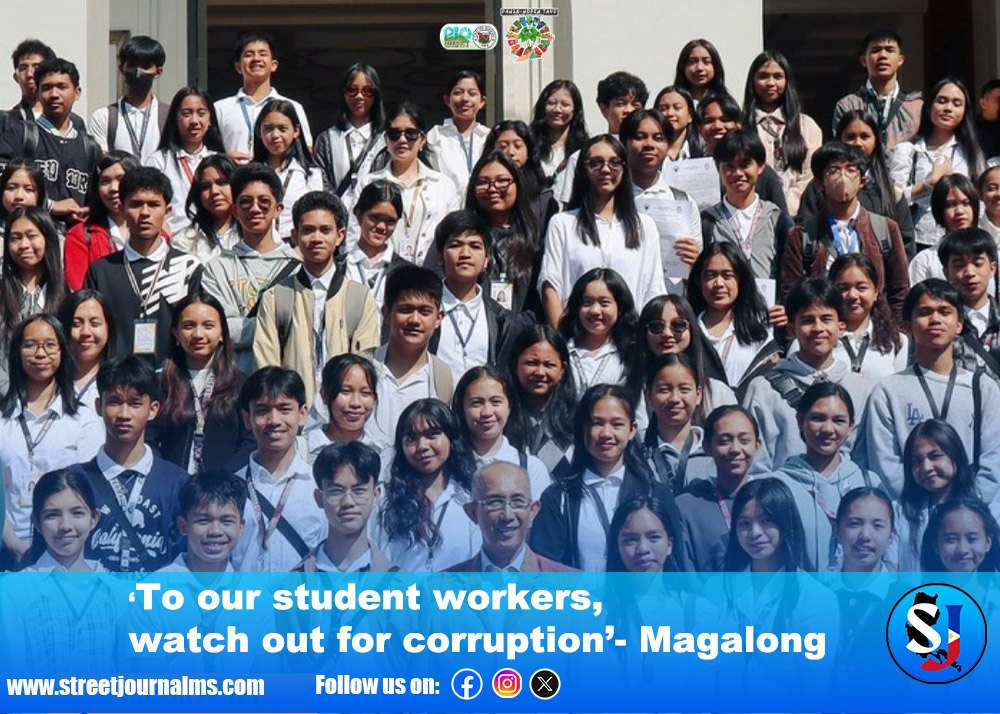
‘To our student workers, watch out for corruption’- Magalong

Baguio City

BAGUIO CITY, Philippines  – Instead of the usual advice to do good or prove yourself, Mayor Benjamin Magalong asked student grantees to be watchdogs against corruption or any wrongdoing in their assigned areas. Magalong led the swearing-in of about 151 grantees of the 2026 Special Program for the Employment of Students (SPES) on April 13. “If you see or know of any illegal activity or transaction, do not hesitate to report it to me. My office is open to receive you,” he told the students during a simple induction program. According to Magalong, during the one-month tenure of the students in the city government, they can gain first-hand experience in the work systems of various departments. Based on this experience, they will be able to tell whether or not City Hall is worthy of its status as a model of quality service and good governance, he said. “Through you, we will know if we are worthy of our ISO 9001:2015 certificate and reputation for good governance. Above all, we also count on you to tell us whether or not there is corruption in our offices,” Magalong told the students. The city achieved its recertification to ISO 9001:2015 after passing a recent external audit conducted by third-party auditor SGS Philippines Inc. The auditing firm confirmed that the city’s processes and services continue to meet the standards of the Quality Management System (QMS) and maintain its dedication to quality service, which led to the awarding of the ISO certificate on April 13, 2026. The SPES grantees are the first of two batches of student workers to be employed in the city this year through the Public Employment Service Office of the City Mayor’s Office. The next batch of 149 students will begin their positions next month.

Magalong opposes 100 more e-taxi units in Baguio

Baguio City

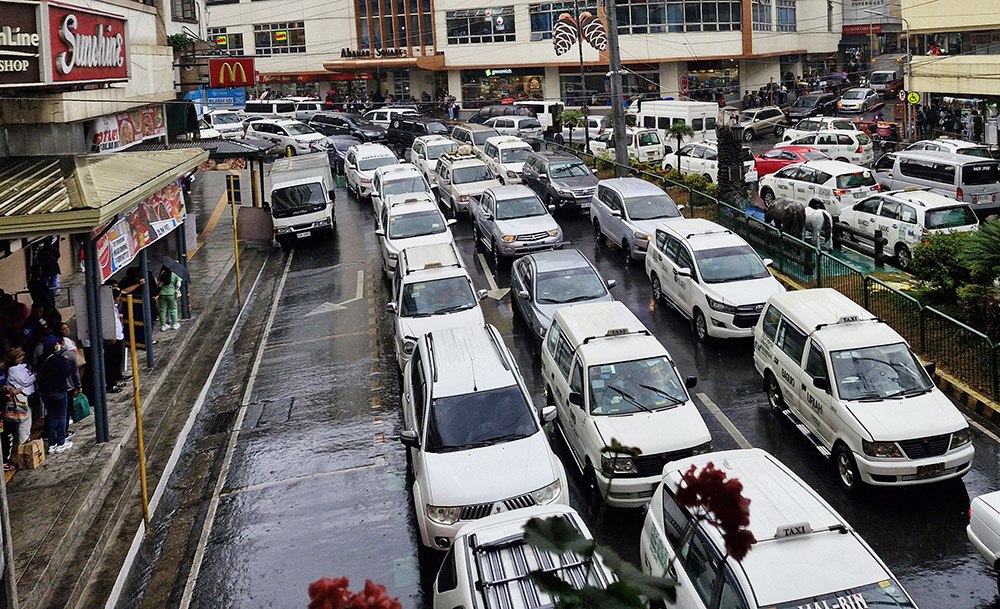
BAGUIO CITY, Philippines — Mayor Benjamin Magalong has previously expressed opposition to the proposal to deploy additional taxi units in the city, saying the plan should undergo local consultations and should consider the city’s road and transportation constraints. Instead, Magalong proposed reducing the number of taxis while increasing public transportation vehicles with higher capacity to ease congestion. He cited data collected in the first four months of 2023 showing that taxis make up the largest share of vehicles on the city’s roads at 42 percent, followed by private vehicles at 31 percent, motorcycles at 16 percent, PUJs at 8 percent, and trucks and buses at 3 percent. Magalong will recall that he criticized the Land Transportation Franchising and Regulatory Board (LTFRB) for its proposal to deploy 100 electric taxis in the city. The proposal to deploy 100 full electric sedan taxis (e-Taxi) was submitted by Design Green and Smart Corporation through its subsidiary Romansa Mobility Land Transport Service. The company is seeking the city government’s approval and endorsement from the LTFRB-CAR for the franchising and operation of e-taxis in the city. According to Magalong, he will not allow the proposal in its current form, emphasizing that the city already has too many taxi units, and that while he prefers eTaxis in the city for environmental reasons, the permitting of additional units should follow a strict “one-in, one-out” policy to avoid worsening traffic congestion. “I will never allow this,” noting that franchising decisions are made by the LTFRB central office without proper consultation with regional offices and local government units.” He said the city government, which directly manages traffic conditions, should be involved in such decisions. In response, LTFRB Chairman Vigor Mendoza promised Magalong to immediately discuss the concerns with his team and expressed his willingness to arrange a courtesy meeting with city officials to plan specific measures. In a message to Magalong, Vigor said the agency has not opened any new franchises, including taxis in the city since he took office in October 2025 and future decisions will be made only with the city’s endorsement. “I assure you that we will not open any new franchise without consulting and obtaining your favorable endorsement,” Mendoza said in a text message to the mayor. Magalong welcomed the assurance and urged the LTFRB to help re-examine the city’s Local Public Transport Route Plan (LPTRP) pointing out the need to use data-driven methods in determining the appropriate number of public utility jeepneys (PUJs) and routes.  

A Space to Create at SM City Baguio

Baguio City

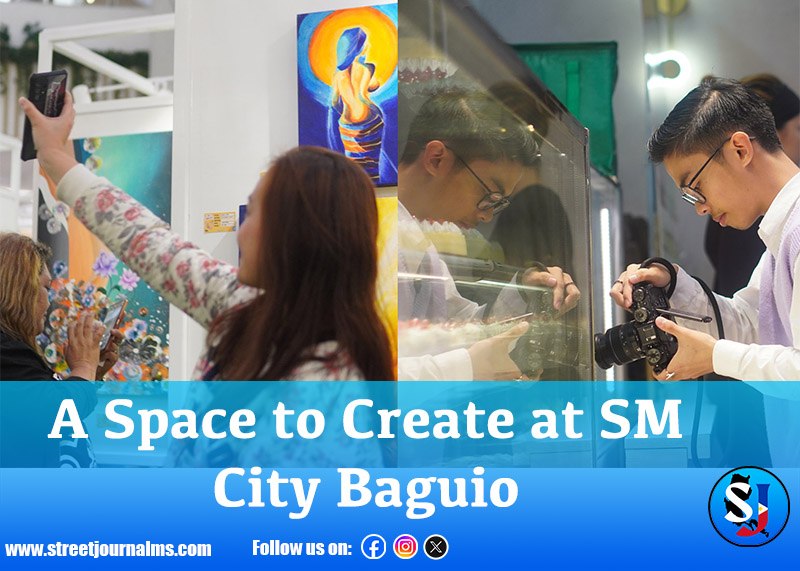
  BAGUIO CITY, Philippines – At SM City Baguio, creativity comes naturally. As more people turn everyday moments into stories, the mall continues to be a space where content creators can express themselves, connect with others, and bring their ideas to life. From lifestyle bloggers to video creators and social media enthusiasts, SM City Baguio has become a go-to destination for those looking to capture engaging and meaningful content. With its diverse spaces and vibrant atmosphere, creators find inspiration in every corner. Local content creator Gell Gadiano is among those who have found a creative home in the mall. Through her content, she highlights not only her personal style and experiences but also the different spaces and tenants within SM City Baguio, showcasing what the mall has to offer in a relatable and engaging way. Areas such as the Sky Terrace provide a dynamic backdrop where natural light, open spaces, and city views come together, making it ideal for photos and videos. Whether it is a quick shoot, a collaboration, or a spontaneous idea, the mall offers endless possibilities for content creation. Beyond aesthetics, SM City Baguio fosters a growing community of creators. It serves as a place where individuals can collaborate, exchange ideas, and support one another, creating a positive environment for creativity to flourish. For creators like Gell, the experience goes beyond content. It is about sharing stories, highlighting local brands, and connecting with audiences in a more meaningful way. By providing accessible and engaging spaces, SM City Baguio continues to support the local creative community while also giving tenants additional visibility through authentic storytelling. More than a lifestyle destination, SM City Baguio remains a space where creativity is celebrated, communities are built, and every visit becomes an opportunity to create, share, and inspire.

Tranquility Park opens at Camp John Hay

Baguio City

BAGUIO CITY, Philippines — A new haven for wellness and reflection has opened at Camp John Hay. The Tranquility Park, spanning approximately 896 square meters, was formally launched today as part of John Hay Management Corporation’s continuing efforts to enrich the area’s attractions and nurture community well-being. The ribbon-cutting ceremony was led by JHMC President Manjit Singh Reandi, who reminded staff and service providers: “Development means sustaining what we have built. Let us help one another to preserve and nurture it. The opening of a project does not mark the end of responsibility; it marks the beginning of it.” Inspired by Camp John Hay’s historic role as a rest and recreation site for U.S. soldiers during World War II, the park reimagines that legacy for the present. It now offers the public a serene space for meditation, exercise, and social connection—an environment where heritage and modern wellness meet. Designed by Architect Leonardo Biasura, Jr., with the significant creative input of JHMC’s Project Management Division, Environment Management Division, General Services Division, and the Aesthetic Enhancement Committee, the park embodies a vision of symmetrical balance. Its layout invites visitors to leave behind daily stresses and embrace tranquility. Among its key features are a central meditation statue, landscaped walkways for relaxation, and open areas that blend wellness activities with community interaction. The design emphasizes simplicity and harmony with nature, encouraging mindfulness, peace, and a renewed sense of balance.              

Scroll to Top