
Street Journal Multimedia Services

Baguio City

Baguio GSO: Garbage Fee Increase No Reason to Take Waste Reduction for Granted  

Baguio City

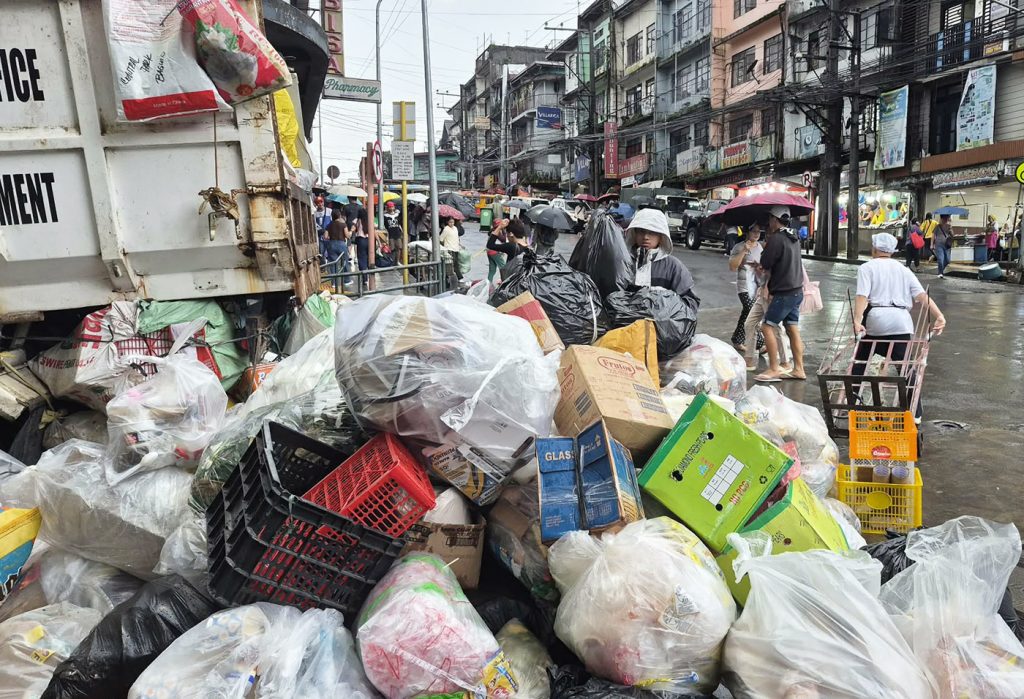
BAGUIO CITY, Philippines — The increase in garbage fees should not be taken as a reason for households, businesses and barangays to ease up on waste reduction, segregation and diversion efforts, newly installed General Services Officer Ma. Guadalupe Della said. Della said the higher fees should instead be matched by stronger implementation of the city’s “Pansa-nopen Tayo” circular economy program particularly waste reduction, segregation, reuse, recycling and diversion. “Reducing waste at source and increasing diversion can help lower collection and disposal costs which could help minimize the need for further garbage fee increases in the future,” Della said. The new garbage fees took effect this September under Ordinance 69-2026 replacing the P20 monthly household fee under Tax Ordinance No. 2000-01 that had been in place for 26 years. Households served by the city’s garbage collection system now pay P75 monthly, while business fees start at P400 and vary depending on the size of the establishment, number of customers, seating capacity and other applicable classifications. Late payments carry a 25 percent surcharge. Under the new ordinance, barangays are entitled to a 50 percent share of garbage fee collections from their constituents, with additional incentives based on collection efficiency. The share is intended to support solid waste management activities at the barangay level. The GSO stressed that barangays should use the additional resources to strengthen their waste management programs rather than rely solely on collection and disposal services. Residents and businesses are likewise encouraged to reduce the waste they generate and properly segregate biodegradable, recyclable and residual waste to increase diversion and lessen the volume of garbage brought to disposal facilities. The city council enacted Ordinance 69-2026  prescribing new garbage fees for households, businesses and other waste generators last July to help finance the city’s Ten-Year Solid Waste Management Plan (2025-2034), strengthen waste reduction and recycling, and sustain garbage collection and disposal services in accordance with Republic Act 9003 or the Ecological Solid Waste Management Act of 2000. The ordinance, principally authored by Liga ng mga Barangay President Rocky Aliping and Indigenous Peoples Mandatory Representative Maximo Edwin Jr., was approved by Mayor Benjamin Magalong and covers establishments, institutions, businesses, households served by the city collection system and other waste generators within Baguio. It repeals Section 32 of Tax Ordinance No. 2000-01 and sets new monthly rates based on the type and size of waste-generating establishments. Households served by the city garbage collection system will pay P75 monthly. Hospitals will pay P600 to P1,200, depending on bed capacity, while funeral parlors will pay P600 to P1,200, based on the number of chapels. Garbage fees for lodging establishments range from P400 to P1,200, while restaurants and similar establishments, as well as bars and liquor stores, will pay P400 to P1,000, based on seating capacity. Hotels will pay P600 to P1,200. Banks, offices, financial institutions, media stations and call centers will pay P200 to P800, based on the number of employees. Schools and other educational institutions will pay P600 to P1,200, with an additional P1 for every enrollee beyond 1,001. Transport terminals will pay P400 to P1,200, private parking areas P400 to P1,000, auto repair shops P400 to P1,000, and department stores, bazaars and groceries P600 to P1,200. Market stalls will pay P200 for dry goods and garden tools, P320 for fruits and vegetables, P480 for meat and fish, and P250 for other merchandise. Junk shops will pay P600, gymnasiums P600, gasoline stations and convenience stores P400 each, private parks P5 per customer, and establishments not specifically classified P200 monthly. Businesses operating additional lines at the same location will pay a separate fee equivalent to 25 percent of the principal business’ garbage fee. Barangay treasurers may be deputized to collect household and apartment garbage fees. Barangays will receive 50 percent of collections, with incentives raising their share to as much as 75 percent for full collection. A 10 percent discount will be granted for annual payments made on or before April 20, while quarterly payments made on or before the 20th day of the month following each quarter will receive a 5 percent discount. Late payments will incur a 25 percent surcharge and 2 percent monthly interest. The rates will be reviewed periodically and will automatically increase by 10 percent every three years beginning in 2027, subject to further adjustments. The ordinance also directs the City General Services Office, in coordination with barangays, to set garbage collection schedules and prohibits residents from putting out waste outside designated collection days. Violators will receive a warning for the first offense, a P1,500 fine for the second, and P3,000 for the third and succeeding offenses. –(Aileen P. Refuerzo)      
Baguio City Advances Performance Governance System

Baguio City

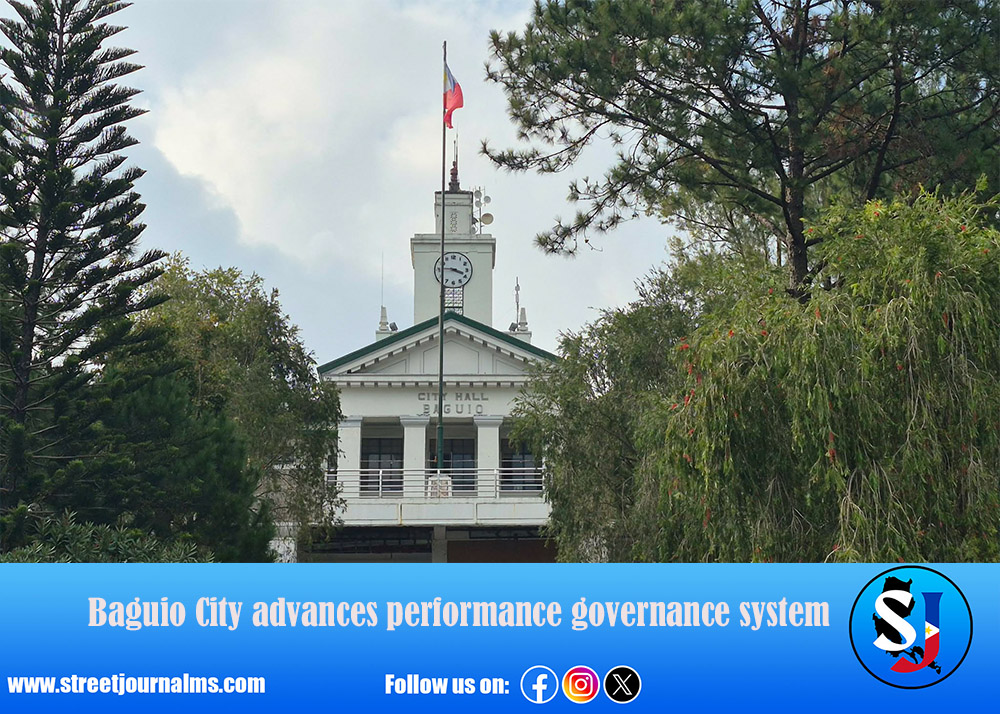
BAGUIO CITY, Philippines — The city government is advancing its Performance Governance System (PGS) to strengthen planning, implementation and measurement of its strategies. Mayor Benjamin Magalong said the city has completed the Initiation and Compliance stages of the framework and received the Silver Trailblazer Award for both. “We are now working toward the third and fourth stages, namely Proficiency and Institutionalization,” he said. PGS is a “framework developed by the Institute for Solidarity in Asia to help government agencies and local units design and execute long-term reforms.  It uses a balanced scorecard method to turn a vision into measurable outcomes.” Along with ISO 9001:2015 Quality Management System and ISO 37001 Anti-Bribery System, PGS is an institutional system being strengthened by the city government to ensure reforms and improvements in governance. Since adopting the PGS, the city has steadily advanced through its governance milestones. It completed the development of its Transformation Plan in 2020 and successfully passed the Initiation Stage in 2021. It progressed to the Compliance Stage this year where city offices continue to strengthen the implementation of strategies aligned with Baguio’s vision of efficient and responsive governance. “PGS will remain a key instrument in driving reforms, enhancing public service delivery and ensuring that the city’s long-term development goals are effectively implemented,” the mayor said. (By Aileen P. Refuerzo)    

CAR declared State of Stable Internal Peace and Security

Baguio City

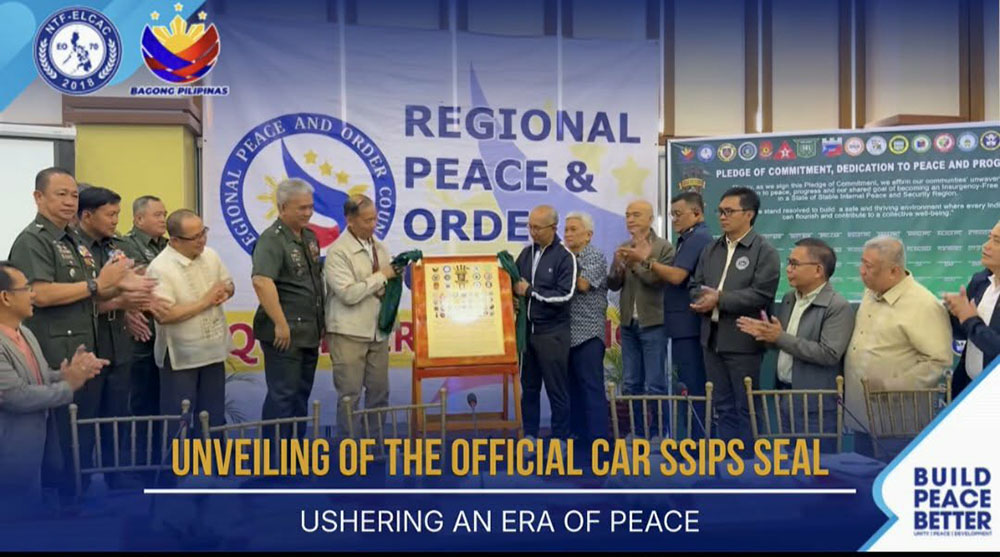
BAGUIO CITY, Philip[pines – The Cordillera Administrative Region (CAR) reached a historic milestone when it was declared under the State of Stable Internal Peace and Security (SSIPS) during the 3rd Quarter Meeting of the Cordillera Regional Peace and Order Council (CRPOC) in Baguio City. The region-wide designation, marked by the unveiling of the official seal of the CAR SSIPS and the signing of commitment agreements by regional stakeholders, recognizes years of sustained peace while signaling a strategic transition toward civilian-led governance, public safety, and long-term economic development. The milestone follows the momentum of each province across the region, with Mountain Province achieving SSIPS status in August 2025, followed by Abra in March 2026 and Kalinga in May 2026. On June 18, the Regional Peace and Order Council approved the resolution recommending the declaration of CAR under SSIPS and it was implemented on September 17 Undersecretary Danilo G. Pamonag, Executive Director of the National Task Force to End Local Communist Armed Conflict (NTF-ELCAC), emphasized that the declaration marks a beginning rather than an end. He reaffirmed the national government’s commitment to support the region as local leaders assume greater ownership in peacebuilding and development initiatives. The CAR declaration under the SSIPS is more than a significant event on paper, signaling an ongoing responsibility to preserve the hard-won peace, strengthen civilian institutions, and ensure that stability creates space for communities to thrive.    

Baguio Horror Festival Organizers Propose Fantasy Festival

Baguio City

BAGUIO CITY, Philippines — Organizers of the proposed Baguio Horror Festival, which has been the subject of debates online and in person, have proposed shifting the event to a Baguio Fantasy Festival featuring characters and themes from different literary genres including Philippine and world mythology, Philippine folklore, and Philippine and international films. Main organizer Carl Paolo Corpuz said they are dropping the horror or Halloween parade as a public event, to be replaced by the proposed Fantasy Festival. The “Baguio as a Horror Capital” branding, which originally appeared on the organizers’ website, has also been officially dropped following the shift from a horror parade to a fantasy parade. The organizers had maintained during the discussions that the branding had been taken out of context, explaining that it was not an official proposal to declare Baguio as a horror capital but was intended as branding and as a form of literary expression. Meanwhile, the horror convention is being proposed as a private event for enthusiasts of “horror” as an artistic and literary genre. The matter was referred to the appropriate Committee which will prepare a report and recommend what action the City Council may take ahead of the proposed October event. City Council members will also submit their respective positions to the committee chairperson for guidance. A working plan and guidelines to be crafted by the organizers will be submitted to the City Council for review. The matter remains under discussion at the City Council and will be taken up in its succeeding regular sessions before the proposed implementation of the event. The discussions are also expected to cover guidelines for public events in general, and not exclusively the proposed festival. ( By Jordan G. Habbiling)  

CSITE Achieves 100% Passing Rate in September 2026 RME Licensure Exam

Baguio City

BAGUIO CITY, Philippines — The Cordillera State Institute of Technical Education (CSITE) Main Campus recorded a 100% passing rate, with all four of its examinees passing the September 2026 Registered Master Electrician Licensure Examination. The new Registered Master Electricians (RMEs) are Friend Bullan, Kevin Cawiding, James Escote, and Christian Naoha, all graduates of the three-year Diploma in Electrical Engineering Technology (DEET) program of TESDA-CSITE. Their results reflect the technical competence and preparation developed through the DEET program, adding four newly licensed professionals to the electrical workforce. The achievement also brings recognition to their families, instructors, and the CSITE community as the four passers begin their professional practice as Registered Master Electricians.        

Baguio City pursues ISO 37001 to firm up anti-bribery system

Baguio City

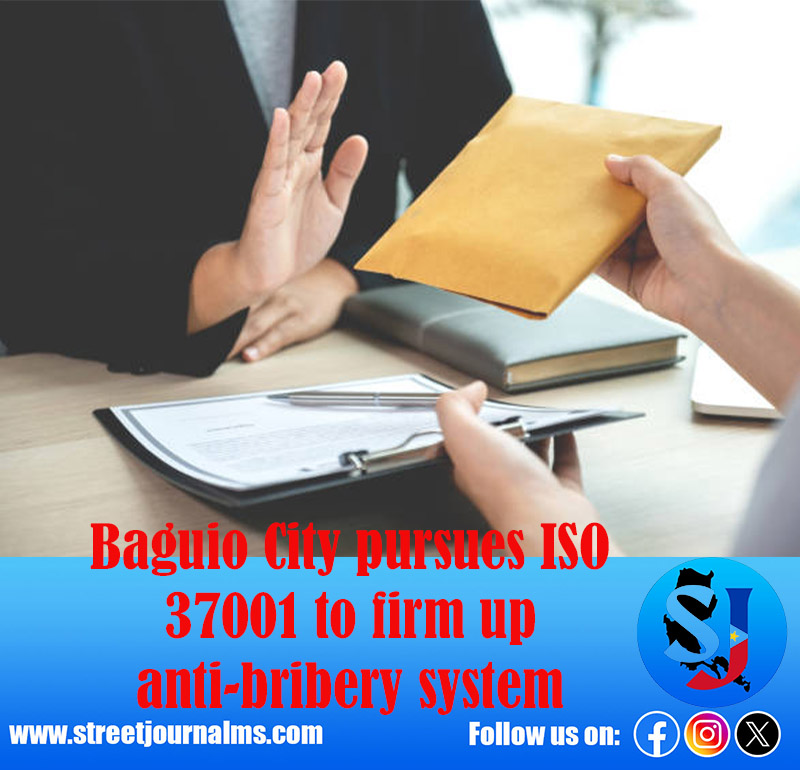
BAGUIO CITY, Philippines – Mayor Benjamin Magalong said the city government is pursuing ISO 37001 certification to firm up its anti-bribery system and strengthen integrity, transparency and accountability in government. He said, the initiative is supported by £1 million in technical assistance from the British government. The ISO 37001 is the international standard for establishing, implementing, monitoring and improving an anti-bribery management system that ensures the following: controls to prevent and detect bribery; awareness and reporting mechanisms for staff; reduce risk in procurement, finance and administrative processes; and strengthen integrity and accountability mechanisms. “In simple terms, we are putting stronger safeguards in place to protect public funds, keep government transactions transparent and organized and hold those responsible accountable,” Magalong said. A roadmap toward ISO 37001 certification was turned over to the city last month, he said. “ It is one of the institutional systems being enhanced to ensure that reforms and improvements in governance are put in place.” Last February, Magalong created the city’s ISO 37001 Anti-Bribery Management System (ABMS) Technical Working Group (TWG) through Executive Order No. 14 series of 2026. The ISO 37001 ABMS TWG will serve as the central coordinating body for planning, implementation and monitoring of ABMS initiatives. City Administrator Vittorio Jerico Cawis acts as the team leader with City Disaster Risk Reduction and Management Officer Engr. Charles Bryan Carame as assistant team leader. The TWG members are the City Building Official Arch. Johnny Degay, City Planning Officer Arch. Donna R. Tabangin, City Engineer Richard Benjamin Lardizabal, City Environment and Parks Management officer Atty. Rhenan Diwas, City Schools Division Superintendent Dr. Soraya Faculo, City Budget officer Atty. Leticia Clemente, City Human Resource Management Officer Atty. Agustin Laban III, Assistant City Accountant Pedro Sawac, City Treasurer Alex Cabarrubias, Geraldine Angolo, Mary Grace Palicdon and Atty. Cherrybeth Batuna. Among the duties and responsibilities of the TWG are to lead the development and implementation of the city’s ABMS; coordinate with CoST and other technical partners; facilitate assessments, interviews, verifications and capacity building sessions; recommend policies and controls aligned with ISO 37001; review procurement, financial and administrative processes for alignment; monitor compliance and progress of ABMS implementation; prepare documentation and evidence for audits; provide regular updates to the City Mayor; provide technical inputs and procurement and financial documents; participate in interviews and assessments; implement process improvements aligned with ISO 37001 and assist in risk identification and mitigation. Meanwhile, the city government is bent on maintaining its status as an ISO 9001:2015 passer to ensure that its processes and services continue to meet the standards of Quality Management System (QMS). Magalong said the city remains committed to providing efficient governance, transparency and improved delivery of services to the public. The QMS is one of the institutional systems being pursued by the city to ensure that reforms and improvements in governance continue beyond political administrations, according to the mayor. “We adopted QMS like the 9001:2015 not just to comply but to create a culture of excellence, consistency, outstanding performance and continuous improvement in everything that we do,” the mayor said. The ISO 9001 is the international standard that specifies requirements for QMS where organizations use the standard to demonstrate their ability to consistently provide products and services that meet customer and regulatory requirements. The city successfully passed its ISO 9001:2015 recertification audit conducted by auditor SGS Philippines in March after undergoing a five-day audit covering its departments and services. The recertification meant that the systems and processes of the city continue to meet international standards, according to the mayor. The auditing firm affirmed that the city government’s processes and services continue to meet the standards of Quality Management System (QMS) and sustained its dedication to quality service, she said. Roger Villanueva, SGS Philippines Director for Business Assurance, pointed out that the recertification reflects on Baguio City’s excellence in governance, discipline and execution and its firm commitment to quality public service. The city’s quest for the ISO certification started in 2021 when it was selected as a Government Quality Management Program (GQMP) beneficiary by the Development Academy of the Philippines (DAP) and entered into a Memorandum of Understanding with DAP for its technical assistance for the establishment of a QMS certifiable status eligible to ISO 9001:2015 standard. The following year, the city passed the Stage 2 certification audit by accredited third-party auditing firm TUV North Philippines on Dec. 26, 2022. In 2023, the city passed the first surveillance audit and was awarded its first certification. ( Aileen P. Refuerzo)

Magalong takes action on expected water shortage by 2055

Baguio City

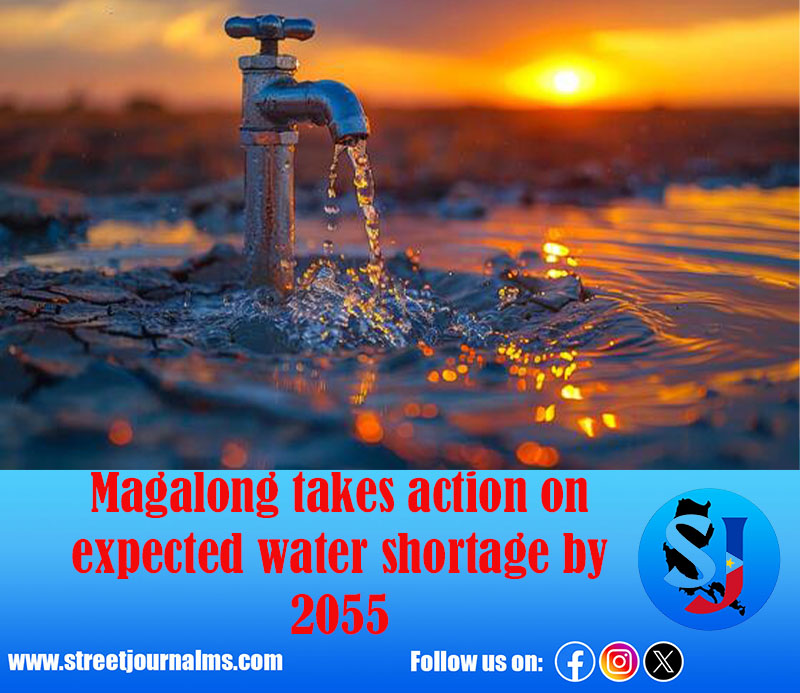
BAGUIO CITY, Philippines — Mayor Benjamin Magalong believes the city could experience a water supply shortage of at least 117 million liters per day by the year 2055. According to Magalong, the city has been experiencing water shortages for years but he said that the growing population, increasing demand, and the effects of climate change require the city to act now. He said the local government cannot let the water problem become more difficult for the next generation. Magalong said the city is currently working to strengthen the protection and management of existing water resources as it prepares for future water challenges. He cited a long-term water supply resilience study recently completed for the city government. According to Magalong, the study was conducted by British consultants under the Green Cities, Infrastructure and Energy Program, of the city government, and the Baguio Water District, as technical assistance provided through a grant from the United Kingdom government worth about £2 million. He said the study was completed and handed over to the city last month. It examined eight possible water sources and examined the technical, financial, environmental, social and climate considerations of each option. Magalong said the study gives the city a stronger basis for deciding how to meet its long-term water needs than simply choosing a project without sufficient technical basis. “It also gives the city a clearer path towards obtaining approvals, attracting investments, and eventually putting in place a water supply system that can serve the city for decades.” He said the city is collaborating with the Philippine Disaster Resilience Foundation through the BRIDGE Project with support from the Canadian government. The four-year program focuses on integrated water resources management, covering watersheds, groundwater resources, water use and community governance. The project will support watershed protection, policy development, capacity building and improved data utilization. It will also assess the needs of water-stressed communities and the potential impacts of climate change and disasters on the city’s water supply. Magalong said addressing water security requires both identifying new resources and properly managing existing resources. The BRIDGE initiative is completing a feasibility study. “The combined effort aims to ensure that Baguio has a more comprehensive and sustainable approach to water security for future generations,” Magalong said.                    

Baguio, TESDA, NCIP forge partnership to establish multiversity of indigenous potentials

Baguio City

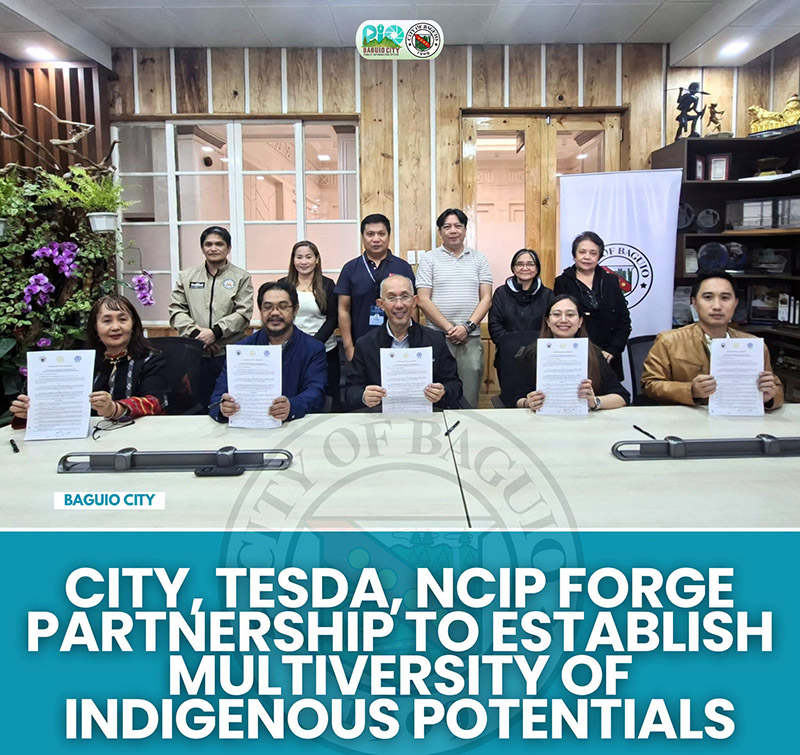
BAGUIO CITY, Philippines — The City Government of Baguio, Technical Education and Skills Development Authority (TESDA), and National Commission on Indigenous Peoples–Cordillera Administrative Region (NCIP-CAR) are joining forces to establish the Multiversity of Indigenous Potentials (MIP), a pioneering platform aimed at advancing education, skills development, entrepreneurship, cultural preservation, innovation, tourism, and economic empowerment among Indigenous Peoples (IPs). The partnership was formalized through a Memorandum of Agreement ( MOA) signed at Baguio City Hall on September 8, 2026, by Baguio City Mayor Benjamin B. Magalong, TESDA-CAR Acting Regional Director Glenn N. Murphy, NCIP-CAR Regional Director Atty. Atanacio D. Addog and City Environment and Parks Management Officer Atty. Rhenan Diwas. The MIP is envisioned as a national education, training, cultural, technology, leadership, tourism, and entrepreneurship development hub that will bring together technical-vocational institutions, higher education institutions, industry partners, Indigenous Cultural Communities/Indigenous Peoples, the private sector, and government agencies. Under the agreement, the City Government of Baguio will make available the Dominican Hill and Heritage Park Training Hall and related support facilities as a venue for education, training, community development, capacity-building, and livelihood enhancement programs. The initiative seeks to provide Indigenous Peoples with greater access to education and lifelong learning opportunities while creating pathways that connect basic education, technical-vocational education and training, and higher education. Among the key areas of collaboration are technical-vocational training, Indigenous Knowledge Systems and Practices (IKSPs), scholarships and learner support, recognition of prior learning and indigenous competencies, work-based learning, entrepreneurship, cultural enterprise, biodiversity protection, food security, ecology management, and cultural tourism. TESDA will contribute its expertise in technical-vocational education and skills development by providing qualified trainers, assessors, resource persons, and technical experts; developing training designs and learning materials; facilitating competency assessment and certification; and helping explore scholarships, training support, starter toolkits, and other assistance for qualified participants. Meanwhile, NCIP will provide policy guidance on Indigenous Peoples’ rights, welfare, and development and facilitate engagement with Indigenous Cultural Communities, Indigenous Peoples Organizations, and Indigenous Peoples Mandatory Representatives. It will also help ensure that Indigenous Knowledge Systems and Practices, as well as Ancestral Domain Sustainable Development and Protection Plans and Programs, are appropriately integrated into MIP initiatives. The City, TESDA, and NCIP will jointly oversee the initiative through a Governing Board, Management Team, and Technical Working Group (TWG). The Governing Board will provide strategic direction, approve annual plans and programs, mobilize resources and partnerships, and monitor the overall performance of the MIP. The Management Team will oversee day-to-day operations and coordinate the delivery of training, entrepreneurship, innovation, and community programs. The TWG, meanwhile, will provide technical oversight, inter-agency coordination, monitoring, and evaluation to ensure that MIP programs remain aligned with the mandates and policies of the three partner institutions. The MIP will feature six flagship centers: Indigenous Education Hub of the Philippines; Indigenous Cultural Heritage Center; Indigenous Peoples Cultural Tourism Center; Industry Skills, Technology and Innovation Center; Indigenous Entrepreneurship Incubation Center; and Research, Governance and Knowledge Development Center. Through these components, the partnership aims to increase educational access among Indigenous youth, leaders, women, elders, and Indigenous Peoples Mandatory Representatives; improve employability and livelihood opportunities; strengthen indigenous entrepreneurship; protect and promote indigenous cultures and expressions; expand cultural tourism; and build stronger partnerships among government, industry, academe, and Indigenous communities. The agreement will be effective upon signing and will remain in force for five years, subject to renewal by mutual agreement of the Parties. (By Ariel Biala)

Baguio records 18 suicide cases in 9-months

Baguio City, Tourism / Health

BAGUIO CITY, Philippines – The City Health Services Office reported 18 suicide cases recorded from January to early September 2026, highlighting the need for stronger mental health support and early help-seeking in the city. Former CHSO Mental Health Unit Coordinator Ricky Ducas said the city has seen an upward trend in reported suicide deaths in recent years, while also noting that more women are seeking professional help for mental health concerns. He said many suicide deaths involve men, who may be less likely to talk about their problems or seek help. Depression, anxiety, substance abuse, and personal or financial problems are among the factors commonly associated with suicide. Ducas stressed that these concerns can be addressed through timely professional support. He said mental health concerns can be managed through proper professional intervention, especially when individuals seek help early so that appropriate support can be provided. According to Ducas, the CHSO Mental Health Unit provides counseling services and free medication to individuals who seek consultation. He encouraged those experiencing mental health problems to immediately go to the nearest district health center and seek professional help. He reiterated his call for individuals experiencing mental health problems to strengthen their efforts to seek help by consulting health professionals about their problems and concerns to avoid escalating situations and putting their lives at risk.                          

Scroll to Top