Street Journal Multimedia Services

Baguio City

Baguio reviews anti-bullying rules for stronger enforcement

Baguio City

BAGUIO CITY, Philippines — A legislative monitoring report on Baguio City’s 2017 anti-bullying ordinance has recommended several changes to strengthen how schools prevent, report and respond to bullying incidents. Submitted by the Baguio City Council’s Legislative Monitoring and Evaluation Section (LMES), the report on City Ordinance 59-2017 found that the ordinance is generally being implemented in schools, with most schools integrating anti-bullying measures into their student manuals, curricula and child protection programs. It also found common use of counseling, parent conferences, mediation, and school-based interventions in addressing reported cases. However, the monitoring identified gaps involving the availability of trained guidance personnel, consistency in implementing school policies, and parental participation. The proposed amendments would expand the provisions of the ordinance to establish stronger intervention measures by requiring regular information and education campaigns (IEC) on bullying, child protection, and responsible technology use as well as stronger participation of parents and guardians. The proposed changes would also strengthen the composition and functions of school Child Protection or Anti-Bullying Committees and provide for structured counseling, intervention, and follow-up for victims, respondents, and other affected learners. The monitoring team also proposed a new capability-building provision requiring the City, in coordination with the Department of Education (DepEd), Commission on Higher Education (CHED), schools, and other stakeholders to facilitate continuing training and technical assistance. Another proposed provision would strengthen partnerships among schools, parents, barangays, police, social welfare offices, civil society and other groups involved in child protection. The report further recommends requiring schools to maintain confidential records of reported bullying incidents and submit periodic reports for monitoring, evaluation, and policy development. Under the proposed amendments, schools that repeatedly fail to implement anti-bullying measures may also be required to submit corrective action plans, undergo capability building, and strengthen their child protection mechanisms. The recommendations remain proposals contained in the monitoring report and have not yet been acted upon by the City Council. In August, DepEd-Baguio reported eight bullying cases since June 2026, while subsequent reports also pointed to continuing concerns over the availability of counseling and support services. (By Jordan G. Habbiling)

Baguio City’s Arboretum to open on October 19

Baguio City, Tourism / Health

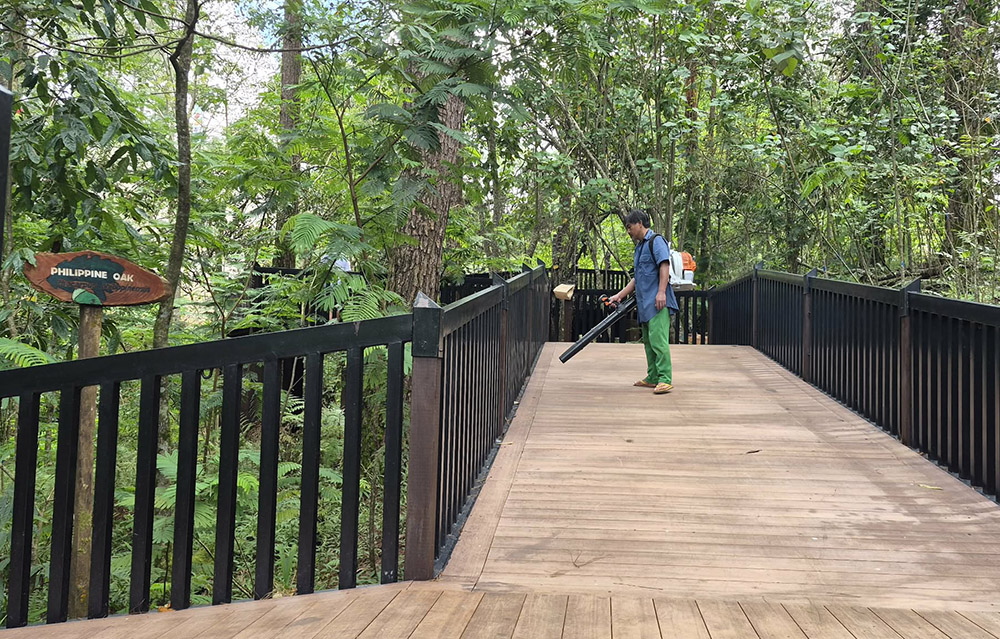
  BAGUIO CITY, Philippines  – An innovative environmental attraction is set to open on October 19 to the public, especially tourists, the Arboretum Park, located just next to the Botanical Garden, Baguio City. According to Rhenan Diwas, chief of the City Environment and Parks Management Office (CEPMO), the Arboretum is ready to welcome visitors to its lush surroundings and tree-lined pathways, offering a forest bathing experience while serving as a living collection of trees and other woody plants for conservation, education, research and public appreciation. “We have cultural and bird watching. The city has a private partner there, the Haring Ibon Foundation, which will provide bird watching tours to attendees,” Diwas said. Also located in the area is the Baguio Arboretum Gallery, a new space developed in collaboration with the Baguio City Government, where the gallery will showcase bird species found in Baguio City and the Cordillera, as well as trees and other plant species found in the Arboretum. The Arboretum is connected to the Botanical Garden, allowing visitors to explore both attractions without paying a separate entrance fee to the Arboretum. Visitors may enter through the Botanical Garden and proceed to the Arboretum, or enter through the Arboretum entrance on Leonard Wood Road and exit the Botanical Garden for a single designated entrance fee. The entrance fee, effective July 1, 2026 under City Ordinance No. 18, Series of 2016, is for tourists P110 for adults and children 13 years old and above, and P27.50 for children 12 years old and below. Senior citizens and persons with disabilities are entitled to a 20 percent discount. For Baguio residents: P55 for adults; P27.50 for children and students 13 years old and above, senior citizens and persons with disabilities; and free admission for children 12 years old and below.        

Baguio City remains as top tourism in the Cordillera

Baguio City

BAGUIO CITY, Philippines — The Summer Capital of the Philippines became the top tourist destination for tourists for the year 2025, where approximately 1,156,884 million overnight arrivals have been recorded—this is according to the 2025 Annual Report of the Department of Tourism Cordillera (DOT-CAR). Followed by Sagada, Mountain Province, with 108, 307 arrivals, and Tabuk City, Kalinga, with 84,483 arrivals. The City of Baguio continued to account for the largest share of same-day visitor arrivals in 2025, recording 52.13% of the regional total. This leads to Baguio City being the region’s top destination in both 2024 and 2025 with approximately 3,492,758 arrivals of same-day visitors. Based on the data on same-day visitor arrivals, Minesview Park emerged as the top tourist attraction in 2025, rising from second place in 2024. Among the top ten tourist attractions in the Cordillera, eight are located in Baguio City, while two are situated in La Trinidad, Benguet. These are Botanical Garden, Diplomat Hotel, Mirador Eco-Park, Historical Core at Camp John Hay, SM Skyranch, Dragon Treasure Castle, and Tam-awan Village. This distribution highlights the continued dominance of Baguio City as the region’s primary tourism hub and underscores the strong appeal of its established attractions to day visitors. Baguio City also holds the largest number of trainees with 5,304 trainees for DOT-CAR trainings such as Tourist Oriented Police For Community Order and Protection, Muslim Friendly Halal Orientation, Tourist Driver Seminar, Street Food Tourism Kulinarya Training, Barrier Free Tourism, Philippine Farm Orientation Program: Planting the Seeds of Agir-Tourism; Homestay Pilipinas Training, Re-Orientation for Tour Guides, and Filipino Brand of Service Excellence. ( AJ VILLENA)

Magalong receives Rajah Sulayman Award for Governance, Public Service

Baguio City

BAGUIO CITY, Philippines — Mayor Benjamin Magalong has been honored with the Rajah Sulayman Award for his efforts in promoting good governance, peace, unity and public service. He received the recognition during the Sultanate Golden Crescent Award (SGCA) 2026 – A CSO Stakeholders’ Excellence Recognition, held on September 22, in Quezon City. The mayor said he considers the recognition not only as a personal acknowledgment of his work but also a tribute to the collective efforts of Baguio City government workers and residents who contribute to the Summer Capital’s development. He thanked the organizers and those who continue to support efforts toward peace, integrity and meaningful public service. Magalong also vowed to continue serving the public with compassion, accountability and dedication. The Sultanate Golden Crescent Award is a recognition program honoring individuals and organizations for contributions to their communities and public service.-Gaby B. Keith with CMO report          

Fantasy Parade guidelines set “Family-Friendly” standard for costumes

Baguio City

BAGUIO CITY, Philippines — Organizers of the proposed Baguio Fantasy Festival have prepared guidelines for the planned Fantasy Parade that seek to balance creative expression with safety and family-friendly standards in the use of public spaces. On September 29, 2026, the organizers submitted the guidelines during a meeting facilitated by Councilor Vladimir Cayabas of the Baguio City Council’s Committee on Creativity, following earlier discussions on the proposed shift from the Baguio Horror Festival to a Fantasy Festival. Under the proposed guidelines, participants may draw inspiration from Filipino folklore and mythology, literature, international fairy tales, animation, anime, films and television, video games, science fiction, professions, history, animals, original characters and other creative traditions. Fantasy, supernatural and spooky themes are not prohibited outright. Characters such as monsters, witches, ghosts, vampires, zombies, skeletons, aswang, kapre, and other mythical or supernatural beings may still be portrayed, provided their presentation is non-graphic and appropriate for a family-oriented public event. The guidelines prohibit costumes depicting nudity or exposed private areas, blood, gore, exposed organs, dismemberment or realistic wounds. Real or functional weapons, fire, pyrotechnics, chemicals and other hazardous effects are likewise prohibited. Costumes must also be safe to wear in a crowded public place and should not pose unreasonable risks to participants, spectators or traffic personnel. The proposed rules also prohibit hate, extremist, illegal-drug and other prohibited material, as well as violent, bloody or gory imagery. The organizers emphasized that the guidelines are not intended to limit creativity or prohibit fantasy characters simply because they are unusual, dark, supernatural or mythical. Instead, the standards focus on how the characters and concepts are presented. A costume may be accepted subject to modifications when one or more elements do not meet the proposed Costume Check requirements. Participation may also be denied when a costume or presentation does not comply with the guidelines or raises safety or public-order concerns. The guidelines provide for a pre-parade Costume Check to determine whether costumes comply with the standards before participants are allowed to join the procession. A Costume Check and Community Review Committee is also proposed to help ensure that the parade remains family-friendly, culturally sensitive and inclusive. The committee may include representatives from the city government, religious and faith-based communities, creative and cultural sectors, the education sector and other appropriate community stakeholders. The Committee on Creativity is proposed to assist in vetting community representatives to ensure that the review committee is composed of individuals who can evaluate costumes fairly, respectfully and objectively. The committee will not judge the artistic quality, creativity or personal expression of participants but will determine whether a costume complies with the agreed standards. The guidelines also recognize Filipino cultural and indigenous representations, allowing traditional attire and cultural elements when presented respectfully and appropriately. Costumes that mock, demean or misrepresent a living culture or community will not be allowed. Suggested costume categories include Filipino folklore and mythology, Filipino literature and legends, superheroes and popular characters, fairy tales and storybook characters, fantasy and mythical creatures, anime and manga, cartoons and animation, film and television, video games, professions and everyday heroes, historical and adventure characters, science fiction, animals and anthropomorphic characters, seasonal and festive characters, spooky and supernatural characters, and original characters. Family and group costumes are also encouraged. The listed categories are not intended to restrict participants from presenting other concepts that comply with the guidelines. The organizers said the proposed guidelines remain subject to modifications. Organizer representatives, petitioner Eric Pangilinan, the City Legal Office, City Tourism Office, Baguio City Police Office, and church leaders participated in the September 29 committee discussion concerning the proposed public event. Pangilinan said the guidelines should be scrutinized to ensure that the proposed event is acceptable to the community. Meanwhile, City Tourism Officer Alec Mapalo said guidelines developed for the city’s cosplay activities were formulated through consultation and consensus among cosplayers and buskers. He said these may be incorporated into the guidelines being prepared by the Fantasy Festival organizers. The Baguio City Police Office also said it will provide assistance for public order and safety, including crowd control, if the proposed parade pushes through. Atty. Melchor Rabanes of the City Legal office said the organizers would need to secure a permit specifically for the proposed Fantasy Parade, noting that the permit previously secured for the abandoned Halloween Parade does not cover the new concept. Cayabas said the proposed event’s consolidated guidelines will be incorporated into the report of the Committee on Creativity for consideration by the Baguio City Council. The earliest the City Council can act on the committee report is October 12, 2026. The City Council will ultimately decide whether to approve or disapprove the proposed Fantasy Festival and its public parade. With the proposal and its history drawing debates and differing views among Baguio residents, attention now turns to the City Council’s decision.  (Jordan G. Habbiling)

45 Senior Citizens take-over Baguio City Hall

Baguio City

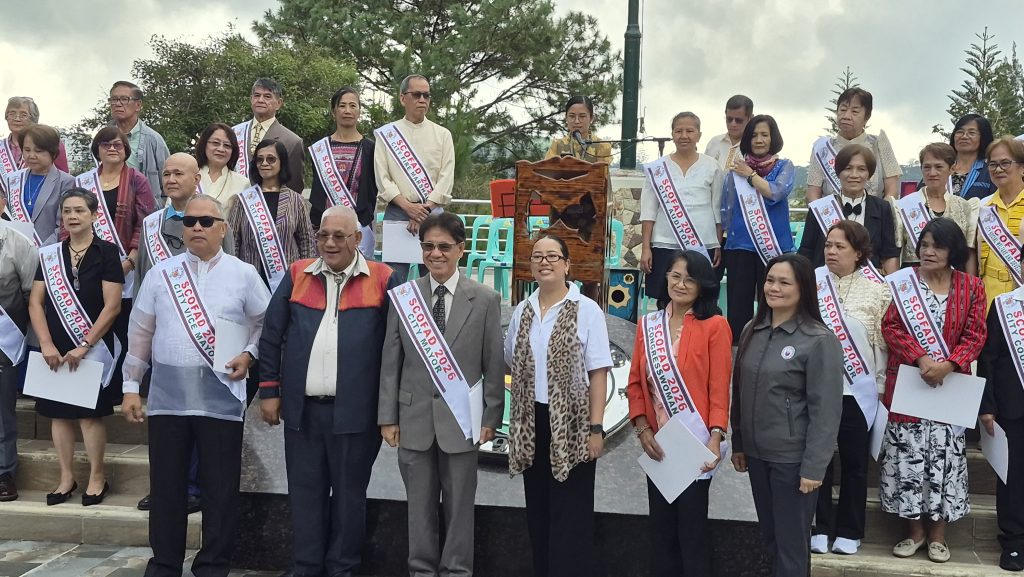
BAGUIO CITY, Philippines — Forty-five senior citizens will serve as government officials and local leaders for a day on October 5 under the Senior Citizens Officials for a Day (SCOFAD) program, following their screening and selection by the Elderly Month Steering Committee on September 22. The committee is led by Councilor Betty Lourdes Tabanda, chair of the Committee on Women, Social Services and Urban Poor, with the City Social Welfare and Development Office (CSWDO) headed by Liza Bulayungan, represented during the screening by Social Worker Racquel Madlon. The designation of the senior citizens is pursuant to Executive Order No. 157, series of 2026, issued by Acting City Mayor Faustino A. Olowan on September 30. The EO is anchored on Republic Act No. 9994, or the Expanded Senior Citizens Act of 2010, which provides additional benefits and privileges to senior citizens. Proclamation No. 470, issued on September 26, 1994, declares the first week of October as Filipino Elderly Week. In Baguio, however, the celebration is observed through month-long activities recognizing the contributions and continuing participation of senior citizens in the community. The city’s SCOFAD program is also supported by City Ordinance No. 057, series of 2009, “Providing for the Senior Citizens to Participate in Nation Building by Acting as Officials for a Day in the month of October of every year,” and Sangguniang Panlungsod Resolution No. 066, series of 2015, urging regional line agencies based in Baguio City to adopt the SCOFAD program. SENIOR CITIZEN LEADERS SC Luzmarie Vega will serve in the office of Congressman Mauricio Domogan; SC Fernando Moyaen will serve as Mayor Benjamin B. Magalong for the day; and former City Planning Officer SC Raymund Ruaro will serve as Vice Mayor Faustino A. Olowan. For the Sangguniang Panlungsod, SC Jeannette Cawiding will serve as committee chair on Employment, Livelihood, Cooperatives and Persons with Disability (PWD), vice Councilor Edison Bilog; SC Renato Reyes will serve as committee chair on Public Works, vice Councilor Joel Alangsab; and SC Enrico Caja will chair the Committee on Public Protection, vice Councilor Jose Molintas. SC Fe Paloga will chair the Committee on Ethics, Governmental Affairs and Personnel, vice Councilor Leandro Yangot Jr.; SC Alicia Santiago will chair the Committee on Education, Creativity, Information and Communications Technology (ICT) and Non-Indigenous Peoples (IPs) Culture, vice Councilor Vladimir Cayabas; and SC Alejandrino Tamania will chair the Committee on Urban Planning, Lands and Housing, vice Councilor Peter Fianza. SC Purificacion Delima will chair the Committee on Market, Trade and Commerce and Agriculture, vice Councilor Van Dicang; SC Bernadette Gallardo will chair the Committee on Public Utilities, Transportation and Traffic Legislation, vice Councilor Fred Bagbagen; and SC Helen Dinamling will chair the Committee on Social Services, Women and Urban Poor, vice Councilor Betty Lourdes Tabanda. SC Maria Carolina Zulueta will chair the Committee on Tourism, Special Events and Playground, vice Councilor Yuri Kiaco Weygan; SC Dr. Virginia Narciso will chair the Committee on Health and Sanitation, Ecology and Environmental Protection, vice Councilor Elmer Datuin; SC Erlinda Fuertes will chair the Committee on Indigenous Peoples and Indigenous Cultural Communities, vice Councilor Maximo Edwin Jr.; and SC Clarita Gamboa will chair the Committee on Youth Welfare and Sports, vice Councilor John Rhey Mananeng. The SC councilors underwent an orientation on parliamentary procedures on September 30 with Sangguniang Panlungsod personnel Jona Pagada in preparation for the council session on October 5, where they will present proposals, either ordinances or resolutions, related to their designated committees. CITY OFFICES, GOVERNMENT AGENCIES For the city departments, SC Carolina Santiago will serve as City Accountant, vice Fredda Jimenez; SC Jennifer Hongitan will serve in the Office of the City Administrator, vice Vittorio Jerico Cawis; SC Ma. Teresita Bersamira will serve as City Assessor, vice Normita Ramon; and SC Lolita Belen will serve in the City Auditor’s Office, vice Melanie Cuilan. SC Linda Culaton will serve as City Budget Officer, vice Atty. Letecia Clemente; SC Engr. Brigida Ancheta will serve in the City Building and Architecture Office (CBAO), vice Architect Johnny Degay; SC Nilda Limpin will serve as Acting City Civil Registrar, vice Allan Abayao; and SC Basilisa Nebrija will serve as Department of Education-Baguio Schools Division Superintendent, vice Dr. Soraya Faculo. SC Verena Repasa will serve as DILG Baguio City Field Office Director, vice Millicent Carino; SC Josephine Fianza will serve as City Engineering Officer, vice Engr. Richard Benjamin Lardizabal; SC Leoncio Cortes Jr. will serve as City General Services Office (GSO) head, vice Ma. Guadalupe Della; and SC Dr. Zoraida Clavio will serve as City Health Services Officer, vice Dr. Celia Flor Brillantes. SC Divina Manos will serve as City Human Resources Management Officer, vice Atty. Augustin Laban III; SC Atty. Romeo Bravo will serve in the City Legal Office, vice Atty. Althea Rosanna Alberto; SC Herminia Velasco will serve as City Planning, Development and Sustainability Officer, vice Architect Donna Rillera-Tabangin; and SC Susan Medina will serve as City Secretary, vice Atty. Brenner Bengwayan. SC Erlinda Erardo will serve as CSWDO head, vice Liza Bulayungan; SC Criselda Labonete will serve as City Treasurer, vice Alex Cabbarubias; and SC Marietta Blanco will serve as City Veterinarian, vice Dr. Silardo Bested. For partner government agencies, SC William Baden will serve as Baguio City Police Office (BCPO) head, vice PCol. Nixon Laoyan; SC Shirley Arukod will serve as National Commission on Senior Citizens (NCSC) Regional Director, vice Atty. Luz Laureta-Balisong; and SC Ernesto Ronquillo will serve as Jail Chief Inspector of the Baguio City Jail-Male Dormitory, vice Atty. Dexter Ngipol. SC Lolita Hunt will serve as Jail Chief Inspector of the Baguio City Jail-Female Dormitory, vice JCInsp. John Wayland Lapon; SC Ricardo Flores will serve as City Fire Marshal of the Baguio Fire Station, vice FSupt. Mark Anthony Dangatan; SC Epifania Claur will serve as Philippine Sports Commission (PSC) Baguio Office Chief, vice Datu Shaiffudin Kiram; and SC Nelson Cara will serve as General Manager of the Baguio Water District (BWD), vice Engr. Salvador Royeca. The SCOFAD participants are from the Philippine Government Retirees Association (PGRA),

Baguio City links livability, quality-of-life fata to planning and policy

Baguio City

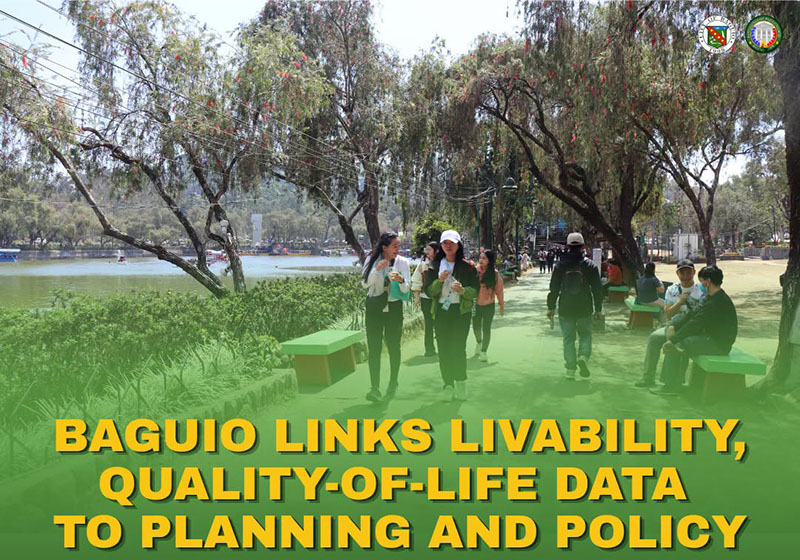
BAGUIO CITY, Philippines — Baguio City is using two complementary assessments of urban conditions to identify development gaps and guide planning, budgeting, and possible legislative measures. Presented to the Baguio City Council during its special session on September 9, 2026, the Livability Index looks at conditions across the city’s 128 barangays, while the Quality-of-Life Index presented during the regular session on September 14, 2026 provides a broader citywide assessment that incorporates residents’ perceptions along with global and local indicators. City Planning, Development and Sustainability Officer Arch. Donna Rillera Tabangin said the two assessments form part of the City’s growing database for evidence-based planning and policymaking. The Livability Index measures 10 indicators covering health, food sources, economic opportunities, crime and safety, accessibility, mobility, essential businesses, risk management, civic spaces and water. It is intended to identify strengths and gaps in individual barangays and help guide investments and development decisions including the assessment of requests for changes in land use or zoning. Meanwhile, the UN-Habitat Quality-of-Life Index examines broader aspects of urban well-being through nine domains: basic services and mobility, governance, health and well-being, economy, environment, social cohesion, education, housing, and culture and recreation. Tabangin said the Quality-of-Life assessment used 53 global indicators, 15 local indicators and a citizen perception survey. The data were drawn from the City’s Voluntary Local Review, Livability Index, Community-Based Monitoring System, national government agencies, regional line agencies, and local government departments. The online perception survey generated 2,636 responses, exceeding the minimum target of 400 respondents. Tabangin said the Quality-of-Life initiative was undertaken with UN-Habitat beginning in 2024 and continued through 2025, with the data undergoing validation, cleansing, and triangulation before the results were completed in December 2025. She said the findings should serve as guidance for planning, budgeting, and policymaking, with the City also looking at updating the assessments in the future through updated CBMS data. During the discussion, Tabangin identified housing, culture and recreation, urban forestry and climate literacy as priority areas for action based on the Quality-of-Life findings. The Livability Index likewise points to the need to address accessibility, disaster risks, water, essential services, green spaces, and other barangay-level concerns. The two assessments provide different but related views of the City’s development conditions. The Livability Index helps identify needs and capacities at the barangay level, while the Quality-of-Life Index looks more broadly at urban well-being and how residents experience the city. Councilor Peter Fianza also called for further examination of the indicators and methodology used in the Quality-of-Life assessment, particularly the 53 global and 15 local indicators and how Baguio’s unique circumstances were considered. Tabangin said the City Council’s own perception could also be incorporated in a future update, given its experience with local policies and legislation. At the close of the discussion, the City Council directed that copies of the Quality-of-Life study be furnished to the Secretariat for distribution to committee chairpersons based on their respective areas of concern. -Jordan G. Habbiling  

Baguio City bent on retaining ISO-9001:2015 status

Baguio City

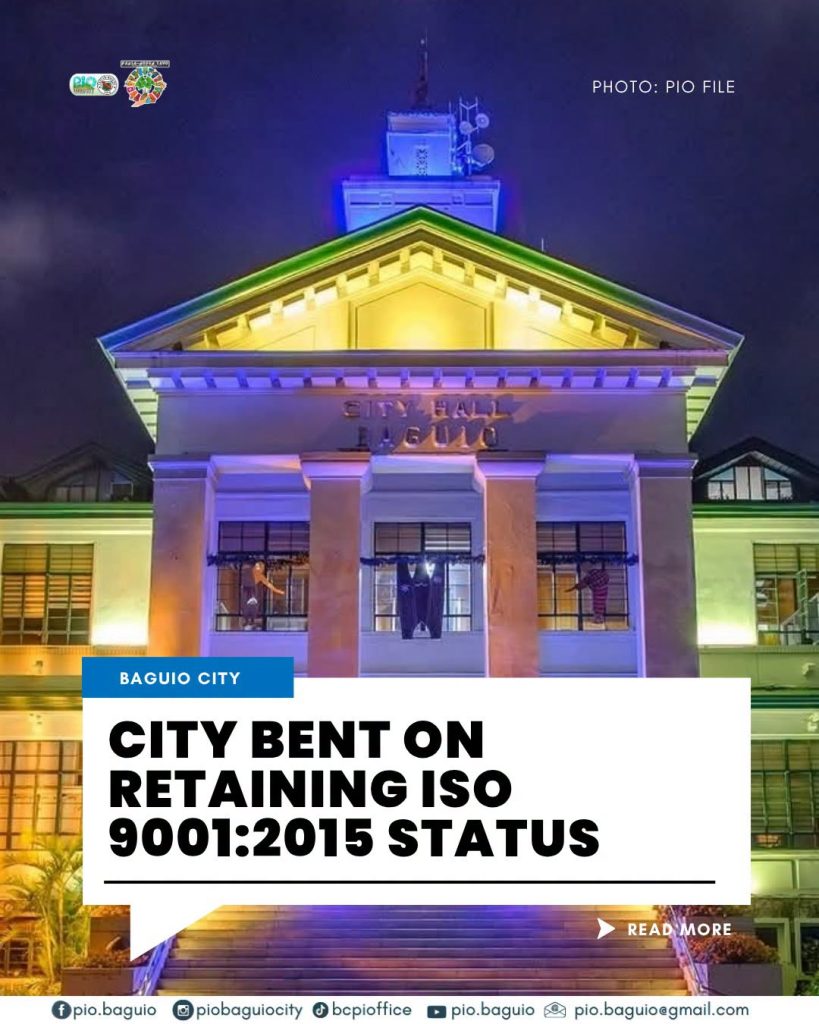
BAGUIO CITY, Philippines — The city government is bent on maintaining its status as an ISO 9001:2015 passer to ensure that its processes and services continue to meet the standards of a Quality Management System (QMS). Mayor Benjamin Magalong said the city remains committed to providing efficient governance, transparency and improved delivery of services to the public. The QMS is one of the institutional systems being pursued by the city to ensure that reforms and improvements in governance continue beyond political administrations, according to the mayor. “We adopted QMS like the 9001:2015 not just to comply but to create a culture of excellence, consistency, outstanding performance and continuous improvement in everything that we do,” the mayor said. The ISO 9001 is the international standard that specifies requirements for QMS, where organizations use the standard to demonstrate their ability to consistently provide products and services that meet customer and regulatory requirements. The city successfully passed its ISO 9001:2015 recertification audit conducted by auditor SGS Philippines in March after undergoing a five-day audit covering its departments and services. The recertification meant that the systems and processes of the city continue to meet international standards, according to the mayor. The auditing firm affirmed that the city government’s processes and services continue to meet the standards of a Quality Management System (QMS) and sustained its dedication to quality service, she said. Roger Villanueva, SGS Philippines Director for Business Assurance, pointed out that the recertification reflects Baguio City’s excellence in governance, discipline and execution and its firm commitment to quality public service. The city’s quest for the ISO certification started in 2021 when it was selected as a Government Quality Management Program (GQMP) beneficiary by the Development Academy of the Philippines (DAP) and entered into a Memorandum of Understanding with DAP for its technical assistance for the establishment of a QMS certifiable status eligible for the ISO 9001:2015 standard. The following year, the city passed the Stage 2 certification audit by accredited third-party auditing firm TUV North Philippines on Dec. 26, 2022. In 2023, the city passed the first surveillance audit and was awarded its first certification.  (Aileen P. Refuerzo)  

Study finds sharp heat increase in Baguio’s built-up areas

Baguio City, Environment

BAGUIO CITY, Philippines — The Summer Capital has experienced a significant increase in surface heat, particularly in built-up areas, according to findings from Project GUHEAT (Geospatial Assessment and Modelling of Urban Heat Islands in Philippine Cities), a study led by Dr. Nathaniel Lubrica of the University of the Cordilleras (UC). The study found that land surface temperature hotspots in the city’s Central Business District (CBD) expanded from 43.38 hectares in 1989 to 82.82 hectares in 2011, before expanding further to about 305 hectares between 2014 and 2019. UC Geographic Information System (GIS) coordinator Josh Gabriel Roldan explained that most of the identified hotspots were located in built-up areas, where buildings, roads, and other structures absorb and retain heat. Measures such as increasing tree cover and gardens in hotspot areas, as well as using heat-reflective paints and wall coverings, can help reduce the amount of heat absorbed by structures, he said. For households, Roldan encouraged the use of light-colored roofing materials, which can reflect more sunlight compared to darker surfaces and noted that increased dependence on air conditioning may also contribute to outdoor heat as cooling systems release heat into the surrounding environment. The findings provide additional data for Baguio’s continuing efforts toward environmental protection and climate resilience as the city balances urban development with the need to maintain green spaces and address environmental risks. Under the Baguio Environment Code, or City Ordinance No. 18, Series of 2016, the City Environment and Parks Management Office (CEPMO) under Rhenan Diwas is tasked with responsibilities related to climate change adaptation and mitigation, including the protection and preservation of tree parks and greenbelts. The city has also formulated its Local Climate Change Adaptation Plan for 2020 to 2030, which works alongside other development, land-use, and disaster risk reduction plans. These existing measures provide a government framework relevant to GUHEAT’s recommendations on increasing urban greenery and reducing heat-absorbing surfaces in identified hotspot areas as Baguio continues to develop. -(By Allan Roy Canilang, UP-Baguio Intern/gabykeith)  

Scroll to Top