Street Journal Multimedia Services

Baguio City

Baguio City to rollout P56-M rice assistance for indigent families

Baguio City

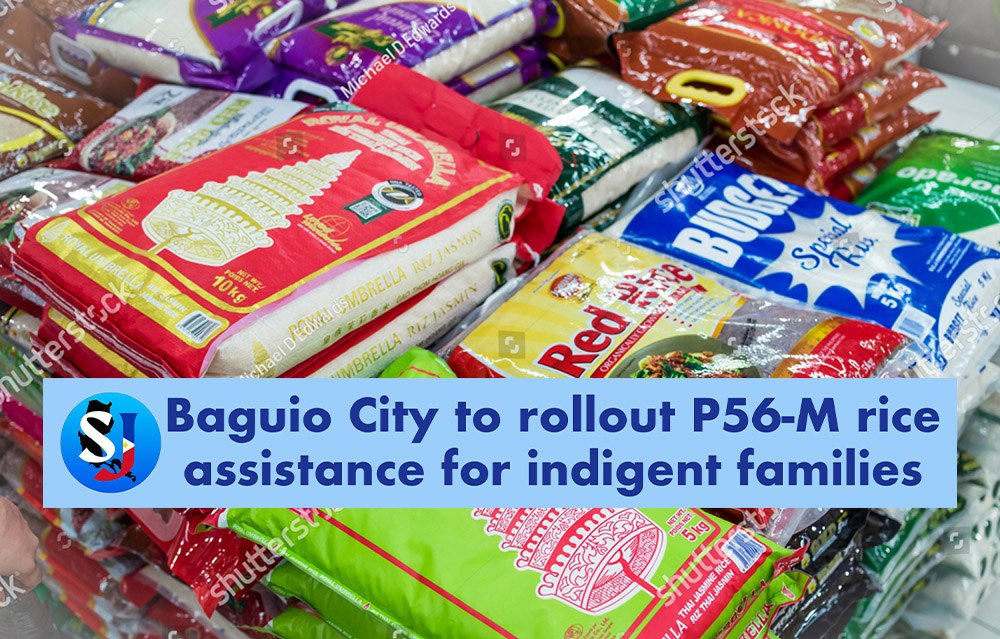
BAGUIO CITY, Philippines – Mayor Benjamin Magalong announced that the city government has received the P56 million fund allocation from the national government for the implementation of the Assistance to Indigent Individuals or Families – Food Assistance/Rice Distribution project intended to provide rice subsidies to indigent families in the city. Magalong directed the City Social Welfare and Development Office (CSWD) to expediting the grant to qualified families from the different barangays in the city. CSWD Officer Liza Bulayungan said they will prepare the project proposal, purchase request and other documentary requirements to immediately roll out the assistance. Magalong last February thanked President Ferdinand R. Marcos Jr. for including the city as beneficiary of the 2026 Local Government Support Fund-Financial Assistance (LGSF-FA) under the Bagong Pilipinas Rice Program. He assured that the distribution of the assistance in the City will be free from political color and influence noting that in the past, similar program was controlled by influential members of Congress. “No politics, no ‘epal’ this time.  Purely assistance from the government to those in need,” Magalong reiterated. He also assured residents that proper guidelines will be followed to ensure fair identification of beneficiaries and accountable use of the funds.  Further details on the implementation and distribution schedule will be announced as soon as available. The P56 million allocation for the city is part of the almost P58-billion LGSF allocation for 2026 which aims to provide direct support to needy families and communities nationwide. The amount is downloaded straight to the local government unit in a direct and digitized manner to ensure faster implementation.(Aileen P. Refuerzo-Baguio PIO)  

Baguio Media cancels 2026 Summer Activities

Baguio City

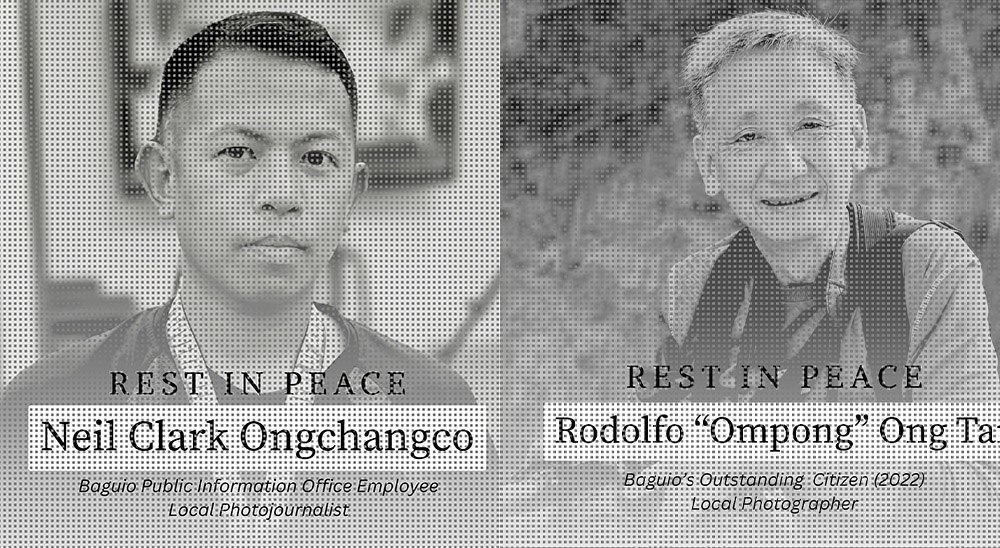
BAGUIO CITY, Philippines – The Baguio Correspondents and Broadcasters Club (BCBC) has canceled the Lucky Summer Visitors 2026 that was supposed to take place during Holy Week, as a mark of respect and mourning for the death of a member in a tragedy in Itogon, Benguet. The LSV is a traditional event of the media community, supported by local government units, stakeholders, which selects first-timers who will go to the Summer Capital during Holy Week for their vacation, with those selected being given the red-carpet treatment for four days. According to BCBC President Dioniso Dennis, Jr., officials and stakeholders agreed to cancel the annual weeklong activities for the Lucky Summer Visitors 2026 that were supposed to take place during Holy Week, to give way to mourning for the sudden death of member Neil Clark Onghanco and respected veteran photographer Rodolfo ‘Ompong’ Tan. Ongchanco, 40, a city government employee and photographer of the Baguio City Public Information Office, while Tan, 68, a well-known businessman, hobbyist photographer of the Baguio Photographers Club and respected partner of the Baguio media community. The two deceased, along with four other photographers, who survived the tragedy, were traveling in a black Toyota Fortuner with license plate ZHE 432, coming from Tabu Elementary School, Dalupirip, Itogon, Benguet, on March 27, where they were conducting pictorials of graduating students as part of a sponsorship activity. On their way home, crossing the Agno River again at around 1:00 p.m., a strong current suddenly hit their vehicle and pushed it into a rocky river about 100 meters from where they were traveling. According to Dennis, in the mourning of the Baguio media, a traditional ritual will be held on Maundy Thursday at the media camp in Burnham Park. “While the shocking news has left us in a quandary whether to pursue or not, we have decided to forgo but will do traditional rituals to hopefully gain the balance following the tragic incident.” In this regard, Mayor Benjamin Magalong deeply mourned the loss of Onghanco, whom he recognized as a wonderful public servant from the Baguio City Public Information Office, because of his kindness, humility, and willingness to help anyone in need and his cycling partner. In his public post, he recognized Tan as a good businessman, a friend who was highly respected by the community and who cared about the citizen photographer. Tan was recognized and honored as one of the Outstanding Citizens of Baguio in 2022 for his invaluable service to the community, in recognition of using his skills to inspire others—guiding children with autism in photography and actively supporting local disaster response initiatives.

Baguio City officially a ‘Resiliency Hub’

Baguio City

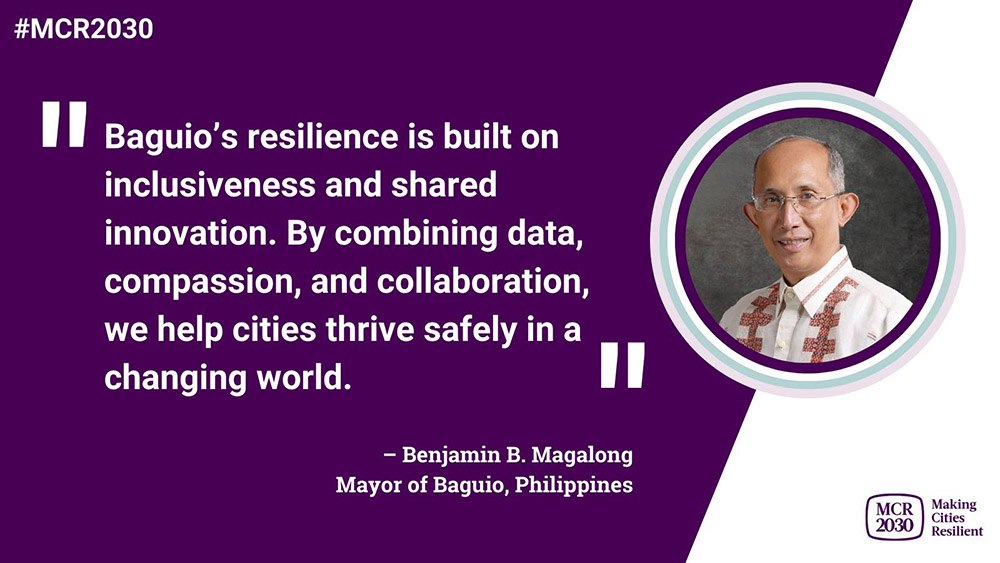
  BAGUIO CITY, Philippines  — The United Nations Office for Disaster Risk Reduction (UNDRR) officially conferred “Resiliency Hub” status upon the City of Baguio in a simple rite held March 26, 2026. Mayor Benjamin Magalong accepted the award, marking Baguio as only the second local government unit in the Philippines to achieve this distinction, following Makati City. The designation places Baguio in an elite group of disaster-ready cities, ranking fourth in Asia and eighth in the Asia-Pacific region. Baguio’s path to becoming a Resiliency Hub began in 2021 following a UNDRR invitation for peer-to-peer training in South Korea. Under the Making Cities Resilient 2030 (MCR2030) initiative. Magalong challenged city officials to meet the rigorous global standards by 2026—achieving the goal four years ahead of the original MCR2030 target.A ten-point disaster-resilience scorecard was be used for the preliminary level assessment where the LGU conducted self-assessment of existing plans and programs backed by data and documentation. After passing the primary assessment, a more stringent scorecard was used to monitor and review progress and challenges in the implementation of plans and projects on disaster resilience. As a Resiliency Hub, Baguio committed to sharing its expertise through four key pillars: Advancing Inclusive Multi-hazard Early Warning Systems (RICH-MHEWS) Capacity Sharing – wherein Baguio City as a UNDRR pilot for the Resilient and Inclusive City Hub RICH-MHEWS – offers a capacity-sharing program that promotes inclusive and data-driven early warning systems. The service focuses on three key pillars: improving risk knowledge, strengthening inclusive governance, and scaling up knowledge dissemination. It guides local governments in developing barangay-level coordinated early warning systems that align with the Sendai Framework for DRR; Smart City Command Center (SC3) Benchmarking and Peer Learning – where the city shares its integrated emergency operations and digital governance. Through this service, Baguio offers benchmarking opportunities and structured peer-learning sessions for cities interested in establishing their own command centers of enhancing interagency coordination. Visiting delegations receive guided briefings on system architecture, data integration, crisis communication and citizen engagement using real-time monitoring tools such as FEWS, CCTV networks and the BIMP mobile app. The city also provides follow-up mentoring on operation protocols, information management, and public alert governance can work together to improve response efficiency and public thrust. By sharing its SC3 model, Baguio empowers other LGUs to build adaptive, transparent and data-informed emergency coordination systems aligned with MCR 2030s Resilient Infrastructure and Smart Cities agenda; Training on Community-based data gathering and risk assessments – Baguio City implements training sessions focused on community-based data gathering and risk assessments. The sessions equip participants with essential skills in utilizing tools such as the Community-Based Monitoring System (CBMS), hazard mapping, and participatory risk analysis. By enhancing local capacities in data management, Baguio ensures that disaster risk reduction plans and development policies are grounded in evidence and tailored to the specific needs of each community. This initiative empowers municipalities to make informed decisions that effectively address their unique climate and disaster risk; and,  Regional and Inter-City Resilience Forums and Learning Exchanges – Baguio City offers to convene and host regional resilience forums and inter-city learning exchanges that foster collab among local government, academic institutions, national agencies, and civil society. Building on its track record of organizing large-scale resilience conferences and DRRM capacity-building events, the city provides a platform for sharing of innovations, research, and best practices in disaster risk reduction, climate adaptation, and inclusive governance. These forums encourage dialogue on critical themes such as risk-informed planning, early warning systems, nature-based solutions and the inclusion of vulnerable populations in local resilience strategies. Magalong thanked the members of the City Disaster Risk Reduction and Management Council (CDRRMC) and the City Disaster Risk Reduction and Management Office (CDRRMO) for leading the LGU in achieving the award. “Baguio’s resilience is built on inclusiveness and shared innovation. By combining data, compassion, and collaboration, we help cities thrive safely in a changing world,” the mayor said. (JM Samidan-Baguio PIO)      

Baguio to host two-day landmark Circular Tourism Summit

Baguio City, Tourism / Health

BAGUIO CITY, Philippines – The City Government will hold the Circular Tourism Summit 2026 on March 30-31, 2026 as part of its push for sustainable development. With the theme, “Weaving a Circular Tourism Economy,” the two-day event is part of the city’s Pansa-Nopen Tayo Program, which promotes a shift from the traditional “take-make-waste” model to a more sustainable circular economy. The summit aims to help tourism stakeholders, especially micro, small, and medium enterprises (MSMEs), adopt environmentally friendly practices. It will focus on raising awareness of circular economy principles, identifying waste management solutions, and linking businesses with green innovators and upcycling groups. Jonathan F. Co, project head of Sentinel Upcycling Technologies, will serve as keynote speaker. He is known for promoting the conversion of waste materials into useful products. The event is supported by the EU-PH Green Economy Partnership, a grant-funded program that selected Baguio as one of its pilot local government units. The program is co-led by the Department of the Interior and Local Government and implemented by the United Nations Development Programme. A highlight of the summit is the Circular Solutions Marketplace, where hotels, restaurants and tour operators can directly connect with recyclers and solution providers to address their waste management needs. Mayor Benjamin Magalong earlier emphasized that circular economy efforts require strong leadership and concrete results. City officials said the summit is part of Baguio’s ongoing efforts to reduce waste and promote a more sustainable and resilient local economy. The Pansa-nopen Tayo circular economy program of the city was launched on Jan. 31, 2025 after Baguio’s selection as one of the 20 local government unit grantees of the European Union-Philippines (EU-PH) Green Economy Partnership, a five-year initiative aiming “to enhance waste management, support the transition to a circular economy and accelerate the deployment of renewable energy technologies” of local government units funded by the EU and implemented in by the Department of Environment and Natural Resources (DENR). The Green LGUs project where the city is one of the 20 recipients, is one of the objectives of the EU-GEP and is being co-led by the Dept. of Interior Local Government (DILG) and implemented by the United Nations Development Programme Philippines (UNDP).  It aims to enhance circular economy practices of LGUs in collaboration with the private sector and the civil society groups. (Aileen P. Refuerzo)        

Baguio City releases P5k aid to 1,912 jeepney drivers

Baguio City

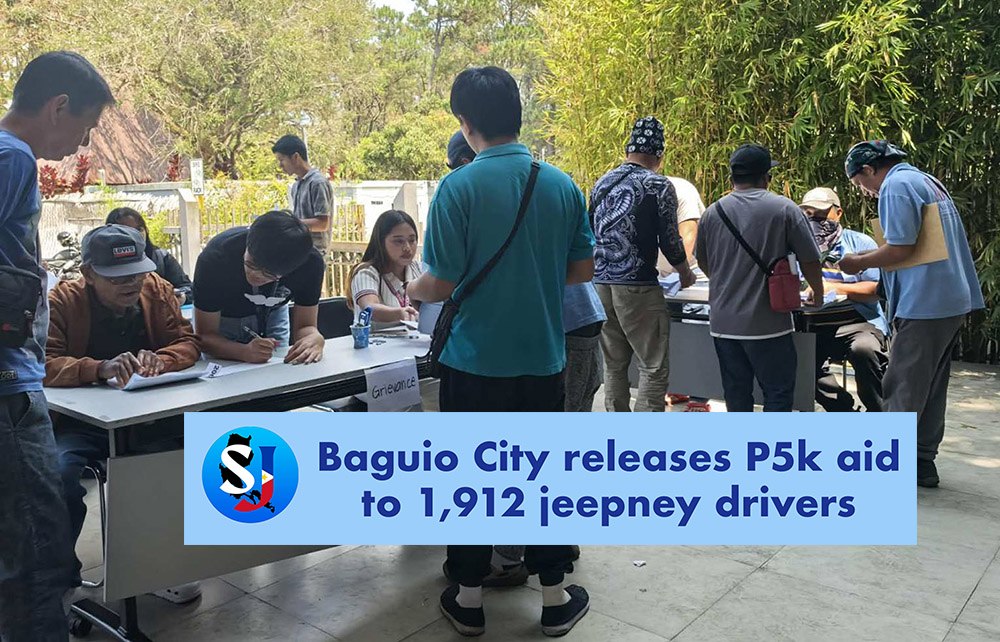
BAGUIO CITY, Philippines – A total of 1,912 public jeepney drivers operating 45 routes in the city received the first P5,000 fuel subsidy in a distribution held at the Baguio Convention Center, on March 25. The funds are from the city government to help with the severe impact of the ongoing war in the Middle East that has resulted in the rapid increase in oil prices worldwide. Mayor Benjamin Magalong said that in exchange for the financial assistance, he requested that jeepney drivers adjust their trip schedules every night so that they can safely transport passengers from the various jeepney terminals to their homes in the barangays. It was learned that many passengers are complaining because even before their scheduled time, there are no jeepneys available for boarding, resulting in long lines of people at most terminals every night. According to Magalong, they observed long lines of passengers that began after a series of excessive oil price increases over the past three weeks. “ Now that we have addressed the small aid, it should be addressed through the commitment of the various jeepney associations to strategize their scheduled trips at night to ensure the availability of public transportation for residents returning home to the various barangays. According to City Social Welfare and Development Officer Liza Bulayungan, the more than P9.8 million needed for the first batch of aid to jeepney drivers came from the available Assistance to Individuals in Crisis Situation (AICS) funds of the local government which will be distributed to all qualified beneficiaries until Saturday, March 28. She emphasized that recipients are only required to present a few documents to utilize the said aid, namely their driver’s license, certificate of residency from the barangay in the city where they live, and certification from the jeepney association where they operate aside from undergoing an interview from assigned social workers. Magalong also directed the concerned local government offices to continue to look for ways in which the city can provide appropriate assistance to the sectors that have been severely affected since there is no specific timeframe for when the ongoing war in the Middle East will end to pave the way for recovery and rehabilitation. He added that even if the war stops, it will still take about three to six months for the global economy to recover. “Therefore, any opportunities that can be used to reduce the effects of the crisis on people’s lives should be examined and utilized if possible.”

Jollibee Group Expands Senior Citizen and PWD Employment Initiative with Baguio City Partnership

Baguio City

The Jollibee Group is expanding its inclusive employment initiative for senior citizens and persons with disabilities (PWDs) through a new partnership with the Baguio City government, creating additional employment opportunities across its restaurant network while reinforcing its commitment to inclusive workplaces. The partnership was formalized through a Memorandum of Agreement (MOA) signed on March 5, 2026, with the Baguio City local government, led by Mayor Benjamin Magalong, enabling qualified senior citizens and persons with disabilities to work in participating Jollibee Group stores across the city. Under the initiative, employees serve as Customer Relations Staff, supporting store teams in roles such as order presentation, drink service, table management, and guest relations across 12 participating stores of Jollibee, Chowking, Greenwich, and Burger King. Expanding Opportunities through LGU Collaboration Since its launch in 2019, the Jollibee Group’s inclusive employment program has provided job opportunities to more than 1,000 senior citizens and persons with disabilities across the country. The milestone reflects the company’s expanding collaboration with local government units nationwide, including partnerships in Manila, Antipolo, Pasay, Pasig, Muntinlupa, Parañaque, Quezon City, Cagayan de Oro, Cabuyao, and Davao, as well as several municipalities in Rizal. The program was temporarily paused during the pandemic due to health and safety considerations, but resumed expansion in 2023. Since then, the initiative has continued to grow, with 451 senior citizens and persons with disabilities hired in 2025 alone. Growing impact nationwide: Since launching in 2019, the Jollibee Group’s inclusive employment initiative has provided job opportunities to more than 1,000 senior citizens and persons with disabilities across the Philippines, including 451 hires in 2025 alone, demonstrating how partnerships with local governments can expand access to dignified work while strengthening restaurant teams and communities. Supporting Joy for Tomorrow: People Pillar The program supports the Jollibee Group’s Joy for Tomorrow sustainability agenda, particularly its People Pillar, which focuses on strengthening communities and fostering inclusive and diverse workplaces. Joseph Tanbuntiong, CEO of Jollibee Group Philippines and Global Head of the Jollibee Brand, said the initiative reflects the company’s broader commitment to inclusive growth. “We believe that business growth is strongest and most meaningful when it is inclusive. By opening employment opportunities for senior citizens and persons with disabilities, we’re strengthening our store teams while helping more members of our communities remain active and engaged.” “When businesses work closely with local governments, we can create pathways for more people to participate in the workforce. In doing so, we help build more inclusive communities and contribute to the country’s broader economic and social progress.” Creating Inclusive Workplaces “At the Jollibee Group, inclusion means creating opportunities for people to work with dignity, independence, and purpose,” said Ruth Angeles, Chief Human Resources Officer of Jollibee Group Philippines and Head of Human Resources for Jollibee Brand International. “Through our partnerships with local governments, senior citizens and persons with disabilities are able to contribute meaningfully in our stores, bringing their experience, dedication, and warmth to the teams that serve our customers.” Angeles added that the initiative reflects the company’s commitment to building workplaces where everyone has the chance to contribute. “We believe that people who have the capacity and desire to work should have the opportunity to do so. By opening our doors to seniors and persons with disabilities, we strengthen our store teams while helping members of the community remain active and valued.” Restoring Dignity, Building Impact More than 1,000 senior citizens and persons with disabilities hired under the initiative stand as proof of the Jollibee Group’s commitment to promoting inclusivity and diversity in the workplace. By extending employment opportunities across multiple regions and continuing expansion into new cities such as Baguio, the Jollibee Group demonstrates how inclusive employment can create meaningful social impact—strengthening communities while building more diverse and inclusive workplaces. Recognition of partnership: Baguio City Mayor Benjamin Magalong (right) presents the Key to the City of Baguio to Ruth B. Angeles, Chief Human Resources Officer of Jollibee Group Philippines and Head of Human Resources for Jollibee International (left), recognizing the Jollibee Group’s partnership with the city in advancing employment opportunities for senior citizens and persons with disabilities.

Magalong wants honest-to-goodness implementation of TUPAD in Baguio

Baguio City

BAGUIO CITY, Philippines — Mayor Benjamin Magalong wants the implementation of the Tulong Panghanapbuhay sa Ating Disadvantaged/Displaced Workers (TUPAD) program of the Dept. of Labor and Employment (DOLE) in the city to be meaningful and honest to ensure that it truly serves struggling residents. “We want its implementation to be different in Baguio, to truly benefit those who are in need and not to serve as a political vehicle or capital. The program must be carried out with integrity, transparency, and genuine concern for beneficiaries,” the mayor said at the Management Committee meeting recently. The program provides short-term emergency employment to displaced and disadvantaged workers and the city through the Public Employment Service Office (PESO) is preparing for its reimplementation this year. Magalong directed PESO Manager Michelle Agbuya to make sure that the program benefits are optimized and implemented in an honest and meaningful manner starting from the selection of the beneficiaries down to the discharge of their tasks. Beneficiaries must undergo careful validation to ensure that those who are truly in need such as displaced workers, underemployed individuals, and families facing economic hardship are prioritized. He underscored that the program should never be used for political gain or favoritism. The mayor called for strict coordination among the city government through the PESO, Liga ng mga Barangay, schools, and DOLE to prevent duplication of names, ghost beneficiaries or irregularities in payouts. He also ordered PESO to strengthen monitoring to ensure that the work required under TUPAD is actually rendered and beneficial to the community. A meaningful implementation would also mean assigning TUPAD workers to projects that create visible and lasting impact, such as environmental clean-ups, drainage declogging, urban gardening, and support for city beautification efforts. “It’s not just about giving temporary work. It’s about restoring dignity and giving our people a sense of purpose while improving our communities,” he said. Agbuya said the city had a total of 653 TUPAD beneficiaries from 77 barangays last year. (By Aileen P. Refuerzo)    

Baguio records 1,000 animal bites in two months of the year

Baguio City

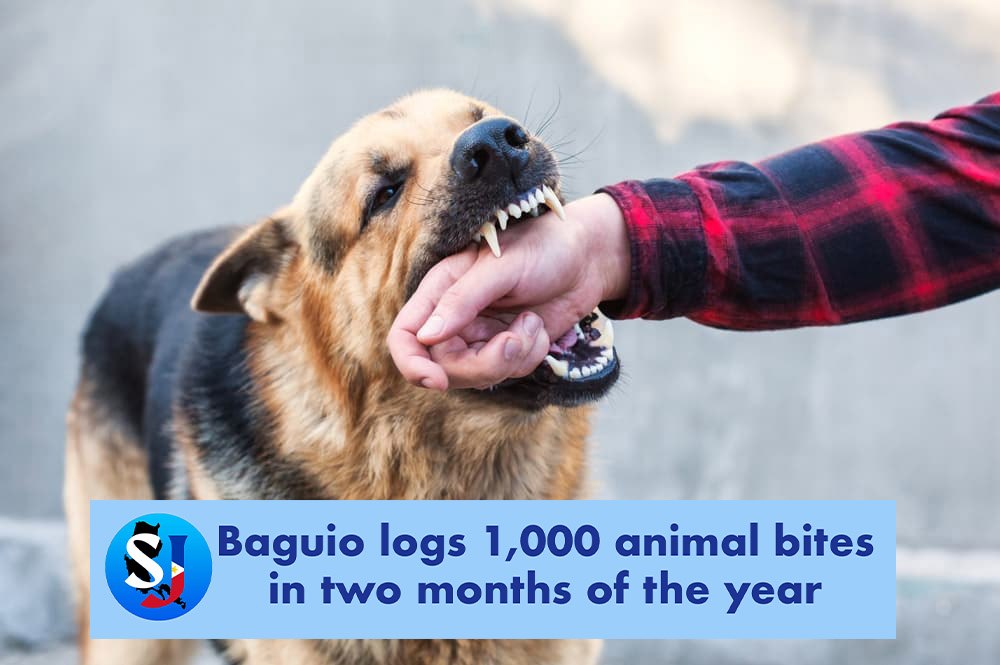
BAGUIO CITY, Philippines – The city’s Animal Bite Treatment Center (ABTC) under the City Health Services Office (CHSO) reported having treated some one thousand animal bites in the city during the first two months of the year. Nurse Agnes Johanna Abad, ABTC manager, said that the significant number of individuals who sought treatment for their animal bites is a clear indication of the public’s awareness on the availability of treatment services right in the city’s health facility. In 2024, the ABTC recorded some 8,156 animal bites treatments they did in the center before dropping to only 7,099 bites last year. However, she claimed there had been no human rabies cases reported through the years except for the one animal rabies case in the city way back in 2021. The ABTC manager advised individuals who are bitten by their pets or stray dogs and cats to immediately seek the necessary treatment from the center for them to ascertain what type of bite did they sustain and the treatment that will be provided to avoid their situation from worsening. According to her, there are three categories of bites from animals – category one involves contact with an animal without breaking the skin and usually does not require vaccination; category two includes minor open wounds without heavy bleeding and requires a primary anti-rabies vaccine while category three is considered the most severe as it involves bites on sensitive areas such as the head, face, or neck, heavy bleeding or cases where the biting animal cannot be observed. She pointed out that the third category requires both anti-rabies vaccination and rabies immunoglobulin administered on the wound after skin testing. Abad reported that most of the reported bite cases are owners of dogs or cats who are either bitten or scratched by their pets and that there are a few number of individuals who are bitten by stray animals primarily because stray animals are usually afraid of humans. She said that the city has three existing animal bite centers situated at the CHSO, the Baguio General Hospital and Medical Center (BGHMC) and the Saint Louis University Sacred Heart Hospital to cater to the treatment of the animal bites inflicted on individuals. (Baguio PIO)  

BENECO updates Baguio City on New Lifeline Rate Subsidy Program

Baguio City

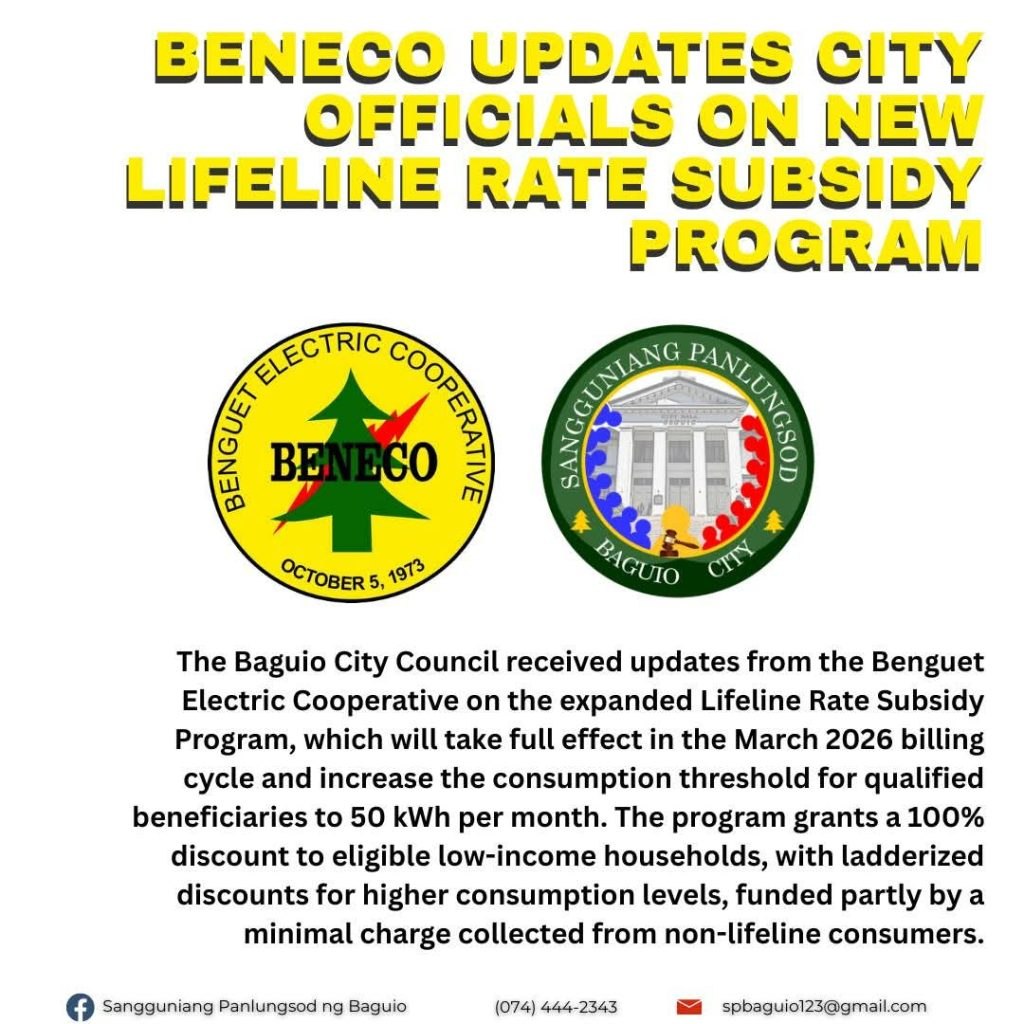
The Baguio City Council has sought updates on the implementation of the Lifeline Rate Subsidy Program, a key initiative designed to assist marginalized electricity consumers. During the City Council’s regular session on March 9, 2026, representatives from the Benguet Electric Cooperative (BENECO) were invited to shed light on the program. BENECO General Manager Melchor Licoben, General Manager of BENECO, and Engr. Ramel Rifani briefed the City Council members on the updates and adjustments being made under the amended Lifeline Rate Law and amendment to the Electric Power Industry Reform Act (EPIRA) of 2001, formally known as Republic Act No. 9136. The new ERC resolution, which amends certain provisions of Republic Act No. 11552 enacted in 2021, was approved in February 2024 and is set for full implementation starting with the March 2026 billing period. The resolution raises the consumption threshold for qualified lifeline consumers from 45 kilowatt-hours (kWh) to 50 kWh per month. Under the new schedule, households consuming up to 50 kWh per month and registered under the Pantawid Pamilyang Pilipino Program (4Ps) will automatically receive a 100% discount on their electric bills. Non-4Ps consumers using 50 kWh or below may also avail of the subsidy, provided they secure a certification from the City Social Welfare and Development Office (CSWDO) confirming their status as indigent or marginalized households. Discount rates will follow a ladderized system based on consumption: 51-70 kWh: 35% discount 71-100 kWh: 20% discount As of the latest records, BENECO has 354 registered lifeline beneficiaries under the existing program. During the discussion, Councilor Betty Lourdes Tabanda inquired whether non-lifeline consumers are subsidizing the discounts for lifeliners. Licoben confirmed that a minimal charge equivalent to one centavo per kilowatt-hour is collected from non-lifeline consumers to sustain the fund. Any surplus or deficit in the collection will be adjusted through the fund’s administrator, ensuring the program’s stability. Licoben also noted that while lifeline consumers will benefit from the discounts, overall electricity bills are expected to slightly increase due to rising oil prices. He added that standard senior citizen discounts of 5% for consumption up to 100 kWh per month remain in effect. The Lifeline Rate Program, originally established under EPIRA, has been repeatedly extended, first for ten years in 2011, and again in 2021 for a new 50-year period ending in 2071. -Danella Corin David (SP PIO Intern/UB Polsci)

Scroll to Top