
Street Journal Multimedia Services

Author name: Street Journal

BIBATAWA keeps tribal heritage alive in Davao

Vis-Min

DAVAO CITY, Philippines -‘ Inside a small tribal hub in Barangay Binugao, Toril District, sewing and handloom machines hum steadily as the women of the Binugao Bagobo-Tagabawa Women’s Association (BIBATAWA) work side by side. Scattered across their tables are colorful fabrics, beads, and threads. For them, these are not just materials, but expressions of identity, heritage, and a culture that continues to endure. For Mervin To-Ong, the creative director of BIBATAWA, every finished garment reflects the pride and resilience of his people. He carries a deep sense of responsibility, not only to preserve tradition, but to ensure it continues to grow in a changing world. “Gusto namo nga tangkilikon sa kadaghanan ang originally-made products nga gihagoan gayud pag-ayo sa tribu,” Mervin shared. (We want people to appreciate our products, which are made with a lot of effort and care by our tribe.) Their handwoven textiles, rooted in the rich history of the Bagobo-Tagabawa tribe, have begun to reach wider audiences. But their journey has not been easy. In the early days, sustaining their craft meant overcoming financial challenges, often relying on Mervin’s own savings to keep production going. “Pamilyado naman halos manghahabi namo, naa silay ginasuportahan. ” Mervin explained. (Most of our weavers already have families to support). “Dili lang sila basta nagatahi or weave, mga ginikanan sila, mga breadwinner nga naay responsibilidad nga ginakarga.” (They are parents, breadwinners, and providers who carry the weight of their families’ daily needs). A turning point came through collaboration with the Department of Science and Technology–Philippine Textile Research Institute (DOST-PTRI), which introduced technology transfers and alternative dyeing methods under the Grassroots Innovation for Inclusive Development (GRIND) program. With this, BIBATAWA began exploring new techniques while staying rooted in their traditions. By 2023, handloom machines were introduced, enabling the weaving of tropical fabrics such as cotton, pineapple, and abaca into more diverse and contemporary designs. Yet even with these innovations, the community remained intentional in preserving the essence of their identity. “Although these handloom machines are an innovation, we make sure our traditional designs are still present in the fabrics we weave,” Mervin explained. “We collaborated with our IP leaders on how to do it properly.” Support also came through skills training from the Technical Education and Skills Development Authority (TESDA), strengthening the capabilities of the weavers. Alongside this, their neighbor in Barangay Binugao, AboitizPower’s Therma South, Inc. (TSI), donated P230,000 and continues to work with the community as a partner in both development and cultural preservation. As a baseload power provider in Mindanao, TSI helps provide the island’s electricity needs that power homes and local enterprises. This role connects directly to how communities like Binugao grow, where access to power supports livelihoods such as weaving, sewing, and other small industries that sustain families. Beyond energy, TSI has supported BIBATAWA by providing tools and materials that allow the community to strengthen and expand their craft. In November 2023, the company provided sewing machines, fabrics, beads, and other tools, followed by the inauguration and turnover of a Handloom Weaving Innovation Center in September 2025. “We wanted to promote the textiles woven here in Davao City, and with this support, we can make it happen,” Mervin emphasized. “Therma South is proud to support the Indigenous Peoples of Barangay Binugao just like BIBATAWA. By helping them grow their livelihood, we believe we are contributing to Davao’s overall progress,” said AboitizPower Transition Business Group AVP for Corporate Services Atty. Alona Suzell Ruyeras-Borromeo. Through their work, BIBATAWA has helped elevate the recognition of Davao’s handwoven textiles. Their efforts contributed to a city resolution officially designating their weaving hub as the first of its kind in the Philippines, a milestone shaped by both tradition and collective support. “This is a huge milestone for us. It’s a proud moment for our community,” Mervin said. “Our traditional textile is now on the map, and we are proud to promote ‘Matanab’, a Bagobo-Tagabawa dialect that means Karangal-rangal.” Recognition followed, including awards from the first Philippine Handloom Weaving Festival in Ilocos Norte and honors at Pasidungog: Garbo sa Dabaw 2026. Yet for the community, these are not endpoints, but markers of a continuing journey. “Each piece we create brings us closer to a brighter future for the Binugao Bagobo-Tagabawa community,” Mervin said. In every thread they weave, the past and the future come together, shaped by culture, strengthened by community, and supported by partnerships that help carry both forward.      

Storage facility with solar dryer itatayo sa La Union

Region 1

BACNOTAN, La Union — Sinigurado ng Provincial Government of La Union (PGLU) ang nalalapit na konstruksyon ng Provincial Storage Facility with Solar Dryer sa Bacnotan, La Union. Ayon kay Gov.Mario Ortega ang proyekto ay itinuturing na pangmatagalan at modernong solusyon sa La Union para sa post-harvest losses ng mga magsasaka. Pinatunayan din ni Governor Ortega na buo ang kanyang suporta sa proyektong ito na magpapaunlad pa ang kabuhayan ng bawat Elyucano sa sektor ng agrikultura. Ang Storage Facility with Solar Dryer ang nakikitang solusyon ng probinsya para matugunan ang epekto ng post-harvest losses sa mga magsasaka dahil sa kakulangan ng tamang imbakan. Ang kanilang mga ani ay tinatabi lang sa bahay gamit ang trapal o sako na siyang dahilan ng mabilis na pagkasira ng aning produkto. Ang maitatayong warehouse na may 350 square meter floor area at 572.37 square meter multi-purpose drying pavement ang nakikitang solusyon na makatutulong para maiwasan ang pagkalugi at mabawasan ang pagbilad ng mga ani sa kalsada na nakaaapekto sa kalidad ng produkto. Tinatayang nasa 22 Farmers Associations, Cooperatives, at Irrigators Associations mula Balaoan, Bacnotan, at Luna ang makikinabang dito pero tiniyak naman ng pamahalaan na bukas ang proyektong ito sa publiko kapag operational na. Sinabi ni Ortega na magiging maayos at mabusisi ang implementasyon ng nasabing proyekto sa pamamagitan ng isang Pre-Construction Conference na ginanap noong June 9-11, 2026 sa Bacnotan Public Market Function Hall. Layunin ng tatlong araw na conference na talakayin ang estratehiya at kabuuang plano ng Storage Facility na itatayo sa Brgy. Bungol, Balaoan, La Union. Dito binigyang-linaw ang mga kondisyon ng kontrata, documentary requirements, timeline, at schedule para maiwasan ang posibleng aberya sa konstruksyon. Buong suporta rin ang ipinadama ni Bacnotan Mayor Divina C. Fontanilla sa kanyang mensahe para sa mga komunidad na makikinabang sa pasilidad. Nagbigay ng overview ang mga personnel ng Department of Agriculture (DA) tungkol sa Philippine Rural Development Project – Scale Up (PRDP-SU) kung saan nakapaloob ang proyektong ito na pinondohan ng The World Bank. Tinalakay din ang tungkulin ng Contractor, Program of Work, Site Management, Social and Environmental Safeguards, funds flow, billing schedule, at paggamit ng Geo-Tagging Technology at Geomapping para sa monitoring. Iprinesenta ng contractor ang kanilang construction team, schedule, manpower at equipment plan, construction methodology, at safety plan. Kaakibat din sa proyektong ito ang supervision team na mula sa Provincial Engineering Office, Office of the Provincial Agriculturist, at Office of the Provincial Planning and Development Coordinator. Bahagi ng conference ang isinagawang site visit upang makita at suriin ang kondisyon ng lokasyon ng ipapatayong istruktura na pag-aari ng PGLU. Personal na sinukat ang lawak ng lugar para tiyakan ang saktong sukat ng warehouse. Pinag-aralan ding mabuti ang site plan para matukoy ang mga dapat i-consider bago, habang, at pagkatapos ng konstruksyon. Binigyang-diin din ng supervising team at DA personnel ang safety protocols sa lugar, maging ang mga environmental safeguards na dapat sundin habang ginagawa ang storage facility lalo’t mahigpit ang ipinapatupad na guidelines sa mga proyektong nasa ilalim ng PRDP-SU. Isang makabagong hakbang muli ang pinatunayan ng PGLU para bigyang halaga ang kontribusyon ng mga magsasaka sa pagpapaunlad ng ekonomiya ng probinsya.

Water finds its second life through SM Green Movement’s conservation program

Environment

  MANILA, Philippines — In 2025, SM recycled 6.6 million cubic meters, or roughly 6.6 billion liters of water – an amount that is equivalent to nearly a thousand times the water consumption of Metro Manila daily. According to the United Nations, nearly half the global population faces severe water scarcity for at least one month every year. For SM, its year-round advocacy takes on greater urgency amid rising water scarcity concerns and a prolonged El Niño. As climate pressures and escalating water demand intensify strain on water resources, SM Supermalls steadfastly prioritizes water conservation and the circular use of this essential resource. An advocacy that started 30 years ago SM Supermalls’ initiatives began in the 1990s with the installation of a Sewage Treatment Plant (STP) at SM Southmall, aimed at conserving water and protecting the environment of nearby communities. Since then, the mall operator has expanded its water conservation efforts, with 90 malls now equipped with facilities that recycle wastewater annually. The mall operator has also embraced innovation to help reduce flooding and enhance water recovery efforts. SM City Baguio’s Rainwater Treatment Facility, for example, collects and treats rainwater for operational use by its tenants and kitchen facilities. From its first day of operations in November 2022 to December 2025, the facility has processed 53,740 cubic meters of rainwater, equivalent to serving an estimated 63,706 households. “Since the 1990s, SM has always prioritized the welfare of nearby communities and the environment. Water is a very precious resource, and we are committed to ensuring its sustainable use for the benefit of present and future generations,” said Liza B. Silerio, SM Supermalls Vice President for Corporate Compliance and Sustainability. SM Supermalls’ integrated networks recycle waste and rainwater for non-potable applications such as cleaning, irrigation, and watering its greeneries across its properties. Not only do the systems reduce demand for fresh water, but they also drive more sustainable and resilient operations, especially during seasonal shortages. The institution has accelerated its water conservation initiatives in its two new malls in 2025. SM City La Union has a 760-cubic-meter rainwater catchment system and a 543-square-meter sewage treatment plant, enabling efficient water use and enhanced wastewater management. Meanwhile, SM City Laoag has a self-sustaining water network that converts deep well water into a potable supply. SM Supermalls’ longstanding green initiatives have garnered multiple industry distinctions, including the Bantayog ng Lawa Para sa Kalikasan from the Laguna Lake Development Authority (LLDA) awarded to SM Mall of Asia and the first ever Gawad Taga-Ilog Award bestowed upon a private entity by the Department of Environment and Natural Resources (DENR) to SM Prime for supporting water stewardship. “As SM Supermalls moves forward, it will continue to pioneer environmental systems and practices across our malls. We will continue working towards a resilient, sustainable, and eco-friendly future,” said Silerio.  

CIAC, Boeing Supplier ink 25-year lease to boost Clark Aviation Capital

Region 3

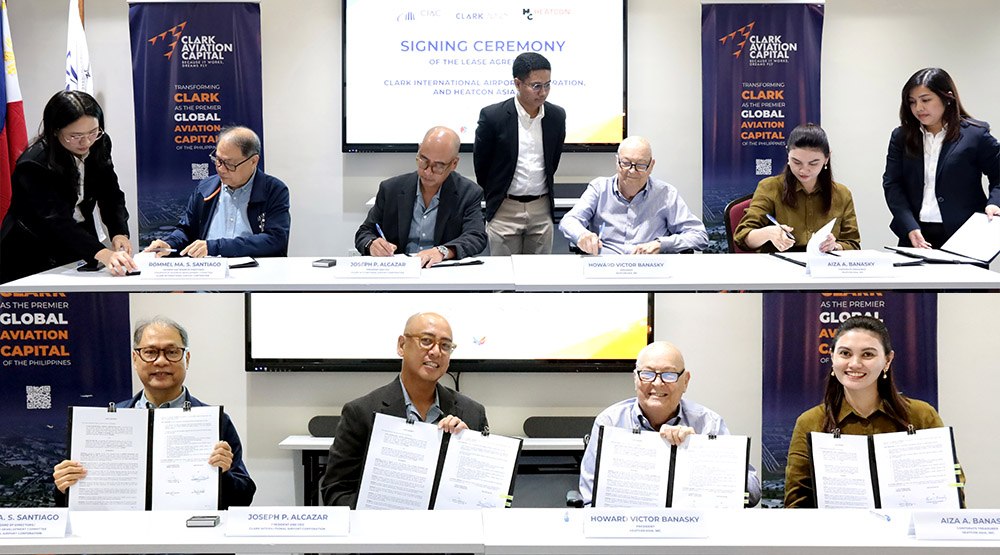
CLARK FREEPORT ZONE, Philippines — Moving swiftly to realize its vision of becoming the country’s premier aviation hub, the Clark International Airport Corporation (CIAC) has officially signed a 25-year lease agreement with Heatcon Asia, Inc., a leading global provider of composite repair solutions and a key supplier to aerospace giant Boeing. The agreement formalizes the establishment of Heatcon’s manufacturing, material distribution, and in-shop composite repair facility within the Clark Civil Aviation Complex. The contract was signed by CIAC President and Chief Executive Officer Jojit Alcazar and Heatcon Asia, Inc. President Howard Victor Banasky, in a ceremony witnessed by key officials from both organizations. Alcazar emphasized that the partnership is a major win for the country’s aerospace sector, directly aligning with the mandates of the Bases Conversion and Development Authority (BCDA) to drive high-value industrial growth. “This investment represents a significant milestone in Clark’s continued emergence as a leading aviation and aerospace hub,” Alcazar said. “Heatcon’s facilities support major aviation players in the region, including Boeing, and are expected to further strengthen Clark’s position as an attractive destination for aircraft Maintenance, Repair, and Overhaul (MRO) services,” he added. Alcazar also noted that by establishing its presence here, Heatcon is directly contributing to CIAC’s vision of transforming the region into a premier aerospace center in Southeast Asia. He added that as global aircraft fleets expand and require strict safety and efficiency standards, Clark is positioning itself to capture the rising demand for world-class MRO services. “Today’s signing formalizes a partnership rooted in innovation and global excellence. It highlights Clark’s readiness to support the growing demands of the global aerospace industry while advancing our vision of developing Clark Aviation Capital,” Alcazar noted. Established in 1978, Heatcon is a globally recognized manufacturer that supplies hot bonders, heat blankets, and process materials to both commercial and military aviation sectors. According to Heatcon management, the new Clark facility will serve as a strategic hub to support its rapidly growing customer base across the Asia-Pacific region, marking a pivotal step in the company’s global expansion. Expressing his gratitude for the collaboration, Alcazar stated: “We thank Heatcon for its trust and investment in CIAC. Their growth is our growth, and we are committed to supporting the long-term success of their operations here. We hope this partnership serves as the launchpad for decades of shared success, innovation, and growth.” Under the Marcos administration, CIAC is aggressively executing its thrust to transform the Clark Civil Aviation Complex into the Clark Aviation Capital, a dynamic, aviation-driven business, manufacturing, and logistics hub. As the premier land and aviation development arm of the BCDA, CIAC is mandated to prime the Clark Aviation Capital for global enterprises specializing in industrial, commercial, warehousing, and high-tech manufacturing operations, solidifying the Philippines’ footprint in the global logistics chain.        

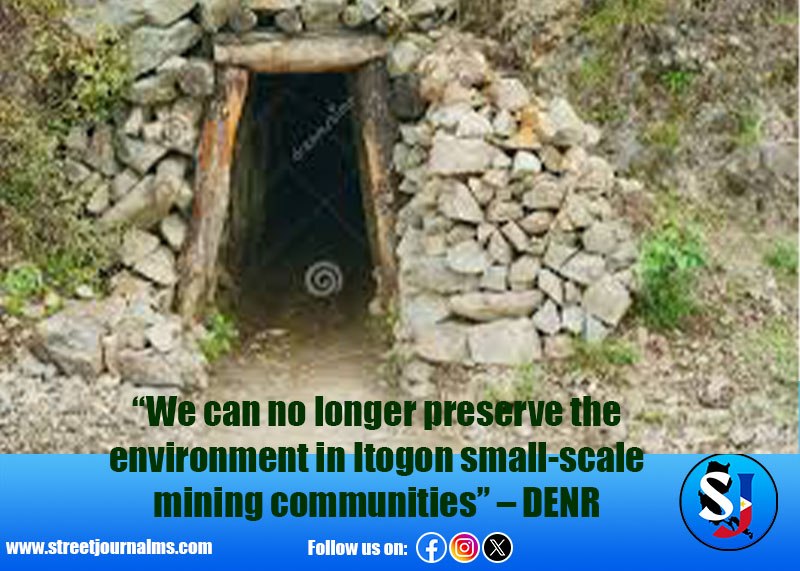
“We can no longer preserve the environment in Itogon small-scale mining communities” – DENR

CAR

ITOGON, Benguet, Philippines — “We can no longer preserve the environment in small-scale mining communities in Itogon.” This was the message of Marie Claire S. Luminang, Information Officer II of the Environmental Management Bureau of the Department of Environment and Natural Resources – Cordillera Administrative Region (EMB-DENR-CAR), during the Miners’ Forum held on June 10, 2026, at the Itogon Municipal Gymnasium in Poblacion. Speaking on the topic “Beyond Preservation: Protecting and Sustaining Environments in Small-Scale Mining Communities,” Luminang delivered her address as part of the municipality’s Environment Month celebration. Luminang explained that the concept of environmental preservation is no longer applicable in Itogon’s small-scale mining communities because preservation refers to protecting natural environments that remain largely untouched by human activity. “But we can protect and adapt,” she emphasized. She noted that while mining continues to provide livelihoods for many families, gold resources are finite and will eventually be depleted. She stressed the need for behavioral change—not only among miners but among all sectors of the community. Luminang also challenged participants to examine whether some existing environmental initiatives are truly addressing the root causes of environmental degradation or merely serving as temporary, band-aid solutions. “Are we really doing something about it?” she asked. According to Luminang, environmental problems do not always require complicated solutions. The first step toward meaningful action is acknowledging the problem and taking responsibility for everyday practices that contribute to environmental protection. These include proper waste segregation at source and, where feasible, transitioning to mercury-free gold processing methods. She explained that environmental protection involves reducing and preventing environmental damage such as pollution and soil erosion, safeguarding communities from hazards, promoting responsible use of natural resources, minimizing environmental impacts, and undertaking rehabilitation and restoration efforts. Environmental adaptation, meanwhile, focuses on modifying existing practices to respond to the realities of mining environments. Examples include progressive rehabilitation of mined-out areas while operations are ongoing, establishing buffer zones near rivers and residential areas, and restricting mining activities on steep slopes and in protected areas. She also highlighted measures to protect water resources, including the construction of sediment traps or settling ponds, preventing the discharge of untreated waste into rivers, and promoting water reuse. Recognizing that small-scale mining remains a primary source of income for many residents, Luminang said it is disheartening to see miners receive all the blame whenever disasters strike mining communities. “The goal is not to eliminate livelihoods,” she said, “but to align them with environmental responsibility and long-term sustainability.” She further urged communities to begin preparing for a future beyond mining. “What happens after we have mined it all out?” she asked. Luminang emphasized the importance of developing alternative skills and livelihood opportunities to ensure that future generations will continue to have sustainable sources of income even after mining resources have been exhausted.          

Lady Atoms, Cardinals defend crowns, dominate BBEAL individual volleyball awards

Sports

BAGUIO CITY, Philippines — Baguio College of Technology went for its fourth straight title which is more than a possibility after two weeks of intensive training in the hope to become a new dynasty in the Baguio Benguet Educational Athletic League. Game time was 10AM at the University of Baguio gym yesterday against the erstwhile University of the Cordilleras Lady Jaguars in what many believe as another walk in the park for the Lady Atoms which, for the second straight year, is perfect with no game lost and no set given. They go for the jugular and a perfect 27 to improve on the 27-1 last year when they gave one to UB in the finals. This as their male counterpart hope to end UB’s two year reign as they go to the finals for the very first time. Moreover, BCT and UB dominate the special awards after the finals games. The troika of Hazel Macapinlac. Shery Estal and Abigail Cunanan led the women’s side as they received the first outside hitter, first middle blocker and setter, in that order, after leading their team to the finals by sweeping the eliminations. Macapinlac was expected to receive the most valuable player award as the league’s top attacker. They were joined by new find Erin Almario in the list as the rookie of the year that saw BCT receive five of the nine awards, excluding the finals MVP, which is also expected to be netted by any of the trio. Joining them were University of the Cordillera’s Kimberlie Calimquim and Rovecielo Junio as best server. The two led the team to the finals after needing two games to beat second seed UB. UB sent three players to the awards with Shariville Ayawan as second outside hitter, Rayanaiza Arances as second middle blocker and Jhea Ybanez, who got the best libero award. UB, meanwhile, has Toeffer De Guzman (best 1st outside hitter), Armin Caisip as second middle blocker, opposite Carl Kevin Osquiza and setter Adrienne Jomar Mostaza in the men’s side. Middle Carlo Laforteza was named the rookie of the year. Mostaza was also the season MVP. Joining them is BCT’s JM Dequino as first middle blocker. The Jaguars sent two of their players to the awards with Molson Janry Galsote (second outside hitter and libero Jeffrey Alvarado. The awards, histed by Heroes with support from councilor Leandro Yangot, Jr., followed the games, with the women taking place after the women’s finals at 10AM at the UB gym, while the men’s side came after the UB-BCT game at 1PM. The Lady Atoms seek their fourth straight title and 11th crown for coach Jun Nisperos. BCT is also the first team to complete a sweep with no set given. The Cardinals seek their third straight title with new coach Melvin Sagyaman, who won the title as a player in 2005. The Atoms, on the other hand, are into the finals for the first time and the first for coach Benigno Aquino. EML            

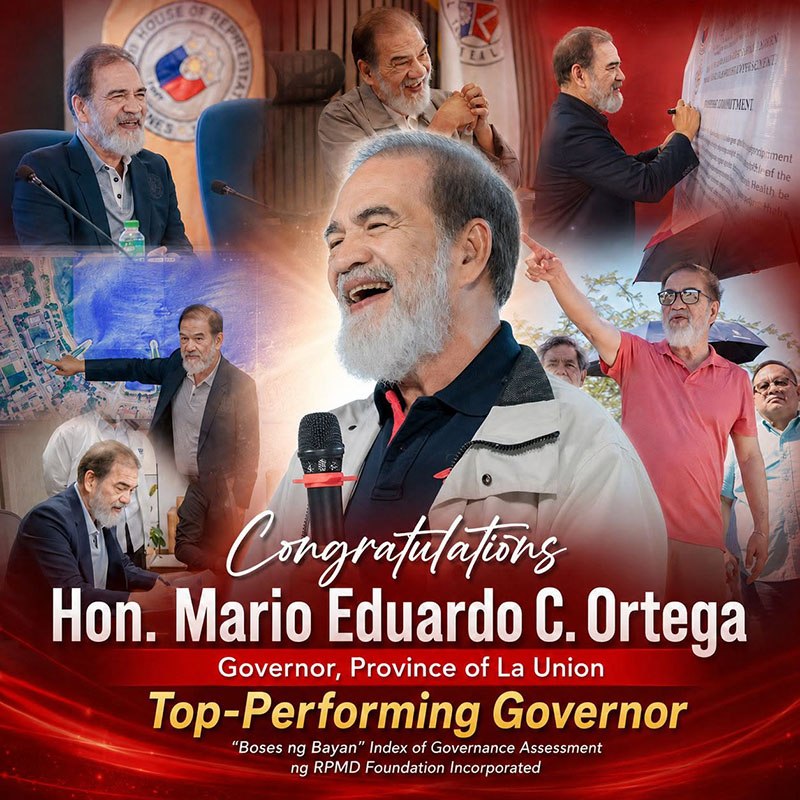
Gov. Ortega recognized as Top Performing Governor in Governance Assessment

Region 1

La Union Governor Mario Eduardo C. Ortega has been recognized as the Top Performing Governor in the “Boses ng Bayan” Index of Governance Assessment conducted by RPMD Foundation Incorporated. The distinction highlights his administration’s commitment to effective governance, responsive leadership, and dedicated public service for the people of La Union. This achievement serves as a testament to the province’s continued efforts in promoting transparency, accountability, and people-centered governance.    

16,000 poorest families in Puerto Princesa benefit from PBBM’s Bagong Pilipinas Rice Program

Region 4

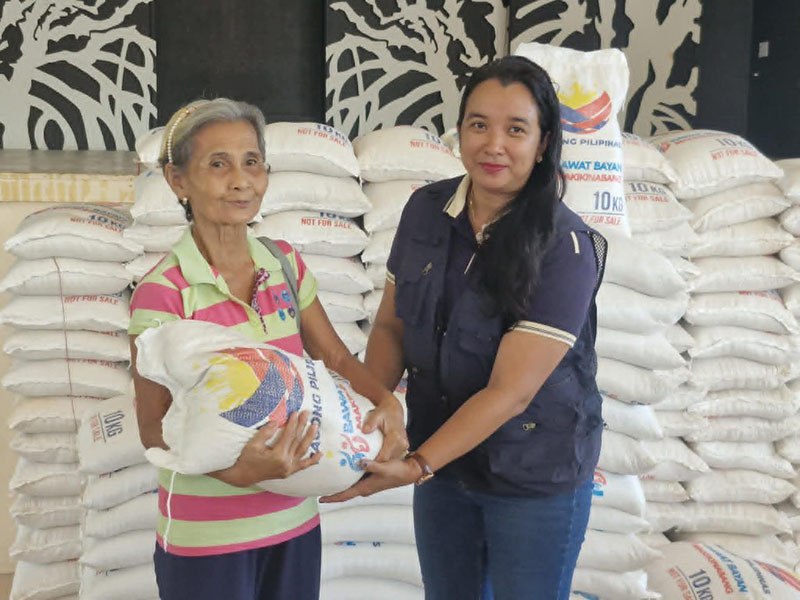
By Orlan Jabagat   PUERTO PRINCESA CITY, Philippines  (PIA) — The Puerto Princesa City government started distributing 10 kilos of rice on June 11 to 16,000 poorest of the poor families in the city under the Bagong Pilipinas Rice Program of President Ferdinand R. Marcos Jr. The distribution was simultaneously conducted in 60 barangays. The Bagong Pilipinas Rice Program is financed through the Local Government Support Fund (LGSF), of which the city of Puerto Princesa received P48 million. According to City Social Welfare and Development (CSWD) Officer Remy Beltran, 60 out of 66 barangays in the city will benefit from the program, while six barangays declined it. Its beneficiaries are the poor and disadvantaged sectors such as poor farmers, poor fishermen, the transport sector, persons with disability (PWDs),  senior citizens, solo parents, and Indigenous Peoples (IPs). Beltran said the computation of beneficiaries was based on the actual total population of the city, which is 300,000 plus, and the 16,000 families turn out to be only five percent of the city’s population. “Kasi what is 16,000, kasi ilan ang population ng Puerto Princesa, nasa 300,000 plus. Sixteen thousand families lang ang beneficiaries natin, paano mo s’ya idi-distribute? So, I have to think of a way na equally distributed siya at lahat ng 66 barangays ay makakasali, but upon getting the right number based on the actual population para mag-esakto sa 16,000, lumalabas na five percent lang s’ya ng total actual ng population ng bawat barangay, kaya may mga barangay na kakaunti o maliit lang ang bilang ng mga beneficiaries,” Beltran explained. She also assured that all beneficiaries underwent validation by the CSWD Office and were certified and confirmed by the Barangay Chief and barangay council members. Beltran also said that those beneficiaries who were given rice at the beginning of the distribution will still be the same beneficiaries that will be receiving 10 kilos of rice within six months. Meanwhile, the barangays that declined the said program are the barangays of Bacungan, Pagkakaisa, Bagong Silang, Princesa, San Isidro, and Maligaya because their allocation is small based on population percentage. “Dahil maliit lang ang allocation nila batay sa population. Siyempre, kung maliit ‘yong population mo, maliit din ‘yong number of beneficiaries na mapupunta sa iyo na fiver percent. So ‘yon ang ginawa nilang dahilan, nag-refuse sila kasi marami daw magagalit na kabarangay nila. Pero ‘di ba dapat nga matuwa sila kasi biyaya ‘yan?” she said. “Kasi sa amin, binalik-balikan namin sila. Two, three, four, times, five times at ipinaliwanag na meron namang deserving qualified na constituents n’yo bakit hindi n’yo i-recommend, but they still refused. Isa sa kanila nag-waive, may documents kami na nag-waive sila. Tapos ‘yong iba naman na lima, ay ayaw nang makipag-usap sa amin,” Beltran added. Before the distribution, the CSWDO coordinated with the Punong Barangay on the actual date of distribution. They also requested the barangay officials to inform their constituents and bring valid ID for identification purposes to ensure that the rice entrusted by the national government to local government was received by the right beneficiaries. She added that this government’s rice subsidy program is a great help for deserving beneficiaries. “Malaking tulong siya sa mga… lalong-lalo na talaga sa mga mahihirap na talagang deserved nila na makakuha din ng tulong from the national government. We are happy to say na ‘yong talagang napili naming beneficiaries ay they really deserved to have it for the six months,” Beltran said. (OCJ/JBG/PIA MIMAROPA-Palawan)

Cebu Pacific expands internship opportunities for deaf students

NCR

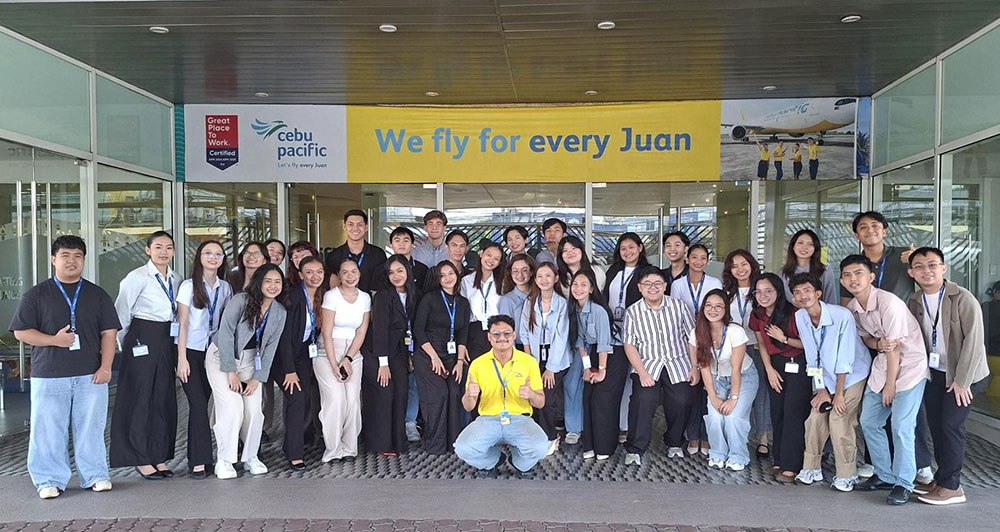
Cebu Pacific (PSE: CEB), the Philippines’ leading carrier, has partnered with De La Salle–College of Saint Benilde (DLS-CSB) to provide internship opportunities for Deaf students, reinforcing its commitment to building an inclusive workplace. Under a Memorandum of Agreement (MOA) with the college’s School of Deaf Education and Applied Studies (SDEAS), the pioneering institution in Deaf education in the Philippines, CEB will offer internship placements that provide Deaf students with hands-on experience and practical exposure to a professional work environment. The partnership’s pilot run began on June 8 with the placement of three SDEAS student interns under CEB’s FLY Internship Program. The program provides college undergraduates with hands-on learning opportunities across the airline’s operations. “We’re excited to welcome our students from DLS-CSB to Cebu Pacific and learn alongside them. Internships are often a person’s first step into the workforce, and we want that experience to be meaningful, supportive, and empowering. We hope this partnership helps open more doors for Deaf professionals and encourages more organizations to recognize the value that diverse talent brings to the workplace,” said Felix Lopez, CEB Chief Human Resources Officer. The SDEAS interns have been assigned to CEB’s Customer Service Operations – Cabin Operations team, where they will support day-to-day functions while gaining insights into the aviation industry. They will complete 360 hours of on-the-job training until August 14, 2026. Prior to the start of the internship, CEB employees participated in a Deaf Awareness Session facilitated by SDEAS. The session introduced participants to Deaf culture, inclusive communication practices, and ways to foster greater accessibility in the workplace. The initiative forms part of CEB’s diversity, equity, and inclusion (DEI) efforts and reflects its commitment to creating meaningful opportunities for Deaf professionals and other persons with disabilities. Through partnerships such as this, CEB continues to foster a workplace where diverse talent can thrive and contribute to the organization’s long-term success.      

Scroll to Top