Street Journal Multimedia Services

Author name: Street Journal

Five KALAHI-CIDSS Subprojects Wrapped Up Early in Abra

CAR

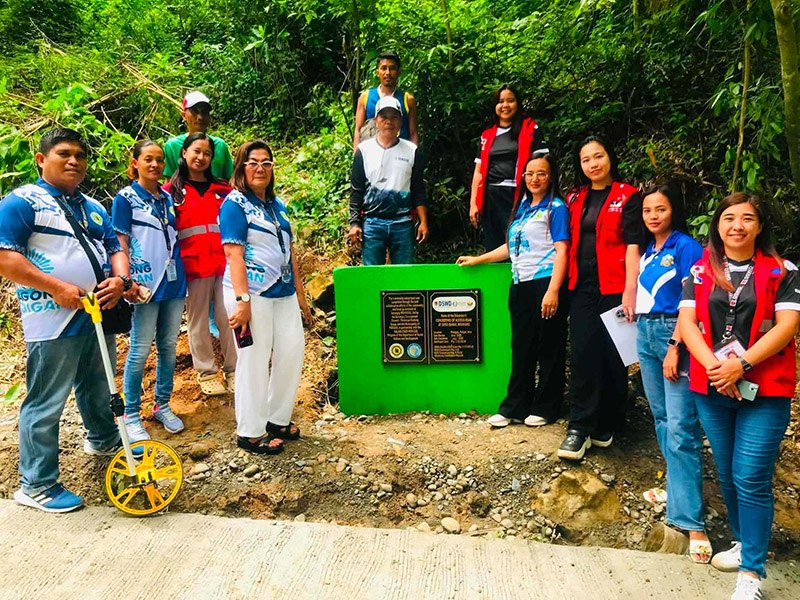
PIDIGAN, Abra, Philippines – Five community-prioritized infrastructure subprojects under the Department of Social Welfare and Development Field Office Cordillera Administrative Region’s (DSWD FO CAR) Kapit-Bisig Laban sa Kahirapan–Comprehensive and Integrated Delivery of Social Services (KALAHI-CIDSS) Program were completed ahead of the prescribed 90-calendar-day implementation period in the Municipality of Pidigan, benefiting a total of 1,078 households. Implemented through the Kapangyarihan at Kaunlaran sa Barangay–Community-Driven Development (KKB-CDD) modality, the subprojects include the Construction of Drying Pavement in Barangay Pamutic, Concreting of Access Road in Barangay Naguirayan, Improvement of Slope Protection at Sitio Proper in Barangay Sulbec, Concreting of Access Road at Sitio Banay in Barangay Monggoc, and Improvement of Access Road at Sitio Proper in Barangay Garreta. The projects were completed between 10 June and 14 July 2026. These interventions address priority infrastructure needs identified by the communities through the community-driven development (CDD) process. The drying pavement in Barangay Pamutic gives farmers a post-harvest facility to help preserve the quality of their produce, while the access road projects in Barangays Naguirayan, Monggoc, and Garreta improve road accessibility, facilitate the transport of agricultural products, and give residents safer access to schools, health facilities, markets, and other essential services. The slope protection project in Barangay Sulbec helps prevent soil erosion and enhances the safety of nearby residents and community facilities. The five subprojects have a combined cost of Php 4,944,143.43, funded through KALAHI-CIDSS grants and counterpart contributions from the local government units. The remaining two community-prioritized subprojects under the program are currently under implementation and are expected to be completed within the prescribed timeframe. KALAHI-CIDSS is a poverty alleviation program of the DSWD that empowers communities to identify, prioritize, and implement development projects that address locally identified needs through participatory planning and decision-making, while strengthening community participation in local governance and development. By Yvonne Gracious T. Elegado, Project Development Officer III

Nueva Vizcaya Jail Transforming Into Rehabilitation, Training Hub

Region 2

By Rachel Magday   NUEVA VIZCAYA, Philippines — The Nueva Vizcaya provincial government is investing ₱35 million to modernize the Nueva Vizcaya Provincial Jail (NVPJ), with Gov. Jose V. Gambito aiming to transform the facility into a rehabilitation and skills training center that equips persons deprived of liberty (PDLs) with livelihood opportunities and practical skills for successful reintegration into society. During a recent visit to the provincial jail, Gambito encouraged inmates to maintain good behavior, learn from their mistakes, and actively participate in programs designed to help them rebuild their lives. The governor acknowledged that people sometimes make wrong decisions and commit offenses but stressed that these mistakes should not be repeated. He encouraged the PDLs to pursue genuine reform not only for themselves but, more importantly, for their families. Gambito also urged them to remain steadfast in their faith in God, saying the difficulties they are experiencing are temporary and will eventually come to an end. He assured the PDLs that the provincial government is committed to a safer, more humane, and rehabilitation‑focused facility. Beyond physical upgrades, Gambito said the province will expand rehabilitation, livelihood, and skills programs so inmates can earn an income while serving their sentences and be better prepared for reintegration upon release. Provincial Warden Carmelo Andrada said the Technical Education and Skills Development Authority (TESDA) has been providing vocational skills training to inmates. Some qualified PDLs have also benefited from employment opportunities under the Department of Labor and Employment’s Tulong Panghanapbuhay sa Ating Disadvantaged/Displaced Workers (TUPAD) program. Livelihood initiatives funded by the Office of the Governor likewise allow qualified inmates to engage in productive activities and earn additional income while serving their sentences. To further improve inmate welfare, the provincial government this year increased the daily food allowance for each PDL from ₱60 to ₱75, enabling the jail to provide more nutritious meals, Andrada said. The modernization program also includes ₱25 million for the renovation and improvement of the jail’s administration building, main facility, and housing areas for inmates. An additional ₱10 million has been approved for the construction of a new perimeter fence featuring a Spanish-inspired, Intramuros-style design. The provincial jail is also set to receive a new multipurpose vehicle to enhance its operations and transportation services. Andrada thanked Gambito for his continued support, saying it has helped improve conditions at the provincial jail.. He said these initiatives will help transform the Nueva Vizcaya Provincial Jail into a secure, humane, and rehabilitation-oriented facility where persons deprived of liberty can acquire valuable life and livelihood skills before returning to their families and communities.            

Baguio passes ordinance to fight price gouging in emergencies

Baguio City

BAGUIO CITY, Philippines — In a proactive move to protect residents from exploitation during emergencies, Councilor Van Oliver Dicang has introduced a landmark piece of legislation titled the “Responsible Consumption and Bayanihan Ordinance of Baguio City during Times of Crisis”. The proposed measure aims to ensure equitable access to essential goods like food, water, and medicine when the city is hit by natural disasters, health emergencies, or supply chain disruptions. The proposed ordinance has been approved on second reading by the Baguio City Council. It was subsequently subjected to a public consultation on July 14, 2026.   The ordinance is rooted in the Filipino spirit of Bayanihan, emphasizing communal unity and collective responsibility over self-interest. According to the explanatory note, Baguio’s status as a regional urban hub makes it particularly vulnerable to sudden supply disruptions, which often lead to panic buying and unethical business practices. Under the proposed ordinance, several practices would be strictly prohibited during declared states of emergency. These include hoarding, or the accumulation of goods beyond reasonable household consumption; price manipulation, or the resale of essential items at excessive or unjustified prices; and artificial scarcity, or the deliberate manipulation of supply chains to limit public access to essential goods. The proposed ordinance establishes a system of graduated penalties to deter violations. A first offense would result in a warning and mandatory orientation; a second offense would carry a P3,000.00 fine and the temporary closure of the business for one month; and a third offense would be punishable by a P5,000.00 fine and the permanent revocation of the business permit. The measure also provides that any hoarded goods seized by authorities may be redistributed to affected residents, with priority given to marginalized sectors. The proposal was sparked by previous experiences, such as a recent fuel crisis where local crisis management was not immediately activated. Dicang explained that this ordinance creates an automatic triggering mechanism, meaning the rules take effect immediately upon the declaration of a state of calamity or public health emergency by either the national or local government. “We want to make sure that when a calamity hits… we don’t immediately see a spike in prices,” Dicang stated during the public consultation, highlighting the role of the Local Crisis Management Committee (LCMC) in monitoring the market. Beyond regulation, the ordinance encourages residents to practice “need-based purchasing” and to share or donate excess goods to their neighbors. To ensure transparency, the city plans to establish hotlines and digital platforms for reporting violations while guaranteeing whistleblower confidentiality. The measure is currently under review, with officials studying specific guidelines on what constitutes “reasonable” household consumption to ensure fair implementation for all residents. -Sean Kimrhed P. Lardizabal (UC BA Comm Student/SP Intern)        

Strategic foresight should guide the Philippine energy system

NCR

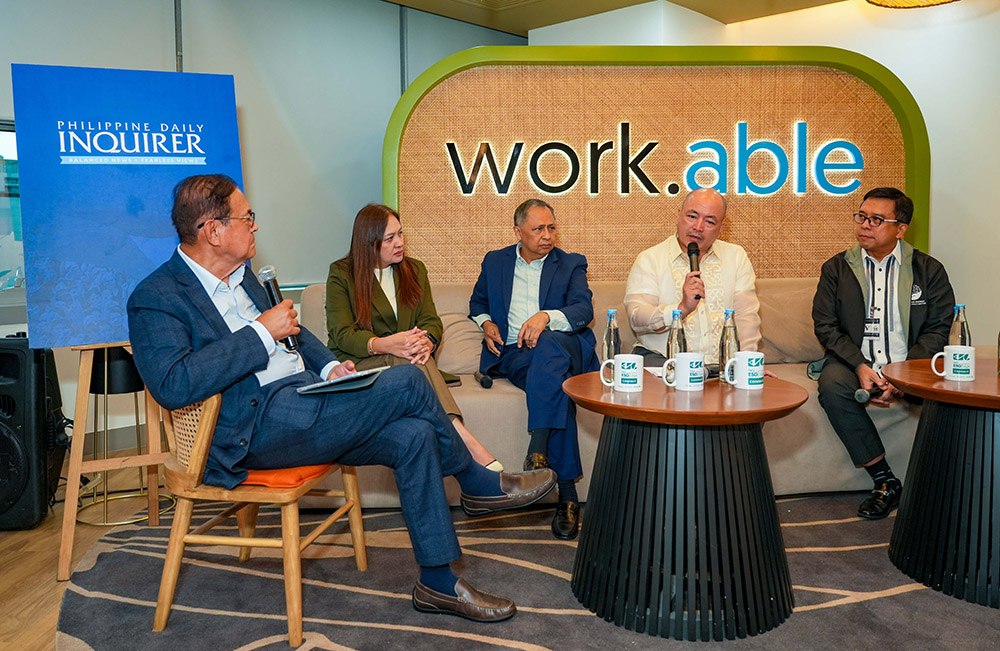
By AboitizPower Vice President for Corporate Affairs Suiee Suarez   In the recent Inquirer ESG Edge Connect, a forum series to advance sustainability and ESG, UP Diliman College of Engineering Associate Dean for Public Engagement Professor Rowaldo “Wali” D. del Mundo offered a compelling framework to challenge the convention for determining backup power supply or reserves. That is to do probabilistic energy capacity planning. In context, he said that the power supply in the Philippines has historically been tight during the summer months to the point where it has become routine for journalists to ask the Department of Energy at the start of each year if there would be sufficient supply to avoid grid-level blackouts. While the answer is almost always in the affirmative, Professor Wali observed that even if the power grid has its existing generation resources and power delivery network (“adequacy”), it ultimately depends on “security”, or whether those assets can “provide continuous operation despite disturbances and outages”. The methodology of a probabilistic approach is to determine the chances of breakdowns of dispatchable power plants based on their past performance. With a long-term view, the approach would inform energy planners which type and size of power mix and network would work best going forward, given past conditions. Evolving conditions — like rising variable renewable energy penetration and externalities such as climate change and seasonal weather — add another layer of complexity and uncertainty that modifies the probabilities of the centralized dispatchable energy system. Considering the influx of more variable renewable energy, for example, statistical probability can be used to plan for the amounts of backup reserves needed in order to maintain a desired level of service reliability. Still, the flaw in probabilistic planning is how future outcomes are predicted based on what transpired in the past. But past performance may not be indicative of future results. Considering that we live in a more complex, fast-paced, and uncertain world subject to black swan-type shocks, we’ll need strategic foresight and some “thinking outside the box”. We should adopt nonlinear and scenario-based planning methods that are grounded in future scenarios rather than just past data and assumptions. In practice, planners can set a standard of energy security (for example, one hour of allowable outage per year) and the model can recommend a statistically computed amount of energy reserves needed to meet this requirement. In effect, this can inform industry planners, regulators, and investors on how much to build in terms of generation, transmission, and distribution. This is made more important by the fact that these investments take years in advance to put into motion, sometimes 5 to 10 years. In that regard, Professor Wali opined that today’s failures in the power grid are a culmination of what was and was not done five years ago. Considering today’s issues, the Philippine grid doesn’t just need more energy capacity and a diversity of options, but also more and better planning. Nonetheless, probabilistic planning and strategic foresight can only give so much. Better execution and cooperation are what can get the country across the energy tightrope. And yet, that is also easier said than done. Execution is made more difficult by the compounded issues, delays, and difficulties of years past. But this is where foresight can come in once again by guiding the industry in anticipating contingencies and preparing plans in case of delays or roadblocks. It is also where cooperation is most needed to get the job done, which, from the very beginning, has always been to provide reliable, affordable, and accessible energy to Filipinos.          

Police nears filing of case in teacher’s killing; Robredo commends swift police work

Region 5

NAGA CITY, Philippines — The Naga City Police Office (NCPO) is nearing the filing of criminal charges in the killing of teacher Leizel C. Permale after investigators arrested the suspect less than half a day after the crime, prompting Mayor Leni Robredo to commend the police for their swift and diligent work. Police Col. Rizaldy Caballero, NCPO city director, said the investigation is now in its final stages, with police completing the documentary requirements needed before formally filing the case in court. “We are almost there,” Caballero said, adding that the police have already achieved about 90 percent of the crime solution. “We are now only completing certain documents necessary in the filing of the case.” Leizel was killed on July 18, 2026. Investigators were able to identify and arrest the suspect within 11 to 12 hours after the incident in the nearby town of Pasacao, where the suspect resides. As of 8:30 a.m. on Monday, July 20, police investigators were still preparing the remaining evidence and documents needed for the filing of charges. Initial findings indicated tell-tale signs of robbery, while the victim was believed to have been suffocated to death. Mayor Leni Robredo congratulated Caballero and the police investigators for their industry and determination in pursuing the case, saying their prompt action has brought authorities close to solving the crime. “We are on top of the situation,” Robredo told local newsmen, stressing that the city government continues to work closely with law enforcement agencies to address criminality and strengthen public safety. The mayor also underscored her administration’s intensified efforts against the proliferation of illegal drugs, which law enforcement authorities have identified as one of the root causes of violent crimes committed in the city in previous years. Permale was a graduate of the Ateneo de Naga University College of Education and had been teaching at a grade school in Barangay Pacol for the past eight years. | via Jason B. Neola, head of CMO-Public Information Division

Powering Legacies: Electricity as an Important Foundation of a Business

Environment

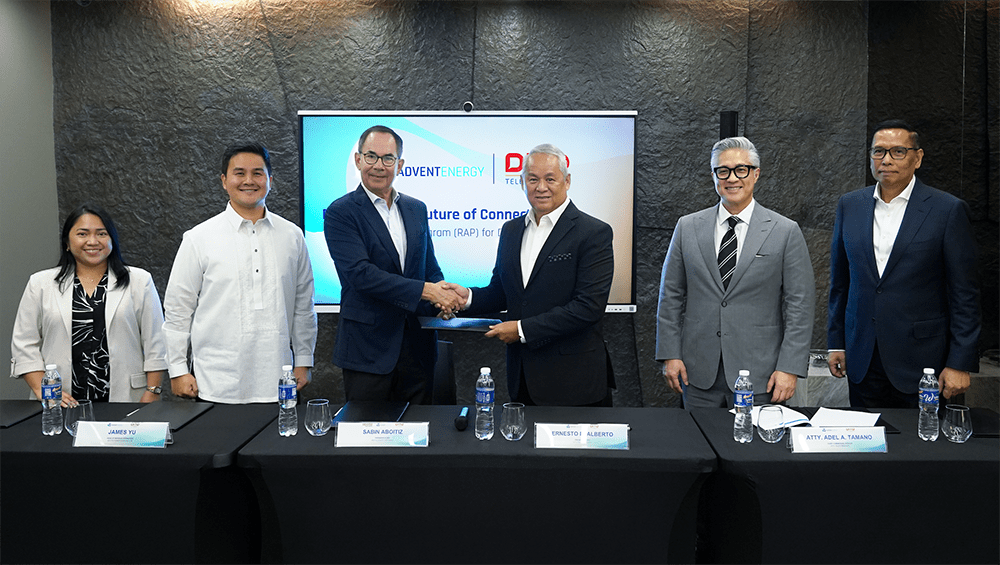
  Businesses are built with an end in mind. Although its legacy does not announce itself at the moment it is built, it reveals itself over time through choices and sustained consistency, which are eventually entrusted to whoever comes next. Manila Water’s facilities in Metro Manila’s East Zone and Rizal Province, including ones in Balara, Quezon City (left) and Calawis, Antipolo (right), are powered by 100% renewable energy, courtesy of a retail electricity supply agreement with AdventEnergy. Those choices are usually the visible, controllable ones: product, service, location, marketing, talent, and management. But one of the most overlooked factors in building any enterprise is also among the most foundational: the electric power that keeps everything running. Think about the businesses that hold the Philippines together on any given day, some of which are supermarkets, manufacturers, telecommunication towers, water utilities, and cold storage facilities. None of them announce their dependence on electricity and yet, without reliable and dependable power, none of them function, and none of them endure. Power is the architecture beneath everything else and the organizations that get it right tend to be the ones that last. Always-on Innovation AdventEnergy, the retail electricity supply arm of Aboitiz Power Corporation (AboitizPower), has spent over a decade building relationships with companies that understand this side of the business, guided by its Always-on Innovation philosophy. “At AdventEnergy, we do not just supply electricity or provide integrated energy solutions,” said AboitizPower Head of Revenue Operations and AdventEnergy President James Yu. “We understand the importance of strengthening the base of business continuity and the legacy that our customers are building.” Powering more than 1,000 facilities nationwide, AdventEnergy has been at the forefront of the competitive retail electricity market — a reform introduced through the Electric Power Industry Reform Act (EPIRA) of 2001 that enables eligible customers to choose their electricity supplier based on their monthly kilowatt demand. Beginning June 26, 2026, the eligibility threshold for Retail Competition and Open Access (RCOA) was lowered from 500 kilowatts to just 100. But understanding this freedom of choice is only the first step. AdventEnergy has always acknowledged that every business consumes power differently, and solutions must be customized around their purpose and operational needs. A legacy, like a load profile, is never one-size-fits-all. Powering legacies across industries Whenever you pick up your phone and connect to DITO Telecommunity’s 5G network – which serves more than 15 million subscribers – you are tapping into the promise of a reliable service. Through AdventEnergy, 1,642 cell towers across Luzon now run on dependable energy for a combined demand of 13.8 megawatts (MW) powering the network end-to-end. “Our partnership with AdventEnergy goes beyond a conventional energy supply agreement. It is an investment that will help keep millions of Filipinos connected, informed, and empowered,” DITO Telecommunity President and Chief Executive Officer Eric R. Alberto said. At the same time, whenever someone from Metro Manila’s East Zone or Rizal Province turns on their tap, the water that flows through is, in part, made possible by the same type of partnership. Through AdventEnergy, Manila Water’s facilities in the aforementioned areas are powered with 100% renewable energy, leading to clean water being delivered through clean energy. In choosing clean, reliable energy, Manila Water is not just managing operational costs, it is also making a statement about the kind of institution it intends to remain, long into the future. “We take pride in this partnership. It truly makes a difference in the lives of our customers knowing that a water utility can work with a partner like AdventEnergy to deliver sustainable solutions that we have worked so hard to pursue,” said Roberto R. Locsin, Manila Water President and Chief Executive Officer. Elsewhere in the Philippines, AdventEnergy also supplies Cebu Water, Tagum Water, Calbayog Water, Laguna Water, Estate Water, LARC Water, Boracay Water, and South Luzon Water. Another example are cold chain facilities, which support the food supply chain by preventing post-harvest spoilage and extending the shelf life of perishable goods, ensuring that safe food is served on your table. Without dependable power, a single power interruption can mean the difference between product quality or food loss. Located in a one-hectare facility in Davao City, AdventEnergy recently secured an 896-kilowatt (kW) retail electricity supply contract with Viking Cold Storage Inc. “Entering the retail electricity market gives us the confidence that our facility will have the reliable, competitive energy it needs to deliver for our clients,” Viking Cold Storage President Jimmy Ngo said. The cold storage operators who invest in tailored solutions for dependable power today are building the infrastructure that helps prevent food waste and supports stable supply in the years to come. Every kilowatt secured is a step toward a facility that does not break when it is needed most. Viking Cold Storage tapped AdventEnergy for an 896-KW retail electricity supply contract to power its one-hectare facility in Davao City. It has loading docks, freezer and chiller rooms, an ethylene glycol refrigeration system, and two 10-metric-ton blast freezers, which all require consistent and reliable electricity. Aside from this growing portfolio of customers, AdventEnergy also powers businesses with deeply local roots, including the L’Fisher Hotel in Bacolod with 673kW of energy supply; Discovery Primea Hotel in Makati at 1.3MW; and two Skyrise Realty & Development Corporation buildings in Cebu at 732 kW and 585 kW respectively. Each deal supports the continued expansion of RCOA, following its implementation in 2013 in Luzon and the Visayas and in 2024 in Mindanao. Legacy-building – wider than ever These stories span industries, geographies, and scales. But they all share a common trend: making deliberate decisions early and securing power that could carry a business forward. Now, that decision is within the reach of smaller and medium-sized enterprises. The Energy Regulatory Commission’s (ERC) decision to lower the contestability threshold of RCOA from 500 kW to 100 kW brings an estimated 11,988 additional potential end-users into the market. This means more hospitals, regional malls, condominiums, manufacturers, educational institutions, and even aggregated households are now

PBBM launches Bigay Bigas sa Masa in Quezon

Region 4

By Danny Estacio   LUCENA CITY, Quezon, Philippines – President Ferdinand Marcos Jr. led the distribution of free rice to 52,400 households in the city on July 21 at Lucena Convention Center. Beneficiaries received 10 kilograms of rice through the ” Bigay Bigas sa Masa” (BBM) initiative. President Marcos was assisted by City Mayor Mark Alcala, and local officials. The first 4000 recipients, who belonged to vulnerable and indigent families, came from 33 barangays in the city. The program is in collaboration with the national and city government through the City Agriculture Office in accordance with the Sagip Saka Act wherein the national government directly bought rice from the local farmers. President said that it was sourced from the Local Government Support Fund Food Assistance Program (LGSF-FAP). The LGSF-FAP is one of the flagship programs of his administration, which is designed to provide direct support and assistance to citizens, particularly in meeting their daily essential needs. The Bigay Bigas sa Masa will be held every two months, Marcos said. Also, the chief executive awarded 100 families the Certificate of Entitlement in Barangay Iyam, this city, under the expanded Pambansang Pabahay para sa Pilipino (4PH) Program implemented by the Department of Human Settlements and Urban Development (DHSUD). The awarding forms part of the government’s continuing efforts to strengthen land tenure security and provide lasting housing solutions for Filipino families who have waited decades to finally secure the land they call home. Also, the President proceeded to the Port of Lucena Passenger Terminal building in Barangay Talao-talao to inspect the new terminal; the port could accommodate up to 1000 passengers going to the provinces of Marinduque, Masbate, and Romblon. President Marcos also handed over P20,000 checks to 165 college scholars, five from each of 33 villages.

51 Kalinga agrarian reform beneficiaries take oath, undergo orientation on DAR programs

CAR

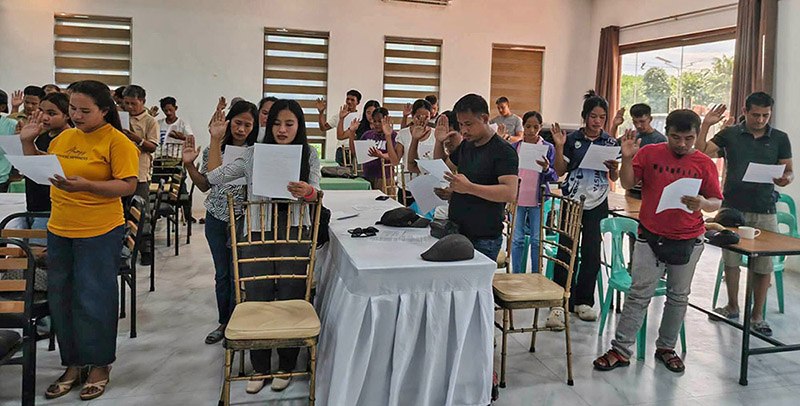
TABUK CITY, Kalinga, Philippines —Fifty-one Agrarian Reform Beneficiaries (ARBs) from various barangays in Tabuk City took their oath and underwent an orientation on agrarian reform laws, policies, and support services on July 16, 2026, as part of the Department of Agrarian Reform’s (DAR) continuing efforts to prepare beneficiaries for land ownership and the eventual issuance of their individual land titles. The activity, organized by the Land Tenure Improvement Division (LTID) of DAR-Kalinga at Red Star Hotel and Event Place in Bulanao, aimed to equip beneficiaries with the legal knowledge, responsibilities, and government interventions available under the Comprehensive Agrarian Reform Program (CARP). Engr. Joseph Calderon described the orientation and oath-taking as an important milestone in the beneficiaries’ agrarian reform journey. He urged the participants to preserve and productively cultivate the lands awarded to them instead of selling them, emphasizing that the properties should serve as a lasting source of livelihood for their families and future generations. The orientation covered key agrarian reform programs and policies, including the Certificate of Condonation with Release of Mortgage (CoCRoM) under Republic Act No. 11953, land acquisition and distribution processes, relocation and subdivision surveys, Land Transfer Clearance procedures, and documentary requirements for agricultural land transactions. Participants were also introduced to the Agrarian Reform Beneficiaries Development and Sustainability Program (ARBDSP), which provides support services such as organizational strengthening, farm productivity interventions, climate-resilient agriculture initiatives, and enterprise development. Resource persons encouraged beneficiaries to organize and actively participate in Agrarian Reform Beneficiary Organizations (ARBOs) to improve their access to government assistance and development programs. An open forum allowed the beneficiaries to raise concerns regarding land surveys, legal land transfers, DAR clearances, and available support services, with resource speakers providing clarifications on the Department’s policies and procedures. In the afternoon, Presiding Judge Hon. Tshaine B. Taguinod-Maggay of the Municipal Trial Court in Cities (MTCC) of Tabuk City administered the oath to the 51 beneficiaries. She reminded them that while agrarian reform grants them the opportunity to own land, it also carries the responsibility of protecting, cultivating, and managing it in accordance with the law.

PGLU Nueva Vizcaya releases over P50-M for 141 barangays

Region 2

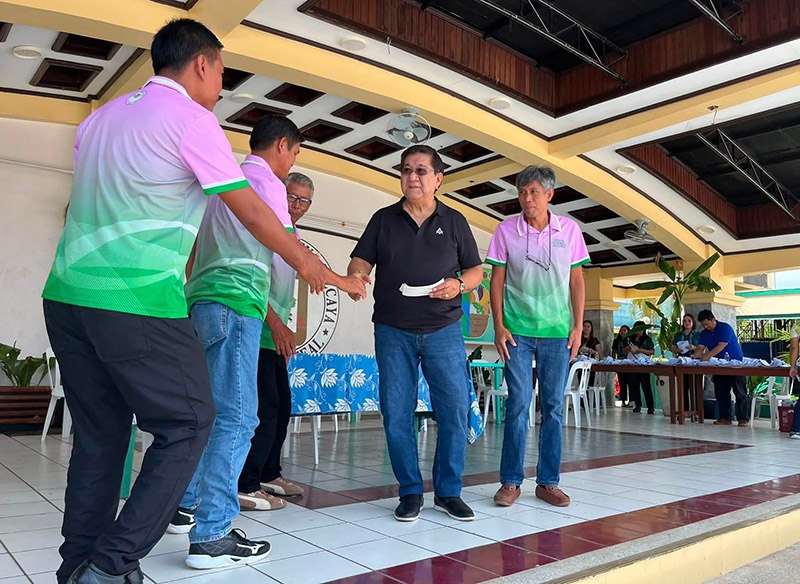
By Rachel Magday   NUEVA VIZCAYA, Philippines — Governor Jose V. Gambito led the release of more or less P50 million in financial assistance to various barangays across Nueva Vizcaya, reaffirming the Provincial Government’s commitment to supporting grassroots development through community-priority projects. During the awarding ceremony on July 15, Gambito encouraged barangay officials to ensure the proper and timely implementation of their respective projects so that residents can immediately benefit from the assistance provided by the Provincial Government. He underscored the importance of responsible stewardship of public funds, emphasizing that every project should be completed efficiently and in accordance with established government guidelines. The financial assistance will support priority projects identified by the barangay council based on the most pressing needs of their communities, according to Janice Dulagan, administrative assistant of the Financial Division of the Office of the Governor. Among the projects to be funded are the construction and improvement of farm-to-market roads, procurement of dump trucks, construction and rehabilitation of covered courts, installation of streetlights, and other infrastructure and community development initiatives. Dulagan said the amount allocated to each barangay varies depending on the approved project, with some barangays receiving up to ₱1.5 million for larger infrastructure undertakings. The GO Financial Division will continue to monitor project implementation and compliance with liquidation requirements to ensure the efficient and transparent utilization of public funds. Barangays are likewise encouraged to complete their projects within the agreed timeline to facilitate future funding requests and sustain the province’s development initiatives. Gov Gambito said the funds released to various barangays forms part of his administration’s continuing efforts to strengthen local communities by financing projects that address infrastructure needs and improve public services across Nueva Vizcaya.            

Scroll to Top