

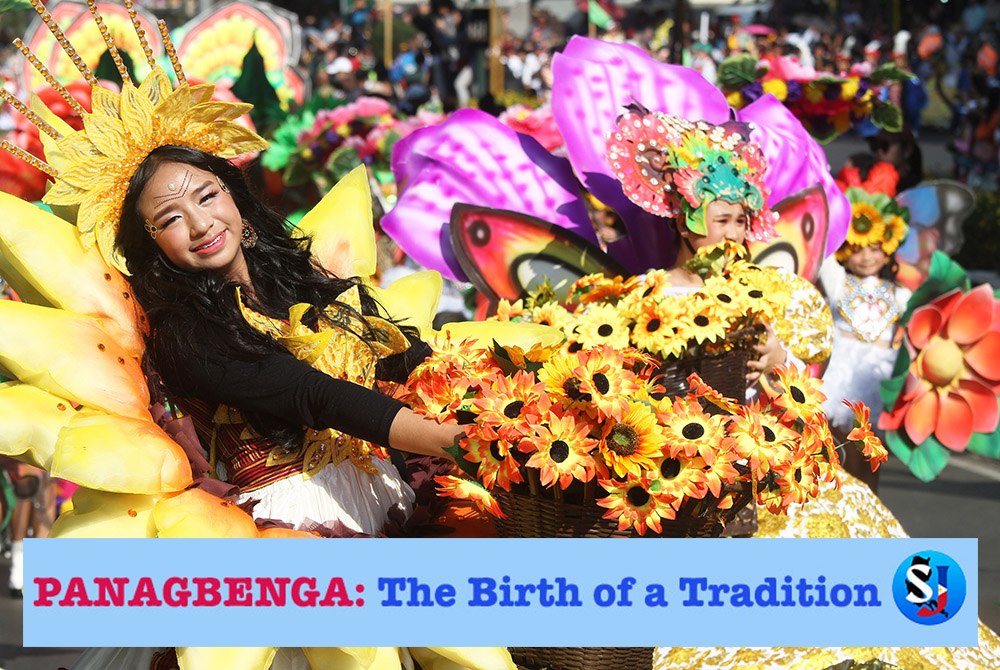
BAGUIO CITY, Philippines — Every February, when the mountain air of Baguio turns crisper and the city seems to breathe in unison, flowers begin to speak. They bloom not only in gardens and parks but in streets, schools, marketplaces, and hearts. This is Panagbenga, the Baguio Flower Festival, a celebration that grew from resilience, flourished through community spirit, and became one of the country’s most cherished cultural traditions.
The story of Panagbenga began in 1995, at a time when Baguio was still healing from the devastation of the 1990 Luzon earthquake. From this period of recovery came an idea both simple and powerful: to hold a flower festival that would honor the city’s environment, culture, and people.
Atty. Damaso E. Bangaoet Jr. presented the proposal to the John Hay Poro Point Development Corporation (JPDC), then managing Camp John Hay. With the support of the Base Conversion Development Authority and the immediate approval of its leadership, the plan took root. February was chosen as the month of celebration, a fitting season for renewal.
When the first Baguio Flower Festival was held in 1996, it was fittingly billed “The Birth of a Tradition.”
What began as an initiative quickly became a movement. Volunteers, city officials, artists, teachers, students, business owners, and civic groups all stepped forward. The people wanted a festival of their own, one that was unmistakably Baguio in spirit, color, and character.
With the full support of city leaders—Mayor Mauricio Domogan, Representative Bernardo Vergara, and the City Council—the festival unfolded smoothly, its success carried by cooperation and shared pride.
Over nine days, Baguio came alive with activities: a floral parade, street dancing, garden shows, cultural performances, competitions, and community-wide beautification efforts. Panagbenga had found its rhythm.
Children danced along parade routes dressed as flowers of every shape and hue. Businesses created flower-inspired products. Civic organizations provided manpower and logistics.
New traditions were born alongside it. “Let a Thousand Flowers Bloom” invited people from all walks of life, artists, children, families, and even tourists to paint flowers that would later transform city walls into open-air galleries.
“Session Road in Bloom” closed Baguio’s most famous street to traffic, turning it into a promenade of flower carts, sidewalk cafés, music, and laughter. Art, fashion, and heritage converged in events that highlighted indigenous weaving, local creativity, and the city’s evolving identity.
By 1998, Panagbenga had matured. Community involvement deepened, and participation expanded across sectors.
Burnham Lake, envisioned by city planner Daniel Burnham as Baguio’s heart, became the stage for a fluvial parade and boating competitions.
Horses, a long part of the city’s character, took center stage during Pony Boys’ Day, where riders dressed as knights, cowboys, Katipuneros, and tribal figures paraded and competed, blending history with spectacle.
Food, too, became part of the celebration. The Baguio Association of Restaurants hosted a food festival, adding flavor to the already rich sensory experience.
Drum and bugle corps filled the air with music, while schools brought the festival into classrooms and campuses through academic, artistic, and environmental activities.
In these efforts, Panagbenga planted itself firmly in the consciousness of the youth, ensuring its continuity.
As the festival grew, so did the understanding that its greatest strength lay not in any single event but in the collective spirit that sustained it.
This came to be known as the Panagbenga Spirit—a sense of oneness born from shared purpose. Government agencies provided structure and support, much like a trellis guiding a garden’s growth.
Each year, Panagbenga closes with rituals rich in symbolism, flags lowered and entrusted for safekeeping, petals falling from the sky, candles lit against twilight, fireworks bursting through the rain. These moments do not signal an ending but a promise: that the season of blossoming will return.
Today, Panagbenga endures because it lives where traditions truly survive, in the hearts and minds of the people. Born from shared history, shaped by collective effort, and sustained by community spirit, it remains a celebration not only of flowers but of who the people of Baguio are and who they aspire to be. In every bloom, every dance step, and every helping hand, Panagbenga continues to say what words alone cannot: this is a city that flowers together. (Danielyn Abela, PIO-DMMMSU Intern)