Street Journal Multimedia Services

Environment

Why Stronger Waste Ecosystems and Communities Matter for a Waste-Free Future

Environment

What is good for the planet is good for the people. SM Prime Holdings, Inc. (SM Prime) moves toward circularity while it continues its campaign for a waste-free future. The World Economic Forum estimates that the circular economy will provide a $4.5 trillion global opportunity by 2030 through avoiding waste, creating opportunities, and making businesses more efficient. SM Prime’s Waste Free Future campaign is committed to diverting waste from landfills through recycling, composting, and strengthening partnerships to improve waste collection and disposal efficiency ecosystems. 𝗙𝗼𝗰𝘂𝘀𝗲𝗱 𝗼𝗻 𝘁𝗵𝗲 𝗥’𝘀 Access to waste management systems is a concern for developing countries, and investing in the best possible and modern waste management solutions is urgently encouraged. SM Waste-Free Future prompted a system rethink within the SM group when it launched a year ago, with its Recyclable, Disposable, and Compostable (RDC) segregation scheme. The program probes deeply into how waste is generated, collected, segregated, transported, and disposed of across all SM Prime properties. In the hierarchy of waste, where reduction is always the best option, SM Waste Free Future also emphasizes the other “R’s” – Recycling and Recovery, to contribute to the advancement of the country’s recycling solutions. The “R” bin works to recover recyclables, helping separate high-value items from waste that ends up in landfills. 𝗜𝗺𝗽𝗮𝗰𝘁 𝗳𝗼𝗿 𝗧𝗼𝗺𝗼𝗿𝗿𝗼𝘄 Enhancing the efficiency of waste collection and disposal supports the local waste management businesses and ensures proper handling of waste. “The real innovation lies in the waste recovery for high-value recyclables. We can enjoy a healthier, cleaner, people-centric city through proper disposal and waste management,” said Engr. Liza Silerio, VP for corporate compliance and program director of SM Cares for Environment. SM Prime equips its properties with a Materials Recovery Facility (MRF) and standardized waste segregation and management practices to reduce the amount of waste sent to landfills. The Trash to Cash Recycling Market and the Plastic Waste Collection Program with Friends of HOPE serve as designated collection points at malls, allowing for the clean, dry plastic waste to be dropped off and providing avenues for proper upcycling or recycling. “We have a chance to make a difference. We proudly celebrate the partners and communities that have proactively embraced the call for a waste-free future, and we look forward to others joining the movement,” said Engr. Silerio. SM Prime remains committed to its role as a catalyst for economic growth, delivering innovative and sustainable lifestyle cities, thereby enriching the quality of life of millions of people.

Baguio bolsters greening efforts

Environment

By Gaby Keith   BAGUIO CITY, Philippines — In its continued push for urban forest management, the city government under Mayor Benjamin Magalong, strengthened its greening efforts not just through tree planting, but also in sustained care and stewardship. “The city’s tree nursery produced over 20,000 seedlings, with a survival rate of 85% in targeted planting activities. More than 13,000 seedlings have been planted surpassing our 10,000-seedling goal. We improved two hectares of our canopy cover,” City Mayor’s Office chief-of-staff Samantha Jean Hamada said in her presentation of the State of Local Governance Report at the regular Executive-Legislative meeting, July 14, at City Hall. In December 2024, the city was honored when its Model Tree Nursery Project, Tree Research Hub and Greenhouse Initiative, was recognized with the SubayBAYANI Award as one of the 10 Outstanding National Projects, she added. “The Saleng Festival continues to be one of our flagship events bringing together communities, schools, and civic groups in a collective movement to promote tree stewardship,” Hamada said. She said Baguio has successfully held 11 Ecological Waste Management and Sustainability Fairs, expanding public awareness and encouraging green practices across sectors and is supported by the City Council through Ordinance No. 15, Series of 2024. “The city has made important strides in data-driven monitoring, international engagement, and sustainability innovation. The installation of Air Quality Monitoring Stations at Burnham Park, supported by roadside and voluntary sampling, has enabled us to consistently track and maintain air quality within safe levels,” Hamada explained. She disclosed that Baguio was recognized as one of the 59 finalists out of 350 cities worldwide in the World-Wide Fund for Nature’s One Planet City Challenge Awards in Jakarta in December 2024 for its commitment to low carbon footprint and efforts towards sustainability. The city also placed 5th in Southeast Asia in the 2024 Mid-Year Pollution Index for cleanest cities. “Currently, the city is actively implementing Project TRANSFORM, a science and data-driven project that integrates strategies for climate resilience, inclusive development, and ecosystem protection into our city’s planning frameworks,” Hamada said.

GSMA Climate Report spotlights Globe’s renewable energy initiatives

Environment

MANILA, Philippines — Globe has once again been recognized by the global trade association for the telecoms industry, the GSMA, in its 2025 report, “Mobile Net Zero: State of the Industry on Climate Action,” for the company’s ongoing leadership on climate action. This marks the third time Globe’s sustainability initiatives have been featured as case studies, and the fifth straight year the company has been included  in the annual climate progress assessment by GSMA, the major international organization representing over 1,000 companies in the broader mobile ecosystem. This annual GSMA report , tracks developments toward the mobile industry’s collective goal of achieving net-zero greenhouse gas (GHG) emissions by 2050. “Globe’s inclusion in the GSMA report shows how our ongoing efforts support long-term resilience and growth through environmental and climate action. We remain committed to contributing best practices globally as we strive to green our network further.” said Yoly Crisanto, Chief Sustainability and Corporate Communications Officer. Steven Moore, Head of Climate Action at the GSMA comments: “Our findings show the mobile industry isn’t greenwashing or greenwishing – it’s green acting. Emissions are trending in the right direction, but the pace of progress must now double. But to sustain this progress, we need broader support: better access to renewables, more policy certainty, and stronger collaboration across the ecosystem.”  The report features Globe’s two-pronged approach to renewable energy (RE): deploying solar solutions in off-grid communities, and securing electricity from the two main Philippine grids for the company’s key facilities through  power purchase agreements (PPAs) with retail electricity suppliers. A milestone under this initiative is Globe’s first fully solar-powered off-grid cell site on Taganak Island in the Turtle Islands, Tawi-Tawi, launched in December 2024. The project enables sustainable connectivity in a remote area, while supporting the protection of a key nesting site for green sea turtles. This builds on earlier deployments of hybrid solar solutions in off-grid locations that balance solar photovoltaic (PV) systems with generator sets and battery energy storage systems (BESS). On-grid, the company had transitioned 29 high-energy utilization facilities to renewable power by 2024, and now numbers 33 high-energy facilities as of May 2025. These initiatives support the company’s decarbonization goals and have  helped increase its share of electricity consumption sourced from renewables from 14% in 2021 to 24% in 2024. Globe’s sustainability efforts are aligned with its validated near-term and net-zero GHG emissions reduction targets under the Science-Based Targets initiative (SBTi), a globally recognized framework for corporate climate goals. As a member of the GSMA’s Climate Action Taskforce, Globe continues to set an example in promoting responsible environmental practices within the mobile sector. The GSMA report can be accessed through: https://www.gsma.com/solutions-and-impact/connectivity-for-good/external-affairs/wp-content/uploads/2025/06/GSMA-Mobile-Net-Zero-2025-State-of-the-Industry-on-Climate-Action.pdf Globe’s Case Study on the GSMA website: https://www.gsma.com/solutions-and-impact/connectivity-for-good/external-affairs/gsma_study/globe-telecom-powering-a-sustainable-future-with-renewable-energy/      

SM Debuts Biggest Rooftop Solar Panel System at SM Fairview

Environment

  In line with its 40th anniversary, SM Supermalls has unveiled the largest rooftop solar photovoltaic (PV) system on a commercial building in the country at SM City Fairview, reinforcing its commitment toward environmental sustainability and corporate resilience. This is a significant contribution to SM Prime Holding’s Net Zero 2040 goal. With a 3.785-Megawatt peak (MWp) solar power capacity, the SM City Fairview solar PV system has 6,882 solar modules over a total area of 4.3 hectares and an average annual solar production of up to 5,960-Megawatt-hour (MWh). This means that 11% of the mall’s annual energy consumption will now come from the sun, which is equivalent to powering SM City Fairview’s 44 escalators and all its mall and perimeter lights for up to two (2) and a half years. The mall ultimately offsets or prevents the release of 4,133 tons of carbon dioxide into the atmosphere with every year of operations, supporting climate action and ensuring a more sustainable future for Filipinos. The SM City Fairview solar PV system also contributes to the malls’ program solar pipeline and SM Prime Holdings’ Net Zero 2040 goal towards a significant reduction of the company’s total carbon footprint. SM Prime’s total rooftop solar capacity is currently at 73-MWp and will be further boosted up to 100-MWp by the end of the year. In partnership with Buskowitz Energy, this project enables SM to further reduce its carbon footprint and reliance on the national grid. It also supports the government’s thrust towards renewable energy for the benefit of the environment. The first Philippine mall to have a rooftop solar PV installation was SM North EDSA in 2014 with a 1.5MW peak capacity. The installation at SM Fairview augments the rooftop solar PV system of SM City Santa Rosa, which was previously the largest installation with a 3.088MW peak capacity. Mr. Hans T. Sy, SM Prime Chairman of the Executive Committee, is at the forefront of the property giant’s sustainability programs – from energy demand management to potable water and wastewater management to solid waste management, which he has led for more than two decades.                  

AuroraPH Project of Aboitiz connects Aeta learners in Bataan to www.com

Environment

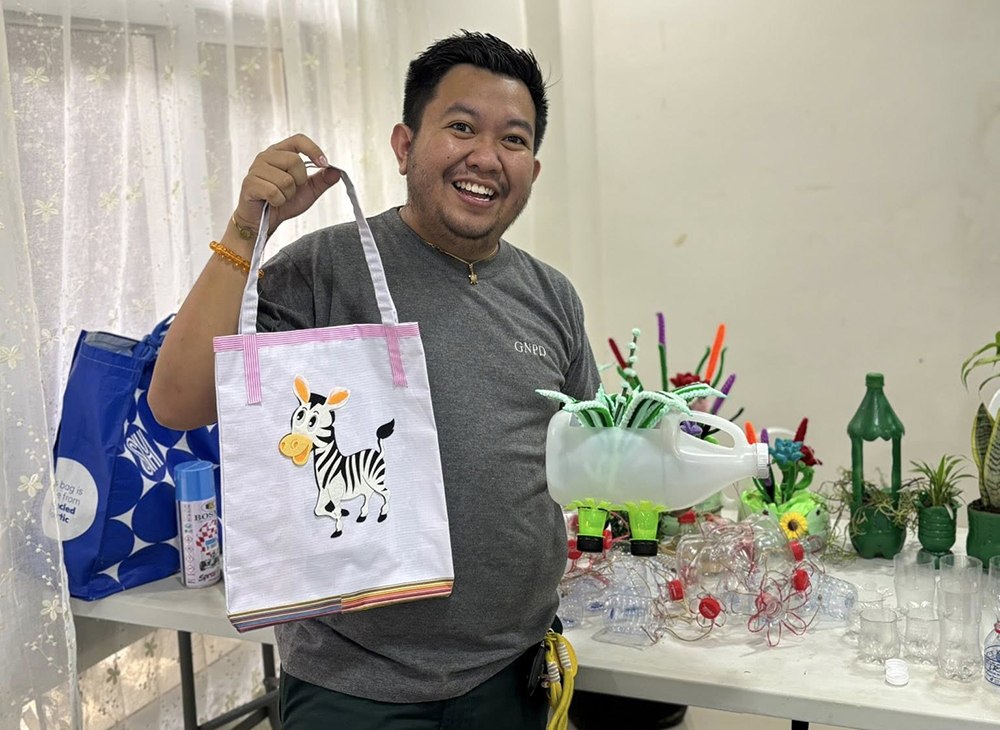
By Ruben A.Veloria BATAAN,Philippines – Aboitiz Foundation, Inc. and Aboitiz Power Corporation (AboitizPower), through GNPower Mariveles Energy Center (GMEC) and GNPower Dinginin (GNPD), turned over an AuroraPH package to Biaan Aeta Integrated School (BAIS) in Mariveles, Bataan. AuroraPH is the Aboitiz Foundation’s flagship education initiative, done in partnership with non-profit GivePower, private companies Starlink and Huawei, and the Philippine Department of Education (DepEd) and the Technical Education and Skills Development Authority. The project aims to bridge the digital and educational divide in last-mile schools by equipping them with sustainable power and internet access through a solar power system setup and Wi-Fi. While the program typically targets off-grid schools, BAIS represents the first on-grid school to benefit from the initiative, further enhancing its existing infrastructure to reduce electricity costs and vastly improve internet connectivity for both students and teachers. Mariveles Mayor Ace Jello Concepcion said, “The additional power supply and stronger internet will greatly improve how our students learn, prepare, and dream for their futures.” Adding that partnerships with the private sector, like what they have with AboitizPower, can be transformative. “BAIS, once a remote and overlooked school, now stands as a model of what’s possible when we work together,” Mayor Concepcion said. Meanwhile, DepEd officials lauded the project, as BAIS Principal Mariquita Banal said, “This support means everything to me, our teachers, and our learners. BAIS used to be an overlooked school, but now we can perform side-by-side with the rest.” For Dr. Carolina Violeta, DepEd Bataan Schools Division Superintendent, the Aboitiz Foundation and AboitizPower don’t just offer short-term help, “They plant the seeds for long-term progress.” “The solar panels and enhanced internet connection they’ve provided are more than infrastructure— they are sources of inspiration and catalysts for educational transformation,” Violeta said. AuroraPH began in 2024, powering 11 schools and benefiting nearly 2,000 students from Benguet, Bataan, Cebu and Davao City to date. AuroraPH targets 100 schools by end-2025 and 300 by 2027. “We want to help more and more schools. It’s a promise to illuminate pathways and unlock opportunities for both learners and educators,” said Aboitiz Foundation’s Impact Lead for Education Jowelle Ann Cruz. Following the turnover, school personnel underwent an operations and maintenance training facilitated by a team from AdventEnergy, a retail energy arm of AboitizPower, to ensure the longevity and efficiency of the solar panels and internet system. Teachers will also undergo a financial literacy session conducted by City Savings Bank on managing personal and community finances called “Project Pera-parasyon.” GMEC and GNPD are private limited partnerships. AboitizPower has a 78.3% effective partnership interest in GMEC and a 70% effective partnership interest in GNPD.    

The National Resilience Council’s colloquium proves resilience thrives in collaboration

Environment

The National Resilience Council (NRC) of the Philippines convened a diverse group of stakeholders for the event “From Surviving to Thriving: Transformative Strategies through Multi-Stakeholder Partnerships and Innovations.” As a science and technology-driven public-private partnership, the NRC unites national and local governments, academia, civil society, and the private sector to advance the interconnected objectives of the Sendai Framework for Disaster Risk Reduction, Sustainable Development Goals, Paris Climate Agreement, New Urban Agenda, and other global commitments. Held as the 2025 Resilient Local Government Unit Program (RGLUP) Colloquium, the event showcased progress and updates from participating cities and municipalities in the NRC’s Adopt a City (AAC) Initiative. This initiative enables corporations to move beyond disaster relief, investing in risk reduction through preparedness funding, prevention, pre-disaster recovery planning, and long-term resilience programs. By empowering local governments, AAC promotes collaborative efforts to build safer, more resilient communities. The colloquium also welcomed NRC’s private and public sector partners, with notable participation from the Department of Environment and Natural Resources, the Department of National Defense, and the United Nations ARISE Private Sector Alliance for Disaster Resilient Societies – Philippine network. The event opened with inspiring messages from NRC Co-Chairman for the private sector and SM Prime Holdings Chairman of the Executive Committee Hans Sy, NRC Vice Chairman for civil service organizations and Zuellig Family Foundation President Austere Panadero, and NRC Vice Chairman for the scientific organizations and academe and Director of the Manila Observatory Fr. Jose Ramon Villarin, SJ. Cities in the AAC’s Prepare phase—Baguio, Iligan, Mandaue, and Tiwi, Albay—presented their innovative disaster resilience strategies. Baguio City Mayor Benjamin Magalong emphasized, “Baguio’s resilience journey highlights the power of collaboration and national support.” Meanwhile, cities in the Adapt and Transform phase, the initiative’s next stages —Naga, Cagayan de Oro, Iloilo, Bataan, Manila, and Ormoc—highlighted their advanced strides. Ormoc City Mayor Lucy Torres-Gomez shared, “I am very proud to say that because of Project Transform, together with our esteemed partners, Ormoc City is always on track in terms of environmental stewardship and resilience.” A highlight of the event was the launch of the Resilience Competency Assessment (CompAss), a tool designed to strengthen local government capabilities in disaster resilience. Drawing from the NRC’s mission, the colloquium underscored the power of multi-stakeholder collaboration in driving transformative change. By bridging sectors and promoting innovation, the NRC and its partners are paving the way for a resilient Philippines.  

BCDA plants 500 endemic trees in New Clark City,nearing 2025 goal of 1,000

Environment

The Bases Conversion and Development Authority (BCDA) planted 500 more native and endemic trees, reforesting one hectare of land along One Clark Boulevard, New Clark City, Capas, Tarlac. This brings the agency closer to its goal of planting 1,000 trees  by the end of 2025, as part of its bold commitment to sustainable urban development and global climate action goals. Since January, BCDA and its public and private sector partners have planted a total of 811 native and endemic trees under this initiative. On Thursday, 10 July 2025, BCDA employees, led by President and Chief Executive Officer Joshua M. Bingcang, took part in planting a variety of native species, including Amugis, Dao, Salingogon, Kamagong, and Banaba. These species were carefully selected for their ability to thrive in the region’s environment while enhancing biodiversity, preventing soil erosion, stabilizing land near rivers, and acting as natural carbon sinks. “This initiative underscores our dedication to building infrastructure that nurtures both progress and the environment. It’s about creating spaces that foster well-being, recreation, and a connection with nature,” said Engr. Bingcang. With an impressive 80% survival rate from last year’s planting efforts, BCDA aims to continue its reforestation work by planting an additional 1,000 trees this year. These actions are a direct contribution to several United Nations’ Sustainable Development Goals (SDGs), including Sustainable Cities and Communities (SDG 11), Climate Action (SDG 13), and Partnerships for the Goals (SDG 17). Since 2019, BCDA has spearheaded various tree-planting initiatives, underlining its dedication to the environment and sustainable growth. Key past initiatives include the “100 Trees for 100 Days” campaign ahead of the 2019 Southeast Asian Games, and a partnership with the Abacan River and Angeles Watershed Advocacy Council Inc. in 2022, which saw the planting of 500 trees for BCDA’s 30th anniversary. Most recently, BCDA held tree planting activities on June 10 and 22, 2025, in partnership with the Youth Ministry of Catholics for Life and the Tourism Promotions Board (TPB), respectively. The former resulted in the planting of 90 trees, while the latter event added 171 native trees, including Banaba, Molave, Lipote, Kalumpit, Narra, and Malabulak. These efforts highlight BCDA’s leadership in integrating environmental stewardship with urban development, setting a powerful example of how public sector projects can drive progress in achieving the UN SDGs. Through sustainable practices, BCDA continues to build cities that are resilient, smart, and harmonious with the environment, ensuring that growth is both responsible and regenerative.          

Empowering Change: SM Cares Unites Communities for the Environment

Environment

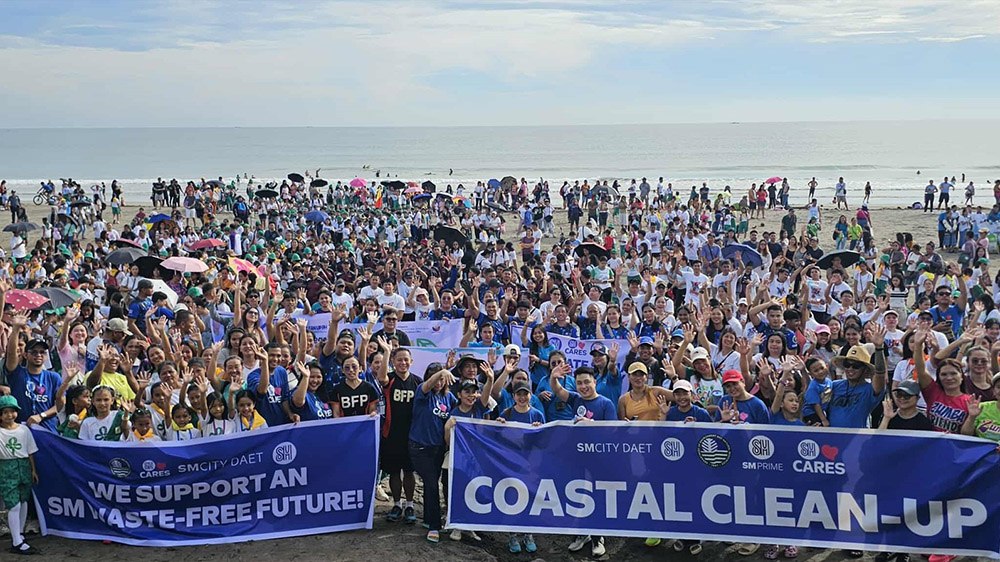
As a long-standing advocate for sustainability, SM Cares—the corporate social responsibility arm of SM Supermalls—once again mobilized thousands of Filipinos in celebration of Philippine Environment Month, reinforcing its commitment to creating a cleaner, greener, and more sustainable future through its movement for an #SMWasteFreeFuture. Throughout the month of June 2025, SM Supermalls nationwide served as rallying points for environmental action, drawing in communities, partners, and changemakers through dynamic and impactful programs that aligned with the spirit of cycling for change, cleaning together, and conserving what matters. 𝗖𝘆𝗰𝗹𝗲: 𝗣𝗿𝗼𝗺𝗼𝘁𝗶𝗻𝗴 𝗦𝘂𝘀𝘁𝗮𝗶𝗻𝗮𝗯𝗹𝗲 𝗟𝗶𝗳𝗲𝘀𝘁𝘆𝗹𝗲𝘀 In celebration of World Bicycle Day, 26 SM malls across the country hosted community bike rides and various bike-related events—encouraging greener mobility while rallying support for various environmental and health initiatives. These bike rides weren’t just about pedaling—they were about movement of people, ideas, and purpose. 𝗖𝗹𝗲𝗮𝗻: 𝗣𝗿𝗼𝘁𝗲𝗰𝘁𝗶𝗻𝗴 𝗢𝘂𝗿 𝗪𝗮𝘁𝗲𝗿𝘀 𝗧𝗼𝗴𝗲𝘁𝗵𝗲𝗿 To honor World Oceans Day, 18 SM malls led coastal and river cleanup drives in collaboration with the Department of Environment and Natural Resources (DENR), LGUs, youth groups, and private sector partners. The initiative drew over 5,000 volunteers and resulted in the collection of more than 30,000 kilograms of trash, showing how collective action can create real environmental impact. 𝗖𝗼𝗻𝘀𝗲𝗿𝘃𝗲 𝘄𝗶𝘁𝗵 𝗣𝘂𝗿𝗽𝗼𝘀𝗲: 𝗘𝗻𝗴𝗮𝗴𝗶𝗻𝗴 𝗧𝗵𝗿𝗼𝘂𝗴𝗵 𝗖𝘂𝗹𝘁𝘂𝗿𝗲, 𝗘𝗱𝘂𝗰𝗮𝘁𝗶𝗼𝗻, 𝗮𝗻𝗱 𝗔𝗰𝘁𝗶𝗼𝗻 As part of its Environment Month campaign, SM Cares expanded its initiatives through a series of educational and cultural activities that promote purposeful conservation. These included a green film showing in partnership with government agencies to raise awareness on climate action and biodiversity, a bike-hike-plant activity that combined cycling, reforestation, and volunteerism, and a youth-led battle of the bands that fused music and environmental advocacy. “These efforts reflect our deep commitment to help build a culture of sustainability in every community we serve,” said Engr. Liza Silerio, Vice President for Corporate Compliance and SM Cares Program Director for Environment. “An #SMWasteFreeFuture isn’t just a goal—it’s a responsibility that we proudly share with our mall-goers, employees, and partners.” These initiatives also support several United Nations Sustainable Development Goals (SDGs), particularly SDG 13: Climate Action, SDG 14: Life Below Water, SDG 15: Life on Land, and SDG 17: Partnerships for the Goals—demonstrating SM Cares’ continuing commitment to environmental stewardship through multi-sector collaboration and community engagement. This Philippine Environment Month, SM Cares continues to prove that progress happens when communities come together—with every ride, every cleanup, and every small act of conservation bringing the country closer to a future that’s cleaner, smarter, and more sustainable. 𝗦𝘂𝘀𝘁𝗮𝗶𝗻𝗮𝗯𝗹𝘆 𝗦𝗠: 𝗗𝗿𝗶𝘃𝗶𝗻𝗴 𝗖𝗼𝗹𝗹𝗲𝗰𝘁𝗶𝘃𝗲 𝗔𝗰𝘁𝗶𝗼𝗻 𝗳𝗼𝗿 𝗮 𝗚𝗿𝗲𝗲𝗻𝗲𝗿 𝗧𝗼𝗺𝗼𝗿𝗿𝗼𝘄 As a Sustainable Mall, SM Cares champions environmental stewardship through inclusive and future-forward initiatives that promote sustainable living, climate resilience, and resource conservation. By actively engaging mall-goers, communities, and partner organizations, SM Cares fosters collective action to reduce environmental impact, and build a greener, more resilient future. Through education, innovation, and strong partnerships, SM Cares leads the way in creating sustainable spaces and inspiring everyday environmental responsibility across generation. 𝟰𝟬 𝗬𝗲𝗮𝗿𝘀 𝗼𝗳 𝗕𝘂𝗶𝗹𝗱𝗶𝗻𝗴 𝗕𝗲𝘁𝘁𝗲𝗿 𝗖𝗼𝗺𝗺𝘂𝗻𝗶𝘁𝗶𝗲𝘀 Celebrating 40 Super Years of Evolving With Every You, SM Supermalls—one of Southeast Asia’s largest mall developers—continuously evolving to lead the way in sustainable development by integrating green design, energy efficiency, disaster resilience, and environmental stewardship into its 88 malls in the Philippines, all while creating inclusive spaces that enrich communities, support climate action, and ensure a better, more sustainable future for generations of Filipino shoppers.              
Fruit bearing trees, itinanim sa Cayanga Eco Park sa Bugallon,Pangasinan

Environment

Daan-daaang fruit bearing trees ang itinanim sa Cayanga Eco Park sa Bugallon Pangasinan. Ito ay sa ilalim pa rin ng Green Canopy Program, isa sa mga prayoridad na programa ni Governor Ramon Guico III. Sanib-puwersa sa pagtanim ang 250 kawani mula sa iba’t ibang departamento, opisina at ospital ng Pamahalaang Panlalawigan ng Pangasinan sa pamumuno ni Provincial Administrator Melicio Patague II. Kabilang sa mga itinanim ay punla ng kalamansi, bugnay, pine tree, fire tree, at narra. Ayon kay PA Patague, mahalaga ang pagtatanim ng puno sa pagpapaigting ng kahandaan at katatagan ng lalawigan sa harap ng mga sakuna, lalo na sa gitna ng climate change. Ang aktibidad ay isinabay na rin sa pagdiriwang ng National Disaster Resilience Month ngayong Hulyo. Nais ni Governor Guico na gawing tourist attraction at sentro ng edukasiyon hinggil sa pangangalaga sa kalikasan ang Cayanga Eco Park. (Rich Majin, JP De Vera)

Scroll to Top