


By Christopher Hedreyda
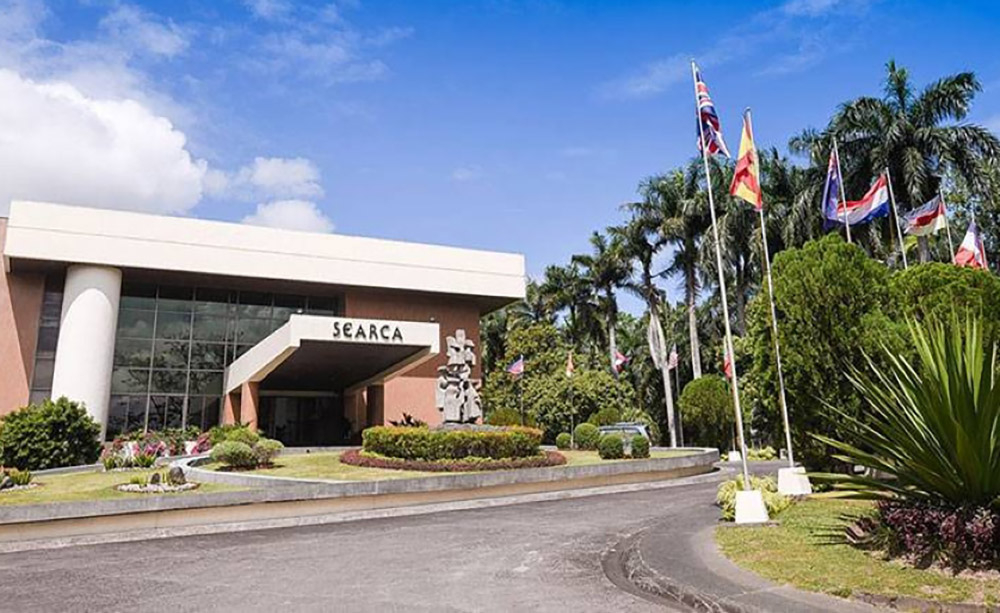
LOS BAÑOS, Laguna, Philippines — The Southeast Asian Regional Center for Graduate Study and Research in Agriculture (SEARCA) is utilizing its research and academic network across Southeast Asia to better understand the effects of climate change, provide valuable inputs for policy development, and assist regional governments in attaining food security.
Dr. Mercedita Sombilla, Center Director of SEARCA, said the organization has already developed innovations and technologies aimed at helping the agricultural sector in the region.
She cited the interconnected challenges threatening Southeast Asia, including climate change, which threatens agricultural productivity and livelihoods, and the degradation of natural resources that continue to face mounting pressures.
Through the help of SEARCA students and scholars who are present in research institutions and universities across 11 ASEAN member states, as well as through its cooperation with regional governments, access to these programs is readily available to support a collaborative approach to combating threats brought about by climate change, which can contribute to the occurrence of a Very Strong El Niño phenomenon.
“We are doing a lot of things in terms of responding [to climate change]. What we really need to do is go to the communities, go to the farmers…They need to prepare for that. There are already technologies that we offer to them so they could respond immediately to natural phenomenon like climate change,” Sombilla said in an interview with the Philippine Information Agency during the 60th anniversary celebration and induction of Outstanding SEARCA Alumni on October 20.
Meanwhile, external threats such as conflicts in the Middle East further contribute to challenges in attaining food and nutrition security. SEARCA said rising commodity prices lead many families to cut spending on food with high nutritional value, making food security a continuing challenge for many Southeast Asian countries.
“Consumer prices, especially on food, if it’s not going to be affordable to people then they will really cut on their spending and that will really affect food security and nutrition security. We are still struggling on problems with regards to malnutrition, stunting, and wastage. These are the things that we really need to do,” the SEARCA director added.
The Center observed in a study that Southeast Asia’s food challenge is shaped by three linked trends: population growth and rapid urbanization, which result in changing diets, supply chain adjustments, and food modification; and climate change and resource pressures, which make production less predictable.
Sombilla further explained that SEARCA has conducted continuous research on nutrition, including ways to make basic nutritious meals more affordable for families, as well as how regional collaboration can improve and address challenges in agricultural transformation.
“We want to learn and to provide some policy recommendations that you know can help countries review, evaluate their programs and policies and hopefully for them to adopt whatever is going to come out of the studies that we do,”
Opportunities in agriculture remain open for the youth, with educational scholarships in the field available through SEARCA and its extensive University Consortium and research organizations.
“The innovations and the technology that are coming up, the development of curriculum in the universities should be one of the focus to encourage these students. There are already technologies wherein you can do farming without tilling the soil…”
She remains optimistic that the youth will sustain and further develop the research and studies being conducted today as potential innovators, and eventually come up with policies that will bridge science and society, build partnerships across sectors, and transform knowledge into solutions that improve farming, food processing, logistics, retail, and nutrition services if agriculture becomes a viable future for them.
Among the main tenets of SEARCA is the belief that education should serve society, research should improve lives, and leadership should create opportunities for others. (CH/PIA-Laguna)