


By Ruben A. Veloria
ZAMBALES, Philippines – President Ferdinand R. Marcos, Jr. inspected on Wednesday the damages to infrastructures and properties caused by month-long monsoon rain and tropical cyclones in August.
The President arrived in Barangay Santa Fe, San Marcelino, at 11:30 in the morning via helicopter, and was welcomed by DPWH Sec. Vince Dizon, DSWD ASec. Irene Dumlao, Zambales Gov. Hermogenes Ebdane Jr., and Reps. Jay Khonghun and Doris Maniquiz (1st and 2nd Dist, Zambales, respectively), and San Marcelino Mayor Elvis Soria.
The President and Public Works Sec. Dizon was briefed by Gov. Ebdane while inspecting some school buildings and houses that are buried up to the roof in sand.
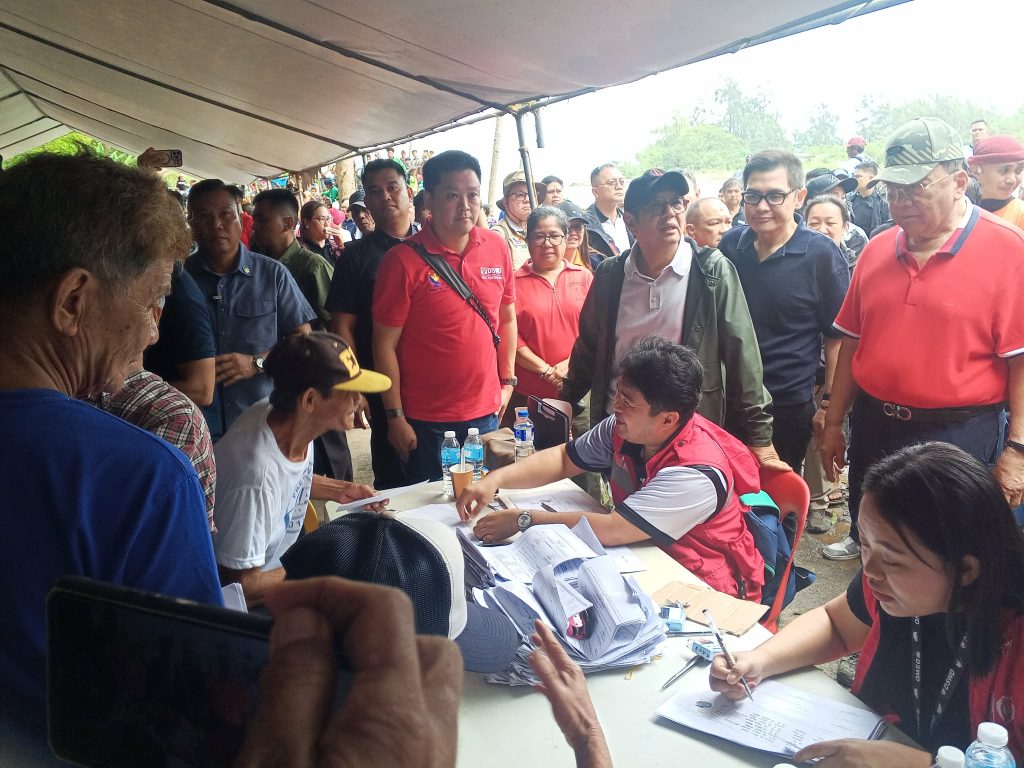
The officials crossed the Sto. Tomas River using a makeshift foot bridge to reach the other side of the river where DSWD were distributing food packs and cash gifts.
Later, the President checked the conditions and welfare of the residents.
Before landing in Zambales, the President also visited flood affected communities in Tarlac and Pampanga.
Meanwhile, ASec. Dumlao supervised the distribution of school bags and supplies to hundreds of school children, and handling of P10,000.00 cash assistance to 1,000 heads of family to help them recover from almost a month without income after the only bridges was washed-out during the monsoon.
Barangay Santa Fe, is located adjacent in the upper part of Santo Tomas River, one of the main lahar channel from Mt. Pinatubo, and the most isolated community after lifeline infrastructure were buried under lahar and flood water, including roads, Sta. Fe Bridge, breached, and houses, a school and barangay facilities.
Earlier, Gov. Ebdane, through the Sangguniang Panlalawigan Resolution, declared the province under State of Calamity on August 19, after damages or loss in infrastructure, livelihood and agriculture had reached nearly P700 million, while disruption in transportation and works and displacement of residents continued.
Gov. Ebdane said putting the province under State of Calamity will facilitate strengthened response coordination, fast tract recovery and rehabilitation measures, and enabling government agencies to implement appropriate responses, especially for more than 18,000 severely affected residents.(RAV)