

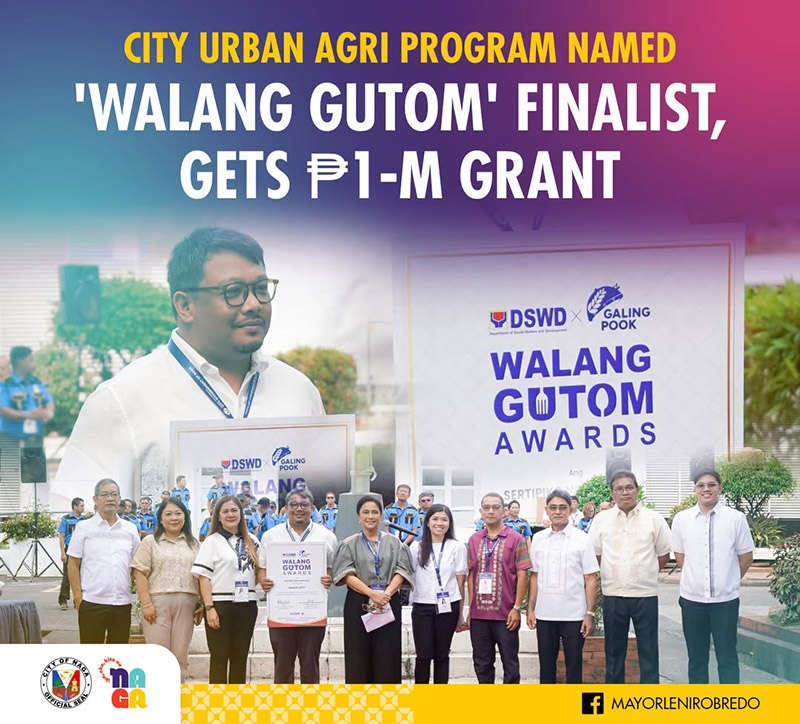
NAGA CITY, Philippines — The city government’s Urban Agriculture Program has been named among the national finalists in the Walang Gutom Awards 2025, earning recognition as one of the 20 finalists from 50 applicants nationwide before advancing to the final 10.
While the program did not place among the top winners, the city will still receive a P1-million financial grant to support the Sustainable Livelihood Program (SLP) of the Department of Social Welfare and Development.
The SLP is designed to address involuntary hunger, particularly among malnourished children, by providing sustainable sources of food and income for vulnerable communities.
The city’s Urban Agriculture Program traces its roots to 2017 through the Integrated Community Food Production Project (ICFP). It was sustained during the COVID-19 pandemic under City Ordinance 2020-095, ensuring continuous food production efforts at the community level.
Under the program, Barangay Agricultural Technicians plant, grow and monitor the progress of assorted vegetable seedlings distributed by the City Agriculture Office and oversee the maintenance of barangay-based nurseries.
City Agriculturist Ernesto Asence III said that for a targeted approach in the implementation of the Urban Agriculture Program, the City Agriculture Office coordinates with the City Population and Nutrition Office in the identification of households with undernourished children. In addition, the i-Governance office assisted in the preparation and submission of the Walang Gutom Awards.
Mayor Leni Robredo said the initiative aligns with her administration’s 2028 “Finish Lines,” which prioritize achieving zero hunger and zero malnutrition in the city.
Robredo added that the P1-million grant will be used to expand the program by assisting small farmers in supplying produce for government feeding initiatives.
She emphasized the program’s dual purpose: to improve farmers’ incomes through assured market access, and to ensure a steady supply of vegetables and other agricultural products for feeding programs benefiting malnourished children. I via Jason Neola