
Street Journal Multimedia Services

NCR

Cebu Pacific wins Marketing Team of the Year, Grand Prix at Tambuli Awards

NCR

Cebu Pacific (PSE: CEB) received three major honors at the 2026 Asia Pacific Tambuli Awards on June 5, earning recognition for its purpose-driven marketing initiatives that promote tourism, cultural preservation, and community development. The airline was named Marketing Team of the Year for its “Fly to Your Happy Philippines” campaign and received two awards for “Flight Patterns”, including a Grand Prix in the Builders of Society – Arts, Culture, and Heritage category, and a Silver award in the Builders of Society – Tambuli Origins category. Organized by the University of Asia and the Pacific, the Asia Pacific Tambuli Awards is an annual program that recognizes brands, organizations, and individuals that achieve business success while creating a positive impact on society. “Since the beginning, Cebu Pacific’s vision has always been to help build a stronger Philippines by connecting communities, celebrating cultures, and creating opportunities through travel. We thank our partners for helping us bring this vision to life through campaigns that put the Philippines on the global tourism map,” said Candice Iyog, CEB Chief Marketing and Customer Experience Officer. “This recognition reenergizes us to create even more meaningful impact with the communities, partners, and teams we work with.” The Marketing Team of the Year award recognizes teams that demonstrate outstanding collaboration, creativity, and excellence in developing and executing purpose-driven marketing programs. The CEB Marketing team, led by its director Michelle Eve De Guzman, is only the second winner of the category after it was first awarded last year. CEB earned the distinction through “Fly to Your Happy Philippines”, a campaign that leverages traveler insights from different countries to showcase the diverse ways people experience happiness when traveling to the Philippines. As part of the campaign, CEB became the first Philippine company to take over Dubai’s Burj Khalifa with a “Fly to Happy, Fly to the Philippines” lights and sound display. CEB also launched various activations at Bondi Beach in Sydney, Australia, Shibuya Crossing in Tokyo, Japan, Seongsu neighborhood in Seoul, South Korea, and Orchard Road in Singapore which showcased the warmth of Filipino hospitality and the country’s diverse destinations to a global audience. The success of the campaign underscored the extensive work undertaken by the CEB Marketing team, from consolidating global insights and coordinating with international government organizations to collaborating with marketing and media agencies, as well as international influencers. These efforts helped bring the Philippines closer to travelers from the airline’s 15 international markets. Meanwhile, “Flight Patterns” received the Grand Prix for Builders of Society – Arts, Culture, and Heritage, the highest honor for this category which recognizes initiatives that foster appreciation and awareness of culture and creativity, as well as the Silver Award for Builders of Society – Tambuli Origins, which honors campaigns that highlight and preserve local traditions, values, and cultural identity. “Flight Patterns” brought traditional weaving heritage into everyday travel spaces through scannable QR codes placed on billboards along major thoroughfares, at airports nationwide, and in select magazines, shining a light on the Filipino weaving communities and artisans whose stories inspired the campaign. Each code features five weaving traditions from across the country: Ilocos Norte’s Binakol, Occidental Mindoro’s Ramit, Iloilo’s Hablon, Antique’s Patadyong, and Basilan’s Tennun. Scanning the codes allowed travelers to learn more about each weave, the destinations where they originate, and the communities that make them, sparking greater appreciation for the rich weaving traditions and artisans that continue to keep this important part of Philippine culture alive. The campaign was made possible through collaborations with key partners, including the Department of Tourism, and the Department of Science and Technology – Philippine Textile Research Institute. This latest recognition builds on CEB’s strong showing at the Tambuli Awards. In 2024, Iyog was named Chief Marketing Officer of the Year, recognizing her leadership in advancing the airline’s purpose-driven marketing initiatives.        

SSS begins early June rollout of 2026 pension hike, citing need for early relief for pensioners

NCR

QUEZON CITY, Philippines  – The Social Security System (SSS) today begins the early rollout of the second tranche of the Pension Reform Program (PRP) to 4.1 million pensioners, advancing the originally scheduled September pension increase to provide SSS pensioners with earlier financial relief. Finance Secretary and Social Security Commission (SSC) Chair Frederick D. Go and SSS President and Chief Executive Officer Robert Joseph M. de Claro said the agency is releasing approximately ₱6 billion in additional pension benefits from June to August 2026 to help pensioners cope with inflationary pressures and higher energy costs. “We are releasing the second tranche of pension increases ahead of schedule to support millions of pensioners and their families, helping them meet their daily needs and enjoy greater financial security sooner,” Go said. “With the early implementation, we hope to provide timely relief to our pensioners and their families as they continue to face every day financial challenges,” de Claro said. He explained that SSS pensioners as of May 31, 2026, will be eligible to receive the pension hike beginning June 1, 2026, while those whose contingencies fall between June 1 and August 31, 2026, will receive their increased pension starting September 1, 2026. Under the second tranche of the PRP, retirement and disability pensioners will receive a 10% increase in their monthly pensions, while death and survivor pensioners will receive a 5% increase. “We recognize that rising prices and economic uncertainty continue to place pressure on Filipino families and businesses,” de Claro added. “Through the PRP, SSS ensures that our pensioners have access to timely, affordable and reliable financial support when they need it most.” The PRP is the first-ever multi-year pension increase in SSS history. Under the program, pensioners will receive annual increases in their pensions every September from 2025 to 2027.      

Cebu Pacific brings Brigada Eskwela drive to last mile schools

NCR

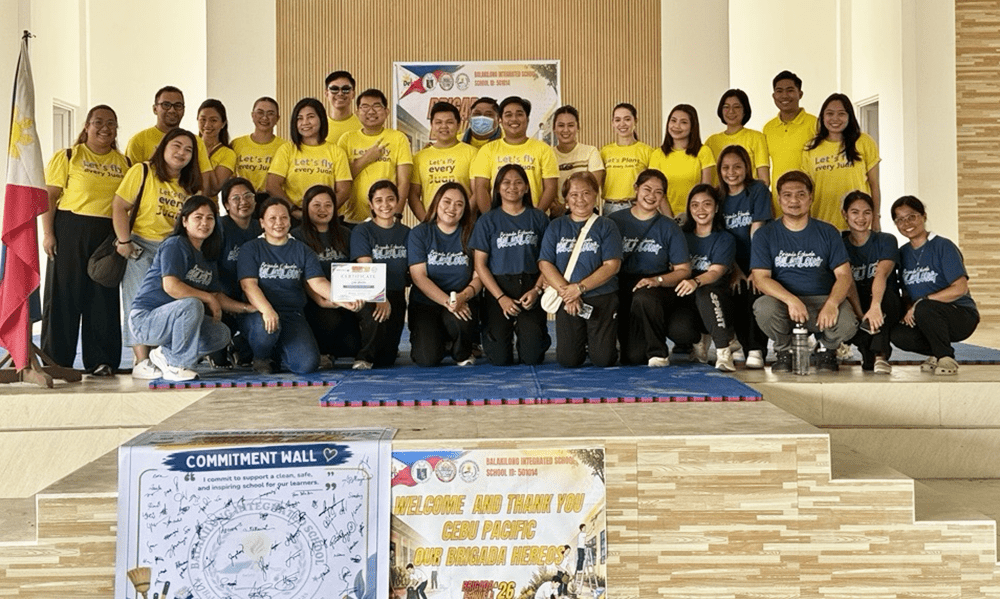
Cebu Pacific (PSE: CEB), the Philippines’ leading carrier, has mobilized its entire group network for the nationwide kickoff of Brigada Eskwela 2026, reinforcing its commitment to education and community empowerment. Volunteers from across CEB group, including airline operations (5J), ground handling provider 1Aviation, and aircraft maintenance company Aviation Partnership (Philippines) Corporation (Aplus), joined forces to help prepare public schools for the upcoming academic year. As part of this year’s campaign, the carrier adopted three Last Mile Schools from the Department of Education’s (DepEd) priority list: Balakilong Integrated School in Batangas, Cadulawan Elementary School in Cebu, and Cogon Elementary School in Davao del Norte. Located in geographically isolated and underserved communities, the schools were selected to help ensure critical aid and support reach students who need it most. Beyond volunteer efforts, the airline provided classroom cleaning and painting materials; science, technology, engineering, and mathematics (STEM) educational packages; and monetary donation raised through contributions from CEB employees. “The true measure of an airline is not only how many people it carries, but how many lives it helps move forward. Through Brigada Eskwela, our people came together to support schools in some of the country’s most underserved communities because every child deserves a safe place to learn, dream, and build a better future. At Cebu Pacific, we are proud to connect Filipinos not only through travel, but through acts of service that create lasting impact far beyond our flights,” said Felix Lopez, CEB Chief Human Resources Officer. The initiative forms part of Juan Community, a broader Gokongwei Group program led by the Gokongwei Brothers Foundation (GBF), which supports education programs nationwide. CEB plans to continue supporting the three adopted schools while exploring opportunities to expand the program to more Last Mile Schools across the country. Operating in 35 domestic and 26 international destinations spanning across Asia, Australia, and the Middle East, CEB continues to connect Filipinos through air travel while helping uplift communities by investing in the next generation.

PBBM witnesses landmark MOU Signing between Ayala, Globe, Mitsubishi, and KDDI for the Philippines’ First Intelligent City Initiative

NCR

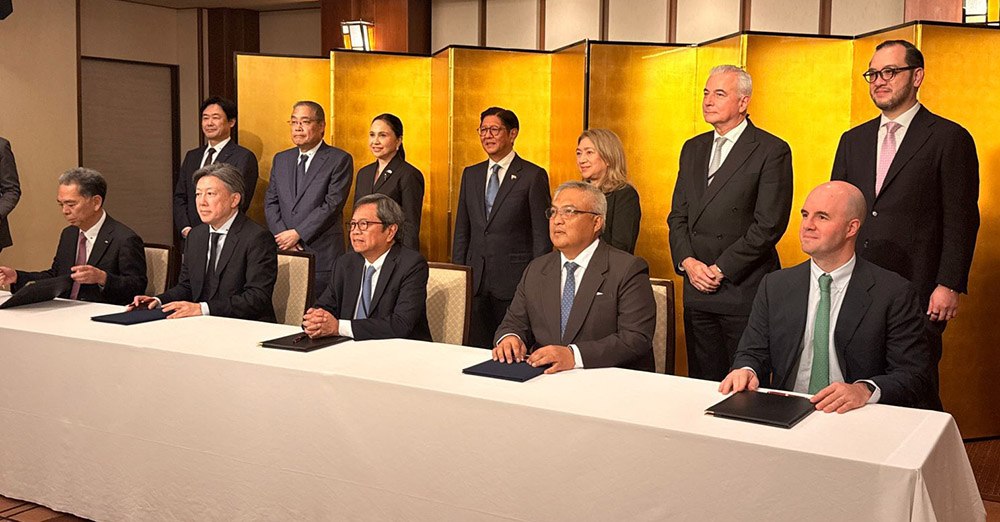
Four industry leaders, Ayala Corporation, Globe Telecom, Mitsubishi Corporation, and KDDI Corporation, have come together to pioneer the country’s first Intelligent City, with Makati CBD as the identified pilot. This project will harness data, digital technologies, and advanced connectivity to redefine how Filipinos live, work, and thrive in urban environments. The initiative will showcase Globe’s consistent and reliable network and digitally enable an ecosystem of sectors to bring the Intelligent City vision to life. This includes advancements in mobility, retail, energy, and connectivity, alongside the development of intelligent city platforms that integrate data and harness AI solutions. “Ayala Corp. has always believed in building communities that uplift lives. Through this initiative, we are reimagining Makati CBS as a hub of innovation, where technology and human connection converge to create a city that truly serves its people,” said President and CEO Cezar Consing. The partnership will also utilize technologies like the Internet of Things that will incorporate artificial intelligence in practical, everyday use. Together, these focus areas form the foundation for building more intelligent, more sustainable, and more resilient urban communities. Globe President and CEO Carl Cruz highlighted the role of connectivity in digital inclusion and nation‑building: “Connectivity has become the lifeblood of progress, the Fifth Utility that empowers nations to grow and thrive. Globe is excited to showcase its consistent and reliable network to transform our cities, ensuring that every Filipino has access to the tools, opportunities, and digital experiences they need to keep moving forward in an increasingly connected world.” This collaboration marks a milestone in nation‑building, setting the stage for a new era of urban development in the Philippines. By harnessing advanced connectivity, AI, and sustainable technologies, the Intelligent City project will not only redefine Makati’s business district but also serve as a model for future developments nationwide, creating an environment where businesses can innovate, opportunities become more inclusive, and economic resilience and competitiveness are strengthened for Filipino enterprises and entrepreneurs in the digital age. Through this strategic partnership, millions of Filipinos will experience safer, more intelligent, and more connected communities, proving that when industry leaders unite, technology becomes a powerful force for transformation. By harnessing innovation and collaboration to modernize cities and empower communities, truly uplifting the lives of Filipinos.

SSS commits to faster, streamlined services as ARTA marks 8th year

NCR

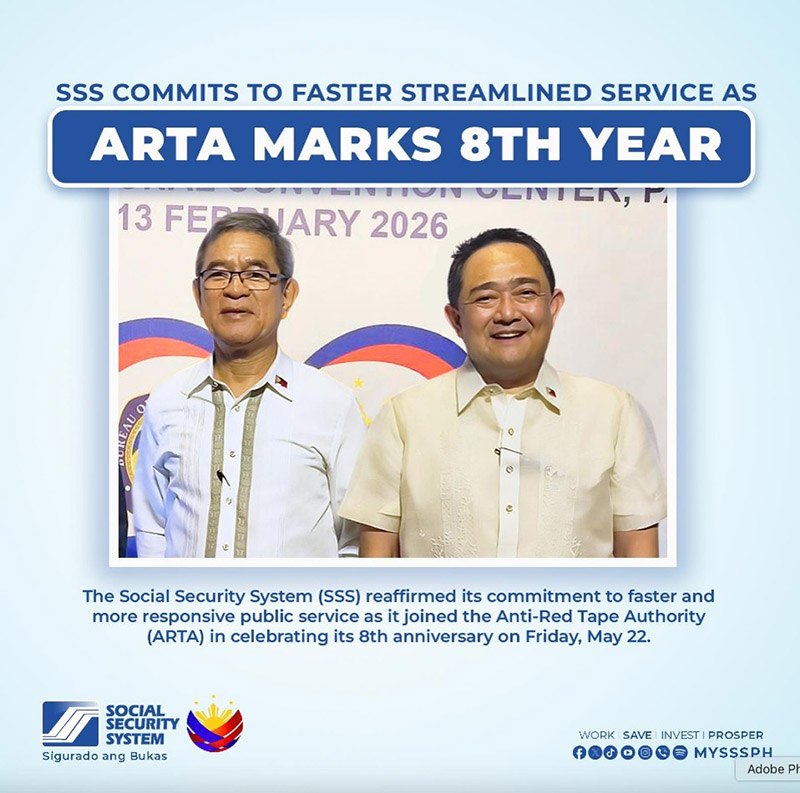
QUEZON CITY, Philippines – The Social Security System (SSS) reaffirmed its commitment to faster and more responsive public service as it joins the Anti-Red Tape Authority (ARTA) in celebrating its 8th anniversary on Friday, May 22. SSS President and Chief Executive Officer Robert Joseph M. de Claro said the agency continues to strengthen frontline services, simplify processes, and modernize systems to better respond to member concerns, in line with the shared goal of improving government service delivery for Filipinos. “As one of the country’s largest public service institutions, SSS recognizes that every transaction affects the daily lives of our members. We continue to improve our systems, processes, and frontline services because faster and more responsive government service is not only an operational goal, but a public responsibility,” de Claro said. “The agency’s strong financial performance in 2025 has strengthened its capacity to expand member assistance programs and accelerate reforms aimed at improving service delivery”, de Claro added. In 2025, SSS posted a net income of P142.97 Billion while its Reserve Fund surpassed the P1 Trillion mark for the first time in the institution’s history, a major milestone that further strengthens the long-term stability of the pension fund for current and future members. “Our strong financial position allows us to invest directly in better services, new technologies, infrastructure upgrades, and programs that will improve the experience of our members,” de Claro said. He also highlighted the agency’s expanded relief programs designed to help Filipino workers and families cope with the continuing impact of the national energy emergency. As part of these efforts, de Claro said SSS is also preparing to roll out an Energy Sustainability Loan Program in September. The program allows qualified SSS members with a Mandatory Provident Fund account to avail themselves of financing to install residential solar panel systems, payable for up to seven years. The Mandatory Provident Fund Program is a compulsory retirement savings scheme that automatically enrolls SSS members who are contributing to the regular SSS program with a Monthly Salary Credit (MSC) above ₱20,000. SSS aims to support at least 100,000 homes by 2028 through the program, which seeks to help families manage rising electricity costs while promoting long-term energy sustainability. According to de Claro, the initiative reflects the evolving role of SSS in responding not only to traditional social security concerns, but also to emerging economic pressures affecting Filipino households. “As ARTA continues to push for reforms in government service delivery, SSS remains committed to developing programs that are more responsive, practical, and relevant to the everyday realities of the Filipino people,” de Claro said.  

Cebu Pacific Welcomes Second Aircraft Delivery of 2026

NCR

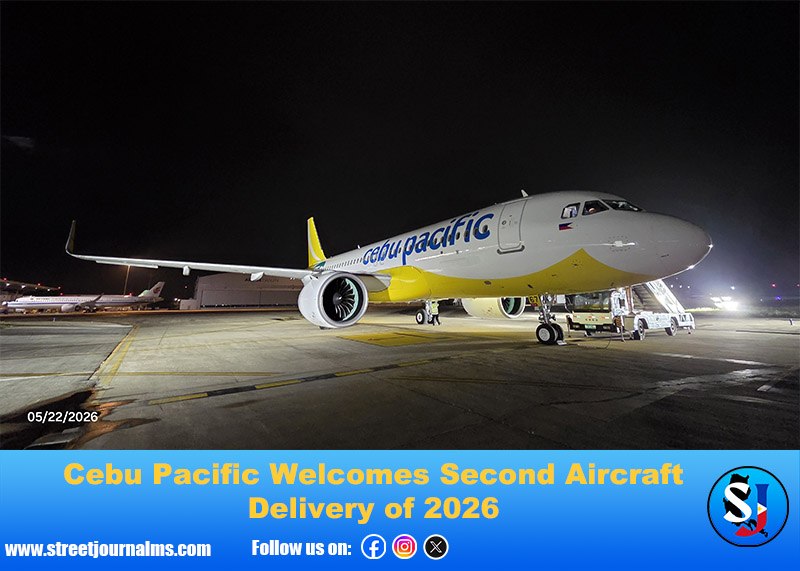
MANILA, Philippines — Cebu Pacific (PSE: CEB), the Philippines’ leading carrier, today took delivery of a brand-new Airbus A320neo aircraft, further strengthening its fleet with modern and fuel-efficient jets. The aircraft arrived in Manila from Airbus’ facility in Tianjin, China, marking the second of four A320neo aircraft expected to join CEB’s fleet this year. In total, CEB anticipates the delivery of seven NEO aircraft in 2026 as part of its ongoing fleet modernization program. “The arrival of another Airbus A320neo reinforces our commitment to sustainability while keeping air travel accessible,” said Xander Lao, CEB President and Chief Commercial Officer. “In today’s operating environment, NEO aircraft also play an important role in helping us manage costs, improve operational efficiency, and reduce our carbon footprint.” Airbus NEO aircraft now comprise 74% of CEB’s jet fleet. Compared to previous-generation aircraft, these aircraft burn 15-20% less fuel per flight and produce significantly less noise, contributing to lower carbon emissions and more sustainable operations. CEB operates one of the youngest fleets in the world. Its diversified fleet mix of 14 Airbus A330s, 27 Airbus A321s, 40 Airbus A320s, and 20 ATR turboprop aircraft enables the widest network coverage in the Philippines.        

Globe supports ASEAN 2026, advancing national efforts through enhanced connectivity

NCR

Globe reaffirmed its commitment to nation-building by supporting the Philippine government’s hosting of ASEAN-related events in the first quarter of 2026, delivering free mobile signal enhancements and dedicated on-ground support across key venues nationwide. In close coordination with the Department of Information and Communications Technology (DICT), the National Telecommunications Commission (NTC), and the ASEAN National Organizing Council, Globe worked proactively to help ensure that the country’s hosting of regional engagements was backed by reliable, high-quality connectivity. The initiative supported events in Metro Manila as well as in Cebu, Bohol, Iloilo, and Boracay. Recognizing the importance of seamless communication in international gatherings, Globe carried out extensive preparations ahead of the events. The company conducted readiness checks across dozens of venues and worked alongside government partners to anticipate connectivity requirements and strengthen network capacity in advance. During the events, Globe deployed dedicated teams on the ground to continuously monitor network performance and respond quickly to any issues. This allowed delegates, organizers, and participants to stay connected and focused on advancing regional cooperation. Improved 5G coverage To further support high-traffic venues such as hotels and function spaces, Globe rolled out targeted enhancements and improved 5G coverage in select locations. These efforts resulted in stronger, more consistent mobile signals and faster data speeds, helping ensure a seamless digital experience for all attendees. The DICT commended Globe for its proactive contribution, recognizing the company’s role in strengthening connectivity support for ASEAN events. “Globe stands with the government in enabling meaningful participation and collaboration during ASEAN engagements. By ensuring reliable connectivity, we aim to support the country’s role in fostering stronger regional partnerships,” said Joel Agustin, Senior Vice President for Service Planning and Engineering at Globe. Through early preparation, close public-private collaboration, and sustained on-ground support, Globe contributed to the successful staging of ASEAN activities in the Philippines. Globe continues to work alongside government and industry partners in strengthening the country’s digital infrastructure, supporting initiatives that promote national development and reinforce the Philippines’ position in the regional and global community.      

USTDA Backs New Airport Development in the Philippines

NCR

Manila, Philippines – The U.S. Trade and Development Agency is supporting the development of a new international airport in Metro Manila, Philippines, that will strengthen secure transportation links with the United States. USTDA announced funding today for a feasibility study on the proposed Sangley Point International Airport, which would ease congestion at Manila’s existing airport and serve as a key international aviation gateway for the Philippines. The study will further high-quality infrastructure to serve the Philippines’ projected aviation needs and define strong security measures to protect direct flights to several major U.S. aviation hubs. “The high volume of direct international travel between the United States and the Philippines reflects the steadfast friendship of our two countries, and we share a desire to see passenger traffic flourish safely and efficiently,” said Thomas R. Hardy, USTDA’s Deputy Director. “This project is one of many shared priorities with the Philippines government to achieve our collective goal of a free and open Indo-Pacific.” USTDA awarded the funding to Philippine project developer Cavitex Holdings Inc. (Cavitex), which selected California-based The S-A-P Group, LLC (SAP) to conduct the study. SAP will provide U.S. technical expertise to guide the airport’s development, including air traffic forecasts, financial analyses, and recommendations for advanced security screening at an airport expected to have direct flights to the United States. The study will also promote the adoption of trusted U.S. solutions, including screening technologies, airport construction components, safety and security equipment, telecommunications networks, and consulting services. The project aligns with the Luzon Economic Corridor effort aimed at strengthening connectivity and economic resilience across a key region of the Philippines. Sangley’s construction will address Manila’s rising travel demand and air traffic congestion by expanding the city’s capacity for both cargo and passenger traffic. Metro Manila is currently served by Ninoy Aquino International Airport, which served approximately 52 million travelers in 2025. Leonides J.M. Virata, President and CEO of Cavitex said: “Cavitex Holdings Inc welcomes the grant from the USTDA, highlighting its importance in accelerating the development of the SPIA, a key infrastructure project under the SPIA Devt Consortium. USTDA’s technical assistance will help advance project planning and implementation by enabling access to advanced U.S. expertise, innovative technologies, and global best practices. The SPIA initiative will deliver transformative benefits for the country – creating tens of thousands of jobs, enhancing mobility, and unlocking billions in long-term economic activity.”                  

Luzon Economic Corridor Expands Partnership to Accelerate Investment and Regional Prosperity

NCR

MANILA, PHILIPPINES —The Governments of the Philippines, United States, and Japan announced today the expansion of the Luzon Economic Corridor (LEC) partnership to include Australia, Denmark, France, Italy, the Republic of Korea, Sweden, and the United Kingdom. The Luzon Economic Corridor, announced in April 2024 as the first Partnership for Global Infrastructure and Investment (PGI) corridor in the Indo-Pacific, enhances connectivity between Subic Bay, Clark, Manila, and Batangas. Through coordinated investments in transport infrastructure, energy systems, digital connectivity, and advanced manufacturing supply chains, the LEC will create thousands of high-quality jobs and transform Luzon into a more prosperous and interconnected region. “The expansion of the LEC partnership demonstrates the power of collaboration among likeminded nations committed to transparency and shared prosperity,” said Philippine Secretary of Finance Frederick D. Go, Co-Chair of the LEC Steering Committee. “Together, we are building infrastructure that will improve daily life for millions of Filipinos and create new opportunities for businesses, industries, and communities in our partner countries and across the region.” LEC partners share a commitment to a free and open Indo-Pacific and pledge to promote fair and transparent economic development. Partners will contribute through technical assistance, financing, and facilitation of private sector investments, while actively participating in working groups focused on transport, energy, and digital infrastructure. Australia is mobilizing investment in the LEC through Australia’s Manila Deal Team, reinforced by technical assistance under the Partnerships for Infrastructure program and a new Php1.9-billion (US$32.6-million) partnership with the Philippines on inclusive economic growth. Denmark is contributing to the LEC by revitalizing Philippine shipbuilding, advancing green maritime innovation, and fostering investments, jobs, and sustainable industrial development. Working with government and the private sector, Denmark’s shipbuilding initiative aims to create 10,000 jobs. France is strengthening connectivity in the LEC by financing 100 bridges through official development assistance, and industrial capacity building through a foreign direct investment project in the aeronautics sector. Italy is contributing to the development of quality, resilient, and sustainable infrastructure by increasing its public financial support in order to facilitate private sector investment from Italian companies in the transport, semiconductors, and manufacturing sectors The Republic of Korea is contributing to enhanced transport and digital connectivity, and sustained economic growth along the LEC, through Official Development Assistance and Public-Private Partnership initiatives, including a Php1.5billion (US$25.6million) grant to establish the National Cyber Security Center and the Ninoy Aquino International Airport modernization PPP Project. Sweden is contributing to Luzon’s Subic-Clark-Manila-Batangas freight railway through a Php74-million (US$1.2 million) grant to fund a feasibility study on signaling systems and operational models. The United Kingdom is deploying its full Growth and Investment Partnerships (GIP+) toolkit in the LEC, providing technical assistance, Php411 billion (US$6.8 billion) in export finance, and mobilizing capital towards infrastructure and energy projects. “The expansion of the Luzon Economic Corridor partnership shows what we can accomplish when likeminded nations unite around strategic infrastructure and shared prosperity. This initiative is creating real opportunities for U.S. business, our Philippine partners, and investors across the Indo-Pacific while countering exploitative infrastructure practices with a better alternative,” said U.S. Senior Advisor for Economic, Energy, and Business Affairs Ambassador Heather Variava. “This expanded partnership reflects our shared vision for quality infrastructure   development that respects transparency, sustainability, and the rule of law,” said Ambassador of Japan to the Philippines Endo Kazuya. “Together, we are building connectivity that will benefit generations of Filipinos and strengthen economic ties across the Indo-Pacific.” The LEC initiative represents unparalleled opportunities for domestic and international investors to participate in transformative projects that strengthen supply chains and enhance regional connectivity.  

Scroll to Top