Street Journal Multimedia Services

NCR

Globe Business Achieves Full ISO Certification

NCR

MANILA, Philippines — Globe Business has achieved full ISO certification for its customer experience and service operations, setting a new industry benchmark for reliability, security, and quality in the Philippine B2B sector. This milestone extends global ISO standards to the entire Customer Experience Management (CXM) organization, fully integrating service quality across both technical infrastructure and all aftersales touchpoints, including analytics, Service Management, process creation, and Voice of the Customer. “This milestone is a clear signal to our customers and to the market,” said KD Dizon, Vice President and Head of Globe Business. “By standardizing aftersales operations under one world-class framework, we are demonstrating operational discipline and collective accountability. In a time when digital trust is critical, we are giving our partners confidence that Globe Business is a low-risk and highly reliable foundation as they pursue intelligent transformation and future-ready growth.” As technology and digital ecosystems evolve, Globe Business continues to stay ahead of the curve by elevating its service standards. While the company has upheld ISO excellence for its technical support teams for over a decade, it is now applying that same level of rigor across every interaction—from system fixes to billing inquiries, to meet the demands of today’s data-sensitive environment. Reliability has emerged as the most important currency. Enterprises in banking, finance, energy, and logistics now require partners that can meet globally recognized standards to mitigate third-party and cybersecurity risks. For Globe Business partners, this certification translates into a tangible strategic advantage: less time spent on exhaustive vendor risk assessments and more resources focused on core business objectives. In this environment, ISO compliance is no longer a differentiator, it is a non-negotiable baseline. The company also upheld its certifications for the Globe Data Centers, reinforcing business continuity and resilience across critical operations. All aftersales operations are now fully aligned with ISO 9001 (Quality Management), and ISO 20000-1 (IT Service Management), and Globe Data Centers sustained its triple certification, including ISO 27001 (Information Security). Operating under this unified framework strengthens both transparency and trust which are key factors that help enterprise clients reduce vendor risk and accelerate procurement cycles by meeting audit and compliance requirements from the outset.  

Globe Backs Stronger Protection for OFWs as GASA and DMW Sign Landmark Anti-Scam Partnership

NCR

  The Department of Migrant Workers (DMW), the GASA Philippine Chapter, and Globe unite to strengthen digital protection for overseas Filipino workers through closer collaboration against evolving scams. MANILA, Philippines — Online scams are becoming more sophisticated and increasingly borderless. For millions of overseas Filipino workers and their families, the risks are real and often personal, especially when it comes to cross-border financial transactions and digital communication. To confront this escalating threat, the Department of Migrant Workers (DMW) and the Global Anti-Scam Alliance (GASA) formalized their collaboration through a Memorandum of Understanding (MOU). The agreement sets a clear direction to strengthen digital safety programs for overseas Filipino workers (OFWs), deepen cross-border intelligence sharing, and widen access to practical tools and resources that help migrant workers recognize, prevent, and respond to scams before real damage is done. Globe serves as Chair of the GASA Philippines Chapter, reinforcing its leadership in responsible AI, strong privacy governance, and sustained scam prevention efforts. Through the Global Anti-Scam Alliance (GASA) coalition, which brings together Globe, Gogolook, Meta, Google, Mastercard, Scamwatch Pilipinas, and other partners, with the Cybercrime Investigation and Coordinating Center (CICC) participating as an observer, the partnership will expand public awareness campaigns, strengthen digital literacy programs, conduct joint training sessions, and advance research initiatives. “Overseas Filipino workers make tremendous sacrifices for their families and for the country. They should not have to worry about falling victim to scams while working abroad,” said Derick Ohmar Adil, Globe’s Head of AI and Privacy Governance. “Through this partnership with the Department of Migrant Workers, we are strengthening digital literacy and promoting responsible use of technology so that protection keeps pace with evolving threats.” Together, these efforts aim to equip OFWs and their families with clear, practical guidance and accessible tools to spot warning signs, verify suspicious messages or transactions, and protect the income they work so hard to earn. “For our overseas Filipino workers, every peso they earn represents sacrifice, discipline, and love for their families. We cannot allow criminals to take that away through deception,” said Department of Migrant Workers Secretary Hans Leo J. Cacdac. “This partnership strengthens our ability to protect OFWs through better information sharing, stronger digital literacy, and coordinated action across borders.” The initiative reinforces Globe’s broader commitment to digital safety, cybersecurity, and responsible AI governance. It also highlights the importance of public and private sector collaboration in combating cyber-enabled crimes that do not respect geographic boundaries. Through sustained collaboration and shared accountability, Globe and its partners aim to empower every Filipino, wherever they may be in the world, to navigate the digital space more safely and securely.  

PBBM infra push spurs more inclusive, transit-led growth phase for BGC

NCR

Bonifacio Global City (BGC) is entering a more inclusive and transit-anchored phase of growth as major infrastructure projects converge with long-term urban planning reforms under the national development agenda of President Ferdinand R. Marcos Jr. At the center of this shift is the Metro Manila Subway, one of the Marcos administration’s flagship transport initiatives being implemented by the Department of Transportation (DOTr). The DOTr is leading the subway’s construction and coordination across national and local agencies, positioning it as the backbone of a more integrated mass transit system for Metro Manila. President Marcos Jr. last week led the groundbreaking of the 1.33-kilometer segment connecting Shaw Boulevard Station in Pasig City to Lawton Avenue Station in Taguig City, including stations within Uptown Bonifacio Global City. With planned stops near Kalayaan Avenue and the eastern portion of BGC, the district is set to gain direct underground rail access to Ninoy Aquino International Airport and major hubs in Quezon City in under 30 minutes. The subway will feature seamless interconnections with existing and planned railway lines, including Light Rail Transit (LRT) Line 1, Metro Rail Transit (MRT) Line 3, MRT-7, LRT-2, MRT-4, and the North-South Commuter Railway, strengthening Metro Manila’s linkages with nearby provinces. For the Bases Conversion and Development Authority (BCDA), which oversees BGC, the subway addresses the district’s long-standing reliance on private vehicles and creates the foundation for stronger transit-oriented development. “National infrastructure investments are allowing BGC to mature into a more commuter-focused and accessible district,” said BCDA President and CEO Engr. Joshua M. Bingcang. “When mass transit becomes embedded in the estate, it improves mobility, strengthens property fundamentals, and supports long-term competitiveness.” Improved rail access is expected to increase pedestrian activity within walking distance of future stations, benefiting residential condominiums, office developments, and retail corridors along BGC. People-centric redevelopment Parallel to rail development, strategic redevelopment is reshaping key areas of the district. The former Fort Strip property along 5th Avenue in BGC is being repositioned for higher-density, mixed-use development aligned with the district’s next-stage urban model. This enabled the opening of a new 7th Avenue road segment toward 32nd Street, restoring continuity to the district’s street grid and improving mobility between Uptown and High Street. These projects are reinforced by a broader and more people-centric recalibration of BGC’s master plan. BCDA, in partnership with SyCip Gorres Velayo & Co., is currently refreshing the BGC Master Development Plan, aligning land use with upcoming transport infrastructure, enhancing walkability, expanding green spaces, and integrating smart systems for traffic and utilities management. This is also linked to BCDA’s national push for model transit-oriented developments. The BCDA has partnered with the Japan International Cooperation Agency (JICA) and coordinated with relevant government agencies to develop a roadmap for transit-oriented development (TOD) in the Philippines. The collaboration aims to align land use planning, infrastructure investment, and value capture mechanisms around major rail corridors. Under this framework, BGC serves as a practical example of how infrastructure and land management can be synchronized. By clustering residential, commercial, and civic spaces around transit nodes, density is supported by mobility rather than road expansion. This approach reduces congestion pressure while improving daily accessibility. Industry assessments continue to identify BGC as one of Metro Manila’s most resilient submarkets, supported by steady tenant demand and established infrastructure. The integration of subway connectivity, redevelopment initiatives, and TOD-based planning positions the district for sustained growth grounded in accessibility and urban efficiency. “With infrastructure aligned to land use and guided by a clear transit-oriented framework, BGC is moving into a more inclusive phase of growth,” Engr. Bingcang said. “Accessibility is no longer a constraint. It becomes a driver of long-term value.” BCDA noted that lessons from BGC’s evolution will inform similar strategies in other growth centers such as New Clark City, as the agency advances a broader model of sustainable and people-centered urban development across its economic zones.

Your first BDO account in minutes? Yes, it’s possible!

NCR

Opening an account shouldn’t feel like another task on your endless to-do list. Between deadlines and side hustles, nobody’s got time for long lines or complicated forms. That’s why BDO Unibank (BDO) offers the Basic Account, a quick and simple way to start banking right from your phone. Ready when you are With just a valid passport and the BDO Pay app, you can set up your Basic Account in minutes—no initial deposit, no maintaining balance required. All you need is your smartphone, so you can literally open an account between classes, after work, or while waiting for coffee. Other government-issued IDs are also accepted, with approval typically completed within one day. Once it’s approved, you’re good to go. Pay Bills, Send Money, Scan to Pay at partner merchants, or Split Bill with friends using BDO Pay—all directly from your Basic Account. Every transaction links straight to your account, making it easy to track your spending. It’s perfect for students and young professionals learning to budget without the hassle. No extra steps, no need to cash in or transfer funds between digital wallets. Easy, simple and secure access you can rely on Your Basic Account is made for everyday life—reliable, consistent, and easy to count on. It’s built to support your daily needs as they grow and change. For added convenience, you can get a physical BDO Pay card and withdraw cash for free at BDO ATMs anytime, giving you dependable access to your funds whenever you need them. And because the Basic Account is powered by BDO Unibank, you have the assurance of strong security and a nationwide branch network whenever you need in-person support. Ready to make banking the simplest part of your day? Download the BDO Pay app and open your Basic Account now.  

BoC,PDEA,PNP intercept P278-M shabu shipment in MICP

NCR

MANILA, Philippines — In one of the largest drug interdictions to date, combined operatives of the Bureau of Customs (BOC), the Philippine Drug Enforcement Agency (PDEA), and the Philippine National Police (PNP), successfully intercepted a shipment of methamphetamine hydrochloride, locally known as shabu, with an estimated value of ₱278,000,000.00, at the Manila International Container Port (MICP), North Harbor, Manila on February 10, 2026. The seized shabu weighed approximately 41 kilograms. This major anti-drug operation highlights the strength of inter-agency collaboration and invaluable assistance of foreign counterparts in the government’s intensified campaign against illegal drugs. The operation was conducted under the institutional guidelines formulated by the Dangerous Drugs Board (DDB), and in accordance with the directive of President Ferdinand R. Marcos Jr. to protect the Filipino people from the devastating effects of illegal drugs. The operation was a product of information sharing from foreign counterparts that highlighted the capabilities of BOC’s x-ray screening process and PDEA’s Narcotics Detection Dogs (NDDs). “This is a major victory for the Filipino people and a severe blow against organized drug syndicates,” said PDEA Director General Undersecretary Isagani R Nerez. “The interception of the shabu shipment at the port represents prevention at its strongest — stopping the threat before it could reach our streets, schools, and communities.” he added. The seizure of such a massive quantity of illegal substances represents not only a major law enforcement success but also a significant social impact. By preventing these dangerous substances from reaching communities, the operation has potentially saved countless lives, shielded families from harm, and safeguarded the future of the country’s youth from the threat of addiction. PDEA extends its utmost appreciation to its partner agencies for their vigilance, professionalism, and unwavering cooperation. “The success of this operation once again demonstrates that unified government action remains the most effective weapon against the drug menace.” DG Nerez expressed. This landmark achievement sends a clear message: the government will remain relentless in dismantling drug networks, enforcing the rule of law, and protecting public safety. Through its supply reduction strategy, the PDEA and other law enforcement agencies target the production and distribution of illegal drugs. By reducing the proliferation of illegal drugs, the government lowers drug dependency, eases the burden on rehabilitation services, and ensures more efficient use of public resources.        

QC LGU and BDO Foundation empower small businesses through financial literacy and entrepreneurship training 

NCR

QUEZON CITY, Philippines — A positive start to 2026 welcomed nano-entrepreneurs as the Quezon City Small Business Cooperatives Development and Promotions Office (QC-SBCDPO) and BDO Foundation teamed up for “Ayusin ang Pera, Palaguin ang Negosyo”, a learning session on financial literacy and entrepreneurship held at the Amoranto Sports Complex in Quezon City. The activity was facilitated by Chinkee Tan, who shared lessons with his signature mix of wit, humor, and practical advice. More than 200 nano-entrepreneurs learned essential skills, mindset, and attitudes needed to start, manage, and grow a business. Sari-sari store owners, market vendors, and other self-employed individuals with a small capital gained practical insights from the Pambansang Wealth Coach as he drew from personal experiences and challenges. Mona Celine Marie V. Yap, City Government Department Head III of the QC-SBCDPO, emphasized that similar capacity-building activities are available to Quezon City small business owners at no cost through partnerships with various organizations, including BDO Foundation. “Katulad po ng mga ganitong pa-event, yung mga financial literacy, marami po tayong training that you can avail. Mayroon po tayong free trainings given by our partners (Similar to financial literacy events like these, you can avail free trainings given by our partners),” she said. “Sa BDO Foundation, naniniwala kami na kapag may tamang kaalaman sa pera at negosyo, mas nagiging handa ang isang negosyante na magdesisyon nang maayos at magplano para sa kinabukasan (At BDO Foundation, we believe that with the right knowledge in finance and entrepreneurship, business owners will be more prepared to make better decisions and plan for the future),” said BDO Foundation President Mario A. Deriquito in his message of support. Aside from the learning session led by Chinkee Tan, participants were also briefed on the Nano-Enterprise Registration Program of the Quezon City Government.  The briefing was aimed at encouraging nano-enterprise owners to register their businesses with the local government. During the session, participants were informed that registered nano-enterprises may avail of tax and registration fee exemptions, in accordance with existing local ordinance. The event was also graced by Quezon City District 1 Councilor Charm M. Ferrer, who delivered a message of support in her capacity as Chairperson of the Committee on Micro, Small, and Medium Business Entrepreneurship Development and Cooperatives. Through this collaboration, BDO Foundation remains steadfast in its commitment to advancing financial inclusion — empowering business owners with the right knowledge and confidence needed to be more prepared in planning and deciding for their future.  

United States, Philippines Celebrate 80th Anniversary of Diplomatic Ties in 2026

NCR

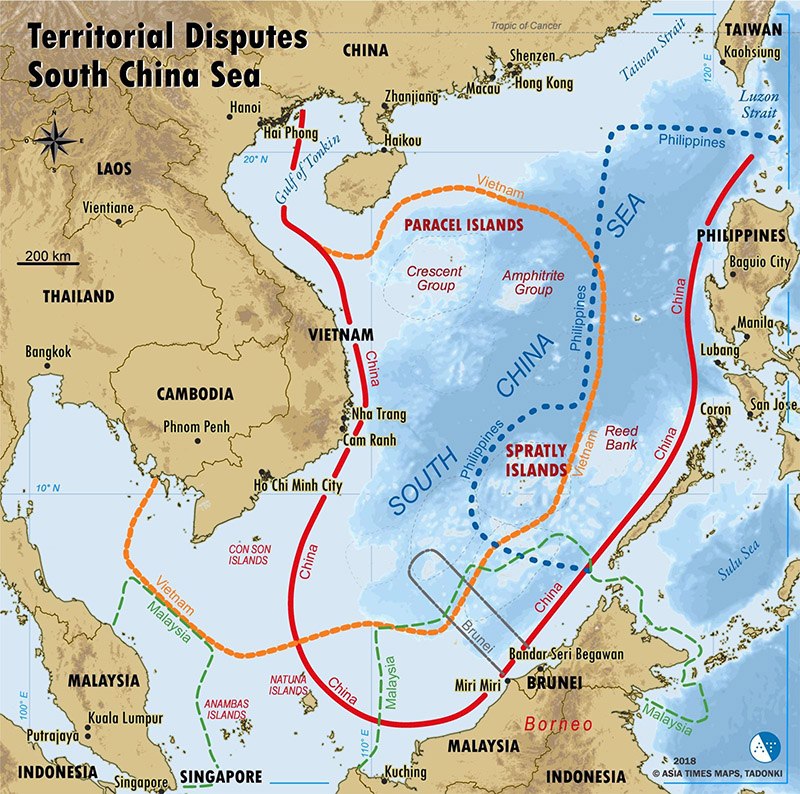
MANILA, Philippines — U.S. Embassy in the Philippines Chargé d’Affaires, a.i., Y. Robert Ewing and Philippine Ambassador to the United States Jose Manuel Romualdez launched February 5 the logo commemorating the 80th anniversary of diplomatic relations between the United States and the Philippines in 2026. The event marks the start of a yearlong campaign led by the U.S. Embassy in the Philippines and the Philippine Embassy and Consulates General in the United States to celebrate the unwavering ties between the United States and the Philippines as friends, partners, and allies. “Eighty years ago, our two nations formalized a partnership rooted in shared values, mutual respect, and a deep commitment to democracy and freedom.  We are proud of what we have accomplished side by side—balikatan—from standing shoulder-to-shoulder in times of conflict, to advancing economic growth, to joining forces on health, education, and disaster response priorities,” Chargé d’Affaires, a.i., Ewing said at the launch of the commemorative logo at the SM Mall of Asia Globe in Pasay City. “The next chapters will be written by the innovative young people who are already building on our shared legacy.  We are confident that – as steadfast friends, partners in prosperity, and ironclad Allies – we will rise to even greater heights together for generations to come.” “Tonight, as we launch the official logo for the 80th anniversary of Philippines-U.S. diplomatic relations, we are not simply unveiling a design.  We are unveiling a story – eight decades of shared struggles, shared values, and shared aspirations. This logo represents a living partnership that has evolved with time and has grown, adapted, and deepened,” Ambassador Romualdez said.  “What makes the Philippines-United States relationship truly special is that it is not only anchored in treaties and institutions.  It is anchored in people.  In many ways, we are not just allies – we are family,” he added. The United States and the Philippines established diplomatic relations on July 4, 1946. Historic people-to-people ties are the bedrock of the U.S.-Philippines relationship.  Around 375,000 Americans call the Philippines home while more than 4.6 million Filipinos and Filipino-Americans live, work, and study across the United States. The economic partnership continues to deliver results for Americans and Filipinos.  Through U.S. investments and foreign assistance, the United States and the Philippines promote mutual prosperity by bolstering energy security, securing critical supply chains, driving private investment in the Luzon Economic Corridor, and addressing public health challenges. This year also commemorates the 75th anniversary of the U.S.-Philippine Alliance through the signing of the Mutual Defense Treaty.  The Philippines is the United States’ oldest security treaty ally in the Indo-Pacific. Through large-scale exercises, joint disaster response operations, and a shared commitment to supporting freedoms of navigation and overflight, free trade and unimpeded commerce, and freedoms of economic opportunity for South China Sea littoral nations, U.S. and Philippine forces work together to address shared challenges in the region. “Eighty years of shared commitment to security, including 75 years as Allies, has enabled our countries to achieve peace through deterrence, protect our citizens, and advance an open, prosperous, and secure Indo-Pacific, including in the South China Sea,” Chargé d’Affaires, a.i., Ewing added. In 2026, the United States also celebrates the 250th anniversary of U.S. independence.  Under the Freedom 250 campaign, the U.S. Embassy in the Philippines is organizing a series of programs to showcase the values of freedom, democracy, and innovation—values that underscore the U.S.-Philippines relationship. The launch of the commemorative logo of the 80th anniversary of U.S.-Philippine diplomatic relations was made possible with the partnership of SM Supermalls.

BGC set for people-first refresh under updated master development plan

NCR

Bonifacio Global City (BGC) is set to undergo a comprehensive, people-first revamp, as the Bases Conversion and Development Authority (BCDA) partners with SyCip Gorres Velayo & Co. (SGV & Co.) to update the estate’s master development plan. More than two decades since its original development framework was put in place, the updated plan will serve as a practical and forward-looking guide for BGC’s next phase of growth. It aims to ensure that the district continues to evolve in a manner that is inclusive, resilient, and responsive to current and future urban needs. “We want to make sure that BGC continues to become more people-centric, with greater focus on open spaces, mobility, and transportation. Moving forward, we want BGC to be more open and accessible to all sectors of society,” BCDA President and CEO Engr. Joshua M. Bingcang said. Under the agreement, BCDA and SGV & Co. will undertake a nine-month consultation and technical study process to prepare the updated plan. The process will involve data-driven urban analysis, visioning workshops, and engagement with key stakeholders to align development strategies with existing policies and infrastructure capacity. The updated plan will integrate contemporary urban planning principles, with stronger emphasis on public spaces, streetscape improvements, and active mobility. It will also align BGC’s development framework with transit-oriented development (TOD) to better connect land use planning with existing and planned transport systems. A component of the study is the review and strategic reallocation of BCDA’s gross floor area (GFA) entitlements. This will help ensure that development intensity matches infrastructure capacity, optimize land use and value, and identify underutilized areas for potential development or disposition. BCDA said the master plan update is necessary to address emerging challenges such as traffic congestion, infrastructure constraints, climate risks, and the need for more inclusive and accessible mobility in a maturing central business district. Once completed, the updated BGC plan is expected to support long-term investments, generate employment, and improve mobility and accessibility for workers, residents, and visitors. This initiative is aligned with the administration’s socioeconomic agenda by advancing sustainable urban development, efficient land use, and investment-driven growth.      

BDO and CCAP recognize Barangay Bel-Air in scam crackdown

NCR

  Photo credit taken from GMA Network’s 24 Oras       MAKATI CITY, Philippines — BDO Unibank (BDO) honors community efforts to fight scams. Representatives from the bank and the Credit Card Association of the Philippines (CCAP) held a recognition ceremony for Barangay Bel-Air officials in Makati City, whose actions which led to the arrest of scammers equipped with International Mobile Subscriber Identity (IMSI) catchers—illegal devices that intercept mobile communications to facilitate scams. The Philippine National Police-Anti-Cybercrime Group (PNP-ACG) spearheaded last year’s operation after detecting unusual cellular signals in the area, indicating the presence of IMSI catchers. Through signal triangulation and close coordination with barangay officials, they were able to locate the source of these signals and identify the suspects. BDO plans to conduct more workshops in communities to share practical tips and insights on identifying fraud schemes, securing personal information, and reporting suspicious activities. The bank believes in the power of multi-sector collaboration among private institutions, government units, and law enforcement to prevent fraud and safeguard the public against evolving criminal tactics.  

Scroll to Top