Street Journal Multimedia Services

Environment

Baguio City bares Environmental Action Plan for 2025-2028

Environment

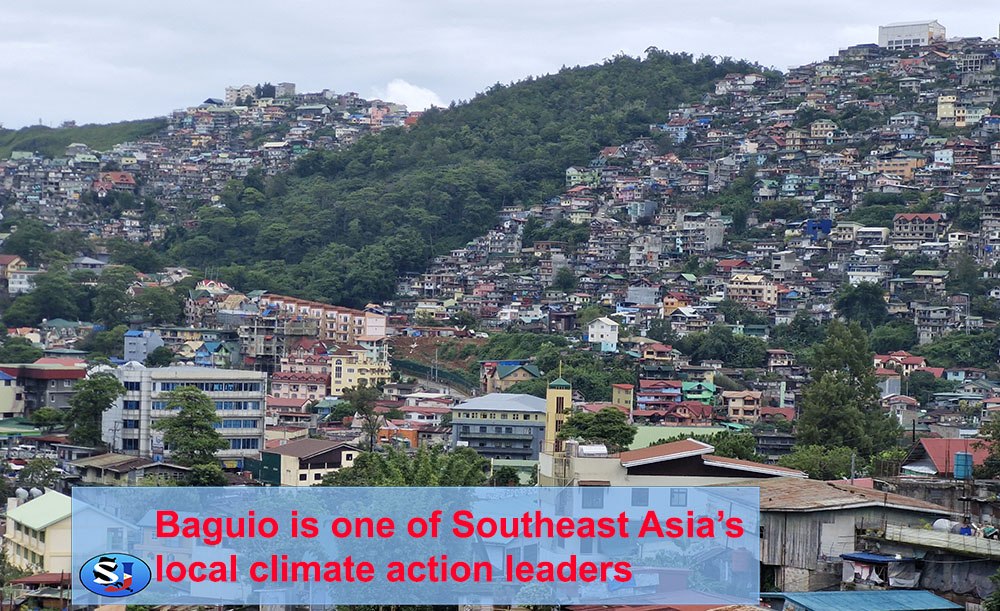
By Aileen P. Refuerzo   BAGUIO CITY , Philippines — The city executive department under Mayor Benjamin Magalong has mapped out an Environmental Action Plan anchored on facilitating environmental regeneration, reducing greenhouse gas (GHG) emissions, and improving waste management systems by 2028. The plan is part of the Executive-Legislative Agenda currently being finalized, charting the city’s developmental direction from 2025 to 2028. The plan targets a 5 percent decrease in GHG emission from 2026 baseline levels and at least a 10 percent reduction in landfill waste, from 300 tons per day to 270 tons per day. 𝗪𝗮𝘀𝘁𝗲 𝗠𝗮𝗻𝗮𝗴𝗲𝗺𝗲𝗻𝘁 𝗮𝗻𝗱 𝗥𝗲𝗰𝗼𝘃𝗲𝗿𝘆 Under the plan’s Solid Waste Management component, the city aims to complete the Central Material Recovery Facility (MRF) and establish three additional barangay MRFs by 2028. These efforts are supported by ₱100 million in funding, with the project divided into several phases—completion of road networks, environmental compliance, and installation of new waste processing equipment such as food waste and plastic shredders. The city will also implement a Social Behavioral Change Project on waste management in partnership with the European Union and the United Nations Development Programme (UNDP). For Liquid Waste Management, the city aims to implement a modernized and upgraded Sewage Treatment Plant (STP) and Septage Facility by 2028. The plan includes rehabilitation of higher-risk sewer line segments, expansion of new connections, and achievement of a 70 percent collection efficiency for Sanitation and Environmental Users’ Fees. The program will also ensure a rehabilitated sewer network equivalent to at least 5,000 new connections. In terms of Hazardous Waste Management, the city aims to establish an Institutionalized Hazardous Waste Collection and Disposal System by 2028. Key steps include baseline data collection, exploratory management systems for hazardous waste such as e-waste and used oil, and the creation of an ordinance to strengthen barangay-level collection systems. 𝗥𝗲𝘀𝗼𝘂𝗿𝗰𝗲 𝗠𝗮𝗻𝗮𝗴𝗲𝗺𝗲𝗻𝘁 The city’s Air and Urban Forest Management initiatives include the continued rollout of the Community and Local Engagement for Air and Reforestation (CLEAR) Baguio Strategy focusing on real-time air quality monitoring, expanded tree registry coverage, and citizen engagement programs. By 2028, the city envisions a real-time, accessible SMART platform integrating air quality, urban forest management and community greening. At least 90 percent of stakeholders are expected to be engaged and responsive to these initiatives. The goal is to make Baguio a national model for SMART environmental communication and urban greening. Meanwhile, the City Integrated Water Management program will ensure a seven-day-a-week water supply and an increase of 3,500 cubic meters per day in available water by 2028. Key deliverables include nature-based waterway rehabilitation, improvement of micro water systems in identified areas such as Kias, Quirino and Irisan, and the implementation of the Integrated Water Resource Management Plan. Monitoring systems for water supply, recharge capacity, and waterway health will also be established. 𝗚𝗿𝗲𝗲𝗻 𝗜𝗻𝗳𝗿𝗮𝘀𝘁𝗿𝘂𝗰𝘁𝘂𝗿𝗲 The plan also covers the redevelopment and expansion of parks, open spaces and green buildings. Between 2025 and 2027, the city eyes multiple projects including the redevelopment of Burnham Park, Mines View Park, Lower Wright Park and Happy Glen Community Park. The Conservation Management Plan of Dominican Hill and Heritage Park is also in the pipeline. By 2028, the city aims to achieve an increased sustainable citywide network of healthy, inclusive, and resilient parks and open spaces. These parks will integrate environmental benefits such as cooling, biodiversity, and stormwater management, alongside improved public health and social cohesion. Baguio will also establish a sustainable financing and governance model for park maintenance and position itself as a national model for green and health-promoting urban spaces. 𝗚𝗿𝗲𝗲𝗻 𝗕𝘂𝗶𝗹𝗱𝗶𝗻𝗴 𝗜𝗻𝗶𝘁𝗶𝗮𝘁𝗶𝘃𝗲𝘀 In support of environmental compliance, the city will roll out Green Building Standards to all barangays and building owners. Continuous assessment, inventory, and execution of these standards will culminate in the implementation of a Green Building Ordinance by 2028. The target is to ensure 100 percent compliance of all new and existing buildings with green standards. Magalong said that through these programs, projects and activities, the city, in collaboration with the private sector, aims to create a greener, cleaner and more resilient city.

Stakeholders: dredging operations in Zambales resurrects “dead” fishing areas

Environment

By Ruben A. Veloria   ZAMBALES, Philippines — Stakeholders, particularly the fishing communities, in the coastal towns of this province express full support to the on-going River Restoration Program (RRP) at the mouth of major river systems here. Speaking for the 28,000 fishermen-member of the Zambales Provincial Fisherfolks Association, president Paulo Quiteneg claimed that fishermen from the towns of San Felipe and San Narciso are enjoying the benefits RRP. “In fact, we were able to catch 25 to 30 kilos of fish every day,” said Quiteneg. He added that the RRP or locally referred to as “dredging”, refreshes their fishing grounds, “that is why we catch more fish at the mouth of Santo Tomas and Bucao Rivers compared to months before.” The show of support came after a group who claimed to be concerned environmentalists protested against dredging operations in the municipalities of San Narciso and San Felipe because it allegedly “destroyed marine habitats, reduced their income, and exposed their communities to coastal erosion and sea-level rise.” Quiteneg belied those reports and clarified that there is no truth about the reported problems of the fishermen in Zambales allegedly caused by the continuous dredging operations at the mouth of major rivers here. From the municipality of San Felipe, Barangay San Rafael Chairperson Marlita Santos claimed that before the river dredging, they have to go to far places in the sea to catch fish. “But months after the dredging has begun, fishermen noticed that fish start to show near the mouth of Sto. Tomas River,” she said. Chairperson Santos encourage the public to visit Barangay San Rafael to see for themselves the bounty of the fisherman’s catch such as sting ray, grouper (lapu-lapu), jackfish (talakitok), shrimps (alamang), pigeon pea (tabios), which they could also buy. Meanwhile, Engineer Doming Mariano, Zambales Provincial Government Consultant on Engineering and Infrastructure Development, said the River Restoration Program is a product of intensive and comprehensive study for the mitigation and control of massive flooding in the province of Zambales. “A brainchild of Governor Hermogenes Ebdane Jr., the dredging of major river channels: Santo Tomas and Bucao Rivers, which are clogged with lahar and sands since Pinatubo eruption in 1991, helped to accommodate run off waters from the mountains instead of rushing to the communities and cause floods,” Mariano said. Among the rivers affected by the RRP are Sto. Tomas River in San Narciso, Maloma River in San Felipe, Tangway River in Cabangan, and Bucao River in Botolan. Mariano said that in collaboration with the DENR, DPWH, DOTr, and local government units, the RRPs in those main river systems were implemented and since then no communities were experiencing major floodings. Bernabe Almandres, chief of the Zambales Bureau of Fisheries and Aquatic Resources (BFAR), said that since 2013, their office repeatedly declared that marine habitat along the stretch of coastline in San Narciso and San Felipe, non-functional fishing ground because of the absence of coastal or coral reef, seagrass bed, or mangrove. But since the start of river restoration Bucao River and its adjacent coastal areas are now becoming functional fishing ground for shrimps, ponyfish (sapsap), and swordfish,” Almandres said. For his part, Barangay Sto. Niño Chairman Elbert Abille said that more than 500 business owners in his barangay are willing to cooperate with the local government to resolve the land issues in their area, and express their support to the River Restoration Program. “Since RRP has begun clearing the rivers of Maculcol and Santo Tomas, fish started to become abundant in the area, and fishermen catch grouper and jackfish (talakitok), but bigger than and more abundant than before,” Abille said. Engr. Mariano noted that the RRP is a gigantic blessing for Zambales, which the national government could not afford to fund considering the magnitude of the amount needed clear the rivers of debris. “Instead, the Provincial Government is earning millions of pesos in revenues, based on the ordinance that requires regulatory fee for every truckload of extracted sand from the river,” Mariano said.        

Aboitiz Renewables showcase innovation, expertise at PH geothermal conference

Environment

The geothermal arm of Aboitiz Renewables Inc., a wholly-owned subsidiary of Aboitiz Power Corporation (AboitizPower), showcased its Overhauling Reduction Days Program, which aims to reduce maintenance time for its geothermal plants, as well as the Bay Battery Energy Storage System (BESS) Project, in a conference recently held in Makati City. Engr. Rommel Austria, Senior Manager for Central Maintenance Services, detailed the Overhauling Reduction Days Program, which uses Agile methodologies — a project management approach that breaks projects into sprints — to significantly enhance the operational efficiency and output of geothermal power plants. “By combining strategy through Agile method, structure, and agility, we’re not only enhancing our operations — we’re ensuring a power system that is more resilient, responsive, and future-ready to deliver reliable and sustainable energy for our customers,” he said. In the same event, Engr. Joerex Delgaco, Production Manager, presented the Bay BESS Project in Laguna, which is set to be the first-ever BESS and geothermal hybrid system in the Philippines. It will add crucial battery storage to APRI’s Makban geothermal plant through a specialized hybrid system, allowing it to quickly support the Luzon Grid during peak demand periods and power disruptions. “Through the Bay BESS Project, we are combining battery technology with geothermal power to strengthen grid stability. This means our consumers can count on a more reliable and steady supply of clean energy, especially during peak demand or unexpected disruptions.” They made their remarks during the sixth Philippine International Geothermal Conference (PIGC6) organized by the National Geothermal Association of the Philippines (NGAP). Aboitiz Renewables is the renewable energy arm of AboitizPower holding investments and interests in various renewable energy projects, including geothermal, solar, large hydro, run-of-river hydro, wind, and battery energy storage systems. “Our projects, like the Overhauling Reduction Days Program and the Bay BESS Project, reflect our mission to deliver innovation with purpose as we help power the nation’s progress,” said Ireneo “Irene” Itoses, First Vice President and General Manager for Geothermal Business Unit of Aboitiz Renewables.            

BCDA upskills indigenous farmers through Ayta Ethno Botanical Center  in New Clark City

Environment

NEW CLARK CITY, Philippines — Through the Ayta Ethno-Botanical Center (AEBC) in New Clark City, the Bases Conversion and Development Authority (BCDA) is empowering indigenous farmers in Tarlac with end-to-end agricultural skills—from sustainable crop production to value chain participation and market access—ensuring that communities thrive both economically and ecologically. Spearheaded by BCDA President and Chief Executive Officer Engr. Joshua M. Bingcang, the AEBC is a model of community-based sustainability—where indigenous knowledge meets modern agricultural innovation. The program equips Ayta farmers with practical skills in sustainable crop production, climate-resilient farming, post-harvest handling, and agripreneurship, empowering them to become both food producers and market players. Now on its 14th week, the AEBC program aims to empower 300 Ayta farmers in Capas and Bamban, Tarlac through hands-on, farm-based training implemented in partnership with the Pampanga State Agricultural University (PSAU) and the Department of Agriculture Regional Field Office III. Located on a 10-hectare learning site in Sitio Binyayan, Capas, the AEBC serves as a living classroom and livelihood hub where Ayta farmers are trained in rice and high-value crop production, including coffee, mango, and various vegetables. These new competencies help them diversify income, improve food security, and restore traditional respect for the land. Beyond cultivation, the AEBC program also helps prepare trainees for educational equivalency certifications in agriculture and agribusiness, giving them formal recognition that strengthens their employability and access to government support. “This role is truly meaningful because it contributes to our bigger goal of ensuring food security,” said Engr. Bingcang. “It’s about empowering stakeholders and engaging the community, especially our indigenous partners in New Clark City. We want them to be part of this progress—to harness their skills and strengths in agriculture and turn it into something we can proudly showcase in New Clark City.” Members of the Ayta community sort newly harvested eggplants at Ayta Ethno Botanical Center. BCDA photo In recent sessions, Ayta farmers harvested over 43 kilos of eggplants and 6.5 kilos of green chili from their demo plots and completed a module on Climate Resilience in Agriculture, learning adaptive strategies to thrive amid changing weather conditions. For the Ayta community, the AEBC has already proven transformative. “Malaking tulong po sa amin ito. Ang project na ito ay binigay ng BCDA kaya ipinagmamalaki namin ito, kaya kami ay nagsisikap (This is a big help to our community. This project was initiated by BCDA, that is why we take pride in it, and we work hard.),” said Sitio Binyayan Chieftain Berling Capiz. “Marami po kaming natutunan at gusto po naming mas marami pang ganitong proyekto. (We are learning a lot, and we hope to have more project similar to this.)” BCDA Executive Vice President and COO Atty. Gisela Z. Kalalo, along with BCDA officers and members of the media,  joins the Ayta community at the Ayta Ethno Botanical Center. BCDA photo For BCDA Executive Vice President Atty. Gisela Z. Kalalo, the BCDA’s mission is to lift the Ayta community through sustainable agribusiness and innovative farming techniques, all while prioritizing the preservation of their cultural identity. “Hindi lang po kami nakatuon sa aming pakikipag-usap sa mga foreign investors, sa mga local investors, mahalaga rin po para sa amin na bigyang-pansin ang aming mga kapwa Pilipino, tulad ninyo, dahil masaya kami na mapapanatili namin ang inyong kultura (We are not only focused on engaging with foreign investors, but also with local investors. It is equally important for us to give attention to our fellow Filipinos, like you, because we are happy to be able to help preserve your culture),” she added. The AEBC initiative supports BCDA’s commitment to the United Nations Sustainable Development Goals (SDGs), particularly SDG 1 (No Poverty), SDG 2 (Zero Hunger), SDG 8 (Decent Work and Economic Growth), and SDG 12 (Responsible Consumption and Production). By building the capacities of indigenous communities and promoting sustainable food systems, BCDA ensures that the growth of New Clark City advances inclusive, resilient, and people-centered development.          

BCDA, CostPlus ink partnership to explore renewable energy solutions in New Clark City

Environment

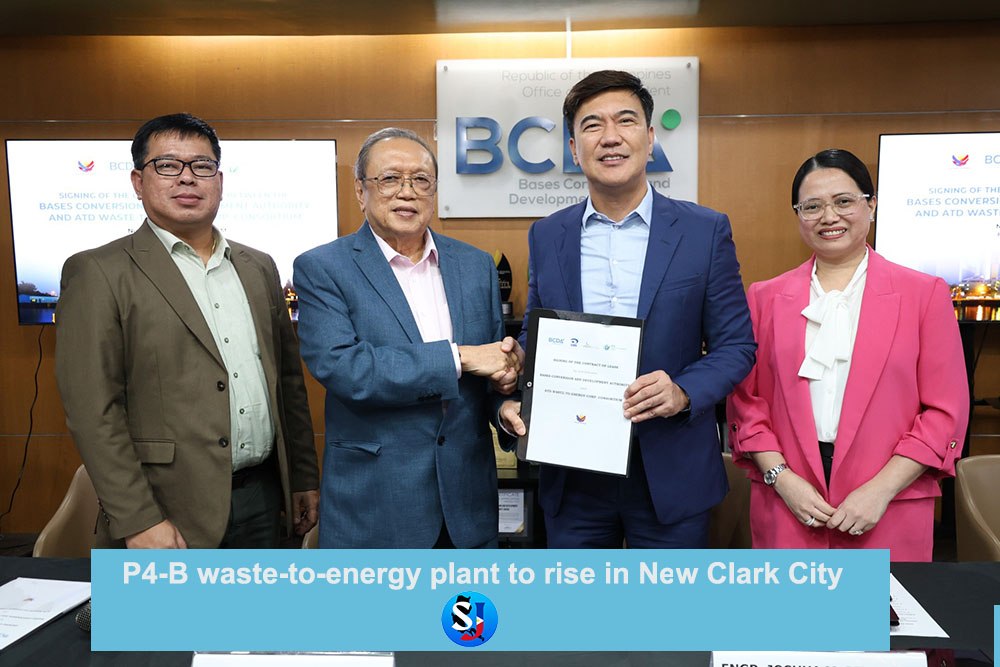
NEW CLARK CITY, Philippines — BCDA President and CEO Joshua M. Bingcang and CostPlus, Inc. President Anand Mahtani formalized the partnership through the signing of a memorandum of understanding (MOU) that will pave the way for feasibility studies on key sustainable energy initiatives, on October 14. “With partners like CostPlus, we are confident that together we can unlock the full clean energy potential of New Clark City, and show the rest of the country that green development and economic growth can go hand in hand,” said Engr. Bingcang. Under the agreement, proposed projects include the development of a 5-megawatt microgrid system powered by solar energy, battery storage, and auxiliary power technologies. Another major component is the establishment of a 20-metric ton per day waste-to-energy (WTE) facility, designed to convert solid waste into compressed natural gas (CNG) that can be used to fuel public transportation. The facility is also expected to produce high-grade fertilizers as a valuable by-product. “[BCDA] is looking at building a city for the sustainable future to showcase to the world that green technology and a clean, sustainable environment for development can exist here in the Philippines,” Mr. Mahtani said during his speech. Mr. Mahtani also highlighted that the initiative will convert waste into compressed natural gas, providing a sustainable energy source to support the fuel needs of jeepneys. In a symbolic gesture marking the start of the partnership, CostPlus, Inc. donated an electric bus to BCDA, demonstrating both parties’ shared commitment to advancing green mobility and supporting the government’s broader sustainability agenda. The signing event was also witnessed by Indian Ambassador to the Philippines H.E. Shri Harsh Kumar Jain, CostPlus, Inc. President Anand Mahtani and BCDA Executive Vice President and COO Atty. Gisela Z. Kalalo. This strategic collaboration forms part of BCDA’s broader commitment to position New Clark City as a model for smart, resilient, and sustainable urban development in the Philippines.    

ECO-WARRIORS AT WORK — NURTURING TREES FOR LIFE

Environment

  SUBIC, Zambales, Philippines — Volunteers from the Bases Conversion and Development Authority (BCDA) joined a mangrove propagation activity held in Binictican at Subic, Zambales, in support of the 47th Anniversary of the Central Luzon Media Association (CLMA) and the 13th Anniversary of the Samahan ng Mamamahayag ng Subic Bay Freeport (SMSF). Over 200 native mangrove saplings were planted by volunteers—strengthening the community’s natural defenses, supporting biodiversity, and helping mitigate the impact of climate change. For three consecutive years, BCDA has taken part in CLMA’s mangrove rehabilitation project as part of its ongoing reforestation initiatives, in line with the United Nation’s Sustainable Development Goals. Joining the effort were SBMA Chairman & Administrator Eduardo Jose Aliño, BCDA OIC–Senior Vice President for Conversion and Development Engr. Mark Torres and Subic Bay locators.

SM GUUN:  Establishing Ecosystems for Waste Transformation and Circularity

Environment

  Manila Developing markets for recovered materials is a crucial step in achieving a successful waste management system for a waste-free future. SM GUUN Environmental Company, Inc. (SM GUUN), a joint venture of SM Prime Holdings, Inc. and Yokohama-based Japanese environmental solutions company GUUN, takes the next bold step in its sustainability journey by creating a collaborative ecosystem dedicated to waste transformation and circularity. The initiative, developed in collaboration with circularity partners, is designed to reimagine waste not as an endpoint but as a renewable resource. Circularity in Action “At SM GUUN, we see waste as the beginning of new opportunities,” said George Cheung, SM GUUN President. This new model brings together technology innovators, manufacturers, policymakers, and community organizations. Working collectively, the group aims to scale up advanced recycling, upcycling, and waste-to-energy solutions, while reducing dependence on landfills and minimizing environmental impact. “Through this ecosystem, and with the strength of our partners, we are turning waste into valuable resources — for the environment, the economy, and society,” said Cheung. The initiative goes beyond waste management. It focuses on creating circular value chains that generate economic opportunity, reduce emissions, and foster social inclusion. SM GUUN emphasizes that partnerships are key to making circularity both systemic and sustainable. A Blueprint for the Future In Asia, establishing end markets is still a new frontier. The challenging process requires creating demand from businesses that use recovered materials for waste transformation. A waste-free future is achieved by taking strategic steps together towards a sustainable future. Through the SM Green Movement, SM Prime champions sustainability by focusing on waste management, water stewardship, and energy efficiency for lasting impact. “Investing in facilities to support the infrastructure that can process the raw materials is still in its infancy. That’s why it’s encouraging to have partners who are like-minded in innovation and purpose, taking collaborative action,” said Cheung. As businesses worldwide face growing pressure to deliver on climate commitments and ESG goals, SM GUUN’s ecosystem offers a replicable model for sustainable growth. With its network of circularity partners, the company positions itself at the forefront of the circular economy transition. About SM Green Movement: SM Prime Holdings, Inc. (SM Prime) is one of the largest integrated property developers in Southeast Asia, committed to creating sustainable, innovative, and inclusive spaces for Filipinos. Guided by its vision of building a better future, SM Prime develops malls, residences, offices, hotels, and leisure properties that support the growth of communities across the Philippines. Through the SM Green Movement, SM Prime champions sustainability by focusing on waste management, water stewardship, and energy efficiency for lasting impact. The movement empowers individuals, families, and communities to take part in simple acts that create shared prosperity for generations to come.      

Basileño nagsagawa coastal clean-up drive

Environment

  BASILAN, Philippines — Nagkaisa ang mga Basileño para sa kalinisan ng kapaligiran sa isang tourist destination sa Basilan. Sa Malamawi Beach sa Isabela City, pinangunahan ng Provincial Government of Basilan ang coastal clean-up drive kasama ang LGU ng Isabela at iba’t ibang barangay volunteers. Nanguna sa cleanup efforts si Gov. Mujiv Hataman, Isabela City Mayor Dadah Turabin-Hataman at si BM Amin Hataman, katuwang sina CENRO Isabela City Chief Albino Orbecido at ang mga aktibong Solid Waste Management focals ng CGSO na nagsilbing gabay para sa mga empleyado ng kapitolyo. Sama-samang naglinis ang mga empleyado at mga residente mula sa walong barangay, bawat isa may tatlong team na nagtulong-tulong sa pangongolekta ng basura. Sa mga ganitong pagkakataon ipinapakita ng mga Basileño na ang malasakit sa kalikasan ay hindi lang responsibilidad ng iilan, kundi ng buong komunidad.

Small seeds, big change, greener Pangasinan

Environment

  BUGALLON, Pangasinan — Bilang suporta sa Green Canopy Program ng Pamahalaang Panlalawigan sa pamumuno ni Gov. Ramon V. Guico III, pinangunahan ng Provincial Disability Affairs Office ang pagtatanim ng mahigit 200 fruit-bearing tree seedlings sa Brgy. Gueset, Bugallon, ngayong araw, September 30,2025. Katuwang sa aktibidad ang mga Persons with Disability mula sa iba’t ibang barangay sa bayan ng Bugallon. Patunay ang aktibidad na ito na malaki ang papel ng mga PWDs sa Pangasinan para makamit ang mas malinis, mas maayos at mas luntiang probinsya. (Eira Gorospe | PIMRO)

Scroll to Top