Street Journal Multimedia Services

Baguio City

BTC issued a manifesto for accountability in road, flood control projects

Baguio City, Tourism / Health

BAGUIO CITY, Philippines — The Baguio Tourism Council has formally issued a Manifesto expressing serious concern over the workmanship and implementation of flood control and road rehabilitation projects affecting major access routes to the city and the province of Benguet, particularly along Kennon Road, Marcos Highway, and other critical lifelines. In its statement, the Council emphasized that Baguio and Benguet’s tourism, commerce, and overall economy heavily depend on reliable and safe infrastructure. However, recent projects have exposed alarming deficiencies in construction quality, adequacy of design, and use of durable materials. These shortcomings have resulted in recurring landslides, road closures, and hazardous travel conditions most especially during the rainy season. The Council underscored that these disruptions have caused cancellations of travel plans, reduced hotel occupancy, and shaken visitor confidence. Beyond tourism, the closures of major routes have also hindered the transport of goods, delayed essential services, and disrupted livelihoods dependent on steady trade and mobility. Preliminary assessments indicate that the economic losses are significant, affecting multiple sectors across the region. Through the manifesto, the Baguio Tourism Council called for urgent, accountable, and collaborative action among government agencies, contractors, local industries, and stakeholders to ensure that future infrastructure projects adhere to the highest standards of safety and quality. The Council stressed that resilient infrastructure is essential not only for sustaining tourism but also for safeguarding lives and advancing economic development. The Council urged authorities to act with prudence, urgency, and accountability, and emphasized that transparency, technical expertise, and community consultation must be embedded in every stage of planning and implementation. The Baguio Tourism Council concluded by affirming that safe and sustainable roads are non-negotiable lifelines protecting the people, supporting livelihoods, and securing the long-term growth of Baguio and Benguet.      

𝗠agalong charts direction, reports on city’s accomplishments

Baguio City

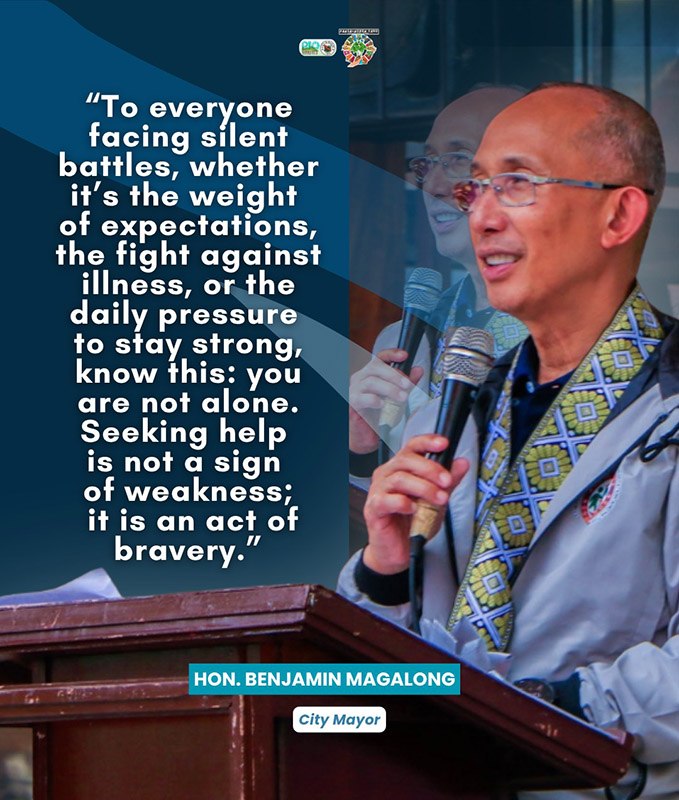
BAGUIO CITY, Philippines – Mayor Benjamin Magalong outlined strategies to address challenges and seize opportunities, highlighting resilience, sustainability, and digital innovation as key priorities for the city’s future. In his State of the City Address (SOCA) delivered during the 116th Baguio City Charter Day Anniversary program on Sept. 1, 2025, the mayor reported that Baguio, in partnership with UNDP Philippines, completed its first Voluntary Local Review (VLR) in June 2025, focusing on nine priority Sustainable Development Goals. The review showed encouraging progress in sustainable cities, climate action, education, and economic growth. To strengthen governance, the city is also implementing the Performance Governance System (PGS), which emphasizes accountability and discipline. Workshops with the Institute for Solidarity in Asia were held last week to align local programs with long-term goals, with Baguio preparing for a Revalida assessment in December. The mayor said part of sustaining this roadmap is finding the right partners as the government can not do everything alone. “This is why we have embraced public-private partnerships as a way to bring in resources, expertise, and innovation while keeping the interests of our people at the center,” he said. “The Intermodal Transport Terminal has been approved by the City Council and is now open for competitive challenge. The Market Redevelopment Project wasrecently approved by the City Development Council and has been endorsed to the City Council, while consultations continue for theSmart Urban Mobility Project. The Asin Hydro Project and TopinaoSocialized Housing Project will soon enter the negotiation stage. The Creative Center proposal is under negotiations.” On infrastructure, the city vowed to intensify efforts to resolve the long-standing issue of “spaghetti wires” by working with telecommunications companies and enforcement personnel. Baguio is also pushing for food security through its Smart Farming initiative, which has introduced solar-powered hydroponics in Pinsao Proper and Dontogan, established demo farms across barangays, and set up greenhouses for strawberry production. The city is now seeking national government funding to expand the program and move toward self-sufficiency. A major priority, the mayor said, is resilience. Under the Making Cities Resilient 2030 (MCR2030) program, Baguio aims to achieve full resilience status by 2026—four years ahead of the global target. Plans include improving communication systems for faster disaster warnings and emergency coordination. As part of its Open Government Partnership, the city also plans to adopt blockchain technology for government documents, including financial records, bidding processes, and infrastructure reports. A Memorandum of Agreement with a local company is set to be signed next week to formalize the rollout, which aims to ensure transparency and prevent tampering. “Growth brings both challenges and opportunities. The question now is how we move forward together to build a resilient, sustainable, and future-ready Baguio,” the mayor said. In his SOCA, the mayor also highlighted the city’s major achievements on sustainability earning it global recognition. He said that over the past year, Baguio advanced its vision for 2043 as a livable, inclusive, and creative city, anchored on the seven-point agenda. Environmental stewardship remained a key priority, with an additional two hectares of canopy cover and the installation of a new air quality monitoring station at Burnham Park. The city also ranked 5th cleanest in Southeast Asia in the 2024 Mid-Year Pollution Index. Baguio formally launched its Circular Economy Project, “Pansa-Nopen Tayo,” on January 31, 2025, supported by the European Union and UNDP Philippines for effective and efficient waste management towards sustainability. On resiliency, the city also earned a Beyond Compliant rating in the 2024 Gawad Kalasag Awards and a Future-Readiness Score of 61.1 percent from the Philippine Disaster Resilience Foundation. On the global stage, Baguio was among only six cities worldwide honored with the 2025 Bloomberg Award for Global Tobacco Control, and previously won the Gold Seoul Smart City Award for its inclusive health governance system. The mayor also reported strides in social services and infrastructure. On health services, the city was given ₱53 million in funding under the Konsulta Primary Care Provider Network, improving 13 facilities and increasing manpower and equipment. Crime dropped by 2%, while both the City Jail and Fire Station were recognized as the best in their categories regionally. Education also saw significant strides: Baguio ranked 1st in CAR and 2nd nationally in functional literacy, supported by programs such as the Barangay Pagbasa Program. The SIGLAT Youth Innovation Hub engaged more than 4,000 young participants and 400 partners. On infrastructure, the city completed multiple projects, including barangay halls, sports facilities, and the Halfway Home for rebel returnees. Major on-going works include the Athlete’s Quarters, Irisan Eco Park Phase II, and several barangay halls. The turnover of the Maharlika Livelihood Center in May 2025 is projected to generate ₱40 million in additional annual revenue. Baguio continues to post strong economic performance, recording a 9% growth rate in 2023—the fastest in the Cordillera. Employment stood at 97.5% in 2024, inflation eased to 2.9% by mid-2025, and poverty incidence dropped to just 0.5% of families. From June 2024 to May 2025, the city’s collections reached ₱2.734 billion, ₱249 million higher than the previous year. Baguio also ranked 12th among highly urbanized cities in the 2024 Cities and Municipalities Competitiveness Index, while securing multiple national and international awards in governance, tourism, and sustainability. Magalong underscored that progress depends on active citizenship and collective responsibility, warning against corruption that has plagued other localities. “Baguio is one of the few places in the country that has remained steadfast against corruption,” the mayor said. “This is a treasure we must safeguard at all costs.” He also stressed the importance of youth participation and community solidarity: “Good governance is not the burden of one—it is the shared duty of all. The progress we celebrate today is the collective strength of a community that refused to settle for less.” As the city looks ahead to its vision for 2043, the celebration of 116 years of Baguio stood as both a reminder of its rich legacy and a call to build a resilient, inclusive, and forward-looking city for future generations. – PIO Baguio

Baguio’s air quality better now with interventions – CEPMO

Baguio City

By Aileen P. Refuerzo   BAGUIO CITY, Philippines – The City Environment and Parks Management Office shed light on the current status of the city’s air quality. CEPMO Head Rhenan Diwas said it is true that rapid urbanization had taken its toll on the city’s urban capacity including its air quality over the years but the city government did not take it sitting down. He said since 2019, the city had embarked on environmental programs meant to systematically address air pollution and other environmental hazards with the end in view of slowing down if not totally arresting urban decay. And because of this, the city’s air quality had not gone worse and this fact is supported by data, Diwas said. “Real-time air quality readings from the Environmental Management Bureau Cordillera (EMB-CAR’)s new continuous monitoring station in Burnham Park and our own monitoring machines (and even from global AQI trackers) show that most of the time, Baguio’s air is in the Good to Moderate range—not “Poor,” Diwas said. He said there were occasional times when the quality dipped “especially during festivals, long weekends, or when weather keeps the smoke from dispersing considering the city’s high altitude, but these poor readings were short-lived. “In fact, recent EMB-CAR data and city’s data even shows particulate matter (PM) levels in some key areas have dropped by more than half compared to previous years,” he said. Aside from these data, he said improvements in the city’s cleanliness including air quality had gained recognition. “In 2024, Baguio ranked fifth as the cleanest city in Southeast Asia which considered air quality, water quality, noise, cleanliness, green space, and other as criteria. On top of that, Baguio became a Hall of Famer in the ASEAN Clean Tourist City Award (2020–2024)—the first city in the Philippines to earn that distinction,” Diwas said. “How did we get here?,” Diwas spelled out the programs, projects and activities being undertaken by the city; “Since 2019, aside from other projects and programs, the city has been following a clear roadmap to protect and expand our urban forests, supported by consistent tree planting and putting up quality nurseries. This project was even recognized nationally, with Baguio becoming a finalist in the 2024 DILG Subaybayani Awards – a distinction to well-managed and monitored LGU infrastructure projects; “Moreover, the Adopt-a-Park Program grew because of trust in leadership with more than 40 companies, NGOs, and foundations are now helping maintain our parks and green spaces; “Stricter zoning policies are finally paying off. Yes, some business sectors resisted at first, but now we see buildings with proper parking, sidewalks being respected and fewer tree cuttings. “Even foundations from outside the city (all the way from Metro Manila) have trusted our leadership enough to invest millions in improving open spaces—like Upper Wright Park’s reflection pool, Post Office Park, and Sunshine Park—without a single peso of public funds…and more green projects are coming!” “These are not just projects on paper, not some ghost projects funded from government coffers. They are tangible proof that when leadership has direction, transparency, and the courage to make unpopular decisions at first, results follow,” Diwas stressed. “Of course, we still have much to do. But one thing is clear: Baguio’s leadership is not doing nothing. We are moving forward…and upward!,” he added.  

Magalong stands firm in campaign against corruption

Baguio City

BAGUIO CITY – Mayor Benjamin Magalong has maintained that his advocacy against corruption will continue, especially in government infrastructure projects involving several politicians and personnel of the Department of Public Works and Highway (DPWH). Magalong’s exposure of government corruption intensified when President Ferdinand Marcos, Jr., in his State of the Nation Address (SONA) mentioned corruption in flood control projects in various parts of the country. Last year, Magalong first exposed the overpriced DPWH projects in the Cordillera region in the cat eyes or reflector lights projects on roads, yellow barriers and rock netting. He said the actual price of a cat eye is only P1,350 per piece, but the DPWH’s detailed price analysis shows it is P11,720, so it appears that it is overpriced by P10,370 each. The yellow barriers found on highway curves have a budget of P121,330 per meter of road, but the actual price is said to be P20,000, so it appears that the kickback per meter is more than P100,000. Magalong also said that the price of rock netting is P6,000 per square meter, but what was listed by the DPWH was P25,000 in 2023. He said that if we add up the rock netting purchased for the Cordillera region from 2017 to 2023, it reaches P46.61 billion and an estimated P28 billion went to kickback. “I used to ask for data information or documents from DPWH, but they played with me and tricked me. Sometimes I also requested the Regional Development Council to complete DPWH to provide me with documents for contracts, but DPWH told me that they would provide me with a link, but we have been clicking on the link for a week and we can’t find anything there. So I talked to NEDA, that’s where we saw the seriousness,” Magalong said in an interview. Magalong previously said that he is ready to appear anywhere, especially in Congress to uphold his disclosure against corruption. (Zaldy Comand

Baguio’s march towards urban sustainability, continues

Baguio City

BAGUIO CITY, Philippines  – As the first Philippine city to join the UN-Habitat Quality of Life Initiative, Baguio continues to work together with other cities around the world to create more inclusive, sustainable, resilient and equitable urban communities. City Planning, Development and Sustainability Office (CPDSO) Head Ar. Donna Rillera Tabangin said the City of Pines is now part of an exclusive network of 100 cities across five continents. “From the Summer Capital of the Philippines, Baguio is now a global leader in urban sustainability,” she said. Tabangin said that from bustling metropolises and mega cities to coastal communities worldwide, the Quality of Life Initiative is scaling up to 100 cities by the end of 2025. “These cities are taking bold steps to integrate quality of life data into urban policy and planning to make cities more inclusive, sustainable, resilient, and equitable. We welcome new cities which are well represented across 5 continents – their leadership and innovation will shape the future of urban living,” she said. The Quality of Life Initiative provides a powerful framework to measure and improve urban well-being across nine key domains: basic services and mobility, culture and recreation, economy, education, environment, governance, health and well-being, housing, and social cohesion. “By leveraging cutting-edge data sources like satellite imagery, mobile data, and social media surveys, the city will gain valuable insights to inform sustainable urban policies that truly respond to what our citizens value most,” Tabangin stressed. She disclosed that the draft Quality of Life Survey Tool is currently being pre-tested by the city government under Mayor Benjamin Magalong spearheaded by the CPDSO and the final version will be published for the public to take part in the initiative. She said Baguio is proud to be leading the way for Philippine cities in this important global initiative to advance the UN’s Agenda 2030 for Sustainable Development which is a global plan to achieve “peace and prosperity for people and the planet” by 2030, encompassing 17 Sustainable Development Goals. (Gaby B. Keith-Baguio PIO)      

Botanical Garden free access to BLISTT residents for 6 months

Baguio City

  BAGUIO CITY, Philippines — The Baguio City Council has approved an ordinance extending the free entrance privilege at the Baguio Botanical Garden for residents of Baguio, La Trinidad, Itogon, Sablan, Tuba, and Tublay (BLISTT) from August 1, 2025 until January 31, 2026. The ordinance was signed by Mayor Benjamin Magalong on August 18, 2025. To avail of the free access, BLISTT residents must present a valid proof of residency such as government-issued ID, barangay clearance, or any city-recognized document showing their address. The first free access privilege was granted earlier this year through two separate ordinances which allowed BLISTT residents to enter the Botanical Garden without charge during and after the Panagbenga Festival as a gesture of gratitude for their support and participation. City Environment and Parks Management Officer Rhenan Diwas recommended the extension after noting that the initial free access program not only strengthened grassroots connection but also boosted visitor turnout, with residents bringing along relatives and friends from outside BLISTT. His report showed that revenues even increased compared to the previous year which proves that the policy supported both tourism and local engagement. Councilor Jose Molintas, principal author of the measures, said this initiative is meant to express gratitude to the BLISTT communities for their support to the city and to promote environmental awareness and inclusivity through accessible green spaces. The ordinance tasks the City Environment and Parks Management Office (CEPMO) to implement the free access program and ensure proper identification of BLISTT residents and monitor the park’s operations during the extended period. (Jordan G. Habbiling SPIO)    

Baguio City sustains Peace and Order efforts

Baguio City

BAGUIO CITY, Philippines  –The Baguio City Police Office (BCPO) sustained targeted operations resulting in the arrest of 132 drug personalities, confiscation of P2.2 million worth of illegal drugs, and recovery of 113 lose firearms, from January to June 2025. City Mayor’s Office Chief-of-Staff Samantha Jean Hamada, in her State of Local Governance Report presentation at the Executive-Legislative meeting, aimed at briefing the city’s newly-elected officials. Hamada said that crime volume in the Summer Capital slightly decreased by two percent from 752 crimes in 2023 to 736 crimes recorded in 2024. Baguio City has been recognized as one of the safest cities in the Philippines for travelers, according to the world travel index mid-year 2025 report, Hamada added. At the Baguio City Jail, she said that education, skills training, and health services have been sustained and that the Baguio City Male Dormitory was awarded the Best City Jail of the Year in 2024 and City Jail for the Quarter during the 2nd Quarter of 2025. The Baguio City Fire Station was also awarded as the Best City Fire Station – Regional Level for the third consecutive year and honored by the Global Institute for Peace, Diplomacy and Human Rights as Firefighters of the Year, Hamada said. (Gaby B. Keith)

Free meals for college students in Baguio

Baguio City

      BAGUIO CITY, Philippines – The long-awaited monthly food vouchers of indigent college students will be fulfilled after the City Council approved the Free Youth Meals for College Students Ordinance of 2023. The free youth meals program under the ordinance aims to make education more accessible by reducing food insecurity and supporting the retention rate of college students, especially those from low-income households, while also promoting health and nutrition. Under the Implementing Rules and Regulations (IRR) administered by the City Social Welfare and Development Office (CSWDO), the city’s free meals program will provide up to P2,500 in monthly food vouchers to qualified low-income college students in institutions of higher learning in the city. The program applies to college or university students in the city, including student assistants, if they meet specific qualifications which include: being a Baguio resident from a low-income family, passing the screening conducted by CSWDO, maintaining passing grades, and not being a recipient of other government assistance. The distribution will be handled through a secure system in collaboration with participating schools to verify eligibility and prevent misuse. Qualified students are given P2,500 worth of food vouchers per month. These vouchers are redeemable at accredited partner food establishments within the city. An initial fund of P2.64 million under the CSWDO budget has been allocated for the first year of implementation. According to CSWDO, the initial target number of beneficiaries is 100 and applicants may submit the following requirements to the CSWDO office units at Saint Louis University (SLU), University of the Cordilleras (UC), and University of Baguio (UB) or to the social worker assigned to each barangay. The relevant documents to be submitted are the application form, Certification of indigency from CSWDO, through its unit offices. For incoming freshmen: Form 138 (High School Report Card); for other college levels: copy of grades from the previous semester; Barangay certificate of residency stating that the applicant’s family is a bonafide resident of Baguio City for at least one year; Voter’s ID or COMELEC voter’s certificate (if not available, parent’s voter’s ID or voter’s certificate). The ordinance, authored by former Sangguniang Kabataan Federation (SKF) President Levy Lloyd Orcales, was adopted by the city council in 2023. Its IRR was drafted by current SKF President John Rhey Mananeng, with input from the CSWDO. (Jordan G. Habbiling-SPIO)

Free EV rides at John Hay loop launched

Baguio City

Free EV CAMP JOHN HAY,Baguio City, Philippines —  -‘ Thousands of visitors, residents, and workers in Camp John Hay can now enjoy free, eco-friendly rides through the new John Hay Loop, a six-month electric-vehicle (EV) shuttle service pilot launched by the Bases Conversion and Development Authority (BCDA), its subsidiary John Hay Management Corporation (JHMC), and private partners Device Design Co. Ltd., LexSwitch, and Cordillera Basic Sector Transport Cooperative,on August 15. The initiative aims to improve mobility, reduce congestion, and promote sustainable transport in one of Baguio’s most popular destinations, benefiting nearly 4,000 people who live and work in the estate, as well as the city’s growing number of eco-conscious tourists. Three EV units, each accommodating 22 seated and nine standing passengers, are now serving eight designated stations across Camp John Hay, including: ●      Main Gate Station – John Hay Trade and Cultural Center ●      Filling Station A – near Le Monet Hotel ●      Scout Hill Station A – near Camp John Hay Grounds ●      Mile Hi Station A – from Forest Lodge ●      Gate 4 Station – to South Drive and Outlook Drive ●      Sheridan Station – near John Hay Golf ●      Mile Hi Station B – going to Forest Lodge ●      Filling Station B – going to Main Gate Powered by a 70 kilowatt-hour (kWh) lithium-ion battery with fast charging capability, each unit can fully recharge in under 90 minutes and also comes equipped with a 7kWh onboard slow charger as a backup. “The John Hay Loop moves us closer to a cleaner, faster, and more connected Baguio,” said BCDA President and CEO Engr. Joshua M. Bingcang. “Through this partnership with the private sector and international community, we are building a sustainable transport model that will benefit residents, workers, and tourists for years to come.” In June 2025, BCDA and JHMC signed a memorandum of understanding with DeviceDesign, LexSwitch, and the Cordillera Basic Sector Transport Cooperative to roll out an integrated mobility system in Camp John Hay. LexBuild Group and LexSWITCH EcoMobility Inc. are supplying the EV units and charging stations, while DeviceDesign provides station markers and monitoring technology. DeviceDesign and Cordillera Basic Sector Transport Cooperative will assess commuter experience, ridership levels, and operational performance, then provide recommendations for the long-term implementation of the John Hay Loop. This initiative reflects BCDA’s commitment to making destinations more accessible while safeguarding the environment. By integrating clean transport solutions into Camp John Hay, BCDA said it aims to promote a greener future for Baguio and set a national benchmark for sustainable mobility in tourism estates. The John Hay Loop is in line with BCDA’s commitment to the United Nations’ Sustainable Development Goals, particularly Goal 11: Sustainable Cities and Communities, and Goal 13: Climate Action.

Scroll to Top