

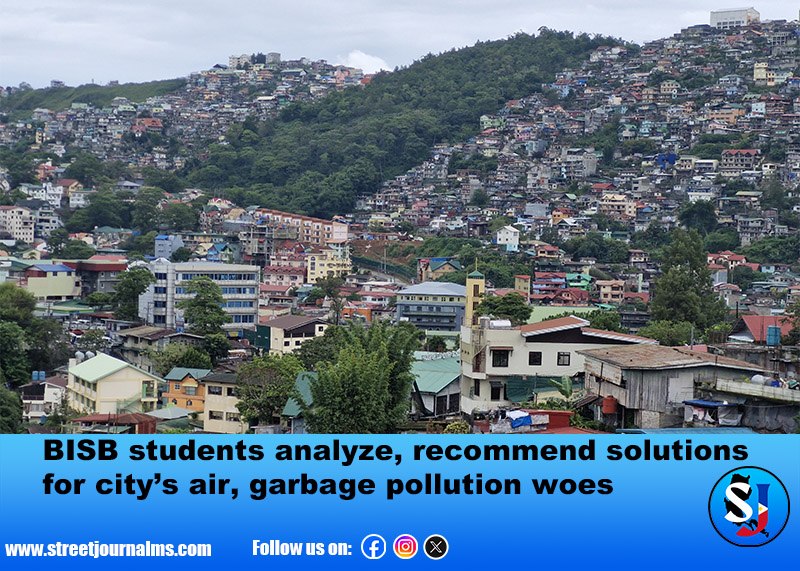
BAGUIO CITY, Philippines — Following in-depth studies of the city’s air, water, solid waste pollution source and problems, Brent International School in Baguio students led by International Baccalaureate (IB) Coordinator and faculty member Paul Engler, presented their detailed recommendations to city officials with Vice-Mayor Faustino Olowan, city councilors, City Administrator Vittorio Jerico Cawis and personnel from other offices, recently at the city multi-purpose hall.
The students were invited by Mayor Benjamin Magalong through the City Environment and Parks Management Office (CEPMO) assistant head Marivic Empizo to briefly present their research and proposed solutions to major environmental problems of the city.
As the current measures being done are seen to be insufficient to meet current and projected waste volumes, the students proposed the following additional solutions:
- Methane capture in sealed anaerobic digestion tanks. This biological process captures methane, which can be used as biogas for electricity or cooking fuel leaving the digestate as organic fertilizer. The challenge is the high construction cost and the need for consistent organic waste segregation due to the danger of system contamination.
- Climate-Controlled BSF Facilities. As the BSF larvae which breaks down organic material thrives in warm climates, there is a need to have heated and bigger housing for more of the said insects. The challenge includes energy costs for heating facilities and potential community opposition to the odor of large-scale operations.
- Leachate Collection and Treatment System. Leachate, the toxic liquid produced by decomposing waste, is a threat to Baguio’s groundwater and soil which could be remedied with a collection and treatment facility at the transfer station. The lack of space however is a challenge, the students said.
- Tourist Eco-Fee. A modest P20 to P50 per tourist could create a “dedicated, self-sustaining” revenue stream for waste management, with precedents in other tourist destinations in the country. The challenge lies with potential opposition from the hotel and tourism industry and legal impediments for the budget not to be absorbed into other funds.
The students conclude that the implementation of the additional suggested solutions would move the city closer to a sustainable self-sufficient waste management that can withstand future growth.
Presently, the current solutions being implemented are the five operational materials recovery facilities and a planned centralized MRF; the use of Trichoderma which accelerated decomposition, reduce odor, turns organic waste into fertilizer; a small scale Black Soldier Fly which processes biodegradable waste into animal feed; a plastic ban and campaign for the use of reusable materials; proper segregation of garbage at source; the approved 10 year Solid waste management plan, up to 2034; and negotiation for a waste to energy plant in a nearby neighboring municipality. -jgfianza