


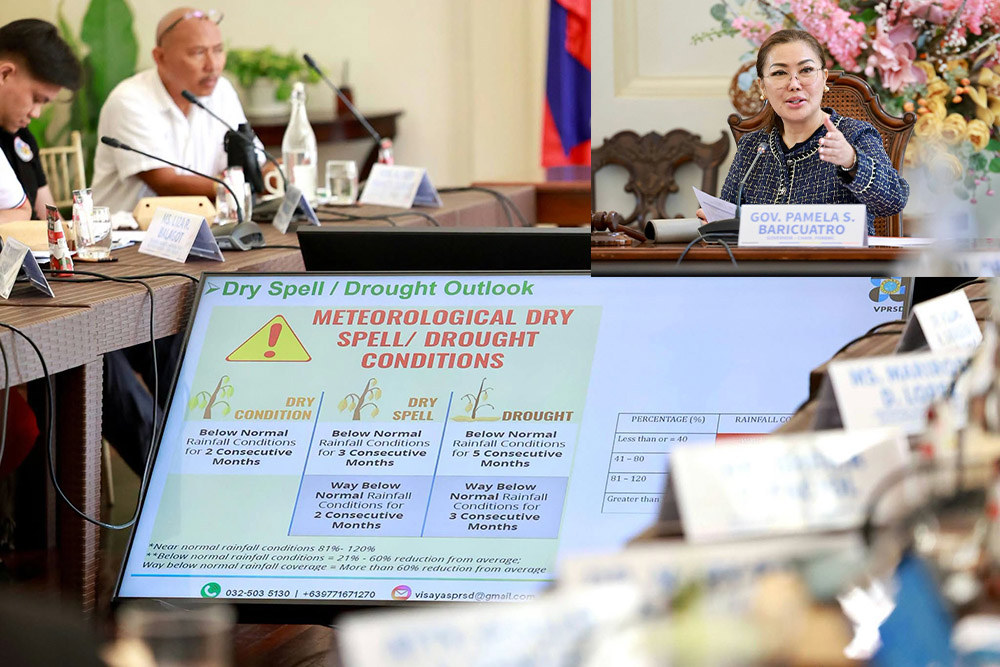
CEBU CITY, Philippines — Cebu Gov. Pamela Baricuatro has recommended installing solar power systems in all 16 Capitol-run hospitals to keep healthcare services running during possible power interruptions amid the looming threat of Super El Niño.
The governor’s proposal, along with the Provincial Engineering Office’s (POE) endorsement to procure ₱104 million worth of water-treatment equipment, was among the measures approved by the Cebu Provincial Disaster Risk Reduction and Management Council (PDRRMC) during its fourth-quarter meeting on Wednesday, Nov. 18, which she presided over.
The governor also called for the acceleration of water infrastructure projects, including the development of deep wells and improvements to existing water supply systems, to ensure adequate water for hospitals and communities that may experience prolonged dry spells.
𝐔𝐫𝐠𝐞𝐧𝐭 𝐚𝐜𝐭𝐢𝐨𝐧
Gov. Baricuatro stressed that the province could not afford delays in implementing its El Niño Mitigation and Preparedness Plan.
“We are in the implementation phase of our preparedness for El Niño. This is an urgent call to action that demands our focus and immediate mobilization. The climate threats facing our province can be very challenging, and we cannot afford to be reactive. We need to be responsive,” she said.
The proposed solar installations are intended to protect hospital operations from possible power interruptions, particularly in critical areas such as emergency rooms, delivery rooms, hemodialysis units, central supply rooms, and nutrition and dietetics departments.
Gov. Baricuatro also pushed for the development of deep wells and more reliable water supply systems in provincial hospitals, citing the need to meet the requirements of healthcare facilities amid increasing patient consultations.
𝐖𝐚𝐭𝐞𝐫-𝐭𝐫𝐞𝐚𝐭𝐦𝐞𝐧𝐭 𝐭𝐞𝐜𝐡𝐨𝐥𝐨𝐠𝐢𝐞𝐬
Meanwhile, the PEO proposed the procurement of 28 multimedia filtration systems and eight seawater reverse osmosis units to augment the province’s water supply.
The equipment will treat water from available sources, including springs and seawater, to provide potable water, particularly in communities vulnerable to shortages.
The council also approved a recommendation to establish hydration stations across the province. These will be replenished through water tankers to provide drinking water to residents during periods of extreme heat.
𝐄𝐥 𝐍𝐢𝐧̃𝐨-𝐩𝐫𝐨𝐧𝐞 𝐚𝐫𝐞𝐚𝐬, 𝐚𝐠𝐫𝐢𝐜𝐮𝐥𝐭𝐮𝐫𝐚𝐥 𝐚𝐬𝐬𝐢𝐬𝐭𝐚𝐧𝐜𝐞
Eight local government units (LGUs) have been identified as particularly vulnerable to El Niño: Tuburan, Daanbantayan, Tabuelan, Bogo City, Catmon, Carmen, Borbon and Sogod.
As of October 2026, agricultural damage estimated at ₱20 million had been reported in eight LGUs: Danao City, San Remigio, Ronda, Carmen, Toledo City, Moalboal, Catmon and Barili.
To help protect farmers and fisherfolk from potential losses, the provincial government is intensifying its campaign to encourage them to enroll in the Agricultural and Fisheries Insurance Program, with the Capitol shouldering the insurance premiums.
The council also approved a resolution recommending the declaration of a provincial state of calamity once at least three LGUs have declared their respective states of calamity.
𝐇𝐞𝐚𝐭 𝐬𝐚𝐟𝐞𝐭𝐲, 𝐡𝐞𝐚𝐥𝐭𝐡 𝐩𝐫𝐞𝐩𝐚𝐫𝐞𝐝𝐧𝐞𝐬𝐬
The Philippine Atmospheric, Geophysical and Astronomical Services Administration (Pagasa) warned that the heat index could reach 49 to 52 degrees Celsius during peak hours, particularly between 10 a.m. and 3 p.m.
A Pagasa Visayas official warned that the impending El Niño could become the strongest on record.
In response, the Provincial Health Office presented its El Niño Health Action Plan, which urges residents to limit continuous exposure to direct sunlight to no more than 20 minutes, particularly during the hottest hours, to prevent heat-related illnesses.
The council also recommended that LGUs acquire psychrometers to help guide decisions on class suspensions during periods of extreme heat.
Gov. Baricuatro directed provincial offices to expedite procurement and implementation processes, stressing the need to turn preparedness plans into concrete measures before the full impact of El Niño is felt.