


By Mary Therese D. Ancheta and Cristina B. Canlog
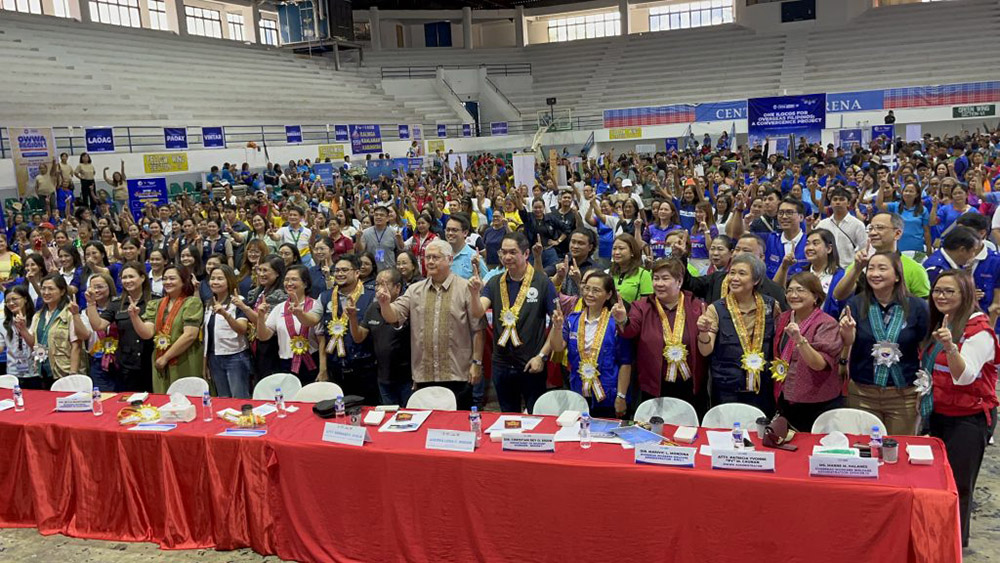
LAOAG CITY, Ilocos Norte, Philippines — Government agencies brought welfare, livelihood, and reintegration services closer to overseas Filipino workers (OFWs), returning migrant workers, and their families through a convergence event held at the Ilocos Norte Centennial Arena here on October 22.
Dubbed “ONE ILOCOS FOR OVERSEAS FILIPINOS: A Convergence Project,” the activity brought together the Department of Migrant Workers (DMW), the Overseas Workers Welfare Administration (OWWA), the Commission on Filipinos Overseas (CFO), and around 40 partner agencies to make government programs and assistance more accessible.
The convergence allowed OFWs and their families to inquire about available services, raise concerns, and seek guidance from the appropriate agencies in one venue, reducing the need to visit several government offices separately.
The activity integrated three major initiatives: the DMW’s Bayanihan Para sa Balikbayang Manggagawa–National Reintegration Network (NRN) Regional Fair, the Alagang OWWA Serbisyo Caravan, and the Migrant Fair of the Inter-Agency Committee on the Month of Overseas Filipinos.
Through these initiatives, participating agencies provided information on migrant welfare, overseas employment, livelihood development, and assistance for returning workers, highlighting the importance of coordinated government support throughout a migrant worker’s journey, including reintegration into life in the Philippines.
DMW Director Andrea Luisa Anolin said she was surprised by the strong turnout, which reflected the interest of OFWs and their families in accessing government services.
“Actually, I was also surprised to see so many people here today. We are delighted that our OFWs and their families have shown such strong support for this convergence event. This is truly a large-scale event organized by migration agencies, not only for our OFWs but also for non-resident Filipinos. It is heartwarming to see so many of them here,” Anolin said.
She stressed that government services should be brought directly to the people who need them, particularly OFWs who may encounter difficulties accessing assistance while working abroad or after returning to the Philippines.
“I think this should be a regular activity. This is one of the directives of our President Ferdinand R. Marcos Jr.: to bring government services closer to our OFWs and their families. We should not just stay in our offices, sitting and waiting for OFWs to come to us. Instead, we should go to them wherever they are,” she said.
Anolin said regular activities of this kind could help OFWs and their families stay informed about government programs and know where to seek assistance when concerns arise.
OWWA Ilocos Regional Director Marivic Mondina said the convergence was organized to make government assistance more accessible to OFWs and their families.
“Our clients are OFWs and their families,” Mondina said, emphasizing that the agency’s services are designed to address their needs.
She said around 40 partner agencies were invited to the caravan to provide services at the venue, including assistance related to medical concerns, overseas employment, and the welfare of workers and their families.
Mondina also highlighted OWWA’s reintegration programs, which aim to help returning OFWs adjust to life in the Philippines and explore opportunities for sustainable livelihoods.
For OFWs interested in establishing or reviving a business, she said OWWA offers Entrepreneurship Development Training and business counseling to help them prepare before investing.
“OWWA provides training for interested OFWs who want to start a business or revive their existing businesses. The agency offers entrepreneurship development training and business counseling to help them achieve these goals,” she said.
These livelihood initiatives are part of broader efforts to help returning migrant workers identify potential sources of income and make use of their skills and experience as they transition back to their communities.
Complementing these programs, the National Reintegration Network coordinates government agencies, local government units, and social partners in providing assistance to returning migrant workers and their families.
Under its KKK framework, the network promotes Kalinga for welfare and protection, Kaalaman for education and upskilling, and Kabuhayan for livelihood and employment.
The framework covers different aspects of reintegration, from addressing workers’ welfare concerns and improving their skills to exploring employment and livelihood opportunities.
For Teddy Sam Paulino, president of the Federated OFWs Association of Laoag City, organizing returning migrant workers into associations can help them stay informed about government programs and maintain connections with relevant agencies.
Paulino, who previously worked as a head cook in Italy for nearly 12 years, encouraged fellow OFWs, including those who have returned to the Philippines, to join or establish groups that can connect them with available government services.
“My message to OFWs, including those who have already returned to the Philippines, is that the government continues to offer programs for them. If possible, they are encouraged to form associations or groups so they can stay connected with the government and access its services,” Paulino said.
He said organized groups could help former migrant workers share information, update their documents and personal records, inquire about available assistance, and learn about opportunities to save and invest for their future.
Meanwhile, Loida Garcia, a former domestic helper in Hong Kong who returned to the Philippines in 2009 after beginning her overseas employment in 1993, welcomed the opportunity for former OFWs to connect with fellow migrant workers and learn about government benefits.
“It has been helpful, and it also serves as a form of recreation. We get to learn about the benefits available to us, and we also have the opportunity to interact with one another as members of our association,” Garcia said.
Her experience highlights the value of providing returning OFWs with opportunities to reconnect with fellow workers, exchange information, and learn about assistance available as they settle back into their communities.
Through coordinated initiatives and stronger connections between government agencies and OFW communities, the convergence underscored the importance of making welfare, skills development, and livelihood support accessible to Filipinos working abroad and those rebuilding their lives at home. (AMB/MTDA/CBC, PIA Ilocos Norte)