


In the mountains of the Cordillera and the highlands of Bukidnon, rivers begin as small streams and make their way down to the communities below. In some of those communities, tradition makes a similar journey, passed from one generation to the next.
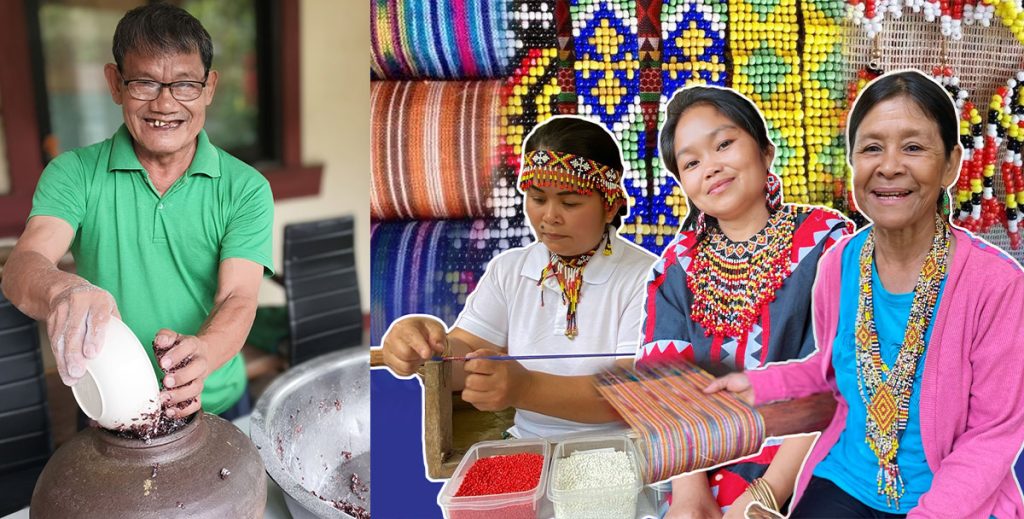
Take Tadiangan in Tuba, Benguet, where Ibaloi elder James Maranes makes tapuy. Or Barangay Guihean in Impasugong, Bukidnon, where Cherlie Tundanay sews traditional Higaonon attire. Both are host communities of Aboitiz Renewables, Inc., the renewable energy arm of Aboitiz Power Corporation (AboitizPower), where hydropower plants generate clean energy.
For Maranes, the work begins with the rice. Made from local kintuman rice, tapuy is shared at gatherings and rituals among Indigenous communities in the Cordillera. “My mother taught me how to make tapuy, and it is a tradition I carry with pride. Through this, I hope we can keep our heritage alive and pass it on to the next generation, just like how our elders have taught us,” Maranes said. Through royalty shares associated with the Irisan 3 Hydropower Plant, Aboitiz Renewables has supported efforts to strengthen the community’s tapuy enterprise and improve its packaging, opening the way to wider markets.
In Guihean, tradition takes the form of cloth. Tundanay is one of the few left in her community who can sew traditional attire where every color carries meaning. Red stands for bravery, white for peace, and yellow for a golden heart, she explains. “Whatever our parents did before, that’s what we take care of now,” she said. Through Project Tahi ‘Ta!, led by Aboitiz Renewables with Aboitiz Foundation, Inc., Higaonon women receive sewing training, machines, and materials, so the craft can be learned by those who come next.
Heritage also shows how a community adapts. In Barangay Santiago, Manolo Fortich, Bukidnon, which sits within the watershed of the Tanaon, Amusig, and Guihean rivers, members of the Higaonon tribe have built a livelihood from bamboo. Through KaBAMBOOhayan, a project of Aboitiz Renewables and Aboitiz Foundation, they trained with the Technical Education and Skills Development Authority (TESDA) to become certified bamboo nursery operators. As members of the Santiago Diversified Farmers Association, they now produce around 3,000 bamboo slats a week.
For Noemie Buclasan, a mother of three and a beneficiary of KaBAMBOOhayan Project, the change is in the rhythm of the week. “Before, we really struggled. The income from corn farming was barely enough for our daily needs. Now, through the cooperative, we have steady earnings every week,” she said.
Across all three stories, the support starts from what people already know. “Indigenous communities carry traditions and knowledge that continue to shape their identity across generations. By supporting initiatives that build on these existing practices, we can help create livelihood opportunities while allowing communities to continue sharing and passing on their cultural heritage,” said Noreen Vicencio, First Vice President and General Manager for Hydro Operations at Aboitiz Renewables.
As the country marks Indigenous Peoples Month, the stories of Maranes, Tundanay, and the bamboo growers of Barangay Santiago show that heritage lives through the people who practice, protect, and pass on their knowledge. Like the rivers that flow down from these mountains, it keeps moving.