


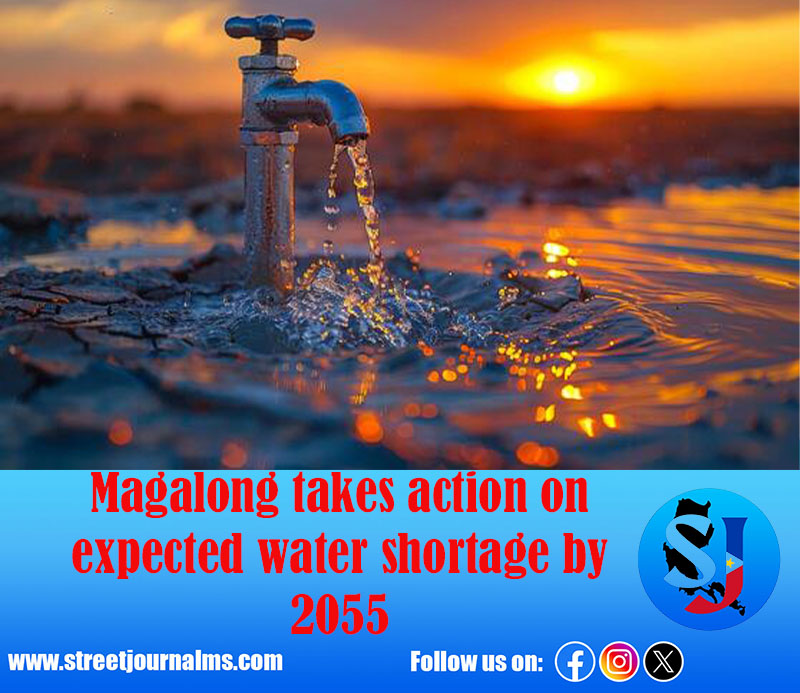
BAGUIO CITY, Philippines — Mayor Benjamin Magalong believes the city could experience a water supply shortage of at least 117 million liters per day by the year 2055.
According to Magalong, the city has been experiencing water shortages for years but he said that the growing population, increasing demand, and the effects of climate change require the city to act now.
He said the local government cannot let the water problem become more difficult for the next generation.
Magalong said the city is currently working to strengthen the protection and management of existing water resources as it prepares for future water challenges.
He cited a long-term water supply resilience study recently completed for the city government.
According to Magalong, the study was conducted by British consultants under the Green Cities, Infrastructure and Energy Program, of the city government, and the Baguio Water District, as technical assistance provided through a grant from the United Kingdom government worth about £2 million.
He said the study was completed and handed over to the city last month.
It examined eight possible water sources and examined the technical, financial, environmental, social and climate considerations of each option.
Magalong said the study gives the city a stronger basis for deciding how to meet its long-term water needs than simply choosing a project without sufficient technical basis.
“It also gives the city a clearer path towards obtaining approvals, attracting investments, and eventually putting in place a water supply system that can serve the city for decades.”
He said the city is collaborating with the Philippine Disaster Resilience Foundation through the BRIDGE Project with support from the Canadian government.
The four-year program focuses on integrated water resources management, covering watersheds, groundwater resources, water use and community governance.
The project will support watershed protection, policy development, capacity building and improved data utilization.
It will also assess the needs of water-stressed communities and the potential impacts of climate change and disasters on the city’s water supply.
Magalong said addressing water security requires both identifying new resources and properly managing existing resources.
The BRIDGE initiative is completing a feasibility study. “The combined effort aims to ensure that Baguio has a more comprehensive and sustainable approach to water security for future generations,” Magalong said.