


By Anthony Ian H. Reyes
For fisherfolk who face the sea each day to provide food for their families, protecting the waters they depend on is also about protecting their livelihoods.
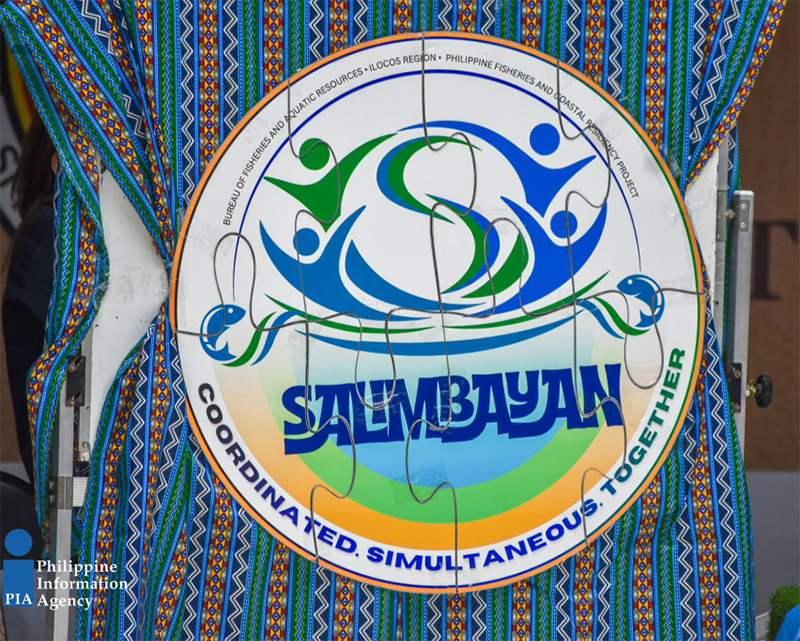
This is the purpose of FishCoRe Salimbayan 2026, a stakeholder engagement initiative that brings together fisherfolk, youth, government, local government units (LGUs), non-governmental organizations (NGOs), academe, media, and other partners to turn their voices, concerns, and ideas into collective action for sustainable fisheries and coastal resilience.
The Bureau of Fisheries and Aquatic Resources (BFAR) Region 1 launched the initiative on August 20, 2026, at SM La Union in San Fernando City and is anchored on the Philippine Fisheries and Coastal Resiliency Project (FishCoRe).
Joining as a community
The name Salimbayan reflects its purpose. As explained by BFAR Region 1 Information Officer Jamille Anne D. Estolas, “sali” means to join while “bayan” refers to the community.
For Regional Director Remely B. Lachica, this shared participation is essential because protecting the country’s waters cannot be accomplished by the government alone.
“No agency can save our oceans alone,” Lachica said. “FishCoRe is built on the belief that through collaboration, knowledge-sharing and a shared commitment, we can achieve success that no one could accomplish alone.”
The initiative creates several avenues for participation, including the FishCoRe Jingle Making Contest, the FishCoRe Kamustahan Session, and the Baybay-saysay Photo Essay Contest.
The jingle contest gives young people a platform to communicate messages on sustainable fisheries, while the photo essay uses visual storytelling to highlight the link between fisheries, coastal resiliency, and ocean health.
Where voices become action
Beyond creative activities, the FishCoRe Kamustahan Session provides a space for fisherfolk, implementers, and partners to share updates, raise concerns, and offer recommendations.
“This is where voices truly become action,” Lachica said. “Every concern raised here will be documented, acted upon, and followed through.”
For fisherfolk, this means a more direct avenue to communicate the realities they face.
Dante C. Noces, chairman of the La Union Federation of Municipal Fisheries and Aquatic Resources Management Council, emphasized the need to support and protect fisherfolk who go to the sea despite the risks involved in their livelihood.
Protecting waters, sustaining livelihoods
Salimbayan is also linked to BFAR’s Malinis at Maayos na Katubigan, which seeks [cleaner and more] productive waters while supporting the sustainability of fisherfolk livelihoods and incomes.
“When our waters are clean and abundant, our fisherfolk can have better catches. Their livelihoods are safer and their future is stronger,” Lachica said.
This makes coastal resource protection not only an environmental concern but also a livelihood issue for communities dependent on fishing.
From commitment to results
The challenge now is to ensure that the voices gathered through Salimbayan lead to sustained action.
Lachica called on stakeholders to develop action plans, reinforced partnerships, and concrete advocacy materials that can guide communities toward better fisheries management.
“Let us turn every voice into action, [e]very idea into impact, and every commitment into results,” she said.
Through Salimbayan, FishCoRe seeks to encourage shared responsibility for the country’s waters—connecting community voices with actions that support sustainable fisheries, protect marine resources, and build more resilient coastal communities. (CCMT/AIHR, PIA Region 1)