

By Sally A. Altea
LEGAZPI CITY, Albay, Philippines (PIA) — The Philippine Institute of Volcanology and Seismology (Phivolcs) issued a warning on Thursday for residents near Mayon Volcano to remain vigilant, as dangerous volcanic flows and lahars may still occur despite the volcano maintaining its current Alert Level 3 status.
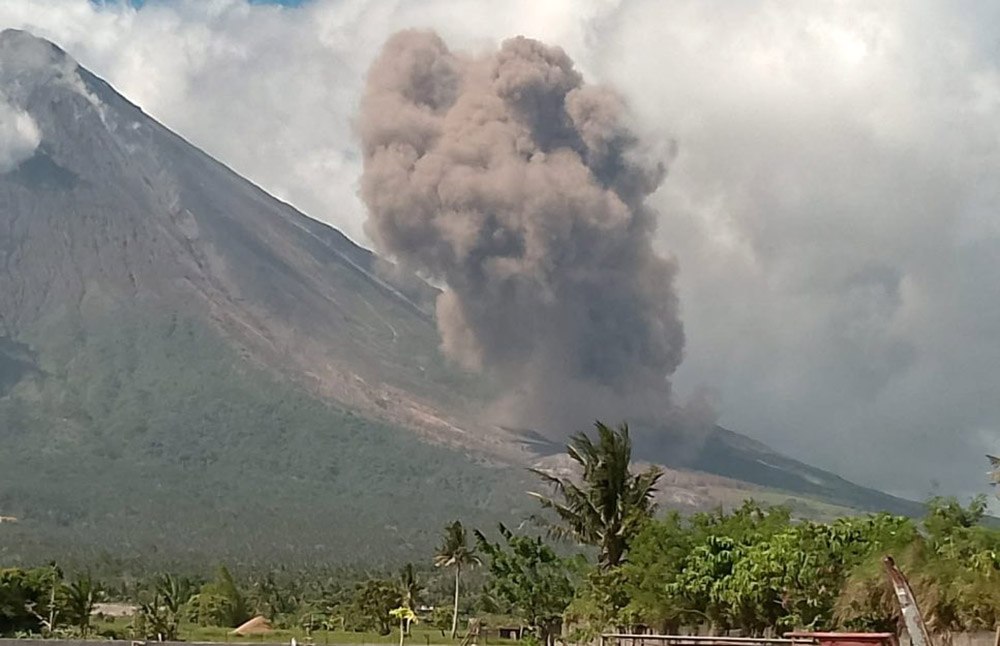
In its volcanic activity report released on May 7, Phivolcs noted that Mount Mayon continues to produce lava flows, rockfalls, and pyroclastic density currents (PDCs), locally known as “uson,” on the southern and eastern slopes of the volcano.
The state volcanology agency described PDCs as fast-moving clouds of extremely hot gas, ash, and rocks that can burn, bury, and suffocate anything in their path.
“PDCs move at speeds that cannot be outrun and can burn, bury, forcefully impact and asphyxiate all living things in its path,” it said.
Phivolcs noted that newly flowing lava has temporarily filled portions of the Mi-isi Gully, increasing the risk of large volcanic collapses.
“Presently, steep slopes in the upper Mi-isi Gully are being built-up by the effusion of the newest lava flows, alleviating the threat of large-volume lava-collapse PDCs similar in magnitude to the May 2 series,” it said.
The agency has warned that larger and more dangerous PDCs could occur again if lava deposits become unstable or overly steep.
Phivolcs also expressed concern about thick volcanic deposits along the Mi-isi-Binaan Channel, which remain extremely hot and may trigger sudden steam explosions.
The temperatures inside these deposits could exceed 500 degrees Celsius.
Authorities are reminded to strictly prohibit entry into the six-kilometer Permanent Danger Zone, particularly on the southern side of the volcano.
Communities within a seven-kilometer radius are advised to prepare for possible evacuation in the event of similar large PDC incidents.
Phivolcs has also warned residents living near rivers and waterways around the volcano to remain vigilant against lahars, or volcanic mudflows, especially during heavy rain.
The agency noted that loose volcanic materials could be carried downstream by intense rainfall, potentially overflowing into communities along the Mi-isi-Binaan Channel, including areas near the Binaan and Yawa Rivers in Daraga and Legazpi City.
Residents are urged to wear masks during ashfall, protect food and water supplies from contamination, and closely monitor official advisories.
Special attention should be given to vulnerable individuals, such as senior citizens, pregnant women, infants, and persons with medical conditions, according to the agency.
Civil aviation authorities have also been advised to prevent aircraft from flying near Mayon’s summit due to potential ash hazards.
Phivolcs said that it will continue to monitor the volcano closely and will immediately relay any significant developments to local government units and disaster response agencies. (PIA Bicol/Albay)