


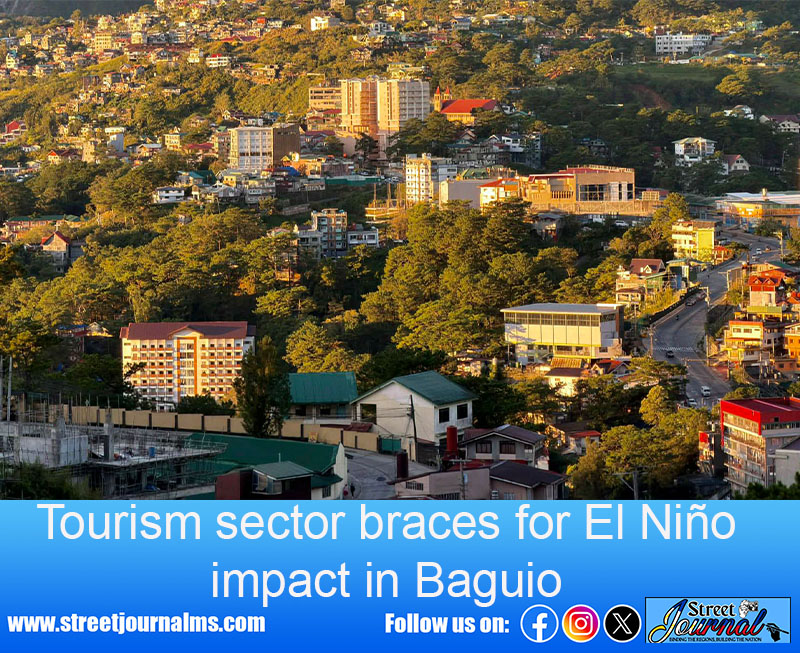
BAGUIO CITY, Philippines — The tourism sector is now stepping up preparations for the expected impact of the El Niño phenomenon, especially as weather conditions are expected to affect major events in the city such as the approaching Christmas, the Panagbenga celebration in February, and summer activities in April and May.
It was learned that the tourism and hospitality industry is working with the city government to implement measures to conserve water and mitigate the impact of possible supply disruptions.
“We always encourage them to implement water conservation practices as visitor arrivals increase during the Christmas season and other peak periods and while El Niño will indeed have an expected adverse impact on our water supply, for a long time, water supply has always been a problem in our city so some establishments have long implemented their own conservation measures,” said City Tourism Officer Alec Mapalo.
He said some of them have implemented their own conservation measures including rainwater harvesting and water recycling facilities.
Mapalo said that through their own initiatives, the Hotels and Restaurants Association of Baguio (HRAB) and the Baguio Tourism Council (BTC) also held a conference last month at the Baguio Country Club to discuss practical and affordable ways to conserve and recycle water.
Experts were invited to share methods on rainwater harvesting, water recycling, and sanitation practices that minimize water consumption.
Mapalo said the activity also addressed the needs of smaller accommodation establishments that may find it difficult to invest in high-tech facilities.
In addition, sanitation practices were also emphasized as maintaining clean establishments can require a large amount of water if not managed efficiently.
“The initiative aims to encourage industry-wide preparedness rather than limiting conservation efforts to individual establishments,” Mapalo said.
At the city government level, various departments are collaborating with the Baguio Water District and other government agencies on the El Niño contingency plan, which also includes the tourism sector.
“Hopefully, through these preparations, we can minimize the impact of El Niño,” Mapalo said.
He added that the city is also preparing for seasonal tourism operations, recognizing that increased visitor arrivals could put additional pressure on local resources.
He said the city’s goal remains focused on the need to conserve water and other resources while ensuring that the city remains ready to accommodate residents and visitors.
Based on the climate outlook available as of November 12, 2026, Baguio City and the rest of Benguet should prepare for drier-than-normal conditions and possible drought toward the end of December 2026.
Although Baguio is normally cold during December because of the Northeast Monsoon (Amihan), the El Niño phenomenon may cause warmer days, reduced rainfall, and increased risk of water shortage.
Baguio and all six Cordillera provinces are expected to experience dry spell conditions by November until December 2026.
PAGASA forecasts that Benguet, including Baguio City and other parts in Cordillera projected to be under drought risk conditions by January–April 2027.