


By Camille N. Gavino
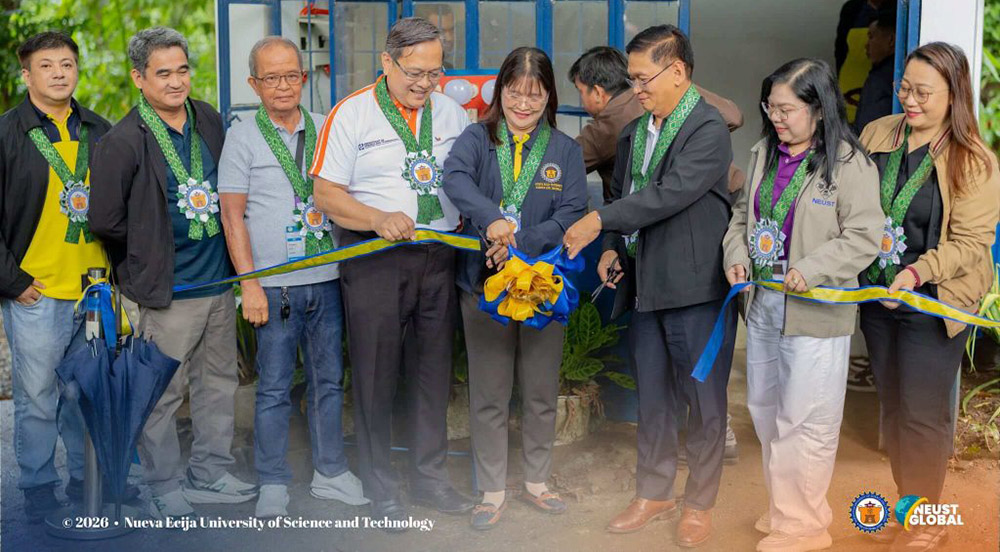
GABALDON, Nueva Ecija, Philippines — The Nueva Ecija University of Science and Technology (NEUST) has revived its micro-hydropower plant at the Gabaldon Campus, restoring a renewable energy source while providing engineering students with a functional laboratory for research and innovation.
The rehabilitated facility, which had been idle for nearly a decade, has an estimated power output of 11 kilowatts, demonstrating the potential of harnessing flowing water for sustainable power generation.
“I find it inspiring that something as natural as flowing water can be turned into a source of energy and learning,” NEUST President Rhodora Jugo said during the inauguration.
Project leader Nathaniel Oliveros explained that the facility uses a cross-flow turbine connected to a 16-kVA generator, with an estimated operating efficiency of 70 to 75 percent.
Established in partnership with the Department of Science and Technology (DOST) Central Luzon in 2011, the plant ceased operations in 2016 after typhoons and other natural disasters caused technical and operational problems.
Its rehabilitation, which began in August 2026, involved equipment repairs, reinforcement of the mini-dam, and improvements to the electrical system.
Jugo reaffirmed NEUST’s commitment to strengthening its partnership with DOST in pursuing research initiatives that benefit students and communities.
“This is your laboratory,” she told students, underscoring the importance of research and technology in addressing energy and water-related challenges.
DOST Undersecretary for Special Concerns Teodoro Gatchalian cited the facility’s potential as a model for other institutions pursuing renewable energy initiatives.
He encouraged the project team to explore digital technologies and artificial intelligence in future system upgrades while underscoring the importance of protecting forests and watersheds that sustain water resources.
Meanwhile, NEUST Vice President for Research, Extension, and Training Jean Guillasper highlighted the university’s GUNITA Program, which documents biodiversity at the Gabaldon Campus to support conservation initiatives, as well as its REVIVE renewable energy program.
She also said the team had prepared a proposal for further improvements to the facility.
Oliveros said the university is considering additional upgrades, including battery storage systems, automated controls, and real-time remote monitoring capabilities, subject to funding availability.
Gabaldon Municipal Administrator Ricardo Subido recalled that before its shutdown, the plant served as an alternative electricity source during power interruptions, allowing residents to charge their mobile phones and stay connected.
With the facility restored, NEUST is poised to use the micro-hydropower plant to help meet part of the Gabaldon Campus’s daily electricity requirements while providing students and faculty members with opportunities for hands-on instruction, research, and innovation in renewable energy.
The initiative contributes to the national government’s efforts to promote clean energy, strengthen science and technology capabilities, and advance sustainable development. (RPQ/CNG, PIA Region 3-Nueva Ecija)