


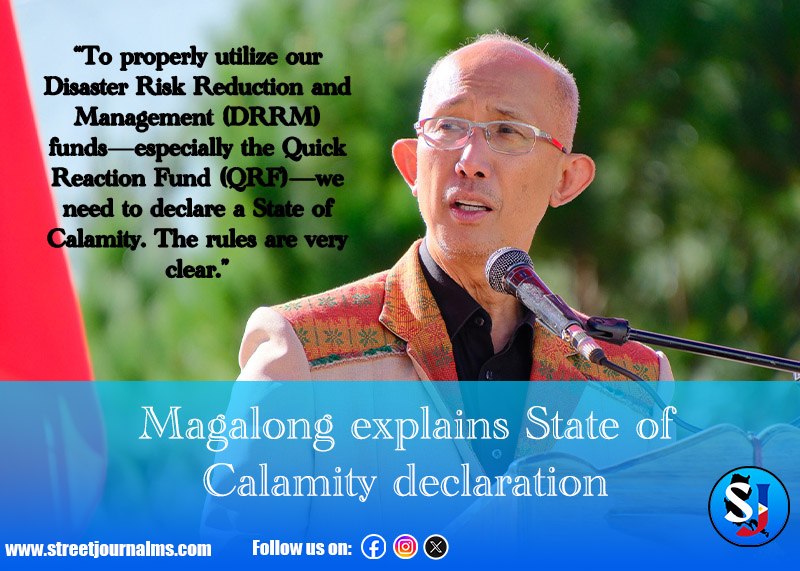
BAGUIO CITY, Philippines — Mayor Benjamin Magalong said the city government has officially declared a State of Calamity in the Summer Capital to address the growing economic and social impacts of the global energy crisis due to the ongoing Middle East conflict.
Magalong said the declaration is necessary to legally access emergency funds under existing government regulations and that while the national government has already declared a State of National Energy Emergency, the Mayor stressed that mobilized resources under such a declaration are primarily allocated to national agencies, leaving local governments with limited flexibility.
“To properly utilize our Disaster Risk Reduction and Management (DRRM) funds—especially the Quick Reaction Fund (QRF)—we need to declare a State of Calamity. The rules are very clear,” Magalong explained.
Under Commission on Audit (COA) guidelines, local governments can only access the QRF—which comprises 30 percent of the DRRM fund—during a declared State of Calamity. The DRRM fund itself represents 5% of the city’s annual revenue.
For Baguio, this translates to over ₱200 million, with approximately ₱146 million allocated for preparedness, mitigation, and prevention, and the remaining portion reserved for immediate emergency response.
The city has already begun deploying these funds, as around ₱20 million has been allocated to provide financial assistance to the transport sector, including public utility jeepney (PUJ) and taxi drivers, while ₱5 million is being distributed as ₱3,000 cash aid to over 1,600 financially vulnerable residents.
The city is also rolling out a significantly expanded rice assistance program, supported by funding from the national government, as the Mayor noted that this is the first time Baguio has received such a large allocation from the Local Government Support Fund (LGSF).
Previously, the city could only allocate about ₱3 million annually for rice assistance, often supplemented by donations. This year, however, the allocation has surged to ₱56 million, equivalent to approximately 33,000 sacks of rice weighing 50 kilograms each.
“This is a big help. A lot of people will benefit from this program,” Magalong said.
He said the State of Calamity would remain in effect depending on the trajectory of the energy crisis, which he linked to ongoing geopolitical tensions, particularly the conflict involving Iran.
“Even if the war stops now, recovery could take three to six months in the best-case scenario. In a moderate scenario, it could take six months to a year. Worst case, one to two years,” he said.
Magalong warned that the current crisis could have a more severe economic impact than the COVID-19 pandemic, as he pointed out that before the pandemic, the Philippines recorded a Gross Domestic Product (GDP) growth rate of 6%in 2019.
In contrast, recent figures show a declining trend, with GDP dropping to 4% last year and continuing to fall in subsequent quarters.
“All the drivers of GDP—consumer spending, investments, government spending, imports, and exports—are affected,” he explained. “With the energy crisis beginning in March, we expect the first-quarter GDP to decline even further.”
He urged residents to prepare for prolonged economic challenges as the city navigates the ripple effects of global instability. “We really have to brace ourselves,” he said. (Gaby B. Keith)