


By Christopher Hedreyda
KALAYAAN, Laguna, Philippines — The operators of the 733.95-megawatt Caliraya-Botocan-Kalayaan (CBK) hydroelectric power complex in Laguna expressed readiness to provide an ample electricity supply as the effects of a Very Strong El Niño phenomenon are anticipated.
During the Power101: Role of Pumped Hydro in the Philippine Energy Grid discussion hosted by AboitizPower and supported by the Department of Energy (DOE), Cleanergy 9 Power affirmed that the operations of the country’s first and only pumped-storage hydroelectric facility remain consistent and within the normal range despite elevation constraints.
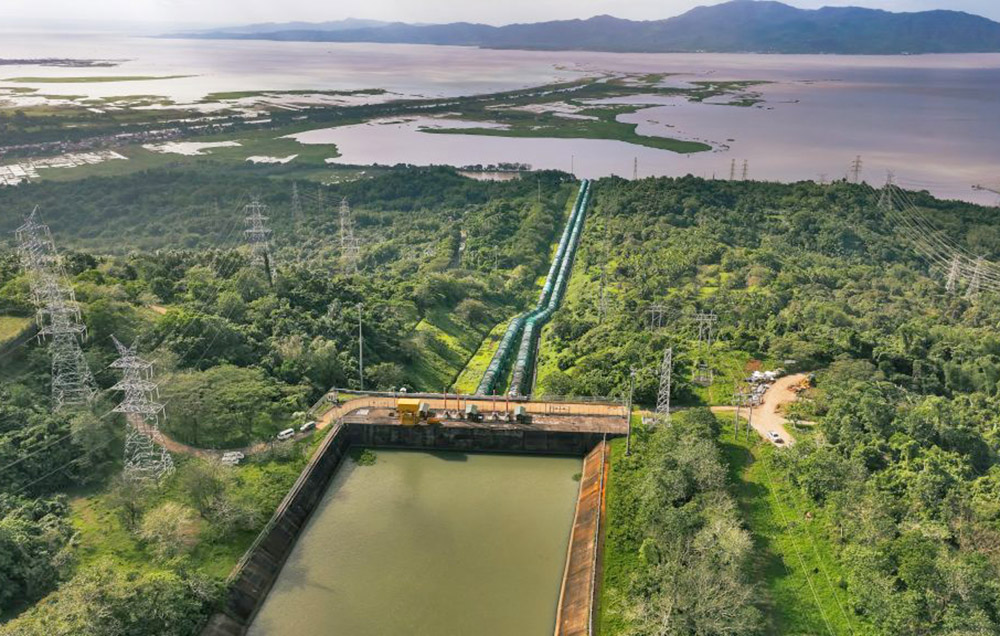
The CBK power plants are designed to pump water from Laguna Lake, which serves as the lower reservoir, to Caliraya Lake, the upper reservoir, during off-peak hours at night and release it to generate electricity during peak hours of the day.
The CBK complex consists of the 39.52-MW Caliraya Hydroelectric Power Plant (HEPP) in Lumban; the 23.10-MW Botocan HEPP in Majayjay; and the 366-MW Kalayaan I and 367.95-MW Kalayaan II pumped-storage power plants which operate similarly to a huge battery system, serving as a critical energy buffer for the Luzon grid.
Elvin Rondilla, Operations and Maintenance Head of Cleanergy 9, explained that to generate electricity, the pumps will need to utilize other energy sources, such as solar energy, as a renewable and sustainable source of electricity for their operations. He assured that the company utilizes AboitizPower’s vast solar energy portfolio.
“Laguna de Bay is very abundant, the water there is approximately 2,250 million cubic meters that we can utilize. The remaining concern is if we have the power to pump that. But during day time or El Niño, the perceived notion is that solar will deliver solar energy. We can utilize those excess energy to pump,” Rondilla said.
Meanwhile, Timothy Taburico, Chief Operations Manager of Cleanergy 9, estimated that current operations can be sustained until March 2027 before the facility feels the full impact of El Niño.
“Basically, the sunlight is affecting the water and it could be also affecting the elevation. But gradually, in the operational perspective we are trying to ensure grid stability and provide those ancillary services to the community,” Taburico said.
He added that maintenance shutdowns, which previously affected some power plants and contributed to disruptions in the country’s power supply, will not affect the CBK plant.
“Yun ‘yung maganda sa Kalayaan, hindi siya magiging affected ng [maintenance shutdown]. Ngayon, lagi kami nag-i-import ng water as long as nakakapag-akyat kami ng tubig and nakakapag-generate. In terms of maintenance, planned naman iyon and normally naman hindi kami nagpa-plant outage or nagpa-plant maintenance during those times.”
According to DOE estimates, El Niño will likely reduce rainfall and disrupt river flow, affecting watersheds and overall water availability and potentially leading to a reduction in power supply.
DOE Hydropower and Ocean Energy Management Division Chief Engineer Ariel Fronda said the division expects hydropower plants to reduce their power generation, but he is banking on the capabilities of the CBK complex to sustain its power generation activities.
“Ang mga pump storage pagka-ganitong El Niño, malaki ang tulong niya doon sa mawawalang generation ng mga conventional hydro power plants. Itong mga pump storage, makakatulong ‘yan to bridge ‘yung gap, puwedeng mapababa natin ‘yung mawawala o reduction na mawawala from conventional.”
Fronda further affirmed that the DOE will continue to monitor all hydropower plants as part of the government’s efforts to mitigate and reduce the impacts of El Niño on communities.
“Ang gagawin po ng DOE particularly ang division namin ay kami po ay susulat sa operating hydro powerplants on their actual and projection data. Meron naman pong hydrological data ng inyong water resource, so hihingi po kami sa [kanila] and submit to us [their] projection of reduction, and of course actual data habang nangyayari ito.”
Beyond power generation, the CBK complex stores energy and rapidly dispatches power, provides ancillary services and reserve capacity, and strengthens system stability in the country. It also serves as a strategic power source near vital financial districts and highly populated communities. (CH/PIA-Laguna)