


Steffi Nicole G. Reyes, GIP ZamSulTa
ZAMBOANGA CITY, Philippines — Preventing children from coming into conflict with the law should begin at home and extend to schools and communities, according to the Department of Social Welfare and Development (DSWD)-9, as it underscored the importance of early intervention, parental guidance, and community support in addressing juvenile delinquency.
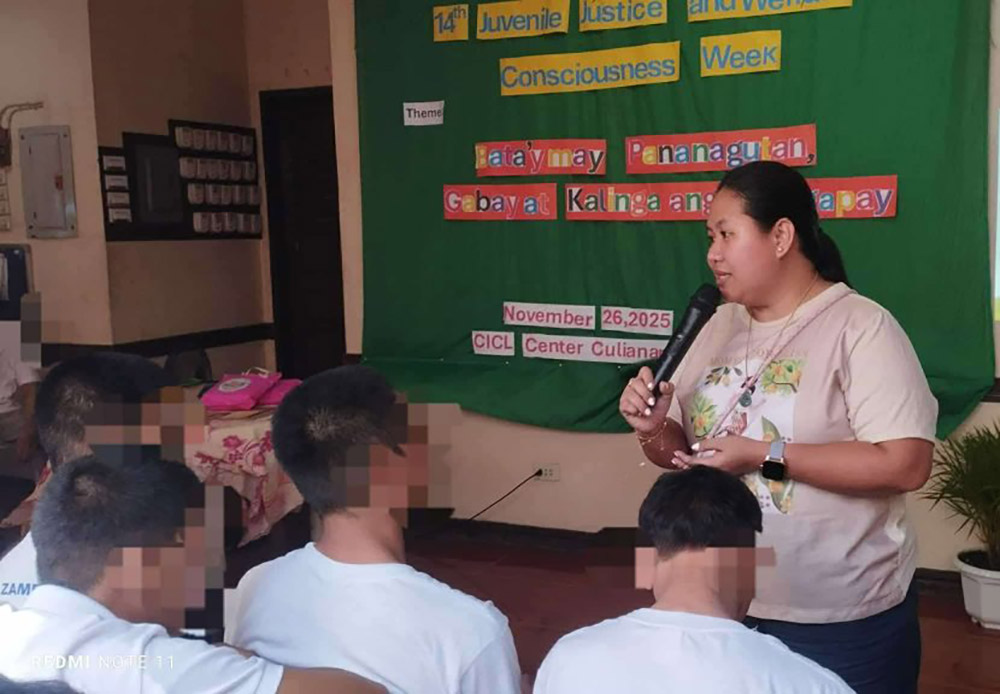
Jacqueline Julpi, Social Welfare Officer III of DSWD 9, said the Juvenile Justice and Welfare Act of 2006, or Republic Act No. 9344, as amended by Republic Act No. 10630, promotes accountability while ensuring that children receive age-appropriate interventions for their development and capacity to change.
“The responsibility of parents towards their children is not just limited to providing food and shelter. Children need love, care, guidance, and discipline,” Julpi said during the Kapihan na Zamboanga.
She explained that factors that may lead children into conflict with the law include inadequate parental care, negative peer influence, exposure to violence online, and gaps in local programs and services for child protection. She emphasized that identifying children at risk, early on, can help prevent them from committing offenses.
Region 9 recorded 536 cases involving children in conflict with the law (CICL) in 2025, based on data from the Philippine National Police Regional Office 9. From January to June 2026, more than 300 cases have already been recorded, with offenses ranging from crimes against property and reckless imprudence to sexual offenses, carnapping, and violations of the Comprehensive Dangerous Drugs Act.
Julpi said the region currently has four operational Bahay Pag-asa facilities in Zamboanga City, Zamboanga Sibugay, Pagadian City, and Sulu, providing temporary residential care and holistic interventions to CICL whose cases are ongoing.
However, she noted that rehabilitation does not end when a child leaves the facility. Reintegration involves coordination with families, local social welfare offices, and communities, including aftercare plans to help children safely return to their families and communities.
We are calling on our communities to help identify children who are already at risk and provide them with appropriate guidance and interventions rather than waiting for them to commit a crime,” Julpi said.
She also urged schools and communities to help create safe environments where children can develop positive values and receive the support they need to avoid conflict with the law. (JPA/MLE/SGR-GIP/PIA9-Zamboanga City)