


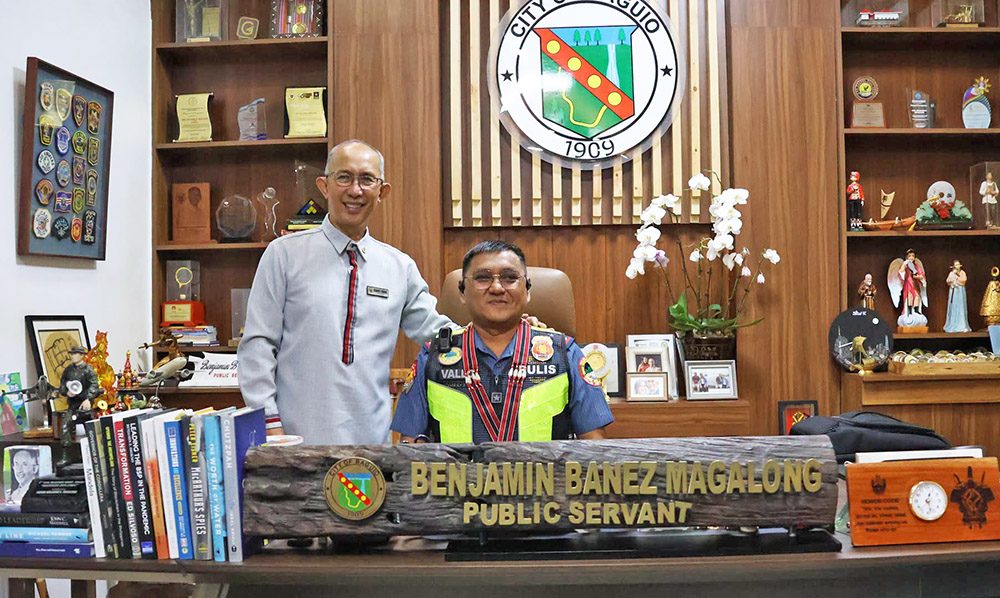
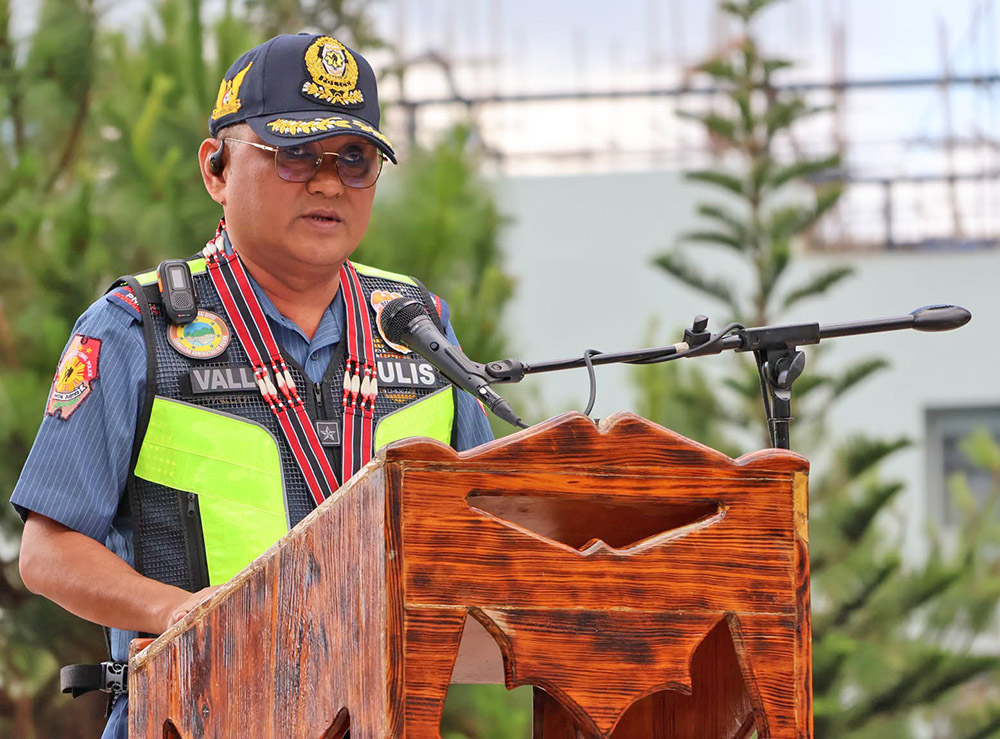
 Police Brig. Gen. Noel Vallo underscored the importance of strong partnerships among government institutions, the police, communities and civil society in building safer and better communities during his message at the Monday flag-raising ceremony in Baguio City.
Vallo expressed his appreciation to the City Government of Baguio for the invitation and opportunity to address city officials, employees, police personnel and other public servants.
He described his return to the Cordillera as both a professional honor and a deeply personal experience, recalling that the region was his first assignment more than three decades ago as a young police officer.
“My first assignment here taught me lifelong lessons,” Vallo said, emphasizing that policing goes beyond enforcing laws. He said effective policing also involves understanding people, earning their trust, being present when needed, and respecting the unique character and aspirations of each community.
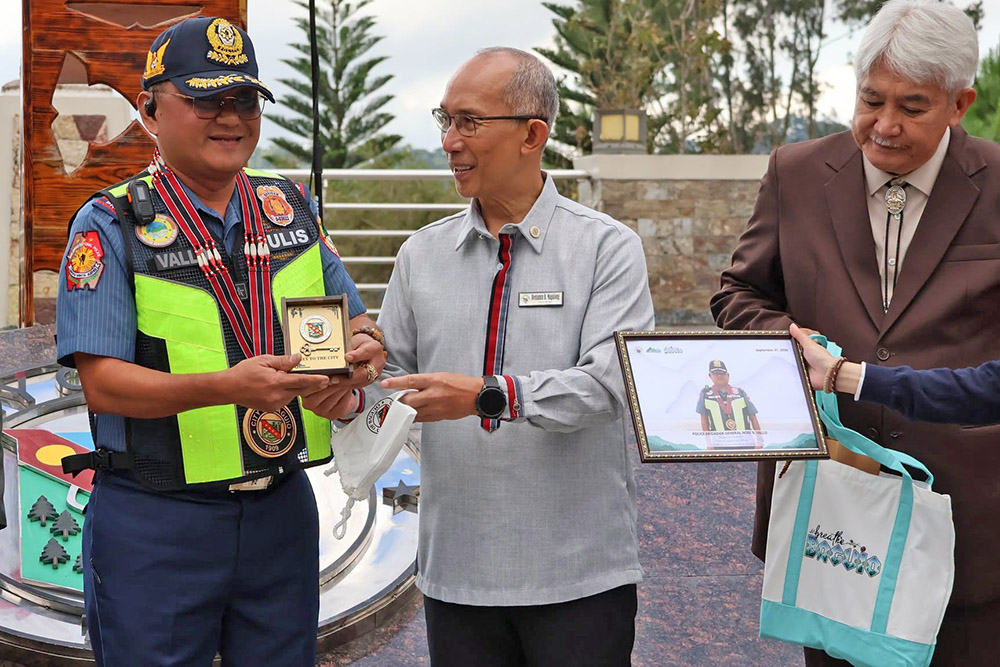 Vallo later returned to the Cordillera for a second tour of duty as chief of the Regional Logistics and Research and Development Division. He now serves as Regional Director of the Police Regional Office Cordillera.
Looking at the region today, Vallo noted that communities have grown while the police force has undergone modernization through improved technology, equipment and training. However, he said some of the challenges he encountered during his early years in the region continue to emerge in new forms.
For Vallo, this underscores the continuing nature of public service and the responsibility of every generation to build on the work of those who came before them.
“Our responsibility is not to solve everything in our lifetime, but to leave things better than we found them,” he said.
Vallo said his return to the Cordillera is an opportunity not only to reflect on his more than 30 years of police service but also to contribute the experience he has gained from various assignments, communities and challenges.
He stressed, however, that public service cannot be carried out by the police alone.
“The work of public service has never been the responsibility of the police alone,” Vallo said, pointing to the need for cooperation among government, communities, civil society and other institutions.
He described the partnership between the police and the City Government of Baguio as particularly important, noting that the local government understands the needs and concerns of the community while the police are entrusted with maintaining peace and order.
According to Vallo, stronger cooperation allows government institutions to better understand problems, respond more effectively and deliver more coordinated and meaningful services.
He also emphasized that partnerships should be founded not only on coordination but on mutual respect, trust and accountability.
“Because at the end of the day, the true measure of our partnership is not simply how well our institutions coordinate. It is how our people experience government service,” Vallo said.
He stressed that people should feel that they have a government and police force they can rely on—one that is willing to listen, help and remain present in serving the community.
Vallo said this kind of public service should be the legacy of those currently entrusted with serving the public.
He noted that decisions made, improvements introduced and examples set today can benefit future generations, even if those who make the changes may not see the full results of their efforts.
As he reflected on his return to the place where his police journey began, Vallo described public service as a continuing journey—one that begins with ideals, develops through experience and ultimately brings public servants back to those ideals with a deeper understanding of what it means to serve. (Baguio-PIO)