


By Yvonne Gracious T. Elegado
The Department of Social Welfare and Development Field Office Cordillera Administrative Region (DSWD FO CAR), through the Kapit-Bisig Laban sa Kahirapan–Comprehensive and Integrated Delivery of Social Services (KALAHI-CIDSS) Program, strengthens coordination with provincial governments and partner agencies to support the implementation of the Panahon ng Pagkilos: Philippine Community Resilience Project (PCRP) in the Cordillera.
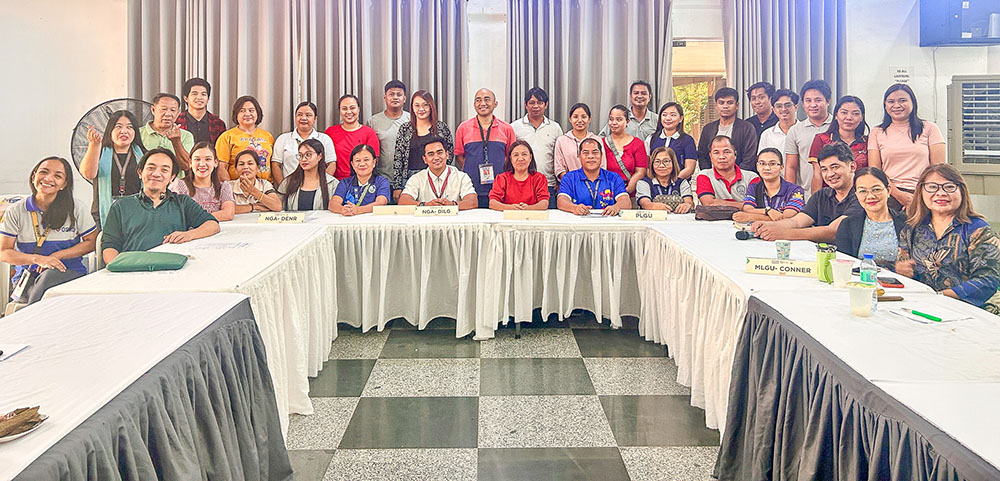
Provincial Inter-Agency and Technical Working Group (PTWG) meetings were held in Apayao on 15 October, Abra on 20 October, and Mountain Province on 22 October 2026.
The meetings brought together representatives from provincial and municipal local government units (LGUs), the Department of the Interior and Local Government (DILG), the National Commission on Indigenous Peoples (NCIP), the Department of Environment and Natural Resources (DENR), and the KALAHI-CIDSS Regional Program Management Office and Area Coordinating Teams.
Discussions covered municipal resilience plans, potential funding support from provincial governments and national government agencies, and the technical assistance needed to implement proposed community projects. Stakeholders also discussed their respective roles in helping municipalities address local risks and meet project requirements.
Proposed subprojects identified through the municipal resilience plans include improvements to irrigation and water systems, flood mitigation structures, access roads, multi-purpose buildings, slope protection structures, and pathways with railings. These projects aim to address local needs, improve access to essential services, protect communities from hazards, and support livelihoods.
Panahon ng Pagkilos is the new modality of KALAHI-CIDSS that supports communities in identifying local needs and prioritizing projects to address risks and vulnerabilities. It enables community participation in planning and implementing initiatives aimed at strengthening resilience and improving access to essential services