Street Journal Multimedia Services

NCR

New wellness hub to serve 500,000 Filipino seafarers with public-private support

NCR

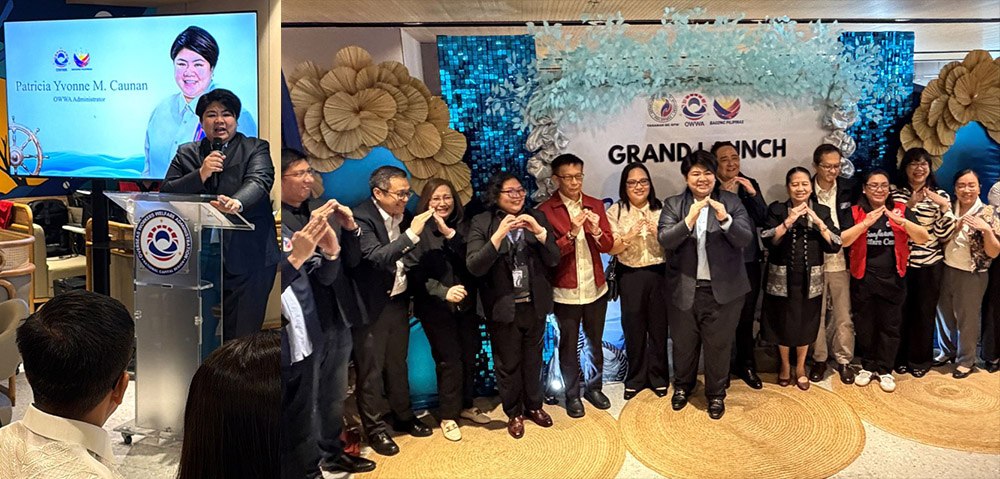
More than 500,000 Filipino seafarers help keep the global maritime industry moving. Now, a new Seafarers’ Wellness Center aims to ensure they and their families are supported beyond the deck. Led by the Overseas Workers Welfare Administration (OWWA) in partnership with the Department of Migrant Workers (DMW), the center brings together legal, medical, and welfare services in one accessible hub. BDO Unibank joined the initiative as part of its continuing “Alagang Kabayan” commitment to overseas Filipinos. The facility offers free legal assistance through the Public Attorney’s Office and volunteer lawyers, an Alagang OWWA Yakap Clinic and Gamot Botika para sa mga Marino, rest and recreation spaces, and training rooms for Pre-Departure Orientation Seminars (PDOS). OWWA Administrator Patricia Yvonne “PY” Caunan described the center as a meaningful first step toward expanding similar facilities nationwide.   “Maliit man ito, magandang simula ito upang mas lalo nating maiparamdam ang Alagang OWWA—serbisyong may puso,” she said, noting that sustained public support will allow similar centers to be established in other regions. While the center focuses on physical and legal welfare, financial preparedness remains essential to long-term stability. Through its Alagang Kabayan program, BDO works closely with OWWA and DMW to deliver financial literacy sessions and PDOS nationwide. These sessions guide seafarers on budgeting, remittance management, scam prevention, and reintegration planning. “We want OFWs to be financially empowered and in control of their future,” Caunan said, underscoring the value of public-private partnerships in extending meaningful services to migrant workers. For seafarer Christian Jay Padrigon, digital banking has made managing money at sea more convenient. Through his Kabayan Savings account and BDO Pay, he monitors transactions and remittances in real time—giving him peace of mind even while onboard. Another seafarer, Ronnel Hurgo, shared that disciplined saving and consistent remittances over nearly two decades helped him build assets and secure his family’s future. “Malaking tulong ang BDO sa pag-iipon at pagpapadala ng pera. Importante na may naipupundar tayo para sa pamilya at sa sarili,” he said. DMW Secretary Hans Leo J. Cacdac also acknowledged the seafarers’ sacrifice and dedication not only to their family but also to their community and country. Congresswoman Johanne Bautista emphasized that increased budget allocations for OWWA and DMW in 2026 reflect sustained national commitment to migrant welfare. The Wellness Center, she said, is a concrete example of how resources translate into frontline services. By aligning financial empowerment with holistic welfare initiatives, BDO reinforces its role as a long-term partner to Filipino seafarers—from pre-departure planning to reintegration.


SSS launches facial authentication for Annual Confirmation of Pensioners with liveness check

NCR

MANILA, Philippines — The Social Security System announced today the launch of a facial authentication to allow pensioners to complete the Annual Confirmation of Pensioners (ACOP) requirement without visiting SSS branches. SSS President and Chief Executive Officer Robert Jospeh M. de Claro said the system uses biometric liveness checks to verify the identity of pensioners online. “This makes compliance easier, faster, and more secure, ensuring uninterrupted pension payments,” de Claro said. The feature is available to pensioners registered in the National ID System (PhilSys) including: Retirement pensioners aged 80 and above residing in the Philippines Retirement pensioners living abroad Survivorship (death) pensioners De Claro explained that pensioners do not need to login to My.SSS.  By visiting the SSS homepage at www.sss.gov.ph, pensioners can access a dedicated ACOP icon that seamlessly guides them through the facial scan and biometric verification process using any camera-enabled device, through the Philippine Statistics Authority’s (PSA) National ID eVerify system. “The verification process takes less than a minute and immediately updates SSS records while confirming that a live person is present, preventing fraudulent activity,” he added. Pensioners without compatible devices may seek assistance at SSS branches through E-Centers. Traditional options, including in-person visits or scheduled video appointments, remain available. This initiative is part of SSS’ ongoing efforts to enhance digital services for nearly four million pensioners nationwide and abroad, making compliance to ACOP requirement more convenient while reducing travel burdens amid rising living costs. “No travel. No hassle. Just quick, secure verification from home,” he emphasized.

Globe scales partnership with transcelestial; rolls out 400-link laser tech for 5G network

NCR

Globe is accelerating the Philippines’ digital future by scaling its partnership with Transcelestial, committing to a nationwide rollout of over 400 wireless laser links over the next three years. This strategic expansion positions Globe as a global pioneer in deploying wireless optical infrastructure at a national scale. By leveraging laser technology for last-mile and backhaul connectivity, Globe is overcoming traditional infrastructure bottlenecks to deliver faster, more resilient 5G services to Filipinos. Transcelestial’s technology directly responds to the unique terrain challenges of the Philippine archipelago, where laying physical fiber-optic cables across coastlines, mountains, and disaster-prone areas is often slow and cost-prohibitive. By utilizing wireless laser links, Globe can now deliver fiber-class capacity for 5G and small cells through a rapid deployment model that bypasses traditional construction delays. This innovation provides a secure, interference-free connection that remains highly flexible for diverse use cases, ranging from large-scale events and emergency response to permanent connectivity for temporary or remote sites. Flexible, future-ready network “Globe’s strategy recognizes that no single technology will define the future of national networks. The move to deploy Transcelestial lasers represents an acceleration of our commitment to bring better access to more Filipinos at speed. We are creating a flexible, future-ready network that adapts to rising capacity needs and environmental constraints,” Joel Agustin, Senior Vice President for Engineering and Network Planning at Globe said. Rohit Jha, CEO and Co-Founder of Transcelestial, added: “Our 400-link rollout with Globe is a signal that the country is embracing new infrastructure models to overcome old constraints. We are proud to work with a forward-thinking partner like Globe to accelerate the digital economy for all Filipinos.” Scalable, resilient connectivity solutions The partnership is deepened by the fact that Transcelestial is a portfolio company of Kickstart Ventures, the corporate venture capital arm of Globe. This investment underscores Globe’s commitment to scouting and scaling transformative technologies that solve local connectivity challenges. “Kickstart’s investment in Transcelestial reflects Globe’s broader commitment to strengthening the country’s digital backbone. By supporting scalable, resilient connectivity solutions, we’re helping enable more inclusive economic participation across regions, which is fundamental to building a more future-ready Philippines,” said Joan Yao, General Partner at Kickstart Ventures. The nationwide rollout follows successful deployments in Visayas and Mindanao, as well as high-demand trials at the Philippine Arena during large-scale events in 2024-2025. These early deployments gave Globe the operational confidence to scale the technology nationwide. To ensure seamless integration, Asticom, a Globe-owned shared services company, meanwhile serves as the local engineering partner. Since 2023, Asticom has provided the critical on-the-ground technical and engineering expertise to deploy and maintain these laser links across the country. “We are proud to enable Globe’s high-tech rollout by bridging the gap between cutting-edge innovation and local infrastructure,” said Mharicar Castillo-Reyes, President and CEO of Asticom. “Our goal is to build meaningful connections that improve Filipino lives through reliable, future-ready connectivity.”    

Cebu Pacific Marks 30th Year with First Aircraft Delivery of 2026

NCR

Cebu Pacific (PSE: CEB), the Philippines’ leading carrier, took delivery of its first aircraft of the year – an Airbus A320neo – on March 6, just days before marking its 30th anniversary on March 8. The aircraft arrived in Manila from Airbus’ facility in Toulouse, France and is the first of four A320neos anticipated to join CEB’s fleet this year. CEB expects to receive a total of seven aircraft in 2026 as it continues to strengthen capacity amid sustained travel demand. “This delivery sets the tone for our 30th year,” said Xander Lao, CEB President and Chief Commercial Officer. “It reflects our continued investment in growth so more passengers can look forward to accessible and reliable air travel in the years to come.” Airbus NEOs are the latest-generation aircraft that burn about 15% less fuel per flight and produces less noise compared to previous models, resulting in a corresponding reduction in carbon emissions. CEB operates one of the youngest fleets in the world, with its diversified commercial fleet mix of 14 Airbus 330s, 27 Airbus 321s, 39 Airbus 320s, and 20 ATR turboprop aircraft enabling the widest network coverage in the Philippines.  

Globe Business Achieves Full ISO Certification

NCR

MANILA, Philippines — Globe Business has achieved full ISO certification for its customer experience and service operations, setting a new industry benchmark for reliability, security, and quality in the Philippine B2B sector. This milestone extends global ISO standards to the entire Customer Experience Management (CXM) organization, fully integrating service quality across both technical infrastructure and all aftersales touchpoints, including analytics, Service Management, process creation, and Voice of the Customer. “This milestone is a clear signal to our customers and to the market,” said KD Dizon, Vice President and Head of Globe Business. “By standardizing aftersales operations under one world-class framework, we are demonstrating operational discipline and collective accountability. In a time when digital trust is critical, we are giving our partners confidence that Globe Business is a low-risk and highly reliable foundation as they pursue intelligent transformation and future-ready growth.” As technology and digital ecosystems evolve, Globe Business continues to stay ahead of the curve by elevating its service standards. While the company has upheld ISO excellence for its technical support teams for over a decade, it is now applying that same level of rigor across every interaction—from system fixes to billing inquiries, to meet the demands of today’s data-sensitive environment. Reliability has emerged as the most important currency. Enterprises in banking, finance, energy, and logistics now require partners that can meet globally recognized standards to mitigate third-party and cybersecurity risks. For Globe Business partners, this certification translates into a tangible strategic advantage: less time spent on exhaustive vendor risk assessments and more resources focused on core business objectives. In this environment, ISO compliance is no longer a differentiator, it is a non-negotiable baseline. The company also upheld its certifications for the Globe Data Centers, reinforcing business continuity and resilience across critical operations. All aftersales operations are now fully aligned with ISO 9001 (Quality Management), and ISO 20000-1 (IT Service Management), and Globe Data Centers sustained its triple certification, including ISO 27001 (Information Security). Operating under this unified framework strengthens both transparency and trust which are key factors that help enterprise clients reduce vendor risk and accelerate procurement cycles by meeting audit and compliance requirements from the outset.  

Globe Backs Stronger Protection for OFWs as GASA and DMW Sign Landmark Anti-Scam Partnership

NCR

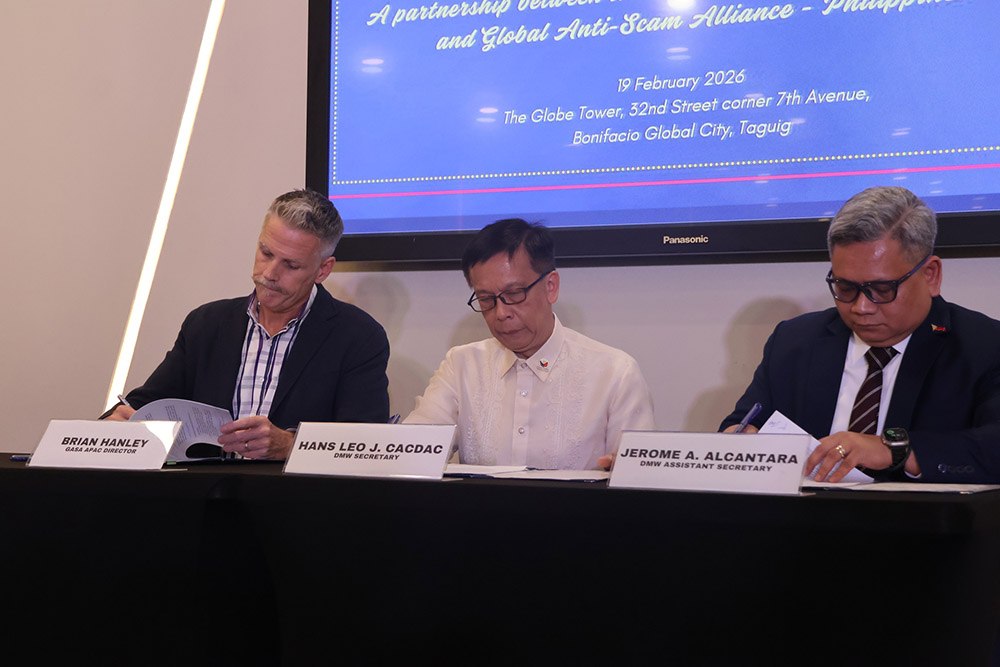
  The Department of Migrant Workers (DMW), the GASA Philippine Chapter, and Globe unite to strengthen digital protection for overseas Filipino workers through closer collaboration against evolving scams. MANILA, Philippines — Online scams are becoming more sophisticated and increasingly borderless. For millions of overseas Filipino workers and their families, the risks are real and often personal, especially when it comes to cross-border financial transactions and digital communication. To confront this escalating threat, the Department of Migrant Workers (DMW) and the Global Anti-Scam Alliance (GASA) formalized their collaboration through a Memorandum of Understanding (MOU). The agreement sets a clear direction to strengthen digital safety programs for overseas Filipino workers (OFWs), deepen cross-border intelligence sharing, and widen access to practical tools and resources that help migrant workers recognize, prevent, and respond to scams before real damage is done. Globe serves as Chair of the GASA Philippines Chapter, reinforcing its leadership in responsible AI, strong privacy governance, and sustained scam prevention efforts. Through the Global Anti-Scam Alliance (GASA) coalition, which brings together Globe, Gogolook, Meta, Google, Mastercard, Scamwatch Pilipinas, and other partners, with the Cybercrime Investigation and Coordinating Center (CICC) participating as an observer, the partnership will expand public awareness campaigns, strengthen digital literacy programs, conduct joint training sessions, and advance research initiatives. “Overseas Filipino workers make tremendous sacrifices for their families and for the country. They should not have to worry about falling victim to scams while working abroad,” said Derick Ohmar Adil, Globe’s Head of AI and Privacy Governance. “Through this partnership with the Department of Migrant Workers, we are strengthening digital literacy and promoting responsible use of technology so that protection keeps pace with evolving threats.” Together, these efforts aim to equip OFWs and their families with clear, practical guidance and accessible tools to spot warning signs, verify suspicious messages or transactions, and protect the income they work so hard to earn. “For our overseas Filipino workers, every peso they earn represents sacrifice, discipline, and love for their families. We cannot allow criminals to take that away through deception,” said Department of Migrant Workers Secretary Hans Leo J. Cacdac. “This partnership strengthens our ability to protect OFWs through better information sharing, stronger digital literacy, and coordinated action across borders.” The initiative reinforces Globe’s broader commitment to digital safety, cybersecurity, and responsible AI governance. It also highlights the importance of public and private sector collaboration in combating cyber-enabled crimes that do not respect geographic boundaries. Through sustained collaboration and shared accountability, Globe and its partners aim to empower every Filipino, wherever they may be in the world, to navigate the digital space more safely and securely.  

PBBM infra push spurs more inclusive, transit-led growth phase for BGC

NCR

Bonifacio Global City (BGC) is entering a more inclusive and transit-anchored phase of growth as major infrastructure projects converge with long-term urban planning reforms under the national development agenda of President Ferdinand R. Marcos Jr. At the center of this shift is the Metro Manila Subway, one of the Marcos administration’s flagship transport initiatives being implemented by the Department of Transportation (DOTr). The DOTr is leading the subway’s construction and coordination across national and local agencies, positioning it as the backbone of a more integrated mass transit system for Metro Manila. President Marcos Jr. last week led the groundbreaking of the 1.33-kilometer segment connecting Shaw Boulevard Station in Pasig City to Lawton Avenue Station in Taguig City, including stations within Uptown Bonifacio Global City. With planned stops near Kalayaan Avenue and the eastern portion of BGC, the district is set to gain direct underground rail access to Ninoy Aquino International Airport and major hubs in Quezon City in under 30 minutes. The subway will feature seamless interconnections with existing and planned railway lines, including Light Rail Transit (LRT) Line 1, Metro Rail Transit (MRT) Line 3, MRT-7, LRT-2, MRT-4, and the North-South Commuter Railway, strengthening Metro Manila’s linkages with nearby provinces. For the Bases Conversion and Development Authority (BCDA), which oversees BGC, the subway addresses the district’s long-standing reliance on private vehicles and creates the foundation for stronger transit-oriented development. “National infrastructure investments are allowing BGC to mature into a more commuter-focused and accessible district,” said BCDA President and CEO Engr. Joshua M. Bingcang. “When mass transit becomes embedded in the estate, it improves mobility, strengthens property fundamentals, and supports long-term competitiveness.” Improved rail access is expected to increase pedestrian activity within walking distance of future stations, benefiting residential condominiums, office developments, and retail corridors along BGC. People-centric redevelopment Parallel to rail development, strategic redevelopment is reshaping key areas of the district. The former Fort Strip property along 5th Avenue in BGC is being repositioned for higher-density, mixed-use development aligned with the district’s next-stage urban model. This enabled the opening of a new 7th Avenue road segment toward 32nd Street, restoring continuity to the district’s street grid and improving mobility between Uptown and High Street. These projects are reinforced by a broader and more people-centric recalibration of BGC’s master plan. BCDA, in partnership with SyCip Gorres Velayo & Co., is currently refreshing the BGC Master Development Plan, aligning land use with upcoming transport infrastructure, enhancing walkability, expanding green spaces, and integrating smart systems for traffic and utilities management. This is also linked to BCDA’s national push for model transit-oriented developments. The BCDA has partnered with the Japan International Cooperation Agency (JICA) and coordinated with relevant government agencies to develop a roadmap for transit-oriented development (TOD) in the Philippines. The collaboration aims to align land use planning, infrastructure investment, and value capture mechanisms around major rail corridors. Under this framework, BGC serves as a practical example of how infrastructure and land management can be synchronized. By clustering residential, commercial, and civic spaces around transit nodes, density is supported by mobility rather than road expansion. This approach reduces congestion pressure while improving daily accessibility. Industry assessments continue to identify BGC as one of Metro Manila’s most resilient submarkets, supported by steady tenant demand and established infrastructure. The integration of subway connectivity, redevelopment initiatives, and TOD-based planning positions the district for sustained growth grounded in accessibility and urban efficiency. “With infrastructure aligned to land use and guided by a clear transit-oriented framework, BGC is moving into a more inclusive phase of growth,” Engr. Bingcang said. “Accessibility is no longer a constraint. It becomes a driver of long-term value.” BCDA noted that lessons from BGC’s evolution will inform similar strategies in other growth centers such as New Clark City, as the agency advances a broader model of sustainable and people-centered urban development across its economic zones.

Your first BDO account in minutes? Yes, it’s possible!

NCR

Opening an account shouldn’t feel like another task on your endless to-do list. Between deadlines and side hustles, nobody’s got time for long lines or complicated forms. That’s why BDO Unibank (BDO) offers the Basic Account, a quick and simple way to start banking right from your phone. Ready when you are With just a valid passport and the BDO Pay app, you can set up your Basic Account in minutes—no initial deposit, no maintaining balance required. All you need is your smartphone, so you can literally open an account between classes, after work, or while waiting for coffee. Other government-issued IDs are also accepted, with approval typically completed within one day. Once it’s approved, you’re good to go. Pay Bills, Send Money, Scan to Pay at partner merchants, or Split Bill with friends using BDO Pay—all directly from your Basic Account. Every transaction links straight to your account, making it easy to track your spending. It’s perfect for students and young professionals learning to budget without the hassle. No extra steps, no need to cash in or transfer funds between digital wallets. Easy, simple and secure access you can rely on Your Basic Account is made for everyday life—reliable, consistent, and easy to count on. It’s built to support your daily needs as they grow and change. For added convenience, you can get a physical BDO Pay card and withdraw cash for free at BDO ATMs anytime, giving you dependable access to your funds whenever you need them. And because the Basic Account is powered by BDO Unibank, you have the assurance of strong security and a nationwide branch network whenever you need in-person support. Ready to make banking the simplest part of your day? Download the BDO Pay app and open your Basic Account now.  

BoC,PDEA,PNP intercept P278-M shabu shipment in MICP

NCR

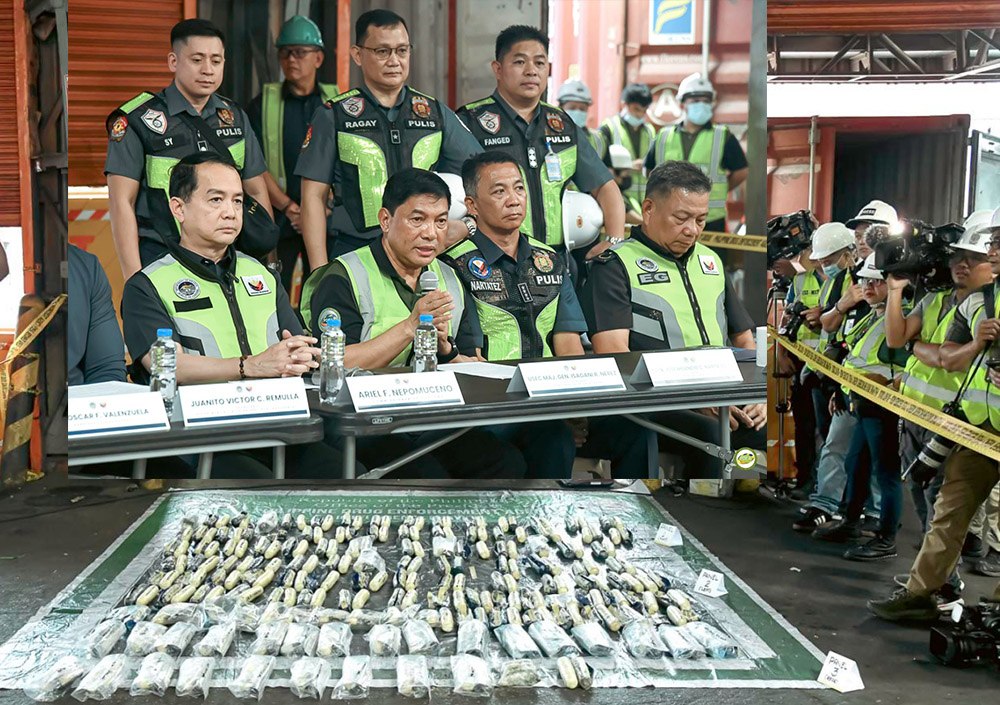
MANILA, Philippines — In one of the largest drug interdictions to date, combined operatives of the Bureau of Customs (BOC), the Philippine Drug Enforcement Agency (PDEA), and the Philippine National Police (PNP), successfully intercepted a shipment of methamphetamine hydrochloride, locally known as shabu, with an estimated value of ₱278,000,000.00, at the Manila International Container Port (MICP), North Harbor, Manila on February 10, 2026. The seized shabu weighed approximately 41 kilograms. This major anti-drug operation highlights the strength of inter-agency collaboration and invaluable assistance of foreign counterparts in the government’s intensified campaign against illegal drugs. The operation was conducted under the institutional guidelines formulated by the Dangerous Drugs Board (DDB), and in accordance with the directive of President Ferdinand R. Marcos Jr. to protect the Filipino people from the devastating effects of illegal drugs. The operation was a product of information sharing from foreign counterparts that highlighted the capabilities of BOC’s x-ray screening process and PDEA’s Narcotics Detection Dogs (NDDs). “This is a major victory for the Filipino people and a severe blow against organized drug syndicates,” said PDEA Director General Undersecretary Isagani R Nerez. “The interception of the shabu shipment at the port represents prevention at its strongest — stopping the threat before it could reach our streets, schools, and communities.” he added. The seizure of such a massive quantity of illegal substances represents not only a major law enforcement success but also a significant social impact. By preventing these dangerous substances from reaching communities, the operation has potentially saved countless lives, shielded families from harm, and safeguarded the future of the country’s youth from the threat of addiction. PDEA extends its utmost appreciation to its partner agencies for their vigilance, professionalism, and unwavering cooperation. “The success of this operation once again demonstrates that unified government action remains the most effective weapon against the drug menace.” DG Nerez expressed. This landmark achievement sends a clear message: the government will remain relentless in dismantling drug networks, enforcing the rule of law, and protecting public safety. Through its supply reduction strategy, the PDEA and other law enforcement agencies target the production and distribution of illegal drugs. By reducing the proliferation of illegal drugs, the government lowers drug dependency, eases the burden on rehabilitation services, and ensures more efficient use of public resources.        

Scroll to Top