


By MJ Roldan
For farmers whose livelihoods depend largely on the mercy of the skies, every drop of rain matters. When the rains stop, uncertainty sets in. Crops struggle, farmlands dry up, and an entire planting season’s hard work can be put at risk.
In the farming communities in Santa Ana, Cagayan, where some agricultural lands remain beyond the reach of conventional irrigation canals, this has long been a familiar challenge.
But for farmers in these communities, the prospect of waiting for rain to water their crops may soon become less daunting.
The installation of two solar-powered irrigation systems by the National Irrigation Administration (NIA) is bringing renewed hope to farmers who have long needed a more reliable source of water for their farmlands.
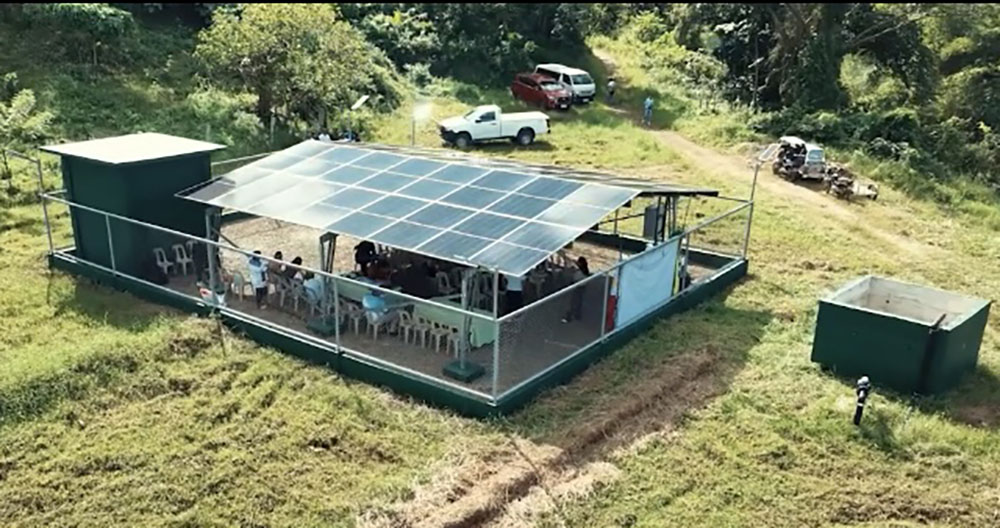
On November 6, 2026, NIA formally turned over two Solar Pump Irrigation Projects (SPIPs) to their respective Irrigators’ Associations (IAs) in Sitio Ugudan and Barangay Visitacion, marking another milestone in the government’s efforts to expand irrigation access and strengthen agricultural resilience.
Each project is equipped with 32 solar panels and is expected to irrigate 15 hectares of farmland, benefiting a total of 30 farmers in the two communities.
For these farmers, the facilities represent more than an additional source of irrigation. They offer an opportunity to cultivate their lands with greater confidence, reduce dependence on unpredictable rainfall, and secure the livelihoods that have sustained their families for generations.
Bringing water where canals cannot reach
While conventional irrigation canals have helped transform many agricultural communities, some farmlands remain difficult to serve because of their elevation and geographical location.
This is where solar-powered pumping systems can make a difference.
Engr. Rowila S. Macoco, system head of the Visitacion Irrigation System, explained that the projects were strategically established in areas that conventional irrigation infrastructure cannot adequately reach.
“These solar projects are being installed in areas that our irrigation canals cannot reach. These are usually high-elevation areas where extensive tracts of farmland remain unirrigated,” Macoco said.
She explained that the solar facility in Ugudan was established in response to farmers’ requests for irrigation services that would bring water to their agricultural lands.
The project, which serves the Ugudan Communal Irrigation System, is expected to irrigate 15 hectares and benefit 15 farmer-beneficiaries.
Macoco emphasized that extending irrigation services to these underserved areas is particularly important amid increasing climate variability and the threat of the El Niño phenomenon.
“These solar-powered facilities are a great help, especially during the El Niño phenomenon, as they allow us to reach areas that our conventional irrigation systems cannot serve,” she said.
By harnessing solar energy to operate water pumps, NIA is helping address irrigation gaps and provide farming communities with an alternative means of accessing water, particularly during periods of insufficient rainfall.
Blessing for farming families
For the farmers themselves, the arrival of the solar irrigation facilities is a welcome development after years of hoping for a more dependable water supply.
In communities where farming remains the primary source of income, access to irrigation can determine whether farmers can continue cultivating their lands or leave portions of them unproductive.
Pablito Buyco Agra Jr., president of CAVICIA Pangkat 3, expressed gratitude to the government for providing their community with a solar pump irrigation project.
He described the facility as a significant intervention for small-scale farmers, particularly because their area lacks a dependable surface water source.
“This government project is a great help to us small-scale farmers. Even without a river as a water source, this solar pump will greatly benefit our farms, as we have no other available water source to operate conventional water pumps,” Agra said.
The project draws water from an underground source, with solar energy powering the pumping system to deliver water to agricultural areas.
For Agra, the development opens up the possibility of expanding their cultivated land beyond the 50 hectares they currently farm.
“I am confident that we may be able to cultivate more than the 50 hectares we currently farm,” he said.
His optimism reflects the potential of irrigation infrastructure to improve agricultural productivity. With more accessible water, farmers may be able to cultivate additional areas, increase production, and strengthen their capacity to sustain their livelihoods.
Agra also expressed appreciation to NIA and President Ferdinand R. Marcos Jr., hoping that similar projects would continue to reach communities in need.
“We hope that projects like this will continue so that the lives of us farmers can improve,” he added.
Greater security
In Ugudan, where farmers have long relied on rainfall to water their crops, the new irrigation facility is seen as a much-awaited answer to the community’s needs.
Fredie A. Castro, president of the Ugudan Sta. Maria Irrigators’ Association, said the project holds particular significance for the community, where farming is the primary source of livelihood.
He recalled how farmers had long hoped for an irrigation facility that would help them overcome the limitations of rain-dependent agriculture.
“We have long hoped for a project like this; that is why we are truly grateful. It is a great blessing from the Lord, especially since our area relies solely on rainfall for irrigation,” Castro shared.
For farmers in rainfed areas, uncertainty over rainfall often translates into uncertainty in agricultural production. Prolonged dry spells can affect crop development, reduce yields, and threaten the income of farming households.
With the solar pump irrigation facility, Castro believes farmers will have a more dependable source of water once the project becomes fully operational.
“Once this project becomes operational and is put to use, it will be a great help to our farmers,” he said.
He added that even during severe El Niño conditions, the facility could provide an alternative water source to help sustain their agricultural activities.
For a community that has long waited for this kind of assistance, the project brings relief and renewed confidence in the future of farming.
A sustainable future
While providing irrigation infrastructure is an important step toward improving agricultural production, sustaining its benefits also requires the active participation of the farmers who will use and manage the facilities.
Wilmer Agresor, secretary of the Ugudan Sta. Maria IA, called on fellow farmers to take good care of the solar pump irrigation system to ensure that all association members can benefit from it.
He emphasized the importance of protecting the facility and keeping it functional so that it can serve the community for years to come.
His appeal underscores the shared responsibility of the government and farmers in maintaining public investments intended to support agricultural communities.
After all, the true value of an irrigation project is measured not only by the infrastructure established but also by the number of farmers whose lives and livelihoods it can continuously support.
Agresor likewise expressed his heartfelt appreciation to NIA and everyone involved in implementing the project, recognizing the agency’s efforts to bring irrigation services closer to their community.
Harnessing the sun
The two solar-powered irrigation projects form part of NIA’s continuing efforts to promote climate-resilient agriculture through renewable energy and sustainable irrigation solutions.
By bringing water to farmlands beyond the reach of conventional irrigation canals, the facilities help address long-standing irrigation gaps while providing farmers with an alternative water source.
The initiative also demonstrates how renewable energy can support agricultural development, particularly in communities where geographical limitations and changing climatic conditions make access to irrigation more challenging.
As the country continues to face the impacts of climate change, investments in sustainable irrigation infrastructure are becoming increasingly important in protecting agricultural production and strengthening food security.
For the 30 farmer-beneficiaries in Ugudan and Visitacion, however, the significance of these projects goes beyond the infrastructure itself. It lies in the new possibilities they offer for their farms and families.
Fields once dependent solely on rainfall may now have access to a more reliable water source. Lands that were difficult to cultivate may have the opportunity to become productive. And farmers who once worried about the coming dry season can begin looking ahead with greater confidence.
The solar panels harness the power of the sun, but their greatest promise lies in what they can bring to the land: water for crops, opportunities for farmers, and renewed hope for communities whose lives depend on agriculture.
In Ugudan and Visitacion, the message is clear: farming should not have to wait for the rain to fall before hope can grow. (OTB/MJR/PIA Cagayan/Files from NIA Region 02)