


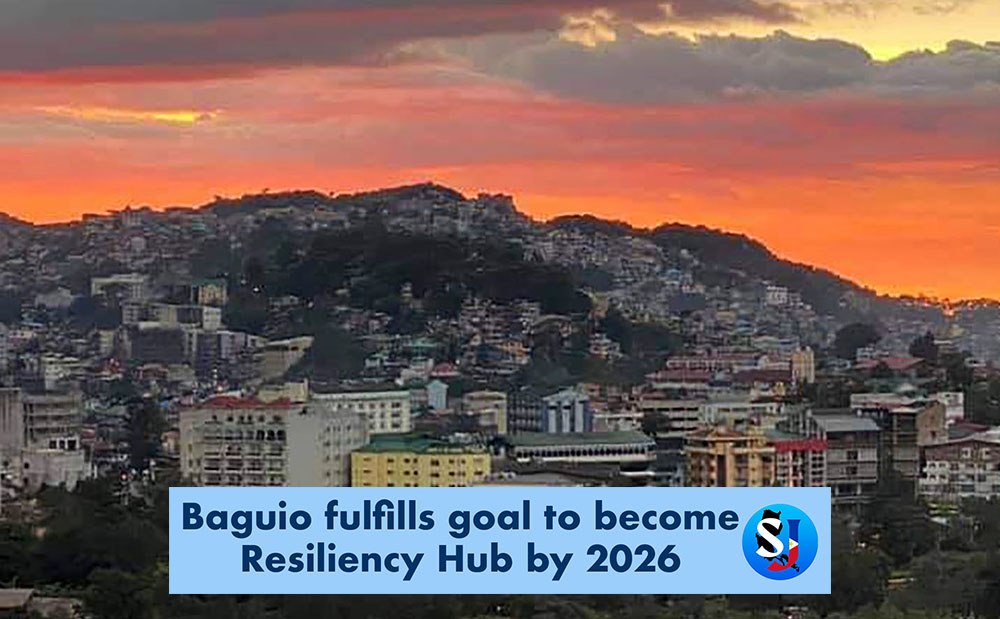
BAGUIO CITY, Philippines — The city government has successfully fulfilled its commitment to become a global model for disaster preparedness and climate resilience after it was officially designated as a “Resiliency Hub” by the United Nations Office for Disaster Risk Reduction on March 26, 2026.
The recognition marks a major milestone for the city, which had earlier set a target of achieving resiliency status by 2026 under the Making Cities Resilient 2030 (MCR2030) program. Notably, the city achieved the goal ahead of schedule, completing the requirements four years before the initiative’s 2030 target.
Mayor Benjamin Magalong accepted the distinction, placing Baguio among an elite group of disaster-ready cities. It is only the second local government unit in the Philippines to receive the designation, following Makati City, and now ranks fourth in Asia and seventh in the Asia-Pacific region.
The city’s journey toward resilience began in 2021 when it responded to a UNDRR invitation for peer-to-peer learning in South Korea. Since then, local officials have worked to align policies and programs with global frameworks such as the Sendai Framework for Disaster Risk Reduction and the Sustainable Development Goals.
A comprehensive and data-driven approach guided the city through the process, starting with a ten-point disaster resilience scorecard that assessed existing systems and programs. This was followed by a more rigorous evaluation that monitored implementation progress and challenges.
City Disaster Risk Reduction and Management Office head Charles Bryan Carame emphasized that the achievement was the result of sustained collaboration across all sectors.
“This milestone did not happen overnight. It was a collective effort of all departments, offices, and partners who committed to making resilience part of everyday governance,” Carame said.
He added that the recognition affirms Baguio’s transformation from a participant in global resilience programs into a leader tasked to mentor other cities.
As a designated Resiliency Hub, the city will now share its expertise through key initiatives, including inclusive multi-hazard early warning systems, benchmarking of its Smart City Command Center, community-based data gathering and risk assessment training, and hosting regional and inter-city resilience forums.
These efforts build on years of groundwork that focused on strengthening urban planning, disaster response systems, and environmental sustainability. The city implemented programs such as green infrastructure development, nature-based solutions, and enhanced monitoring of risk scenarios to address the growing threats of climate change.
Mayor Magalong underscored that resilience in Baguio goes beyond infrastructure and technology. “Baguio’s resilience is built on inclusiveness and shared innovation. By combining data, compassion, and collaboration, we help cities thrive safely in a changing world,” he said.
With the new designation, city officials said the focus now shifts to sustaining gains and extending support to other local government units. Authorities stressed that resilience will continue to be a shared responsibility among government agencies, communities, and citizens as Baguio strengthens its role as a leader in disaster risk reduction and climate adaptation. (Aileen P. Refuerzo)