


By Rod Asurin
BAGUIO CITY, Philippines — Rains from the Southwest Monsoon, or Habagat, have replenished Baguio City’s underground water sources and rainwater reserves, giving the city additional supply as it prepares for the impacts of a strong El Niño.
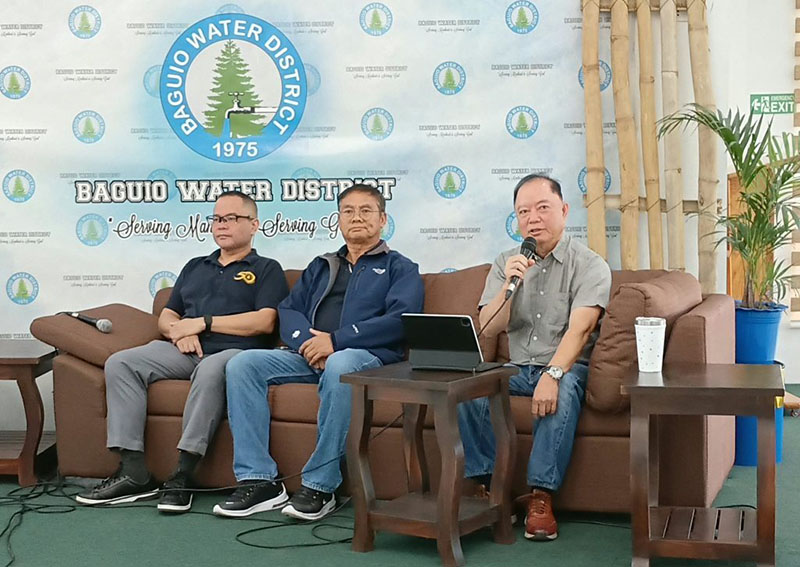
Baguio Water District (BWD) General Manager Engr. Salvador M. Royeca said the increased rainfall significantly improved groundwater levels and boosted the production capacity of the district’s deep wells.
He said the recovery of water sources provides some relief as the city anticipates reduced rainfall during the El Niño period, although sustaining water availability will remain a challenge.
“We’re very thankful with the Habagat because that’s the time that we could recharge our open and underground sources. It’s good that our sources have recovered. At least we have something to manage,” Royeca said.
He also reported that the Mt. Sto. Tomas Rainwater Harvesting Facility reached its spilling level of 12.4 meters during the height of the habagat season in September 2026, providing an additional reserve for the coming dry months.
The facility can potentially support consumption for up to six months, depending on operational conditions and demand, according to Royeca.
Despite the improved water situation, he cautioned that Baguio remains vulnerable to prolonged dry conditions because of its heavy dependence on groundwater and the limitations of its existing water sources.
He explained that Baguio’s mountainous terrain, heavy dependence on groundwater, rapid urban development, and increasing demand during peak tourist seasons put additional pressure on the city’s water resources.
To prepare, BWD is managing groundwater extraction, maximizing spring sources, developing additional deep wells, and improving pipelines and distribution systems. The district is also intensifying leak detection and repairs to reduce water losses.
Royeca also identified watershed degradation and the loss of forest cover as major concerns, emphasizing the need to protect open spaces that allow rainwater to seep into the ground and replenish underground sources.
He urged residents and businesses to conserve water, consider rainwater harvesting and water reuse, and invest in additional water storage containers in preparation for possible supply interruptions during prolonged dry periods.
“The water security of Baguio will not be determined by BWD alone. It will be determined by how the entire city manages the water that nature provides,” Royeca said. (JDP/RGA-PIA CAR)